
Reviewed · AMSTERDAM RED LIGHT DISTRICT TOURS
Amsterdam: Red Light District Walking Tour
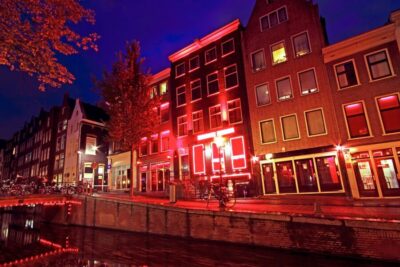
Amsterdam’s Red Light District is more than a row of red-lit windows. On this two-hour walk, you move through old sailor streets, Chinatown, canals, crooked homes, historic pubs, sex shops, and the city’s oldest building. The guide adds context to places that can otherwise feel confusing or purely theatrical.
I like the way the route joins the Red Light District with Old Amsterdam, rather than treating the neighborhood as an isolated attraction. I also like the chance to hear why sex work was legalized in the Netherlands and how the term coffeeshop came into use. The main consideration is that this is a busy, adult-themed area, so it may not suit every visitor or family.
The guides set a friendly, lively tone. Ari was praised for being upbeat and engaging, Aaron for clear information, Robin van Gemer for storytelling, and Sander for keeping the walk fun. The drawback is that the meeting point can vary by booking option, so check your exact confirmation before setting out.
Key points at a glance
- Zeedijk and Chinatown: Walk through an old sailor neighborhood now filled with Chinese shops, bars, and food stops.
- The Waag at Nieuwmarkt: See a former city gate and section of Amsterdam’s old defensive walls, now used as a restaurant.
- Red-lit brothel windows: Learn about the famous red drapes, prostitution windows, and the district’s current debates.
- Adult venues with context: Pass Cassa Rosso, peep shows, Bananenbar, sex shops, strip clubs, and historic pubs.
- Two hours on foot: The tour covers several compact Old Town areas without included transportation.
- English or German guides: Private groups are available, and you can book now while keeping the option to cancel up to 24 hours ahead.
Why this walk is useful in Amsterdam
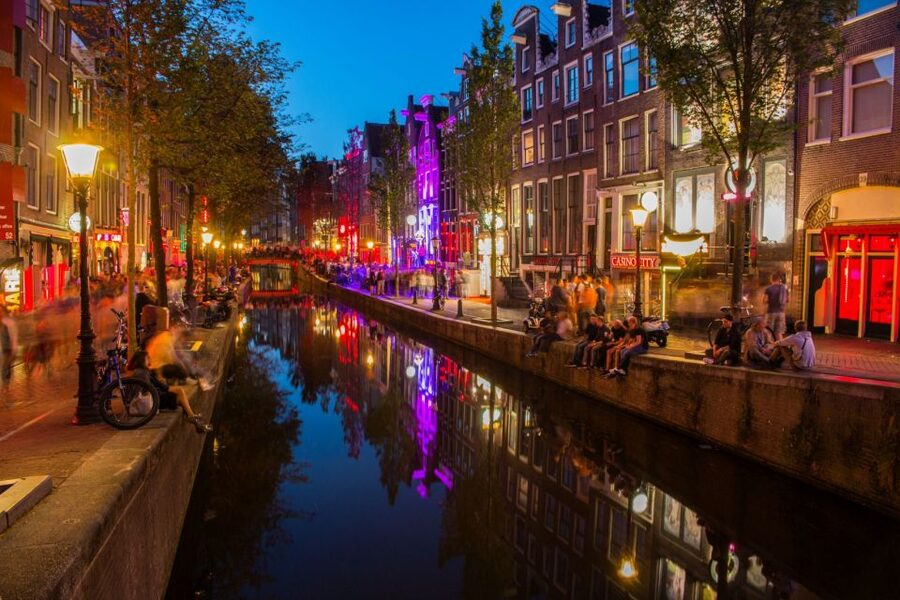
The Red Light District is easy to misunderstand. Some people arrive expecting only nightlife and neon. Others avoid it because they assume it is nothing more than a tourist spectacle. A guided walk gives you a clearer picture of how the area developed, how it functions today, and why Amsterdam handles sex work in a way that differs from many other places.
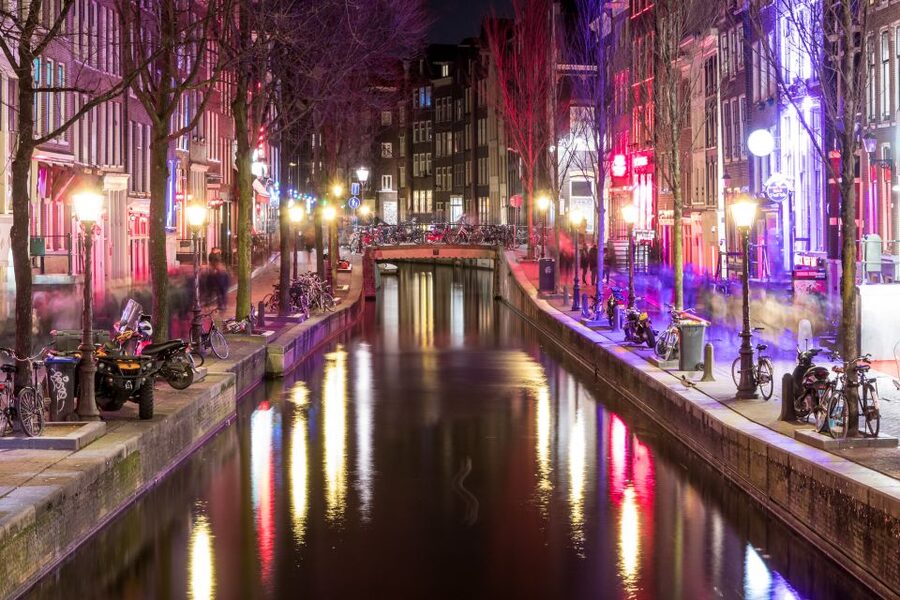
The route also gives you more than the district itself. You begin in the older part of the city, pass through Zeedijk and Chinatown, reach Nieuwmarkt, and then enter the central Red Light District. That wider setting matters. Amsterdam’s adult entertainment quarter is tied to the city’s port, canals, old walls, working neighborhoods, and changing ideas about public space.
I would choose this tour early in an Amsterdam visit if I wanted to understand the area before returning on my own. Two hours is long enough for useful context but short enough to fit around a museum, canal cruise, or evening plans.
Keep your expectations realistic. This is a walking and storytelling experience, not a visit inside brothels or a show. You see the streets and venues from public areas, while the guide explains what you are looking at.
More Red Light District tours:
- Amsterdam: Red Light Secrets Museum Entry Ticket
★ 4.2 · 5,722 reviews - Amsterdam: Red Light District Tour in German/English/Italian
★ 4.9 · 5,623 reviews - Amsterdam Red Light District & Coffee Shop Tour
★ 4.6 · 4,134 reviews
Starting along Zeedijk Street
Zeedijk Street was once an old sailor neighborhood, and the route uses it to introduce a side of Amsterdam that is older and less polished than the postcard canals. You pass crooked houses, pubs, and the In’t Aepjen bar, one of the notable sights along the street.
The crooked buildings are not just a photo stop. They help you notice how Amsterdam’s narrow historic properties fit together along the canals. The city’s older center can feel compressed, with leaning facades, tight lanes, and buildings that seem to press toward the water.
Your guide can also point out how the area has changed. The route presents Zeedijk as a place that was once considered unsafe and has since become a friendlier part of town. That shift gives the walk a practical theme: Amsterdam’s neighborhoods are not frozen museum pieces, and their reputations can change.
I like this opening because it eases you into the subject. You are not dropped immediately into the most famous red-lit streets. Instead, you first get a sense of the people, businesses, and old buildings that surround them.
Chinatown, shops, and a possible snack stop
From Zeedijk, the walk continues through Amsterdam’s Chinatown. You see Chinese stores and the many small businesses that give this part of the Old Town a distinct identity.
The Chinatown section is relatively compact, but it helps connect the Red Light District to ordinary city life. Shops, pubs, food stalls, and residential streets sit close to the adult venues. That mix is one of the most important things to understand about the area. It is not a separate resort built only for nightlife.
At this point, you might stop at one of the market stalls for a quick snack. The snack is not included in the $33 price, so bring a little spending money if you want to sample something along the way. Since the tour lasts two hours, this is more of a brief opportunity than a planned meal stop.
The guide’s role is especially useful here. Without local direction, you could walk through Chinatown, photograph a few buildings, and miss how the street’s past connects with the rest of Amsterdam’s center.
Nieuwmarkt and the old walls at the Waag
Next comes Nieuwmarkt Square, home to the Waag. The building began as a city gate and formed part of Amsterdam’s old walls. Today, it operates as a restaurant, giving the square a clear example of how defensive city structures have been reused.
This is one of the strongest historic stops on the route. It shifts the focus away from adult entertainment and toward Amsterdam’s earlier growth as a walled city. The square also gives the group room to pause before moving into the most famous section of the walk.
If you are interested in architecture, pay attention to the way the Waag relates to the surrounding streets. You are seeing a building that once controlled movement through the city, now surrounded by restaurants, market stalls, and modern urban life.
The stop should also help you place the Red Light District in context. The district is not an isolated strip. It grew within the old center, beside major streets, canals, markets, religious buildings, and former city defenses.
More walking tours in Amsterdam:
- Anne Frank’s Story – Guided Walking Tour through Amsterdam
★ 5.0 · 11,619 reviews - Amsterdam: Life of Anne Frank and World War II Walking Tour
★ 4.8 · 10,467 reviews - Absolutely Amsterdam – the Essential Introductory Walking Tour
★ 5.0 · 3,629 reviews - Amsterdam: Anne Frank Guided Small Group Walking Tour
★ 4.8 · 2,722 reviews
Entering the Red Light District
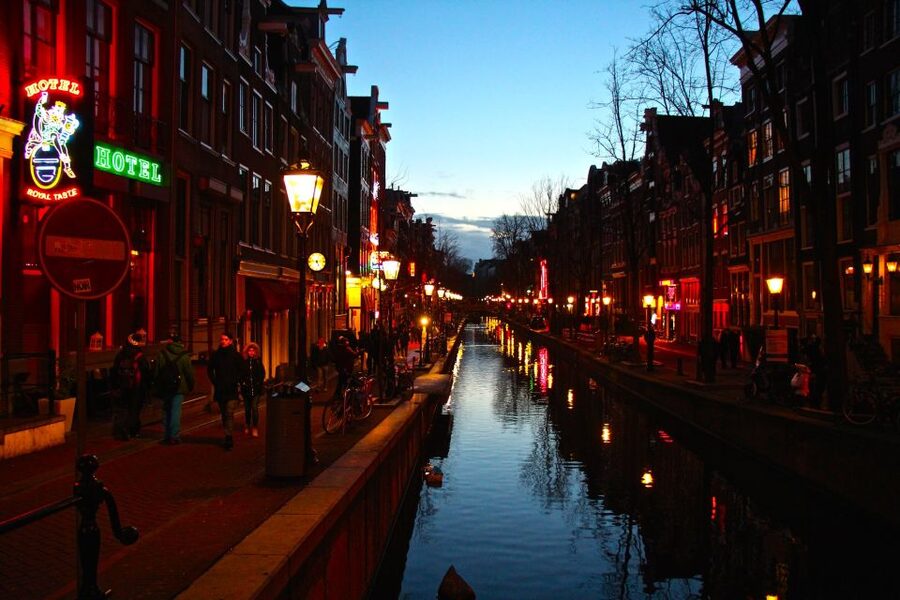
The mood changes as you continue toward the heart of the district. The guide points out the red drapes in the brothel windows, prostitution windows, peep shows, sex shops, strip clubs, and other venues that have made this area famous.
This is the part most people picture before booking. You should expect to see the windows from the street, but the experience is built around explanation rather than access. The guide discusses what the venues represent and how the district has changed, including recent controversies.
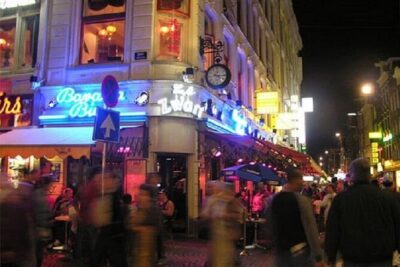
Cassa Rosso and Bananenbar are among the named stops. You may also pass pubs and bars that sit alongside adult businesses. The closeness of these different uses can be surprising, especially if you expected one clearly marked entertainment zone.
Photography and behavior deserve care here, even though the supplied tour details do not set out a formal photography policy. Keep your attention on the guide and the public street, and treat the people working in the district with ordinary respect. This is a functioning neighborhood, not a stage set.
The guide also explains why prostitution was legalized in the Netherlands. That discussion is valuable because legalization does not mean every debate has ended. The tour includes the district’s current situation and controversies, giving you a chance to think about regulation, public order, work, and tourism without reducing the subject to jokes.
The story behind coffeeshops
Another topic covered on the walk is how the name coffeeshop came into use. The term can confuse first-time visitors because these businesses are associated with cannabis rather than coffee.
The tour does not simply point out a sign and move on. It uses the word as a way to explain Amsterdam’s particular approach to certain activities and the difference between what is tolerated, regulated, and openly advertised.
This is a useful part of the walk for anyone who wants more than a quick look at red lights and neon. You gain vocabulary and local context that can help you make sense of the streets during the rest of your stay.
The exact amount of time spent on each topic can vary with the guide and group. Ari, Aaron, Robin van Gemer, and Sander have different speaking styles, but the basic route and themes remain focused on the Old Town and Red Light District.
What the guide adds
A local guide matters most in a neighborhood where the surface details are easy to see but the meaning is less clear. Red drapes, crooked houses, bars, and signs tell only part of the story. The guide explains why these sights are there and how the district reached its present form.
The available guide feedback points to a consistently friendly tone. Ari is described as upbeat and engaging, Aaron as informative, Robin van Gemer as a storyteller, and Sander as someone who kept the walk lively. One German-language comment simply called the tour very informative.
That range is useful to know. You are not booking a silent architecture walk. Expect conversation, anecdotes, and a guide who may use humor while discussing adult subjects. If you prefer a formal lecture with little interaction, this may feel more casual than you want.
Language options are English and German. A private group is available if you want a more personal format, though the supplied details do not state the maximum size or private-group price. Check those points before booking if group size is important to you.
Is $33 a fair price?
At $33 per person, the tour sits in a reasonable range for a two-hour guided walk in central Amsterdam. You are paying for a local guide and the route, not transportation, food, drinks, entry tickets, or entertainment inside the venues.
The value comes from interpretation. You can walk through the Red Light District on your own for nothing, but you will not automatically understand the history of Zeedijk, the role of Chinatown, the Waag’s earlier purpose, or the reason sex work was legalized.
I think the price makes the most sense for a first visit, a short stay, or anyone who wants a quick orientation before exploring alone. It is less useful if you already know Amsterdam’s Old Town well or only want to see the red-lit windows without discussion.
The route includes a possible snack stop, but you should budget separately for food. Since no transportation is included, you also need to reach the meeting point yourself. The meeting point can vary by the option selected, so do not rely on a generic location from a search page.
Timing, comfort, and who should book
The tour lasts two hours and is entirely a walking experience. Wear shoes you can use comfortably on Amsterdam’s narrow streets and canalside routes. The provided information does not specify an accessibility plan, so ask the operator directly if you need details about surfaces, pace, or mobility support.
I would book this for adults and older teenagers who are comfortable discussing sex work, adult venues, and the district’s controversies in a public setting. It can suit couples, friends, solo visitors, and private groups looking for a shared introduction to Amsterdam’s Old Town.
Families should use their own judgment. The tour passes sex shops, strip clubs, peep shows, prostitution windows, and other adult businesses. The walk may be educational, but the subject matter and street scenes are not designed as a general family attraction.
The route could also work well for people who are curious but uneasy about visiting the district alone. You have a guide to explain what you are seeing and to keep the walk focused on the area’s history and present-day issues.
Book earlier in your visit if possible. That way, the information about Chinatown, Nieuwmarkt, the Waag, coffeeshops, and legalized prostitution can add meaning to later walks through central Amsterdam.
Should you book this Red Light District walk?
Book it if you want context as well as sightseeing. The route covers the famous windows and adult venues, but it also includes Zeedijk, Chinatown, crooked houses, canals, the Waag, and Amsterdam’s older city center.
The tour is especially worthwhile for first-time visitors who want a clear introduction in two hours. The upbeat style associated with guides such as Ari, Aaron, Robin van Gemer, and Sander should suit people who prefer stories and conversation to a dry lecture.
Skip it if you want privacy, nightlife access, or a tour with no adult content. You should also think twice if you already know this part of Amsterdam and would rather spend $33 on a museum or food experience.
For most curious adults, this is a practical way to approach a complicated neighborhood with some background and respect. The route is focused, the price is fair for a guided walk, and the combination of Old Town history with present-day controversy gives you more than a quick look at the red lights.
FAQ
How long does the Amsterdam Red Light District walking tour last?
The tour lasts two hours.
What languages are available?
The live tour guide is available in English and German.
Does the tour include transportation?
No. This is a walking tour, and transportation is not included.
What places does the route visit?
The route includes Zeedijk Street, Amsterdam’s Chinatown, Nieuwmarkt Square, the Waag, Cassa Rosso, and other parts of the Red Light District. You also see canals, crooked houses, pubs, bars, sex shops, strip clubs, prostitution windows, peep shows, and Bananenbar.
Is a private group option available?
Yes. A private group option is available, depending on the booking choice.
Can I cancel the tour for a refund?
You can cancel up to 24 hours in advance for a full refund. You can also reserve now and pay later, subject to the selected booking option.
Newest Amsterdam write-ups
- Amsterdam: Explore Pass with Over 35 Attractions★ 3.1 · 45 reviews
- Deluxe Tickets for the RijksMuseum★ 5.0 · 3 reviews
- Amsterdam: The ‘Hollandsche Manege’ Stables Entry Ticket★ 4.2 · 43 reviews
- From Amsterdam: Day Trip to Efteling Theme Park with Ticket★ 5.0 · 3 reviews
- Volendam: E-Fatbike Rental★ 4.4 · 26 reviews
- Historic Amsterdam 2-Hour Private Tour with Local Guide★ 4.9 · 53 reviews
- Amsterdam Cruise Discovery Tour★ 3.7 · 6 reviews
- Marken, Volendam and Edam: Private Full-Day Tour★ 4.6 · 18 reviews
Amsterdam Red Light District Tours, compared.

Red Light District Tour in German/English/Italian
Read our review →
Amsterdam Red Light District & Coffee Shop Tour
Read our review →
Red Light District Pub Crawl with Unlimited Shots
Read our review →
Private Amsterdam Red Light District and Coffee Shop Tour
Read our review →Browse the lists this tour appears in