
Reviewed · AMSTERDAM RED LIGHT DISTRICT TOURS
Amsterdam: Red Light Secrets Museum Entry Ticket
Amsterdam’s Red Light Secrets Museum puts you on the other side of the famous red-lit window. Inside a 17th-century house and former brothel, you see the small workrooms, listen to Inga’s first-hand account, and sit in a window yourself. I especially like the personal audio guide and the Confession Wall, which brings humor and uncomfortable truths to the final part of the visit.
The museum also explains how sex work became legal in the Netherlands in 2000, giving the district more context than you get from simply walking its canals. My main caution is space and length: the visit can take only 15 to 30 minutes, and busy periods can make the small rooms hard to hear and photograph.
Key things to know before you go
- You sit in a real Red Light District window: The museum lets you experience the view from behind the glass rather than only looking in from the street.
- Inga guides the visit by audio: Her account explains the daily work, practical realities, and personal side of sex work in a frank, often humorous way.
- The museum occupies a former brothel: Its narrow rooms and old Amsterdam setting give the subject a direct physical context.
- Legalization gets proper attention: You learn how the Netherlands regulated sex work and why Amsterdam developed its liberal reputation.
- The visit is short but self-paced: Most people need roughly 15 to 30 minutes, depending on how closely they read and listen.
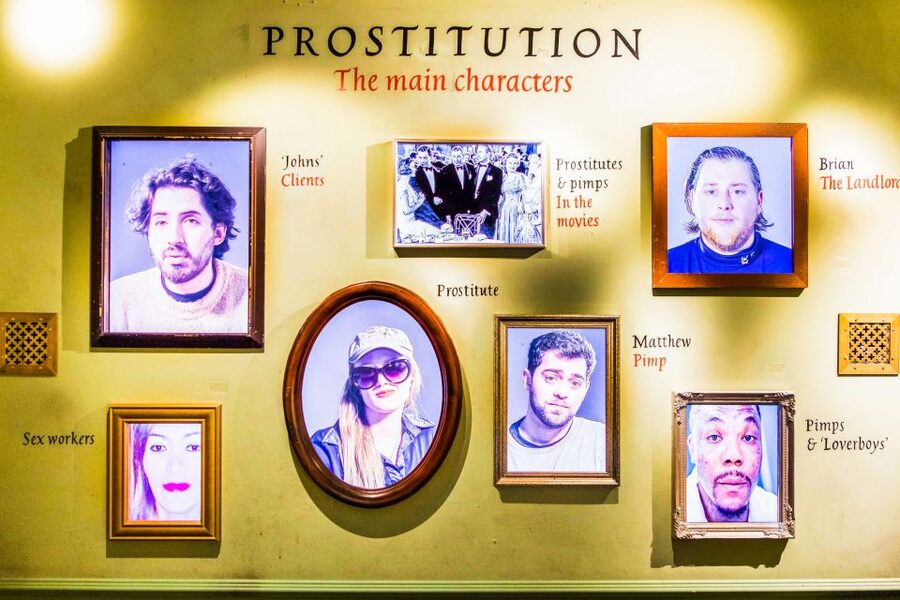
- The Confession Wall ends on a lighter note: Some notes are funny, some are crude, and some reveal more than their writers probably intended.
What Red Light Secrets actually gives you
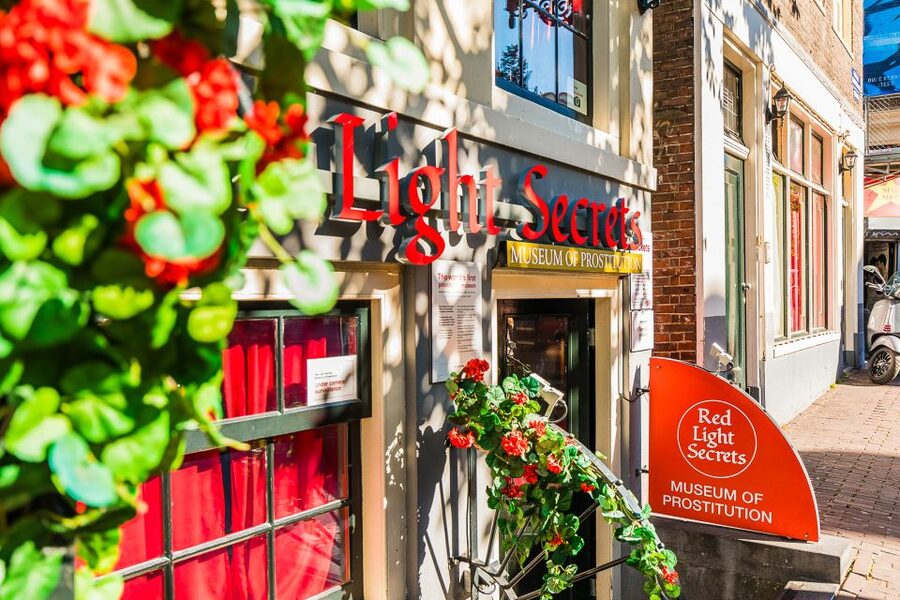
Red Light Secrets is not a conventional art museum, and it is not a guided street walk. It is a compact museum of prostitution in Amsterdam’s De Wallen district, set inside a former brothel at Oudezijds Achterburgwal 60h.
The focus is simple: show you what lies behind the windows and explain the work from the perspective of the people who do it. You move through the rooms at your own speed, using an audio guide in Dutch, English, French, German, Italian, or Spanish.
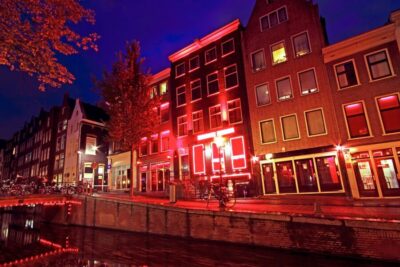
That format works well for Amsterdam’s Red Light District. The area is easy to see from the street, but the street view tells you very little about the rooms, the business arrangements, or the people behind the glass. The museum fills in those missing pieces without requiring a long lecture or a large time commitment.
I would treat it as a short, focused stop rather than a major half-day museum. Its value comes from the subject and setting, not from the size of the collection.
More Red Light District tours:
- Amsterdam: Red Light District Tour in German/English/Italian
★ 4.9 · 5,623 reviews - Amsterdam Red Light District & Coffee Shop Tour
★ 4.6 · 4,134 reviews - Amsterdam: Red Light District Pub Crawl with Unlimited Shots
★ 4.1 · 2,130 reviews
Entering a 17th-century house and former brothel
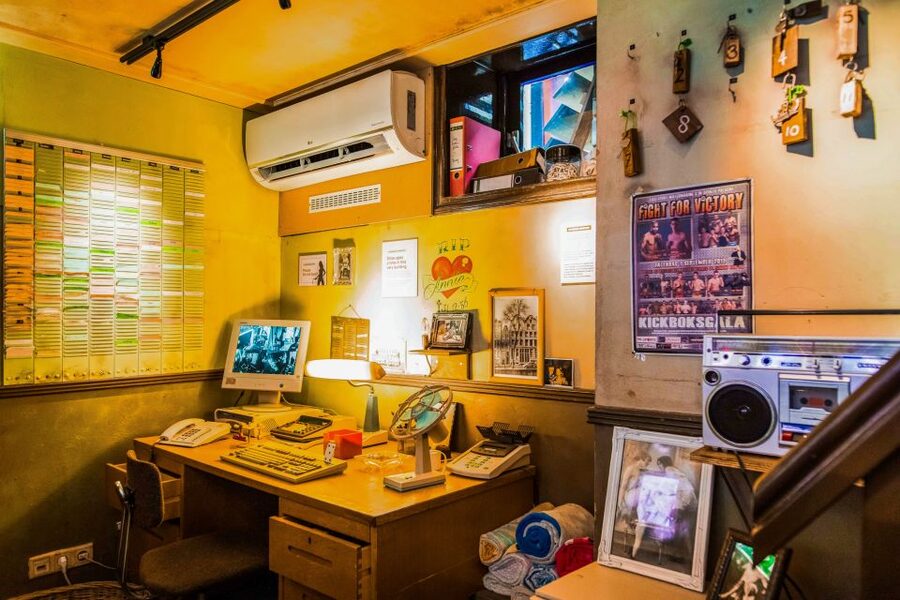
The setting does much of the teaching. You are in an old Amsterdam house that was used as a brothel, so the rooms are narrow and practical rather than designed for a polished museum display.
That matters because the workrooms feel like working spaces, not abstract exhibits. You can see the scale and arrangement of the rooms, then compare what you have seen on the street with what happens behind the window.
The museum presents the subject in a direct way. It does not ask you to treat the Red Light District as a joke, but it also avoids a heavy, solemn tone throughout. The audio and displays explain the business side, the routines, and the human choices involved.
The compact layout has a downside. When several people are inside, the rooms can feel crowded, and it may be hard to hear the audio or take a clear photograph. If you want time to read everything, give yourself room to move slowly and wait for a quieter moment.
Listening to Inga’s first-hand account
The audio guide is one of the strongest parts of the experience. Inga, described as a former sex worker, leads you through the museum and shares her experiences in a conversational voice.
Her story gives the visit a personal center. Instead of hearing only dates and official explanations, you get an account of what a working day can involve and how a sex worker may separate professional and private life.
The tone is frank and sometimes funny. That helps make difficult subjects easier to approach, but the humor does not remove the serious side. You also encounter stories about danger, exploitation, and women who have been murdered. A memorial serves as a reminder that legalization does not remove every risk.
I like that the audio guide lets you stop and continue at your own pace. You do not have to keep up with a group or wait for a guide to finish speaking. If a section feels too graphic or uncomfortable, you can move on. The museum contains some material that may be too direct for sensitive visitors.
The audio is available in six languages:
- Dutch
- English
- French
- German
- Italian
- Spanish
You receive the audio guide as part of admission. Most of the strongest comments about the museum center on this personal storytelling, so I would not rush through it just to finish quickly.
Sitting behind the famous window
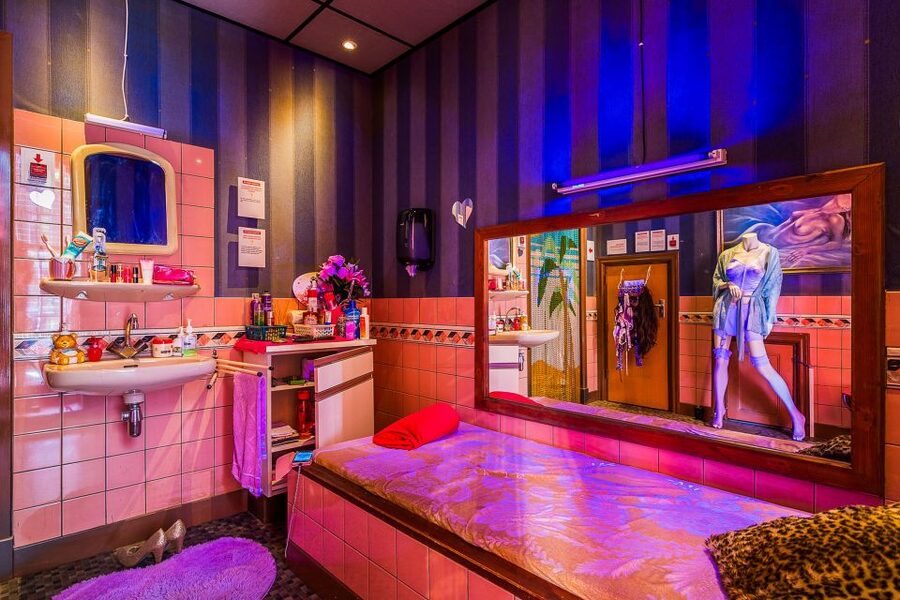
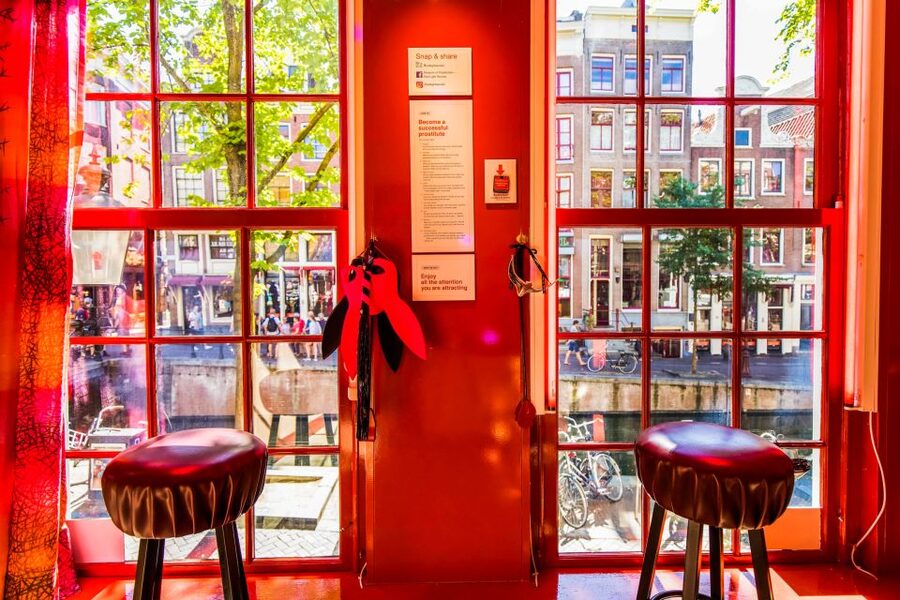
The most memorable physical feature is the window experience. You can sit in one of Amsterdam’s familiar Red Light District windows and look out from the worker’s side of the glass.
This is a small gesture, but it changes your point of view. On the street, it is easy to watch the windows as part of the district’s spectacle. Sitting inside makes you consider what it feels like to be visible, approached, and working in that small space.
It is also a good photo opportunity, though you should expect the museum to become crowded at busy times. The window is not a full simulation of the profession, and it cannot reproduce the pressures or risks of real work. It does, however, give you a clearer sense of the physical setup than a plaque or photograph would.
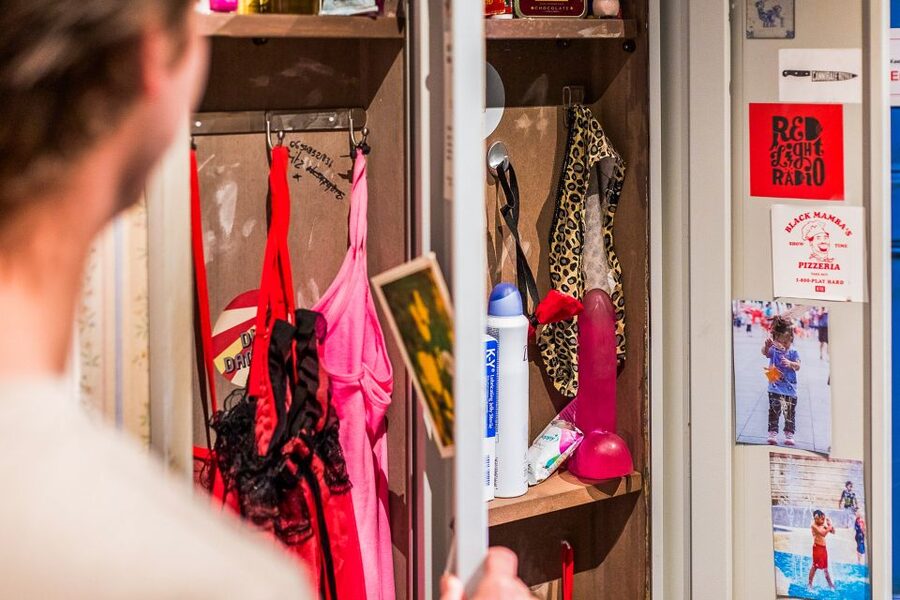
The museum also recreates rooms where sex workers work. These spaces help connect the stories in the audio to something concrete. You can see the difference between the public image of the district and the private working environment behind the door.
More museums and galleries in Amsterdam:
- Amsterdam: The Upside Down Museum Entrance Ticket
★ 4.4 · 9,506 reviews - Amsterdam’s Weirdest Museum: Believe It or Not!
★ 4.5 · 4,086 reviews - Amsterdam: Van Gogh Museum Ticket and City Canal Cruise
★ 4.6 · 3,899 reviews - Amsterdam: Van Gogh Museum Ticket & Canal Cruise
★ 4.5 · 3,304 reviews
How the museum explains legalization in 2000
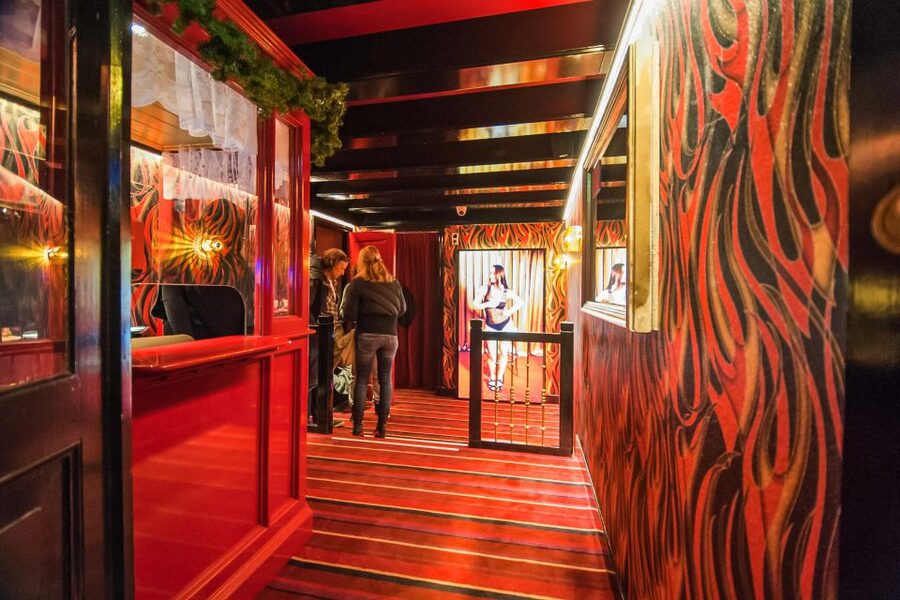
A useful part of the visit is its explanation of sex work in the Netherlands, including the legalization of prostitution in 2000.
That fact is easy to reduce to a simple slogan about Amsterdam being liberal. The museum gives you a better starting point by showing that legalization is tied to regulation, working conditions, and the attempt to make the trade safer and more visible.
You also learn how Amsterdam developed its reputation as a liberal-minded city. The museum does not turn the subject into a political lecture, but it gives enough background to help you understand why the Red Light District exists in its current form.
I found this context especially useful before spending more time in De Wallen. Without it, the windows can seem like a tourist attraction disconnected from real lives. With it, you are more likely to see the district as a working area with a long and complicated past.
The experience does not answer every question about modern sex work. It is small, and some visitors may want more detail about current regulation, exploitation, or the broader social debate. Still, it offers a clear introduction and encourages you to look at the district with more care.
The Confession Wall, funny and uncomfortable
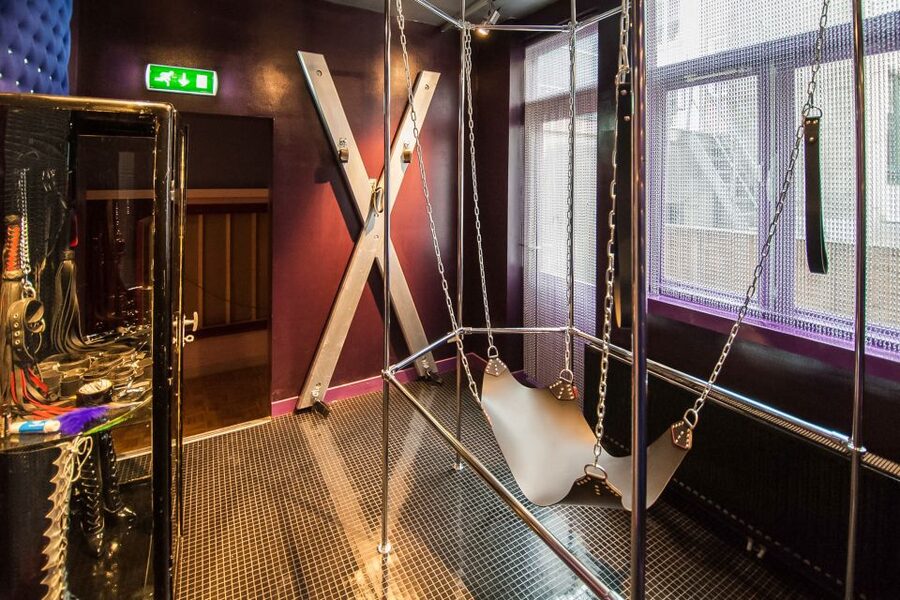
The visit ends with the Confession Wall, a collection of written confessions left by museum visitors.
This is the museum’s change of tone. After the historical information and first-hand stories, you reach a display that can be hilarious, strange, crude, or unexpectedly revealing. Some notes are clearly written for a laugh, while others show that the subject has made people think about their own attitudes and experiences.
I would not call the wall a serious historical exhibit. Its value is personal and social. It shows how people react when given a private place to write about sex, curiosity, embarrassment, and taboo.
The wall is also one reason the museum feels less formal than a standard cultural attraction. You can read a few entries, smile at the absurd ones, and move on. If you are visiting with family or younger teenagers, remember that the content is intended for adults and the museum has a minimum age of 16.
How long the visit takes
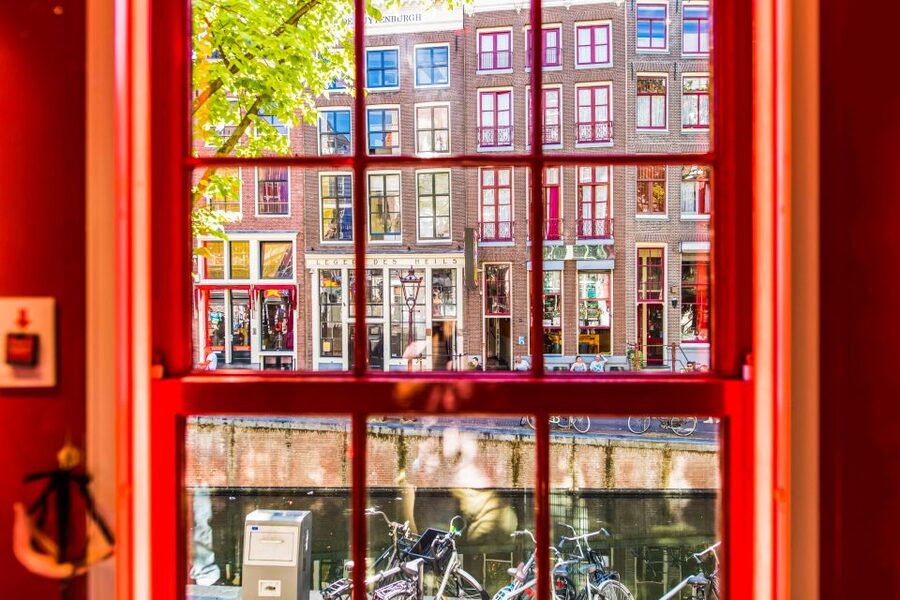
Plan on about 15 to 30 minutes inside. Some people move through in roughly 15 minutes, while others spend longer listening to the audio and reading the displays.
The ticket is valid for one day, but entry is tied to the time slot you choose. That means the one-day validity gives you flexibility around the date, not unlimited freedom to arrive whenever you wish. Check the available time before booking and arrive ready for that slot.
The short length can be a benefit. You can fit the museum between a canal walk, lunch, and other sights in central Amsterdam. It is also a sensible choice if you want an introduction to the Red Light District but do not want to spend an entire afternoon on the subject.
The drawback is value perception. At about $17 per person, the price is fair if you listen carefully and use the museum to understand the area. It may feel expensive if you rush through in 15 minutes and treat it as a quick photo stop.
I would allow at least 30 minutes in your schedule, even if you expect to finish sooner. That gives you time to collect the audio guide, wait through a crowded section, and read the Confession Wall without watching the clock.
Queues, timing, and the practical details
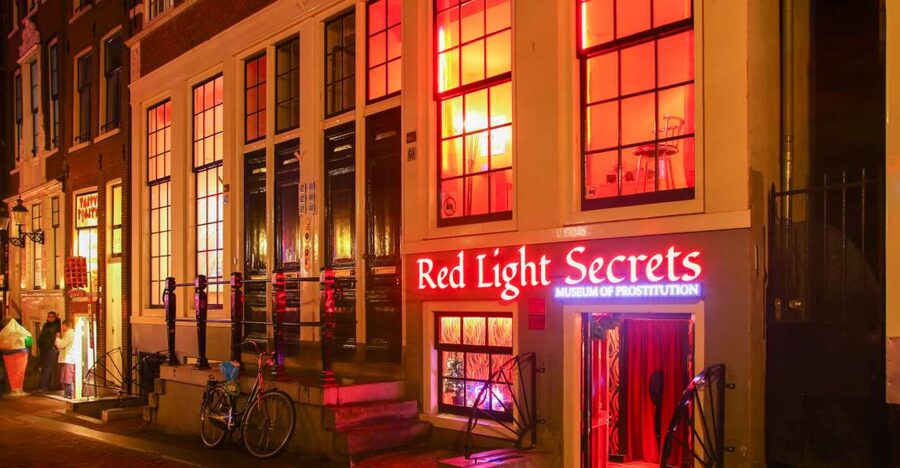
The museum is at Oudezijds Achterburgwal 60h, 1012 DP Amsterdam. Go directly to the entrance and present your voucher for scanning.
The ticket is sold as skip-the-line access, but that does not always mean you walk straight inside. A queue can form, and the entry process may be unclear when people buying tickets at the door are mixed with people who already paid. Keep your voucher ready and ask staff where your line begins.
Busy periods can affect the visit once you are inside, too. The building is small, so a full time slot may make it harder to hear the audio, read every panel, or take a picture in the window. Going early may help if you want a calmer visit, though you should still follow the time printed on your booking.
The museum is not suitable for wheelchair users. It is also restricted to visitors aged 16 and over. Those two limits are important to check before you pay.
Free cancellation is available up to 24 hours before the booked time, and you can reserve now and pay later. Those policies are useful if your Amsterdam schedule is still changing, but they do not remove the need to reserve the correct time slot.
Who will get the most from this museum
I would recommend Red Light Secrets to anyone curious about Amsterdam’s Red Light District but uncomfortable with treating it as a party backdrop.
It suits first-time visitors who want basic history before walking through De Wallen. It also works well for couples, friends, and solo visitors who prefer to explore at their own pace rather than join a group tour.
The museum is a good fit if you want:
- A short cultural stop in central Amsterdam
- A first-hand account through an audio guide
- A look inside a former brothel
- More context about legalization and regulation
- A frank but accessible introduction to sex work
- A self-guided visit in one of six languages
I would be more cautious if you want a large museum with many objects, long explanations, or a full afternoon of exhibits. The rooms are compact, and the amount of material is limited. The subject may also be uncomfortable for some people, especially the references to violence, exploitation, and murder.
This is not a place for children, and it is not a way to photograph the district without thinking about the people who work there. The museum is most useful when you approach it with curiosity and respect.
Is the $17 ticket good value?
At $17, the ticket is reasonable for Amsterdam if you use the audio guide and take time with the displays. The personal narration, former brothel setting, window experience, and legalization background give you more than a quick look at a novelty exhibit.
The price is less attractive if your only goal is to sit in the window or take a photo. The museum is brief, and some of the physical rooms are small. You are paying for interpretation and context as much as for the building itself.
I think the best value comes from combining the visit with a thoughtful walk through the surrounding district. Do the museum first, then notice the windows, canals, and streets with a better understanding of what you are seeing. The museum gives you a frame for the neighborhood, while the walk shows you the area in real life.
Should you book Red Light Secrets?
Book it if you want a compact, respectful introduction to the history and working reality of Amsterdam’s Red Light District. The audio guide featuring Inga, the chance to sit behind the glass, and the Confession Wall give the visit a clear identity.
Skip it if you need wheelchair access, dislike frank sexual subjects, or expect a large museum that takes hours. Also think twice if you will only have time for a rushed 15-minute visit during a crowded period.
For most curious visitors aged 16 and over, I consider the $17 ticket worthwhile, especially as a first stop before exploring De Wallen. Go with an open mind, listen rather than simply photograph, and give the small museum enough time to explain what you are looking at.
FAQ
Where is the Red Light Secrets Museum located?
The museum is at Oudezijds Achterburgwal 60h, 1012 DP Amsterdam, Netherlands, in Amsterdam’s Red Light District.
How long does the museum visit take?
The visit can take about 15 to 30 minutes, depending on how much time you spend listening to the audio guide and reading the displays.
What is included in the ticket?
Admission to the Red Light Secrets Museum of Prostitution and an audio guide are included.
What languages are available for the audio guide?
The audio guide is available in Dutch, English, French, German, Italian, and Spanish.
Can I enter at any time during the day?
No. You can access the museum only during your chosen time slot. The ticket is valid for one day, but the selected entry time still applies.
Is the museum suitable for children?
No. The activity is suitable only for visitors aged 16 and over.
Is the museum wheelchair accessible?
No. The experience is not suitable for wheelchair users.
Newest Amsterdam write-ups
- Zaanse Schans: Half-Day Private Guided Tour★ 5.0 · 4 reviews
- Zaanse Schans: Private Cruise + Live Guide, Optional Drinks★ 4.7 · 26 reviews
- Zaanse Schans: Wooden Shoe Painting Workshop★ 4.9 · 23 reviews
- Amsterdam: Private Zaanse Schans Windmills and Volendam Trip★ 4.9 · 31 reviews
- Zaanse Schans: Pancake Restaurant Visit★ 4.5 · 26 reviews
- Amsterdam: Zaanse Schans E-Bike Tour with Windmills & Cheese★ 4.5 · 12 reviews
- Zaandam: Paint a Perfect Portrait workshop★ 5.0 · 5 reviews
- Volendam: Volendams Museum Entry Ticket★ 4.4 · 14 reviews
Amsterdam Red Light District Tours, compared.

Red Light District Tour in German/English/Italian
Read our review →
Amsterdam Red Light District & Coffee Shop Tour
Read our review →
Red Light District Pub Crawl with Unlimited Shots
Read our review →
Private Amsterdam Red Light District and Coffee Shop Tour
Read our review →
Browse the lists this tour appears in