
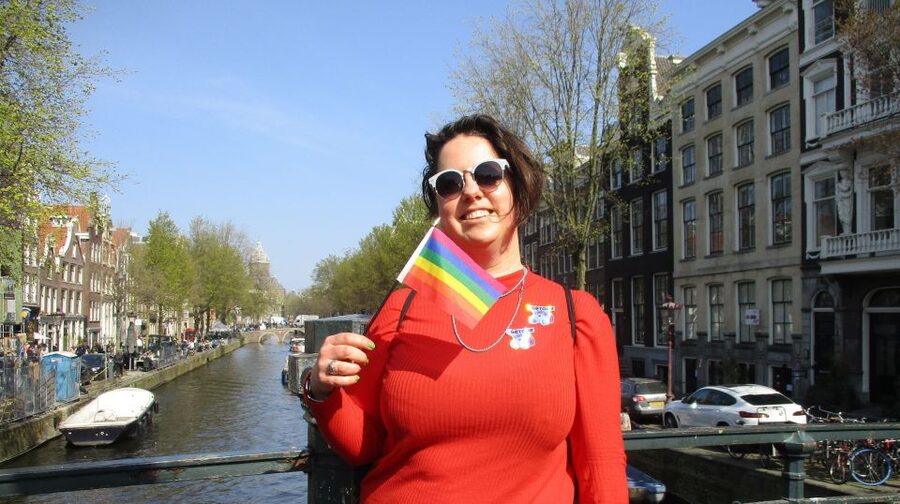
Reviewed · AMSTERDAM WALKING TOURS
Amsterdam: Queer City Walking Tour With Local Guide
Amsterdam’s queer story is written into the oldest streets of the city, but it is easy to miss if you only follow the usual canals-and-museums route. This two-hour walk with Sanne of LGBTOUR_AMSTERDAM connects public landmarks, nightlife spots, protests, personal memories, and the daily realities of queer life.
I like the personal storytelling, especially the promise of stories about love, being gay and single in Amsterdam, and the guide’s own life. I also like the route’s clear historical shape, moving from Dam Square through the Red Light District and along Zeedijk to Café ’t Mandje. The main consideration is that this is a conversation-led walking tour, not a museum visit with extensive indoor exhibits. Come ready to listen, walk, and think.
Key points at a glance
- Sanne leads with personal experience, linking Amsterdam’s queer past to present-day life.
- The Homomonument gets 20 minutes, including the controversial story behind its creation.
- The route covers old queer Amsterdam, with stops at Belle, the Condomerie, Eagle Amsterdam, Kokopelli, and Café ’t Mandje.
- The Red Light District is treated through a queer lens, rather than as a simple sightseeing stop.
- The tour ends at Café ’t Mandje, one of Amsterdam’s best-known historic queer bars.
- The $59 price buys a focused two-hour experience, with a strong emphasis on stories and context rather than entry tickets.
Amsterdam’s queer story begins at Dam Square
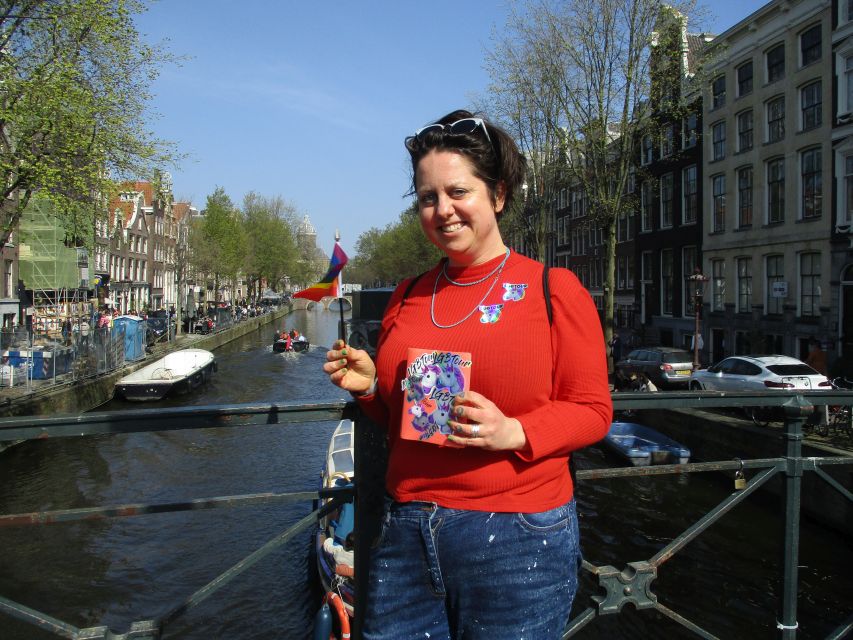
Meet Sanne at the National Monument in Dam Square. She carries a tiny rainbow flag, which gives you a simple visual marker in one of Amsterdam’s busiest public spaces.
Starting here makes sense. Dam Square brings together royal power, national memory, public protest, and everyday city life. The tour’s queer reading of Amsterdam begins by asking you to look again at familiar surroundings. Even details connected with the Royal Palace can take on a different meaning, including the unicorns that appear in its decoration and symbolism.
The opening also sets the tone. This is not a walk that treats queer life as a side note. It presents LGBTQI+ people as part of the city’s political, social, and personal story from the start.
More walking tours in Amsterdam:
- Anne Frank’s Story – Guided Walking Tour through Amsterdam
★ 5.0 · 11,619 reviews - Amsterdam: Life of Anne Frank and World War II Walking Tour
★ 4.8 · 10,467 reviews - Absolutely Amsterdam – the Essential Introductory Walking Tour
★ 5.0 · 3,629 reviews
The Homomonument and the politics of memory
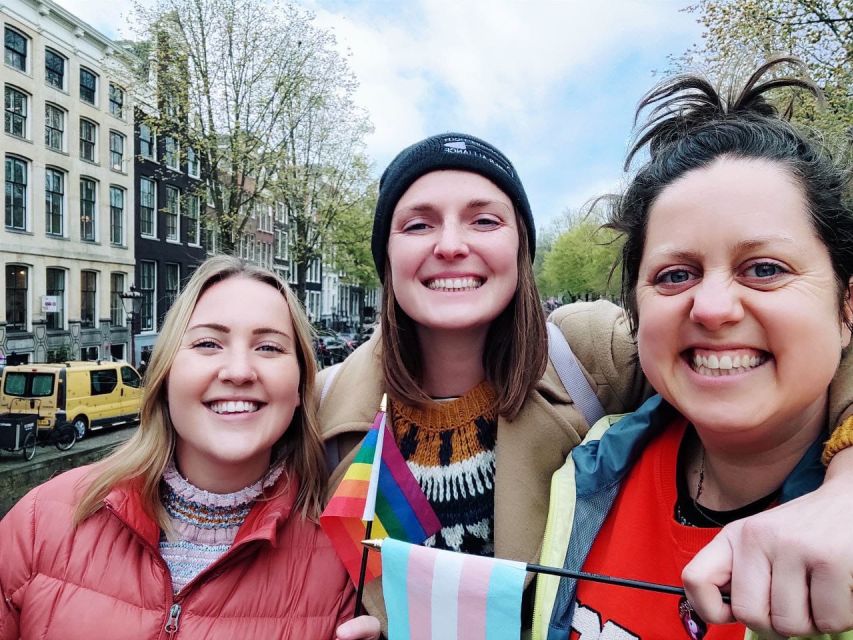
The Homomonument is the emotional center of the walk. You spend about 20 minutes here with Sanne, hearing how the monument came to be and why its creation was controversial.
The site honors gay men and women who faced persecution, with its position beside the Westerkerk making it impossible to separate queer memory from the wider history of Amsterdam. Sanne’s approach connects the monument to pride, protest, grief, and public recognition.
This stop rewards a little patience. You may be tempted to take a quick photograph and move on, but the point is the discussion. The monument is not presented as a finished answer to the past. Its story raises questions about who gets remembered, how public memorials are shaped, and what it means to claim space in a city.
If you want only dates and architectural facts, this part may feel less formal than expected. If you want to understand why the monument matters, the personal angle gives the visit more weight.
Belle, the Condomerie, and stories of survival
The next stops bring the subject closer to daily life.
At Belle, Sanne spends around 10 minutes explaining the location and its place in Amsterdam’s queer story. The route then reaches the Condomerie, where another 10-minute talk focuses on sexual health and the impact of the AIDS crisis.
The Condomerie is described as the first condom shop in the world. That detail is more than a novelty. It points to the practical side of queer history, where health, safety, pleasure, and public education were matters of urgent concern.
I appreciate this part of the tour because it keeps queer history from becoming only a story of famous people and grand celebrations. Shops, bars, street corners, and health campaigns also shaped how people lived. The stop may be uncomfortable for some families or more conservative visitors, but the subject is handled as part of social history, not as a cheap joke.
Sanne’s personal stories also fit naturally here. The walk promises stories about falling in love, living openly, and being single in Amsterdam. Those details give the larger historical points a human scale.
The Red Light District from a different angle
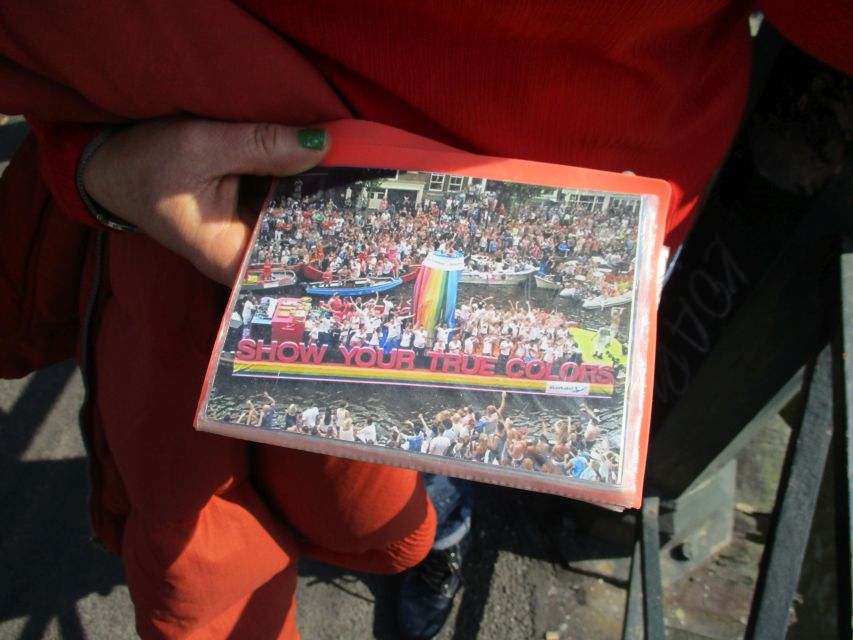
The route then enters the Amsterdam Red Light District for about 15 minutes. This is the oldest part of the city, and the tour treats it as old queer town as well as a famous nightlife zone.
That shift in viewpoint is one of the strongest reasons to book. Most people arrive in this area with a narrow picture in mind. Sanne instead points you toward the queer people, businesses, meeting places, and social changes connected with these streets.
The Red Light District is also where the tour’s limits become clear. Fifteen minutes is enough for an introduction, not a full history of the neighborhood. You will not receive an exhaustive account of every venue or period. What you get is a focused queer perspective that may change how you see the area on the rest of your Amsterdam visit.
The walk passes Eagle Amsterdam, a well-known queer venue, for about five minutes. You do not need to expect a long interior visit here. It is a brief point along the route, useful for placing nightlife within the city’s wider queer geography.
Same city, a completely different afternoon:
- Amsterdam Classic Saloon Boat Cruise with Drinks and Cheese
★ 5.0 · 31,825 reviews - Amsterdam Luxury Canal Cruise + Unlimited Drinks & Bites option
★ 5.0 · 30,518 reviews - Amsterdam: Heineken Experience Ticket
★ 4.6 · 30,055 reviews - Amsterdam: Rijksmuseum Entry Ticket
★ 4.7 · 25,535 reviews
Zeedijk, Pride, and the life of the street
The group then walks for about 15 minutes along Zeedijk Street. This stretch helps connect the concentrated Red Light District stops with the broader old center.
Sanne’s themes include Amsterdam Pride and the city’s history of protest. Pride here is associated with the canals, where the annual celebration takes place, but the tour also presents Pride as political action. That balance matters. It is easy to see the parade as a colorful party and miss the demands, risks, and earlier struggles behind it.
You will also pass Pride Clothing, another short stop of about five minutes. The route does not suggest a long shopping visit, so treat this as a street-level reference point rather than a retail break.
The walk is likely most useful for people who want connections between places. One bar or monument alone tells only part of the story. Moving through several streets helps you see queer life as something tied to work, nightlife, health, protest, friendship, and public space.
Kokopelli and the tour’s more playful side
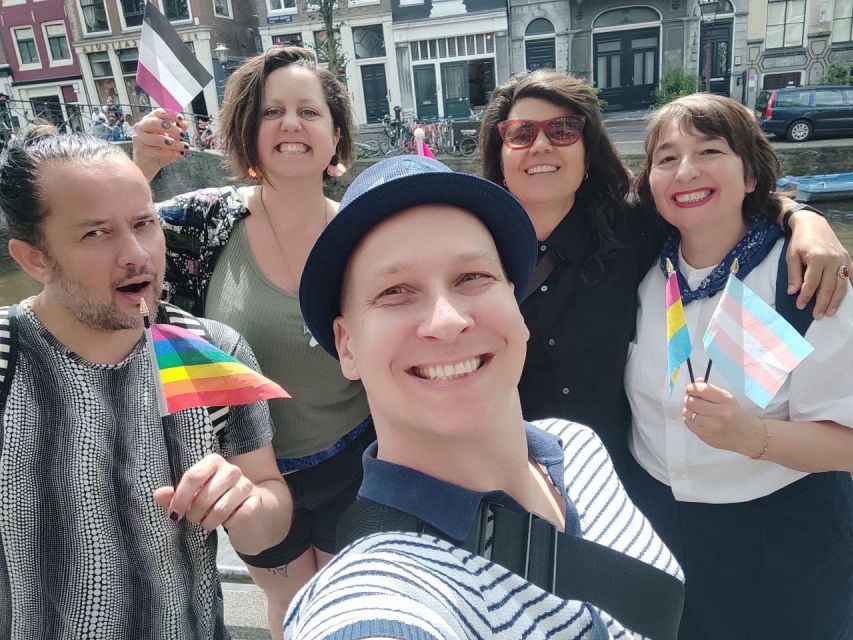
Kokopelli receives about 10 minutes of guided attention. It adds another layer to the route and keeps the experience from becoming a solemn procession from monument to monument.
The walk includes humor, unusual details, and questions about how the least expected people and places connect. That is where Sanne’s personality matters. The five-star feedback describes her as caring, warm, and highly informed, while another comment praises the personal connection she creates. Those qualities sound central to the experience, not incidental extras.
Still, you should know what kind of guide this is. Sanne is not simply pointing at buildings and reciting dates. She is asking you to see Amsterdam through a queer lens and to connect your own experiences with the stories being shared. Some people will find that open format moving. Others may prefer a more traditional history tour.
The Dancing Houses and a final photo stop
The Dancing Houses provide a 10-minute photo stop. These narrow canal houses are among Amsterdam’s most recognizable views, and their leaning façades offer a lighter visual pause after the heavier subjects of memory, protest, and the AIDS crisis.
The stop also reinforces one of the tour’s main ideas: queer history does not sit apart from the rest of Amsterdam. It appears in the postcard views, historic streets, commercial buildings, royal symbols, and ordinary public places.
You should bring comfortable shoes. The route covers old streets and includes roughly two hours of walking, with stops for discussion. The tour takes place rain or shine, so pack rain gear, sunscreen, and a sun hat as the day requires. Comfortable clothing will make the experience easier, especially if you plan to continue exploring on foot afterward.
Finishing at Café ’t Mandje
The walk ends outside Café ’t Mandje, described as the oldest queer bar. This is a fitting final stop because the café represents the social side of the story. After monuments and protests, you finish at a place associated with meeting, nightlife, and community.
Do not treat the ending as just a convenient drop-off point. It gives you a practical next step. You can pause there, continue your own evening, or use Sanne’s personal list of LGBTQI+ events, venues, and favorite Amsterdam spots to plan more time in the city.
The tour does not promise a meal or a drink, so budget separately if you want to stay at the café. The value is in reaching the location with context, rather than simply finding it on a map.
What $59 gets you
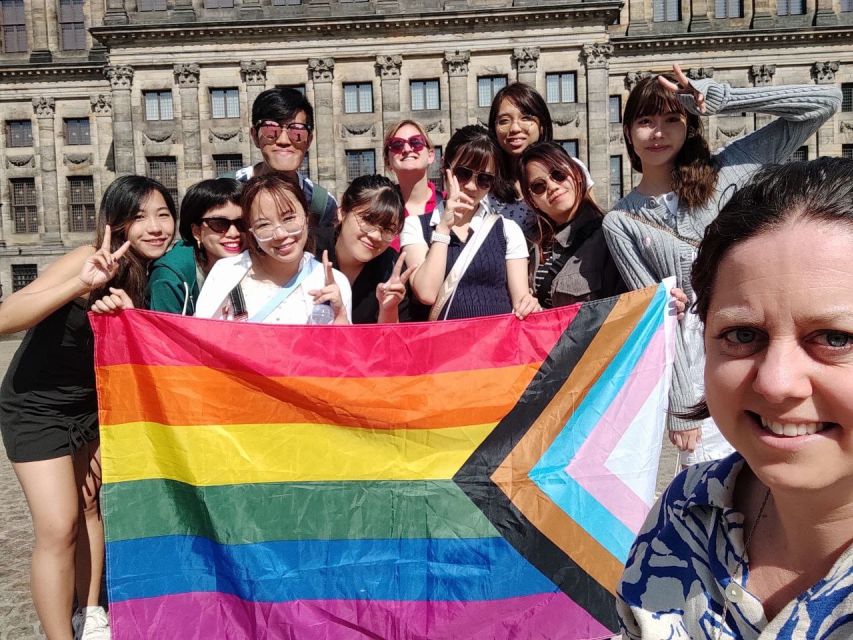
At $59 per person, this is not the cheapest way to spend two hours in Amsterdam. You are paying for a specialist subject, a live guide, and a carefully connected route through the historic center. The experience does not appear to include admission to major attractions, food, or drinks.
The price makes the most sense if you want a focused queer history walk and would otherwise spend time searching for these places yourself. Sanne supplies the route, the links between locations, and the personal perspective that a self-guided walk would lack.
It is less compelling if you want a broad general history of Amsterdam or a tour packed with indoor visits. The route’s strength is interpretation. You pay for stories and connection, not a long list of included tickets.
The booking terms also reduce some of the risk. You can cancel up to 24 hours before the start for a full refund, and you can reserve now and pay later. The activity is listed as wheelchair accessible, though the provided details do not explain the exact street conditions or restroom arrangements.
Who will enjoy this walk most
I would choose this tour if you want:
- A clear LGBTQI+ perspective on Amsterdam
- Personal stories alongside historical background
- A small-group rainbow experience
- A walk through the old center and Red Light District
- Ideas for queer venues and events after the tour
- A welcoming setting for queer people and allies
- A guide who invites conversation rather than delivering only a memorized speech
It should suit solo visitors, couples, friends, and people meeting queer and allied participants from around the world. The tour also welcomes anyone who supports the idea that the rainbow is for everyone.
You may want another type of tour if you dislike discussions about identity, protest, sexual health, or personal relationships. The subject matter is central to the walk. It is not a neutral sightseeing circuit with a rainbow label added at the end.
The tour runs in English or Dutch. The full experience lasts two hours, so it is easy to fit into a day of sightseeing. Check the available start times when booking, since the exact departure schedule is not fixed in the information provided.
Should you book the Queer City Walking Tour?
Book it if you want Amsterdam to feel more personal and less like a collection of famous views. Sanne’s route links the Homomonument, the Condomerie, the Red Light District, Zeedijk, nightlife venues, and Café ’t Mandje into one story about identity, public space, love, health, protest, and belonging.
The strongest reason to go is the guide’s personal approach. The five-star score from 24 ratings supports the impression that Sanne’s care and connection are major parts of the experience. Just keep your expectations in the right place: this is a two-hour walking conversation, not a full museum course or an evening inside every venue.
For queer visitors, allies, and anyone who wants to understand a less often told side of Amsterdam, the $59 cost is reasonable. Wear shoes for walking, carry weather protection, and arrive at the National Monument with room in your schedule for a thoughtful, sometimes serious, and distinctly human look at the city.
FAQ
Where does the Queer City Walking Tour start?
The tour starts at the National Monument in Dam Square. You can identify Sanne by her tiny rainbow flag.
Where does the tour finish?
The walk finishes at Café ’t Mandje, described as the oldest queer bar.
How long does the tour last?
The tour lasts two hours.
What languages are available?
The live tour guide speaks English and Dutch.
Is the tour wheelchair accessible?
Yes, the activity is listed as wheelchair accessible.
Does the tour run in bad weather?
Yes. The tour takes place rain or shine, so bring suitable rain gear and wear comfortable clothing.
What should I bring?
Bring comfortable shoes, a sun hat, sunscreen, rain gear, and comfortable clothes.
Newest Amsterdam write-ups
- Zaanse Schans: Half-Day Private Guided Tour★ 5.0 · 4 reviews
- Zaanse Schans: Private Cruise + Live Guide, Optional Drinks★ 4.7 · 26 reviews
- Zaanse Schans: Wooden Shoe Painting Workshop★ 4.9 · 23 reviews
- Amsterdam: Private Zaanse Schans Windmills and Volendam Trip★ 4.9 · 31 reviews
- Zaanse Schans: Pancake Restaurant Visit★ 4.5 · 26 reviews
- Amsterdam: Zaanse Schans E-Bike Tour with Windmills & Cheese★ 4.5 · 12 reviews
- Zaandam: Paint a Perfect Portrait workshop★ 5.0 · 5 reviews
- Amsterdam Central Walking Tour★ 4.9 · 11 reviews
Amsterdam Walking Tours, compared.
Anne Frank’s Story – Guided Walking Tour through Amsterdam
Read our review →
Life of Anne Frank and World War II Walking Tour
Read our review →
Absolutely Amsterdam – the Essential Introductory Walking Tour
Read our review →
Anne Frank Walking Tour – Guided in EN/DE/IT/ES
Read our review →

Anne Frank Walking Tour Amsterdam Including Jewish Cultural Quarter
Read our review →Browse the lists this tour appears in