
Reviewed · AMSTERDAM WALKING TOURS
Amsterdam Central Walking Tour
Amsterdam’s story is written into its crooked houses, narrow canals, old bridges, and working-class streets. This two-hour walk with Yellow Bike takes you from the city’s oldest quarter through the Westerlijke Wallen, Jordaan, Negen Straatjes, and Spui, mixing famous sights with less polished chapters about squatting, protest, religion, trade, and LGBTQ+ rights.
I like the small groups of up to 12 people, since you can hear the guide without fighting for space on a busy pavement. I also like the stop at a traditional brown café, plus the chance to hear local stories from guides such as Willem and Sid. The main drawback is the pace: two hours covers a lot, so some stops receive only a short explanation rather than a full treatment.
Key points to know before you book
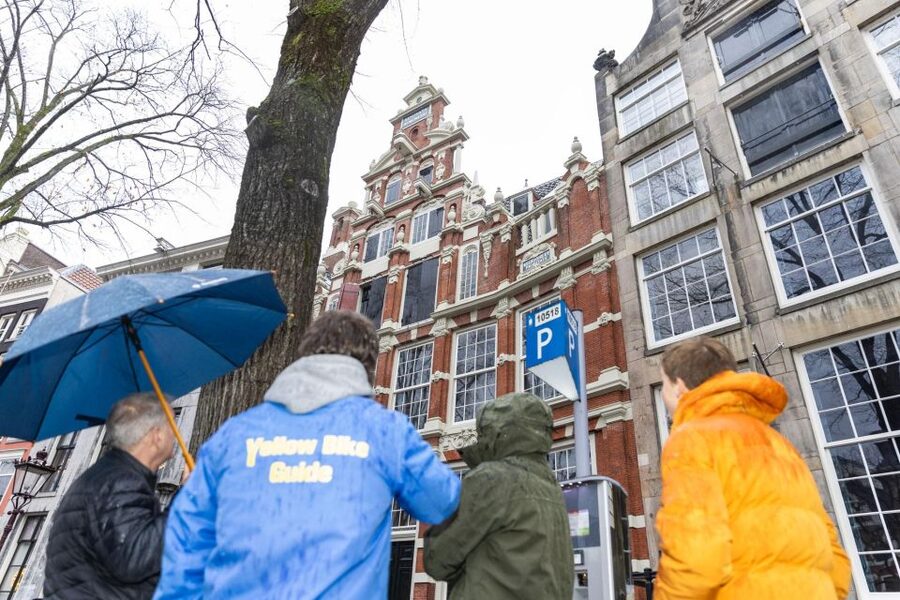
- The route covers both famous sights and local politics, including the Anne Frank House, Westertoren, Provo movement, and Amsterdam’s squatting past.
- Groups are capped at 12 people, and they are often smaller.
- Willem and Sid are named guides associated with especially engaging tours, with Willem praised for his English, humor, and broad knowledge of history, politics, and religion.
- The café break is atmospheric but not included, so bring money for your own drink.
- The tour runs in rain or shine, making warm clothing and comfortable shoes essential in winter.
- The $26 price is fair for a two-hour orientation walk, especially if you want context before exploring Amsterdam on your own.
Starting at Nieuwezijds Kolk and entering old Amsterdam
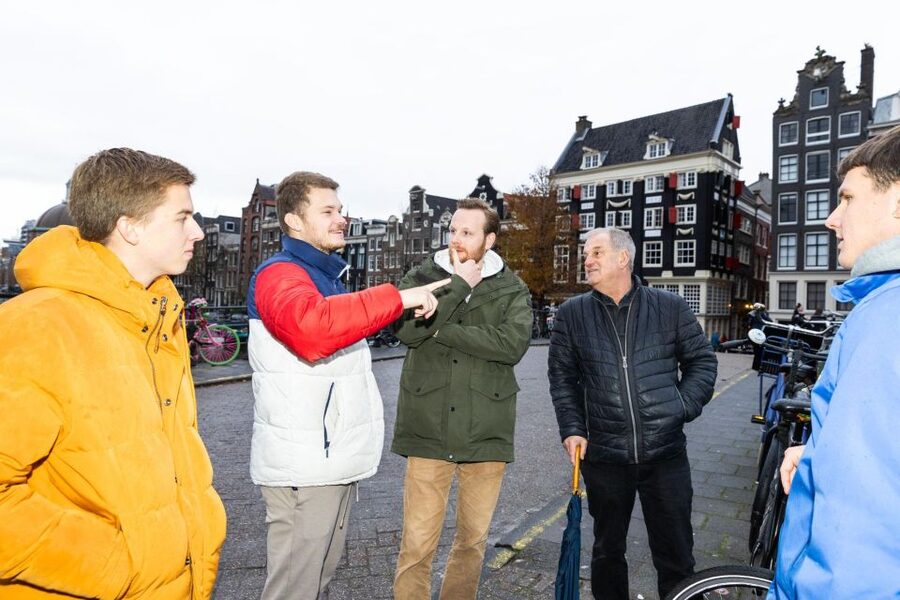
You meet at Yellow Bike on Nieuwezijds Kolk 29. Check in at the counter, then set off on foot into the oldest part of central Amsterdam.
This is a useful location for a first walk because you begin close to the city’s historic core rather than spending half the tour getting there. The route returns to the same place at the end, and free luggage storage is included, which helps if you are arriving before check-in or leaving Amsterdam later that day.
The opening section introduces Amsterdam as a city built around water, trade, and tight urban space. You’ll see why the houses lean and why so many buildings sit on wooden poles. The tilted façades are not simply charming oddities. They reflect centuries of building on soft ground, narrow plots, and the practical need to move goods through upper windows.
I find this kind of introduction useful because it gives the rest of the walk a clear frame. Amsterdam’s canals are attractive, but they also tell a story about engineering, money, trade, and constant efforts to keep the sea and waterways under control.
More walking tours in Amsterdam:
- Anne Frank’s Story – Guided Walking Tour through Amsterdam
★ 5.0 · 11,619 reviews - Amsterdam: Life of Anne Frank and World War II Walking Tour
★ 4.8 · 10,467 reviews - Absolutely Amsterdam – the Essential Introductory Walking Tour
★ 5.0 · 3,629 reviews
Westerlijke Wallen and the rules of the Red Light District
The tour passes through the Westerlijke Wallen, part of Amsterdam’s Red Light District. The emphasis here is on respect and understanding, not gawking.
You will be reminded that photography is not appropriate and that you should not linger. That guidance matters. This is a working neighborhood as well as a famous sightseeing area, and the short explanation helps you approach it with some awareness instead of treating it like a stage set.
The route then moves toward the Nieuwe Haarlemmersluis, where you learn how Amsterdam has dealt with seawater entering the canal system. It is a small but useful stop because it shows how the city’s water management is not just an old story. Amsterdam’s relationship with water remains part of daily life.
The discussion of herring trade adds another layer. Herring was an important part of Amsterdam’s commercial past, and the subject helps explain how food, shipping, and trade helped the city grow.
Koepelkerk, Brouwersgracht, and the city’s drinking past
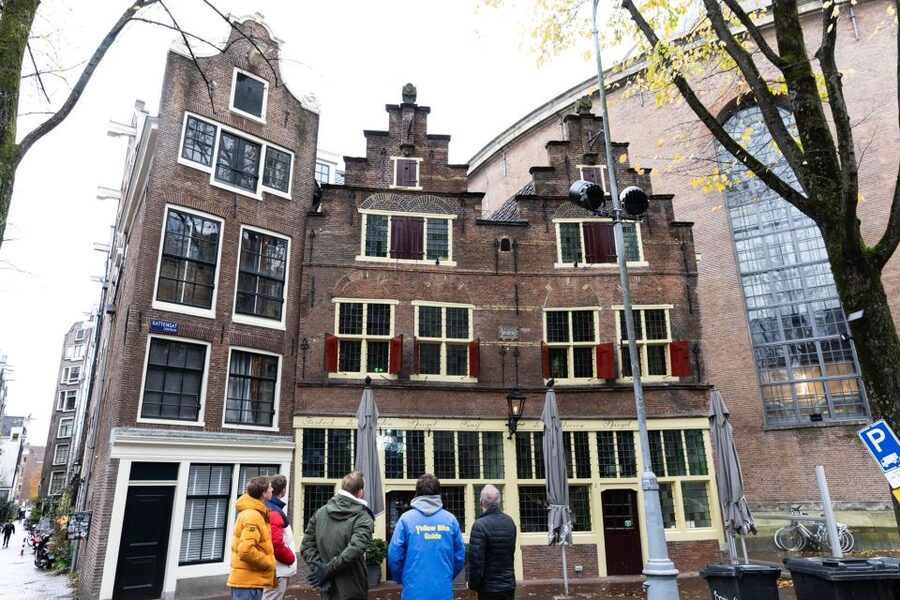
At Koepelkerk, the copper-clad Lutheran church provides a striking change from the canal houses. The guide explains the church’s connection to a major fire and Amsterdam’s ability to recover after disaster.
From there, the route reaches Brouwersgracht. Here the story turns to grain supplies, breweries, and the reason Amsterdam gained a reputation as the Booze Capital. This is the kind of detail that makes the city feel less like a collection of pretty façades and more like a place shaped by work and commerce.
You should expect a walking tour, not a church interior visit or a long architectural lecture. The value is in seeing the building while hearing why it mattered. If you want extended time inside historic churches, this tour will not provide it.
Bridges, prison cells, and an exceptional canal house
The Jan Roodenpoortstoren area brings one of the route’s more unusual stories. Beneath the bridge are historic prison cells, giving you a glimpse of how civic life once operated below street level.
The tour then reaches Torensluis, described as Amsterdam’s oldest bridge and once part of the city’s defensive wall. Bridges can blur together when you are walking through central Amsterdam, so this kind of background helps you notice what you are crossing instead of merely using it to reach the next canal.
At Bartolotti House, the focus shifts to one of the city’s grandest mansions. Its elegant front offers a sharp contrast with the narrow merchant houses around it. The contrast is worth noticing: Amsterdam’s canal belt was never socially uniform. Wealthy owners, workers, traders, brewers, and renters all left their mark on the same compact city.
Same city, a completely different afternoon:
- Amsterdam Classic Saloon Boat Cruise with Drinks and Cheese
★ 5.0 · 31,825 reviews - Amsterdam Luxury Canal Cruise + Unlimited Drinks & Bites option
★ 5.0 · 30,518 reviews - Amsterdam: Heineken Experience Ticket
★ 4.6 · 30,055 reviews - Amsterdam: Rijksmuseum Entry Ticket
★ 4.7 · 25,535 reviews
The Gay Monument and Amsterdam’s changing social story
The Gay Monument adds a modern social chapter to the walk. You learn about the Dutch LGBTQ+ community’s struggles and gains, including the significance of the site linked with the world’s first gay marriage.
This stop is valuable because it widens the tour beyond old buildings and commercial history. Amsterdam’s identity has also been shaped by social movements and changes in law. The guide connects a physical place with the people and campaigns that gave it meaning.
The tour also covers squatting history along Spuistraat. This is one of the more recent and political parts of the route, and it may appeal to you if you like hearing how residents challenged property use and urban authority. It also gives you a more complicated picture of Amsterdam than the postcard version of canals and bicycles.
Anne Frank House and the shadow of World War II
The route includes the Anne Frank House, though the walk does not include entry to the museum. You will hear about Anne Frank, her diary, and the painful history of Amsterdam during World War II.
This is a reflective part of the walk. The guide’s role is to give context and point out the location, while the museum itself requires a separate ticket and visit if you want to see the interior. Do not book this tour expecting it to replace a dedicated Anne Frank House visit.
The nearby Westertoren is another major landmark. At Amsterdam’s tallest church tower, the guide explains its place in the city’s history and skyline. The tower is especially useful as a visual marker because it helps you understand how the center is arranged around its canals and old neighborhoods.
A brown café break in the middle of the walk
The café stop is one of the tour’s appealing touches. You pause at a traditional Dutch brown café, the sort of low-key pub that gives you a feel for local social life.
Drinks are not included, so budget separately for your beverage. The break also makes the two-hour walk easier, especially in winter. One practical point: do not assume this is a long sit-down meal stop. The information provided describes a break for drinks, not lunch.
The timing can matter. A winter afternoon may be cold and wet, but the café pause gives you a chance to warm up before continuing. One January participant found the guide engaging even after the tour ran for about an hour and 45 minutes, which suggests that the route may finish slightly short of the advertised two hours on some occasions.
Negen Straatjes and the working-class Jordaan
The walk continues through the Negen Straatjes, or Nine Streets. Today, the area is known for boutiques and cafés, but the guide explains its earlier connection with artisans and small workshops.
This is a good place to notice how Amsterdam’s neighborhoods change over time. The same narrow streets can serve different social roles across generations. You get the pleasant shopping area, but also some context for how it developed.
The itinerary also includes the Jordaan, once a working-class neighborhood. That background helps balance the polished image of the canal belt. You see how ordinary residents and tradespeople shaped the character of central Amsterdam, not just the wealthy merchants who built the grander homes.
The group size matters here. With no more than 12 people, you can usually stay together without turning the tour into a moving crowd. Still, central Amsterdam has narrow pavements and busy streets, so you should be ready to keep moving and listen closely.
Spui, Provo, Kalverstraat, and Dam Square
At Spui, the guide explains the Provo movement, student protests, and civil resistance. The Provo statue provides a physical marker for a period when young people challenged established political and social habits.
This is one of the tour’s best subjects if you enjoy modern history. It shows that Amsterdam’s public spaces have long been used for argument, protest, and cultural change. The guide may also connect the area with current local issues, as Willem did on one highly praised tour.
From Spui, the route passes Kalverstraat, the Netherlands’ best-known shopping street. The contrast is clear: one moment you are discussing protest and counterculture, and the next you are walking along a major retail street.
The tour ends at Dam Square before returning to Yellow Bike at Nieuwezijds Kolk. Ending here gives you a central point from which to continue exploring, but remember that the official finish is back at the starting location. You should allow enough time to walk back with the group.
What the guides add to the experience
The guide can make or break a walking tour, and the strongest part of this experience is the human storytelling. Willem is praised for clear English, humor, and the ability to move between old history, politics, religion, and current local issues. Sid led one tour that became private when no other participants joined.
That small-group or private feel can make a major difference. You can ask more questions, hear the answer, and adjust the conversation to your interests. One Dutch-language participant described the walk as disorganized and light on information, so the experience may vary by guide and group.
The available feedback is still strongly positive overall, with a 4.9 rating from 11 reviews. The repeated praise focuses on informative guides, excellent English, enjoyable storytelling, and a good introduction to Amsterdam. I would book this for the guide-led context, not simply for the number of landmarks checked off.
Is $26 a fair price?
At $26 per person, the tour sits in a reasonable range for a two-hour guided walk in central Amsterdam. You are paying for a local guide, a compact route through several major areas, a café pause, and free luggage storage.
The value is strongest if this is your first visit or if you want help understanding the city before exploring alone. In two hours, you can identify places to revisit, learn how the canals and houses fit together, and hear about subjects that are easy to miss when you only take photographs.
The value is weaker if you want museum entry, long stops at each landmark, or a quiet architectural study. The Anne Frank House, for example, is seen from the outside as part of the route. Drinks at the café also cost extra.
Weather, clothing, and walking comfort
The tour runs rain or shine. In winter, bring warm clothing, a hat, gloves, scarf, and comfortable shoes. Amsterdam’s cobblestones and wet streets can make poor footwear a nuisance within minutes.
The activity information says the tour is wheelchair accessible, but it also says it is not suitable for people with mobility impairments. That is an important inconsistency. If you need step-free access or have difficulty walking for two hours, contact Yellow Bike before booking and ask about the exact route and conditions.
The walk is most suitable for people who can keep moving through central streets and stand or walk during outdoor explanations. The café stop offers a pause, but it should not be treated as a full rest period.
Who should book this Amsterdam walk?
I would choose this tour if you want:
- A first look at central Amsterdam with a local guide
- Small groups rather than a large city tour
- A mix of famous sights and social history
- Stories about squatting, protest, trade, religion, and LGBTQ+ rights
- A winter-friendly route with a café break
- Practical orientation before independent sightseeing
I would look elsewhere if you want museum entry, a specialist art tour, a long food stop, or a route designed for limited mobility. The tour covers many subjects quickly, so you need to enjoy variety and accept that some stories will be brief.
Should you book the Amsterdam Central Walking Tour?
Book it if you want Amsterdam explained rather than simply photographed. The route brings together crooked houses, canals, churches, bridges, the Anne Frank House, Westertoren, Jordaan, Negen Straatjes, Spui, and Dam Square, while also making room for less comfortable subjects such as the Red Light District, squatting, wartime memory, and civil protest.
The strongest reason to choose it is the guide. Willem and Sid show how much personality can shape a walking tour, and a small group gives you a better chance to ask questions. Just dress for the weather, budget for your café drink, and remember that two hours means a broad introduction rather than an in-depth visit to every stop.
FAQ
Where does the Amsterdam Central Walking Tour start?
The tour starts at Yellow Bike, Nieuwezijds Kolk 29. Look for the Yellow Bike sign and check in at the counter.
Where does the tour finish?
The route ends at Dam Square, followed by a walk back to Yellow Bike at Nieuwezijds Kolk 29.
How long is the walking tour?
The scheduled duration is two hours. One tour finished after about one hour and 45 minutes.
What languages are available?
The live guide speaks Dutch or English.
Is a café drink included?
No. The tour includes a break at a traditional Dutch café, but beverages are not included in the price.
What should I bring?
Bring comfortable shoes and warm clothing. A hat, gloves, and scarf are recommended, especially for a winter walk.
Can I cancel the booking?
Yes. You can cancel up to 24 hours in advance for a full refund. You can also reserve now and pay later.
Newest Amsterdam write-ups
- Amsterdam: Private Zaanse Schans Windmills and Volendam Trip★ 4.9 · 31 reviews
- Zaanse Schans: Pancake Restaurant Visit★ 4.5 · 26 reviews
- Amsterdam: Zaanse Schans E-Bike Tour with Windmills & Cheese★ 4.5 · 12 reviews
- Zaandam: Paint a Perfect Portrait workshop★ 5.0 · 5 reviews
- Volendam: Volendams Museum Entry Ticket★ 4.4 · 14 reviews
- Volendam: Stroopwafel Experience with Tasting★ 3.6 · 93 reviews
- Volendam: Traditional Costume Photo with Cheese & Clog Tour★ 4.5 · 151 reviews
- Volendam: Photo Opportunity in Traditional Dutch Costume★ 4.3 · 62 reviews
Amsterdam Walking Tours, compared.

Anne Frank’s Story – Guided Walking Tour through Amsterdam
Read our review →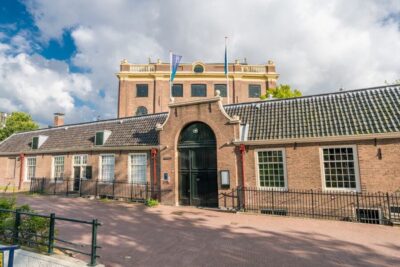
Life of Anne Frank and World War II Walking Tour
Read our review →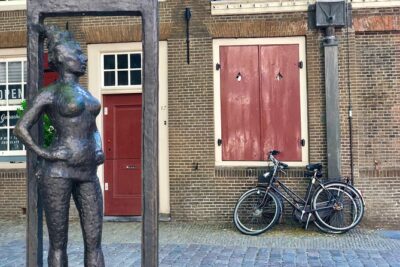
Absolutely Amsterdam – the Essential Introductory Walking Tour
Read our review →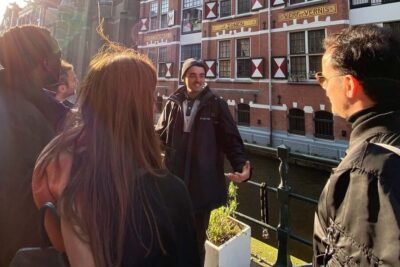

Anne Frank Walking Tour – Guided in EN/DE/IT/ES
Read our review →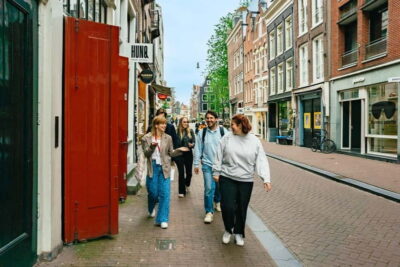

Anne Frank Walking Tour Amsterdam Including Jewish Cultural Quarter
Read our review →Browse the lists this tour appears in