

Reviewed · ANNE FRANK WALKING TOURS
Amsterdam: Anne Frank Walking Tour – Guided in EN/DE/IT/ES
Amsterdam’s Jewish Quarter is best understood on foot, where grand buildings, memorial stones, synagogues, and quiet canals sit beside the everyday city. This two-hour walk links that setting to Anne Frank’s life through selected passages from her diary, while also explaining the wider story of Amsterdam’s Jewish community before, during, and after World War II.
I like the way the tour gives Anne Frank’s story a wider setting, rather than treating her as an isolated figure. I also like the route’s mix of major memorials and smaller details, from the Portuguese Synagogue to Stolpersteine and the old plague cemetery gate. The main consideration is simple: this tour does not visit or even pass the Anne Frank House, and two hours of walking covers about 2 to 3 kilometers.
Key points at a glance

- Diary passages add a personal voice: Your guide uses excerpts from Anne Frank’s diary to connect individual experience with the history of Amsterdam’s Jewish community.
- The route covers major wartime memorials: You visit the Auschwitz Monument, the Dokwerker, and the National Holocaust Names Monument.
- Amsterdam’s Jewish Quarter comes first: The walk explains why Jewish residents settled here and how they influenced the city’s buildings, business, and culture.
- Resistance is part of the story: You hear about the February Strike and the risks taken by Jewish and non-Jewish members of the Dutch resistance.
- Four language choices are available: Tours run in English, German, Italian, or Spanish, with only one language used per tour.
- The price is modest for a guided history walk: At $28 per person, the value comes from the guide’s storytelling and context, not from paid admissions.
Starting at De Waag in Nieuwmarkt
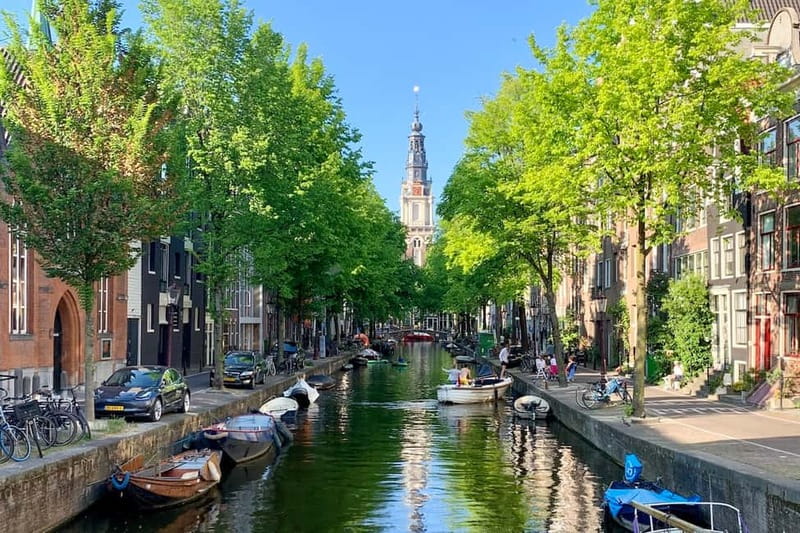
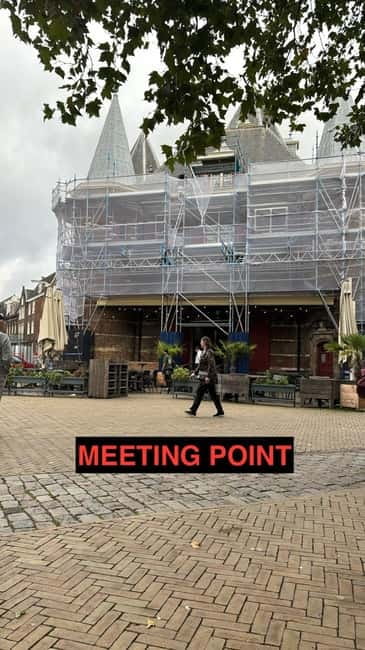
Meet your guide at the entrance to De Waag, the castle-like historic building in the middle of Nieuwmarkt. Look for a guide wearing a red name tag around the neck.
There is one useful meeting-point warning. Google Maps can send you to the rear of the building. If you see the Jolly Joker coffeeshop, you are on the wrong side. Walk around De Waag to find the main entrance.
This is a good place to begin because Nieuwmarkt sits at the edge of Amsterdam’s old Jewish Quarter. You are not starting with a long lecture in an anonymous street. You begin among historic architecture and a busy public square, then move into streets where the city’s Jewish past is still marked by buildings, memorials, and stones set into the pavement.
The guide sets the tone for the rest of the walk. Guides such as Valentina, Josh, Emilia, Julia, Charlotte, Deborah, Lili, Bianca, and David have been praised for clear storytelling, careful pacing, and thoughtful readings from Anne’s diary. Your guide will depend on the date and language you select, but the strongest part of the experience is the same: history is explained at the places where it happened.
More Anne Frank walking tours:
- Anne Frank’s Story – Guided Walking Tour through Amsterdam
★ 5.0 · 11,619 reviews - Amsterdam: Life of Anne Frank and World War II Walking Tour
★ 4.8 · 10,467 reviews - Amsterdam: Anne Frank Guided Small Group Walking Tour
★ 4.8 · 2,722 reviews
Nieuwmarkt and Zuiderkerk: setting the Jewish Quarter
The first stop is Nieuwmarkt Square, followed by Zuiderkerk. These opening stops help explain the shape of the old neighborhood before the tour turns fully toward wartime memory.
Amsterdam’s Jewish population grew after Jews expelled by the Spanish Inquisition settled in the Netherlands. Jewish residents helped build Amsterdam into an important commercial center, and their presence left a mark on the city’s streets and buildings. The tour explains why this particular part of Amsterdam became the Jodenbuurt, or Jewish Quarter, and why the Jewish Triangle became its best-known section.
At Zuiderkerk, you get a sense of how Jewish and non-Jewish Amsterdam existed side by side. This was not a sealed-off district with no connection to the rest of the city. It was part of Amsterdam’s daily life, with work, worship, housing, trade, and neighbors all close together.
The guide may also put the district’s history into present-day context. That matters because the wartime story is easier to understand when you first see the community as a living part of Amsterdam, rather than as a population defined only by its destruction.
Huis de Pinto and Rembrandt’s Jewish neighbors

The brief stop at Huis de Pinto gives the walk another architectural reference point. The house is connected with the Jewish Quarter and helps show the sort of substantial homes found in the area.
Next comes the Rembrandt House, where the tour spends about 15 minutes. Rembrandt van Rijn lived in the middle of the Jewish Quarter, a useful reminder that the neighborhood was also home to famous non-Jewish residents. The connection is not just a name-drop. It helps you see the quarter as a mixed urban district, not a separate world.
This is one of the tour’s strengths. It does not reduce Amsterdam’s Jewish past to a sequence of tragic dates. You hear about prosperity, art, commerce, architecture, religion, and ordinary city life before the discussion turns to persecution.
The Rembrandt House stop is viewed from the outside as part of the walking route. Entry fees are not needed at any point on this tour, but the tour does not include admission to museums or other interiors.
Sint Antoniesluis and the Portuguese Synagogue
At Sint Antoniesluis, the route continues through the old quarter and gives your guide another chance to connect the waterways and streets with the neighborhood’s development. The stop is short, about 10 minutes, so expect explanation rather than an extended visit.
The Portuguese Synagogue is one of the route’s key sights. You have time for photographs and a guided explanation, but this is not an indoor synagogue visit. The building matters because it reflects the strength and influence of Amsterdam’s Sephardic Jewish community.
This is also a good point to remember what the tour does best. It brings you to meaningful locations and explains what they represent. It is not a museum tour with exhibits, captions, and long periods inside one building. If you want to see the Portuguese Synagogue interior, you will need to arrange that separately.
The guide’s use of Anne Frank’s diary adds an emotional thread here. Passages are read at suitable points along the route, connecting the physical neighborhood with Anne’s private thoughts, fears, and hopes. The diary readings are not the whole tour, and that is a good thing. They support the wider history rather than replacing it.
More walking tours in Amsterdam:
- Absolutely Amsterdam – the Essential Introductory Walking Tour
★ 5.0 · 3,629 reviews - Amsterdam: Guided Cultural Walking Tour
★ 4.9 · 2,384 reviews - Amsterdam: Guided Ganja Walking Tour of Coffee Shops
★ 4.2 · 2,092 reviews - Anne Frank Walking Tour Amsterdam Including Jewish Cultural Quarter
★ 5.0 · 1,879 reviews
Jewish Historical Museum and the road to wartime memory

The stop at the Jewish Historical Museum is short, around five minutes. You should think of it as an exterior orientation stop rather than a museum visit. The walking tour does not include museum admission.
From here, the tone becomes heavier. The guide explains how discrimination under the Nazi occupation turned into deportation and mass murder. Thousands of Amsterdam’s Jews were deported, and very few returned. The tour treats that fact directly, without allowing the city’s earlier success to soften the horror that followed.
I appreciate this part of the route because it places the Holocaust within Amsterdam itself. You are not hearing only about distant camps or national policy. You are learning how persecution affected a particular neighborhood, its homes, businesses, families, and streets.
Small details also matter. The route includes Stolpersteine, the brass memorial stones set into sidewalks to remember individual victims. These are easy to pass without noticing, so having a guide point them out changes the way you walk through the district. The stones make the scale of the loss personal, one name and one household at a time.
Auschwitz Monument and the Dokwerker
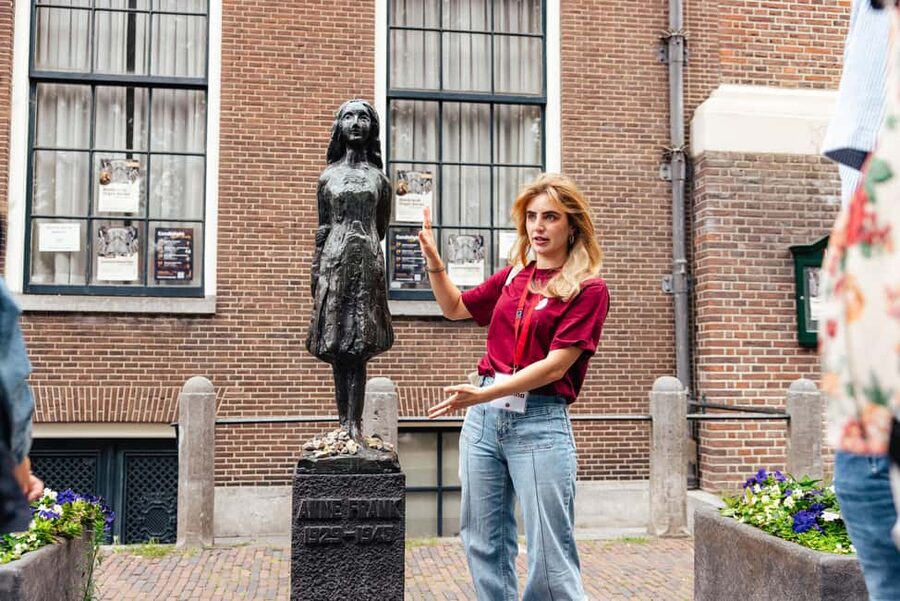
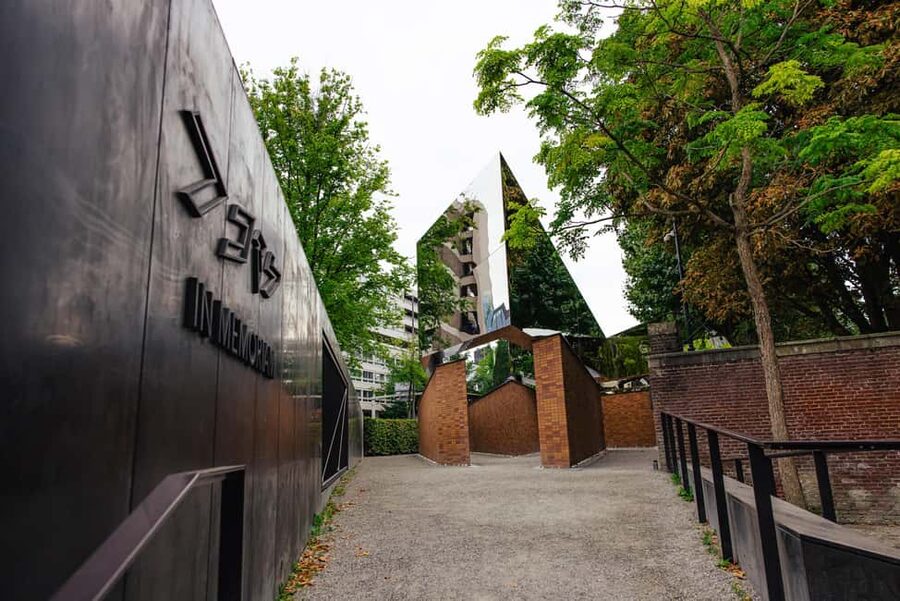
The Auschwitz Monument is one of the tour’s most serious stops, with about 10 minutes of guided discussion. It commemorates those murdered at Auschwitz and gives the walk a place for quiet reflection.
The guide also discusses the courage of Jewish and non-Jewish resistance members who tried to save lives while risking their own. That balance is important. The history includes terrible suffering, but it also includes choices made by people who refused to accept Nazi rule.
At the Dokwerker, the tour focuses on the February Strike of 1941. This was a major act of protest by Amsterdam workers against the persecution of Jews. The stop is brief, around five minutes, but it adds an important piece to the story: resistance was not limited to people working in secret. Public protest, solidarity, and personal acts of help all formed part of the response.
The tour does not suggest that resistance stopped the Holocaust. It shows something more precise and useful. Some Amsterdammers resisted, some helped people hide, and some saved lives, often at great risk. Understanding both the scale of collaboration and the courage of resistance gives you a clearer view of the period.
National Holocaust Names Monument: a powerful finish
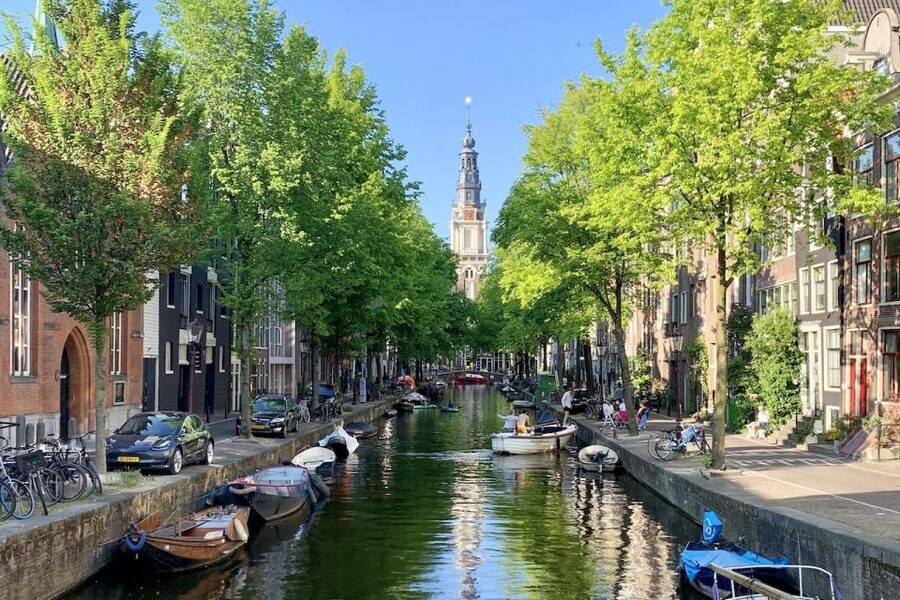
The final major stop is the National Holocaust Names Monument, where the tour spends about 15 minutes and allows time for photographs. The monument lists the names of Dutch Holocaust victims, making this one of the most important places on the route.
The ending works well because the tour has moved from neighborhood history to individual experience, then toward collective remembrance. Anne Frank’s diary gives you one young person’s voice. The Names Monument reminds you that her story was part of a much larger loss.
The supplied route lists the National Holocaust Names Monument as the finish. The meeting information also says the activity ends back at the starting point, so check the exact end-point instructions when you book. Either way, allow a little flexibility after the two-hour schedule.
What the guides do best
The strongest feature of this walk is the guide. The best guides do more than recite dates. They explain how the streets, buildings, and memorials connect, then pause for questions and adjust the pace.
Valentina is noted for linking Amsterdam’s history to Anne’s story and reading diary passages in clear English. Josh is described as patient, warm, and willing to use photographs and personal insights. Emilia is praised for detailed World War II explanations and for answering questions fully.
Other guides bring different strengths. Charlotte keeps the presentation approachable and helps the group move away from crowded areas. Bianca is noted for telling Anne and her family’s story with care. David is praised for a well-paced tour and beautiful readings. Deborah adds useful background about Dutch life alongside the history of the Jewish Quarter and Nazi occupation.
Your guide may not be one of these people, especially if you book in German, Italian, or Spanish. Still, the pattern is clear: choose the language in which you can best follow a serious and emotionally difficult subject. The tour is not bilingual, so do not assume an English and German presentation will be combined.
Walking conditions, timing, and access
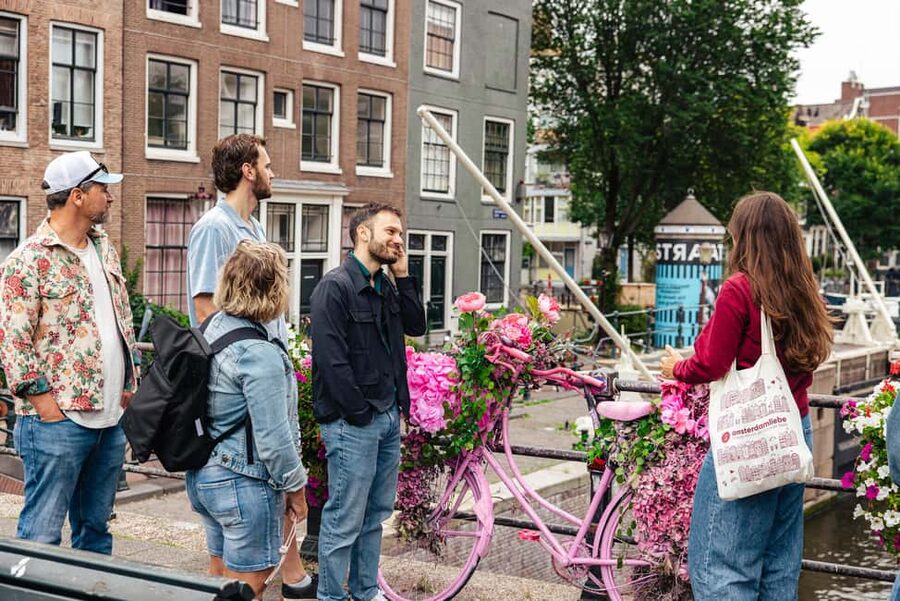
The tour lasts two hours and covers roughly 2 to 3 kilometers. The pace is described as easy, but this is still a walking tour through city streets, so wear comfortable shoes.
You may want water, especially if you are walking earlier in the day or during warmer weather. Bring clothing suited to the forecast and an umbrella if rain is possible. The tour runs in all weather conditions.
The activity is wheelchair accessible, but the route remains an outdoor city walk. If you need specific assistance, confirm the details before booking. A private group option is available, which may suit families or small parties looking for a more flexible conversation.
The tour is not a food experience, and food and drinks are not included. There are cafes and restaurants around Nieuwmarkt, so the starting area is convenient for a meal before or after the walk.
Is $28 a fair price?
At $28 per person, this is a reasonable price for a two-hour guided walk with a clear route and no entry fees to pay along the way. You are paying mainly for interpretation: the guide’s preparation, local context, diary readings, and ability to connect separate memorials into one understandable story.
The value is strongest if you are new to Amsterdam’s Jewish Quarter or want help making sense of the Anne Frank story beyond the famous house. A guide can show you details you might otherwise miss, especially Stolpersteine, resistance monuments, and the relationship between the district’s earlier prosperity and its wartime destruction.
The price is less attractive if you only want to visit the Anne Frank House. This tour does not include that entry, and it does not even pass the building. You will need a separate plan for it, and this walk should be booked for its own subject: the Jewish Quarter and Amsterdam during World War II.
Free cancellation up to 24 hours before the start gives you useful flexibility. You can also reserve now and pay later, which helps if your Amsterdam schedule is still changing.
Who should book this walk?
I would recommend it to anyone who wants a serious introduction to Amsterdam’s Jewish history and to people who prefer places and stories over a museum-only visit. It suits first-time visitors, families with older children, students, and anyone interested in how local residents responded to Nazi occupation.
The tour is also a good choice if you already know Anne Frank’s diary but want more context. You will hear about the Jewish community before the war, the February Strike, resistance by Jews and non-Jews, and Jewish life in multicultural Amsterdam today.
I would hesitate only if you need a short, light sightseeing walk or if you are looking specifically for access to the Anne Frank House. The subject is painful, and the memorial stops require attention and respect. For that reason, I would avoid placing this tour immediately before a packed evening of entertainment.
Should you book it?
Book this tour if you want Amsterdam’s Jewish Quarter explained by a guide who can connect architecture, memorials, resistance, and Anne Frank’s diary in one compact route. The diary readings, especially when delivered by a thoughtful guide such as Valentina, Josh, Emilia, or David, give the walk a personal center without losing sight of the wider community.
Skip it if your main goal is the Anne Frank House itself. For $28, though, this is a fair and focused way to understand the streets and memorials around Amsterdam’s wartime Jewish history. Wear good shoes, choose your language carefully, and arrive at the front entrance of De Waag, not the side by Jolly Joker.
FAQ
Does this tour visit the Anne Frank House?
No. The Anne Frank House is not visited or seen during the tour, and entry is not included.
How long is the walking tour?
The tour lasts two hours and covers approximately 2 to 3 kilometers.
Which languages are available?
The tour is available in English, German, Italian, or Spanish. It is conducted in one selected language, not as a bilingual tour.
Where does the tour start?
Meet your guide at the entrance to De Waag in the middle of Nieuwmarkt. Look for the guide’s red name tag. Google Maps may take you to the back of the building, so walk around it if you see the Jolly Joker coffeeshop.
Are admission fees included?
There are no admission fees during the walking tour. However, the tour does not include entry to the Anne Frank House, the Jewish Historical Museum, or the interior of the Portuguese Synagogue.
What should I bring?
Bring comfortable shoes, water, and weather-appropriate clothing. The tour runs in all weather, so take an umbrella if rain is forecast.
Newest Amsterdam write-ups
- Zaanse Schans: Half-Day Private Guided Tour★ 5.0 · 4 reviews
- Zaanse Schans: Private Cruise + Live Guide, Optional Drinks★ 4.7 · 26 reviews
- Zaanse Schans: Wooden Shoe Painting Workshop★ 4.9 · 23 reviews
- Amsterdam: Private Zaanse Schans Windmills and Volendam Trip★ 4.9 · 31 reviews
- Zaanse Schans: Pancake Restaurant Visit★ 4.5 · 26 reviews
- Amsterdam: Zaanse Schans E-Bike Tour with Windmills & Cheese★ 4.5 · 12 reviews
- Zaandam: Paint a Perfect Portrait workshop★ 5.0 · 5 reviews
- Volendam: Stroopwafel Experience with Tasting★ 3.6 · 93 reviews
Anne Frank Walking Tours, compared.

Anne Frank’s Story – Guided Walking Tour through Amsterdam
Read our review →
Life of Anne Frank and World War II Walking Tour
Read our review →
Anne Frank Walking Tour Amsterdam Including Jewish Cultural Quarter
Read our review →
Anne Frank’s Last Walk & See Anne Frank House in Virtual Reality
Read our review →
Anne Frank and Jewish Quarter Amsterdam Private Walking Tour
Read our review →
Browse the lists this tour appears in