
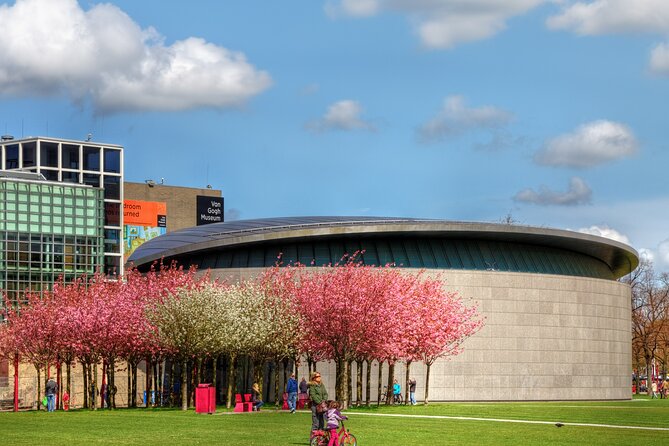
Reviewed · VAN GOGH MUSEUM TOURS
Van Gogh Museum Amsterdam Small Group Guided Tour
Van Gogh’s paintings are familiar. Seeing his brushwork close up, then following the changes from his early peasant scenes to the bright canvases of Arles and the troubled works of Auvers, is something else. This tour gives you that story in a small group of no more than 14 adults, with a guide leading you through the permanent collection.
I like the clear chronological route and the wireless headset. Guides such as Martina, Claire W, Kawika, Marlene, Roland, and Holly have been praised for explaining Van Gogh’s technique, influences, and personal struggles without letting the talk become a dry art lecture.
The main drawback is the fixed two-hour pace. You will see the essential works, but you cannot linger over every painting, and the experience is available only in English and only to adults aged 18 or older.
Key points to know before booking
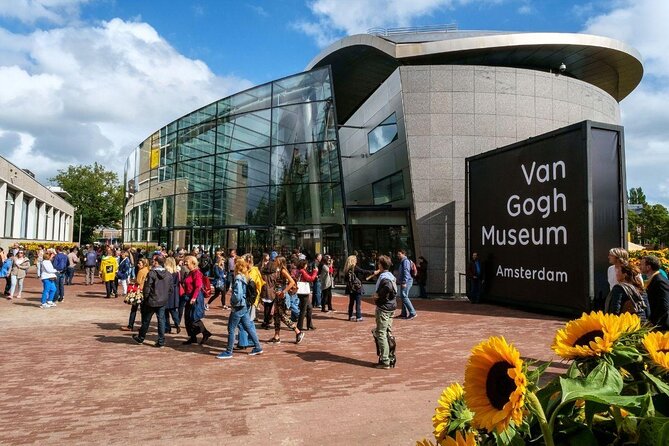
- The route follows Van Gogh’s artistic development, from early peasant subjects through Paris, Arles, Saint-Rémy, and Auvers.
- Admission to the permanent collection is included, so you do not need to arrange a separate museum ticket for the guided visit.
- The wireless Whisper System matters in a crowded museum, especially if you want to hear the guide while standing a few steps away from the group.
- Morning and afternoon departures are offered, giving you room to fit the museum around other Amsterdam plans.
- You can stay inside after the tour ends, allowing you to revisit favorite works or see more of the permanent collection at your own pace.
- The $77.43 price is best for visitors who want interpretation, not for someone content to walk through with an audio guide.
Why this tour works best as a Van Gogh story
The Van Gogh Museum contains far more than a short list of famous paintings. Its real strength is the chance to see how one artist changed over a brief, intense career. A guided route helps connect those changes.
You begin with Van Gogh’s early work, where the colors are darker and the subjects often come from ordinary working life. Later, Paris brings lighter colors and new painting methods. Arles brings intense yellows, strong outlines, and some of his most recognizable pictures. The final rooms show a more restless, forceful style.
That progression is the reason I would choose a guide here. On your own, you can admire Sunflowers or The Bedroom, but it is easy to miss how much the paintings differ from The Potato Eaters. A good guide gives you the visual links.
The strongest guides named in the feedback include Martina, Claire W, Kawika, Marlene, Roland, Holly, Sylvia, and Caroline. Their approaches vary, but the best sessions focus on Van Gogh’s life, the development of his technique, his influences, and details you might overlook while moving through a busy gallery.
More ways to see the Van Gogh Museum:
- Amsterdam: Van Gogh Museum Ticket and City Canal Cruise
★ 4.6 · 3,899 reviews - Amsterdam: Van Gogh Museum Ticket & Canal Cruise
★ 4.5 · 3,304 reviews - Van Gogh Museum Amsterdam Exclusive Tour w/ Reserved Entry
★ 5.0 · 1,760 reviews
Meeting at Cobra Café and entering the museum
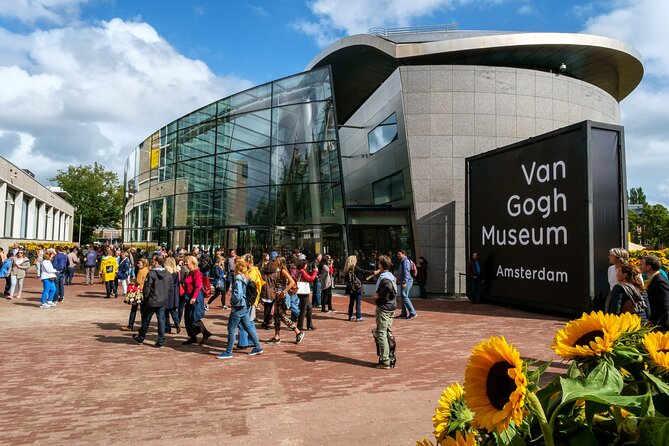
The tour starts at Cobra Café, Hobbemastraat 18, 1071 ZB Amsterdam. The museum itself is at Museumplein, so check the meeting address carefully before setting out. The experience ends inside the Van Gogh Museum at Museumplein 6.
That ending is useful. You are not pushed back outside when the two-hour guided portion finishes. You can remain in the museum until closing time and continue independently, giving you a chance to return to a favorite painting or cover rooms the guide passed more quickly.
The tour is offered in the morning or afternoon. I would choose the time that leaves you with breathing room, since a museum visit can easily expand beyond its official length. If you have a packed day, remember that the guided portion is approximately two hours, not a full-day museum program.
Admission to the permanent collection is included. Special exhibitions are not part of the guided experience, though you can visit them afterward at your own pace if you arrange access separately.
Stop 1: Van Gogh’s self-portraits
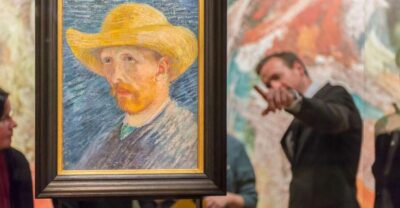
The tour opens with Van Gogh’s self-portraits, a smart way to introduce both the man and the painter. These works show how he looked at himself, but they also let you track changes in color, brushwork, and mood.
This is more than a quick photo stop. The self-portraits help you see Van Gogh testing ideas on a subject always available to him. A guide can point out shifts in handling and explain how the paintings fit into his wider development.
Still, this is the section most likely to feel overlong if you already know Van Gogh well. One visitor felt too much time went to the self-portraits. If your main goal is Sunflowers or The Bedroom, you may wish the opening moved faster.
Stop 2: Millet, Jules Breton, and The Potato Eaters
The first-floor foyer introduces the artists and subjects that shaped Van Gogh’s early work, including Jean-François Millet and Jules Breton. You will see paintings connected to rural labor, along with Woman Lifting Potatoes and the wall of portraits titled Head of a Peasant Woman.
The centerpiece is The Potato Eaters. This is the moment when the tour shows Van Gogh before the bright colors most people associate with him. The painting is earthy, serious, and focused on the rough dignity of farm life.
I find this section valuable because it prevents the common mistake of treating Van Gogh as a painter who simply discovered bright yellow and thick brushstrokes. His early work had a clear purpose and a strong interest in working people.
The guide may also discuss Van Gogh’s artistic models and the way he studied other painters. That context makes the later jump to Paris easier to understand. You are not just moving from one famous picture to another. You are seeing a painter search for a language of his own.
More museums and galleries in Amsterdam:
- Amsterdam: The Upside Down Museum Entrance Ticket
★ 4.4 · 9,506 reviews - Amsterdam: Red Light Secrets Museum Entry Ticket
★ 4.2 · 5,722 reviews - Amsterdam’s Weirdest Museum: Believe It or Not!
★ 4.5 · 4,086 reviews - Amsterdam: NEMO Science Museum Ticket
★ 4.4 · 2,979 reviews
Stop 3: Paris from 1886 to 1888
The Paris section marks a major change. Van Gogh moved to Paris between 1886 and 1888, and the paintings here show the effect of a new artistic setting.
The route includes Self Portrait with Felt Hat, Still Life with Absinthe, In the Café: Agostina Segatori in Le Tambourin, and Garden with Courting Couples. These works give the guide several ways to explain color, urban subjects, and Van Gogh’s response to the art around him.
The Paris self-portrait is especially useful for comparing with the darker early paintings. Look closely at the colors and the surface of the paint. A guide may help you notice how the picture feels lighter and more direct, even though the subject is still Van Gogh himself.
The café scene and garden picture broaden the story. Van Gogh was not only painting portraits and rural workers. He was paying attention to modern city life, leisure, and the methods of other artists.
This part can feel more technical than the famous Arles section, but it is crucial. Without Paris, the later paintings can seem to appear from nowhere. With it, you see the experiments that helped lead to the bold work in the south of France.
Stop 4: Arles and the paintings of southern France
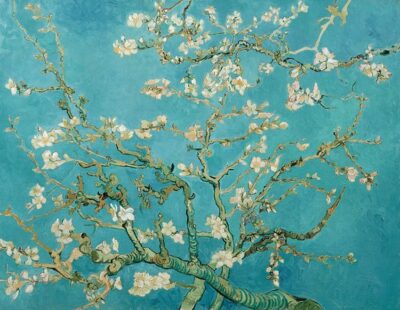
The Arles rooms contain the pictures many people are waiting for. Van Gogh moved to Arles in 1888, and the tour includes Sunflowers, Almond Blossoms, The Bedroom, Japanese prints copied by Van Gogh, and The Yellow House.
This is likely the emotional high point of the visit. Sunflowers needs no introduction, but it rewards close looking. The paint is not flat or decorative. Thick marks give the flowers weight and movement, while the yellow range creates a strong visual unity.
The Bedroom offers a different kind of interest. Its simple furniture and unusual perspective make the room feel both familiar and slightly unsettled. A good guide can draw your attention to the choices in the walls, furniture, floor, and outlines rather than reducing the picture to a biography lesson.
The Japanese paintings and copies from prints matter too. They show that Van Gogh was looking beyond the European traditions that shaped his early work. This is where a guide’s use of an iPad or additional images can help, as Martina has done in past sessions.
The Yellow House brings the Arles setting into focus. Taken together, these works show Van Gogh trying to create a home and artistic community while pushing his painting toward stronger color and more expressive marks.
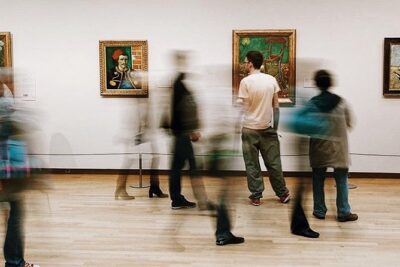
Crowds can be heavier around these famous pictures. The headset helps because you can stand near the group without needing to hear a voice raised over the room. One guide was praised for encouraging the group to move closer to the paintings, though that enthusiasm can occasionally mean sharing space with other museum visitors.
Stop 5: Saint-Rémy-de-Provence on Level 3
The tour then moves to Level 3 and Van Gogh’s Saint-Rémy period. The works listed here include Almond Blossoms, Wheatfield with a Reaper, Iris, and Pieta, after Delacroix.
This room changes the feel of the visit. The colors remain powerful, but the brushwork can seem more urgent and the subjects more emotionally charged. Iris is a good example of how Van Gogh could turn a group of flowers into a study of rhythm, movement, and contrast.
Wheatfield with a Reaper brings the figure of the laborer back into the story, linking the late work to the themes of his early years. A guide can help you see that Van Gogh’s interests did not simply disappear when his colors changed.
The reference to Delacroix in Pieta also opens a useful discussion about artistic influence. Van Gogh was not working in isolation. He borrowed, copied, adapted, and argued with the art he admired. That makes the work feel more connected to the wider art world.
The route also draws attention to Almond Blossoms in this part of the museum. The painting is associated with the period’s lighter, more decorative side, and it offers a welcome contrast to the darker emotional tone that can hang over discussions of Saint-Rémy.
Stop 6: Auvers and the final room
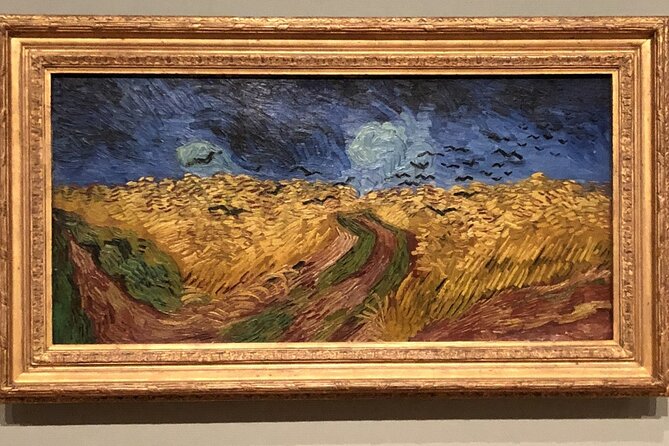
The final stop is the Auvers room, also on Level 3. You will see Tree Roots and Wheatfield with Crows.
This is a brief stop of about 15 minutes, but it carries considerable weight. The two paintings allow the guide to discuss Van Gogh’s late style, where the marks can feel especially forceful and the natural world seems almost in motion.
You should expect this section to be handled with care. A weak museum talk can turn Van Gogh’s final period into a simple story about illness and tragedy. The better approach is to look first at the paintings themselves, then place them within the circumstances of his life.
The shorter time here makes sense for a two-hour route, though you may want to remain afterward. If Tree Roots or Wheatfield with Crows captures your attention, use the extra museum time to look again without the group moving on.
How the guide and headset change the visit
The wireless Whisper System is one of the practical strengths of this experience. Museums are not always quiet, and groups standing around famous paintings can become hard to follow. The headset lets you hear the guide while examining the work instead of staring at the guide’s face.
Group size is capped at 14 people. That is small enough for questions and personal attention, though it is not the same as a private tour. The guide still has to keep the group together and maintain a schedule.
The best sessions appear to depend heavily on the individual guide. Martina has been praised for passion, clear explanations, and using an iPad to add visual context. Kawika has been appreciated for discussing paint types, technique, Van Gogh’s artistic development, and the European art world around him. Roland received praise for a calm pace and for making the headset work well for someone using hearing aids.
Marlene has been noted for patience and for returning to a painting when part of the group wanted more time. Holly has been praised for good pacing and a useful amount of background information. These details tell you what to hope for, but they do not guarantee which guide you will receive.
There is one important caution. Guide quality can vary. At least one visitor found the tour disappointing and preferred an audio guide. Another had a serious problem when the guide did not appear and could not be reached. Those incidents are not the usual picture, given the very high overall rating, but they are worth keeping in mind when deciding how much you value a live explanation.
Is $77.43 good value?
At $77.43 per person, this is not the cheapest way to see the museum. You are paying for admission to the permanent collection, a two-hour guided route, a live English-speaking guide, a small group, and the headset.
The value depends on your goal. If you already know Van Gogh well and prefer to set your own pace, an audio guide or independent visit may suit you better. You might spend longer with one painting and avoid paying for a structured route.
If you want the paintings connected into a clear story, the price is easier to justify. The guide helps you notice the shift from early peasant scenes to Parisian experiments and then to the intense work of Arles, Saint-Rémy, and Auvers. The ability to remain inside afterward adds value because the guided route does not have to cover every room.
I would especially consider this tour if you are visiting Amsterdam for a short time, if art museums sometimes feel hard to approach, or if one person in your group is more interested in art than the others. A lively guide can make the visit work for the whole group.
Who should book this experience?
Book it if you want to understand how Van Gogh’s work changed, not simply check off his most famous paintings. It suits adults who appreciate explanation, close looking, and a planned route through a busy museum.
It is also a strong choice if hearing a guide clearly matters to you. The headset has helped people follow the talk even in crowded rooms and has been useful for visitors with hearing aids.
You should think twice if you want complete freedom. Two hours is enough for the main arc, but it will not let you study every canvas. The tour is also English only, and everyone in the group must be at least 18.
Cancellations are free up to 24 hours before the start time. Inside that window, the payment is not refunded, and changes are not accepted. Confirmation arrives when you book.
Should you book the Van Gogh Museum guided tour?
I would book this tour if Van Gogh is a major reason for your Amsterdam visit, or if you want a stronger understanding of the paintings than you would get by walking through alone. The chronological route, included admission, headset, and small group make the format practical.
I would skip it if you already have a strong background in Van Gogh, dislike fixed pacing, or mainly want a quiet, unhurried look at a few favorite works. In that case, the museum on your own may offer better value.
For most adult first-time visitors, the tour is a sensible choice, especially when you plan to stay afterward and explore independently. Choose morning or afternoon based on your wider schedule, arrive at the Cobra Café meeting point, and keep time after the guided portion for the paintings that deserve a second look.
FAQ
How long is the Van Gogh Museum guided tour?
The guided portion lasts approximately two hours.
What language is the tour offered in?
The tour is offered in English.
Is museum admission included?
Admission to the Van Gogh Museum’s permanent collection is included. Special exhibitions are not included in the guided tour.
Can I remain in the museum after the tour?
Yes. The tour ends inside the museum, and you can stay until closing time to continue exploring independently.
How many people can join the tour?
The maximum group size is 14 travelers.
Can children join the tour?
No. This experience is available only to adults aged 18 or older.
Newest Amsterdam write-ups
- Zaanse Schans: Half-Day Private Guided Tour★ 5.0 · 4 reviews
- Zaanse Schans: Private Cruise + Live Guide, Optional Drinks★ 4.7 · 26 reviews
- Zaanse Schans: Wooden Shoe Painting Workshop★ 4.9 · 23 reviews
- Amsterdam: Private Zaanse Schans Windmills and Volendam Trip★ 4.9 · 31 reviews
- Zaanse Schans: Pancake Restaurant Visit★ 4.5 · 26 reviews
- Amsterdam: Zaanse Schans E-Bike Tour with Windmills & Cheese★ 4.5 · 12 reviews
- Zaandam: Paint a Perfect Portrait workshop★ 5.0 · 5 reviews
- Amsterdam Central Walking Tour★ 4.9 · 11 reviews
Van Gogh Museum Tours, compared.
Van Gogh Museum Amsterdam Exclusive Tour w/ Reserved Entry
Read our review →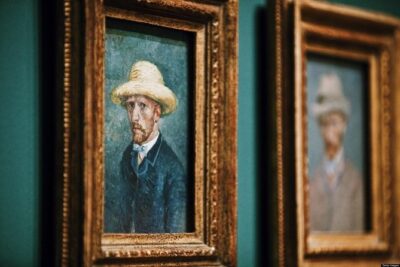
Van Gogh Museum Tour Reserved Entry Semi Private
Read our review →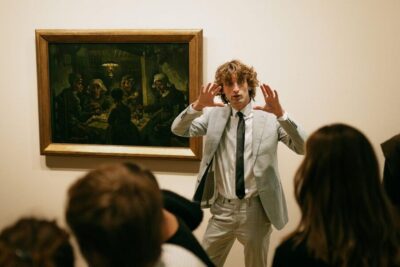
Combo Ticket: Van Gogh Museum Ticket and 1-Hour Canal Cruise
Read our review →

Van Gogh Museum Guided Tour & Entry Ticket (Max 6 ppl)
Read our review →
Van Gogh & Rijksmuseum w/ Reserved Entry Semi-Private 8ppl Max
Read our review →Browse the lists this tour appears in