
Reviewed · REMBRANDT EXPERIENCE TICKETS
Rembrandt House & Neighborhood Exclusive Guided Walking Tour
Rembrandt’s life comes into focus as you walk through the Amsterdam streets that shaped it, then enter the house where he worked from 1639 to 1656. This is not just a museum visit. It is a two-mile route through canals, squares, the Amstel, and the former Jewish Quarter, with the artist’s home saved for the final hour.
I like the way the tour links Rembrandt to real places rather than treating him as a name on a museum label. I also like the private format, which lets you ask questions and set the pace more easily. The main drawback is the price: at $159.21 per person, it makes the most sense for a small group that values a dedicated guide.
Key points at a glance
- Rembrandt’s house is the main event: Spend about an hour inside the preserved home and museum where the painter lived and worked.
- The route covers about two miles: Expect a steady city walk with canals, bridges, squares, and historic neighborhoods.
- Guide Haas may lead your tour: He is described as pleasant and clear in his explanations of Rembrandt’s life and artistic development.
- The private format matters: Your group receives its own guide unless you choose the save-money semi-private option.
- Several sights are exterior stops: The tour passes Museum Van Loon, the Munttoren, and the National Opera and Ballet, but the included museum admission is for Rembrandt House.
- The tour ends at the museum: There is no hotel pickup or drop-off, so plan your way to the 1:30 pm meeting point at Cobra Café.
Why the walk makes Rembrandt’s house more meaningful
Rembrandt’s House Museum can be visited on its own, but the preceding walk gives you a better sense of Amsterdam around him. You move from the old canal defenses and wealthy canal houses to markets, bridges, public squares, and the former Jewish neighborhood.
That setting helps explain why this tour takes 2.5 hours instead of simply sending you into the museum. The house is the centerpiece, but the city walk supplies the context. You hear about Rembrandt’s artistic development while seeing the kinds of streets and buildings that formed his daily world.
I especially like the order. The walk gradually leads you toward Rembrandtplein and the Jodenbuurt, then finishes at Jodenbreestraat, where the artist’s former home is located. It feels like a route with a destination, not a string of unrelated photo stops.
The tour is offered in English and is private for your group, apart from the cheaper semi-private choice. That makes it a good fit if you want to ask about a particular painting, spend more time on Rembrandt’s career, or avoid being tied to a large group’s questions and pace.
More Rembrandt tickets in Amsterdam:
- Rembrandts Experience Amsterdam Admission Ticket
★ 4.5 · 521 reviews - Rembrandt House Museum Amsterdam Entrance Ticket
★ 4.5 · 355 reviews - Amsterdam: Van Gogh and Rembrandt Immersive Experience Entry
★ 4.2 · 334 reviews
Starting at Cobra Café and the old city edge
Meet at Cobra Café on Hobbemastraat at 1:30 pm. You will not be collected from your hotel, so allow time to reach the starting point by public transportation, taxi, or Uber.
The first stretch heads toward the Singelgracht. This canal once marked the outer defenses of Amsterdam’s central city. It is a useful first stop because it shows that Amsterdam’s famous water network was not built only for beauty. Canals also shaped movement, protection, trade, and the growth of the city.
The walk then reaches the Spiegelgracht, part of Amsterdam’s UNESCO-listed canal area. Today, this stretch is known for art galleries and antique shops. The stop is brief, about 10 minutes, so think of it as an introduction to the district rather than time for a full gallery visit.
I would not book this experience expecting a leisurely shopping walk. The route keeps moving, and the galleries are part of the street scene. The value comes from the guide’s explanation of the area and its connection to Amsterdam’s artistic culture.
Keizersgracht and the world of canal houses
Next comes Keizersgracht, or the Emperor’s Canal, the middle and widest of the three main inner-city canals. It was named for Maximilian of Austria and gives you a clear look at the grand canal planning that made Amsterdam so distinctive.
The stop lasts about 10 minutes and is free to view from the street. You will likely find this part most useful if you enjoy architecture and city planning, since the canal itself is the subject. The tour does not promise a canal cruise, so do not confuse this walk with a boat excursion.
The route then passes Museum Van Loon, a canalside house on Keizersgracht associated with Ferdinand Bol, one of Rembrandt’s pupils. The stop helps place Rembrandt within a wider circle of artists and patrons. It also gives you a glimpse of the kind of grand domestic setting linked to Amsterdam’s wealthy residents.
The museum is listed as an outside stop rather than a separate included visit. If you want to explore its interiors, check the arrangement when booking, since the tour’s main museum entry is Rembrandt House.
Bloemenmarkt, the Munttoren, and a change of pace
The walk continues through the flower market toward the Munttoren. The market adds a lighter, more commercial note to the route after the formal canal district. You will see Amsterdam’s familiar flower trade in a busy central setting, though the stop is short.
The Munttoren, sometimes described as the Mint Tower, began as part of one of the gates in Amsterdam’s medieval city wall. Its role as a surviving piece of the old defensive city gives the walk another layer. You are not only following Rembrandt. You are watching Amsterdam change from a fortified medieval town into the canal city seen today.
The tower is an exterior sight on this route. Admission is not included as a separate visit, and the listed stop lasts about 10 minutes. That is enough for orientation and photographs, but not a full tower experience.
More walking tours in Amsterdam:
- Anne Frank’s Story – Guided Walking Tour through Amsterdam
★ 5.0 · 11,619 reviews - Amsterdam: Life of Anne Frank and World War II Walking Tour
★ 4.8 · 10,467 reviews - Absolutely Amsterdam – the Essential Introductory Walking Tour
★ 5.0 · 3,629 reviews - Amsterdam: Anne Frank Guided Small Group Walking Tour
★ 4.8 · 2,722 reviews
Rembrandtplein and the bronze Night Watch
At Rembrandtplein, the artist’s name becomes impossible to miss. This busy square contains a monument to Rembrandt and a bronze representation of The Night Watch, created for the 400th anniversary of the artist’s birth in 2006.
The bronze figures offer a playful way to look at the painting in three dimensions. You can see the famous composition as a group of full-size forms rather than as a flat image behind museum glass. The stop also gives the guide a natural opening to discuss Rembrandt’s best-known work before you reach the house.
This is a public square, not a quiet museum setting. You may find traffic, pedestrians, and city noise around you. That is part of the point. The tour connects Rembrandt to present-day Amsterdam rather than presenting him in isolation.
The Amstel, Skinny Bridge, and Blue Bridge
From Rembrandtplein, the route reaches the Amstel River. Two bridges are highlighted here: the Skinny Bridge and the Blue Bridge.
The Skinny Bridge is one of Amsterdam’s best-known bridges and crosses the Amstel. The Blue Bridge is not actually blue today. Its name comes from a wooden blue bridge that crossed the river in the 17th century.
These stops are brief, but they break up the museum and architecture material with open water and city views. I like this section because it gives you a sense of Amsterdam’s scale. The route is not confined to one museum quarter. It moves across the city’s public spaces and waterways.
The walk does require moderate physical fitness. The total route is about two miles according to the tour information, and the schedule includes many short stops before the one-hour museum visit. Wear shoes you can walk in comfortably, especially if the weather is wet.
Stopera and the former Jewish neighborhood
The next landmark is the Stopera, the complex housing Amsterdam’s city hall and the Dutch National Opera and Ballet. Its construction took at least 60 years to complete, making it a useful example of the city’s more recent public architecture.
The route does not include a performance or an interior visit. Instead, the guide uses the building as a city landmark on the way to the former Jewish neighborhood, known as the Jodenbuurt.
The Jodenbuurt contains historically important buildings preserved and managed by the Jewish Cultural Quarter. This section adds serious historical weight to the walk. It also makes the final approach to Rembrandt’s house more than a simple museum transfer.
The neighborhood stop is listed as free and lasts about 10 minutes. You should expect an introduction to the area rather than a full Jewish Cultural Quarter tour. If this subject is a major priority for you, ask the guide how much time can be devoted to it within the fixed 2.5-hour schedule.
Inside Rembrandt’s House on Jodenbreestraat
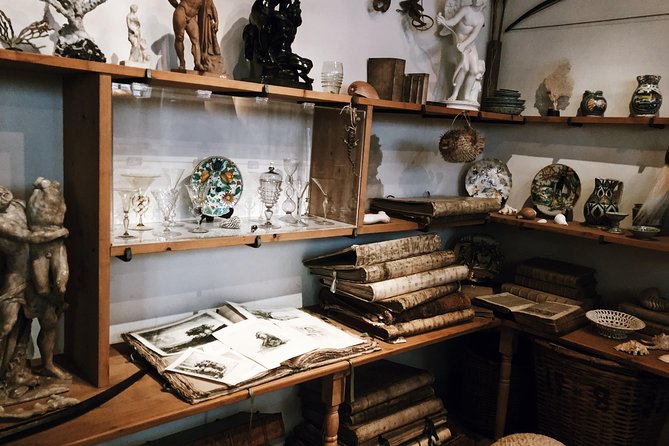
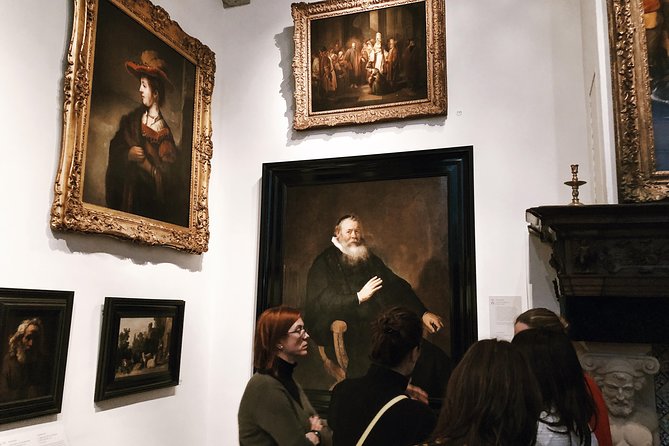
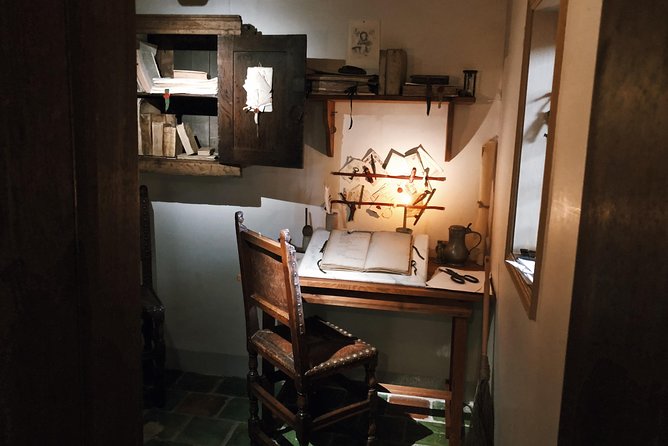
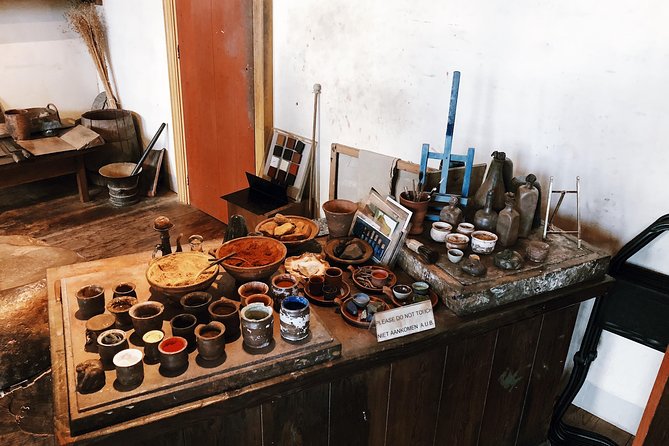
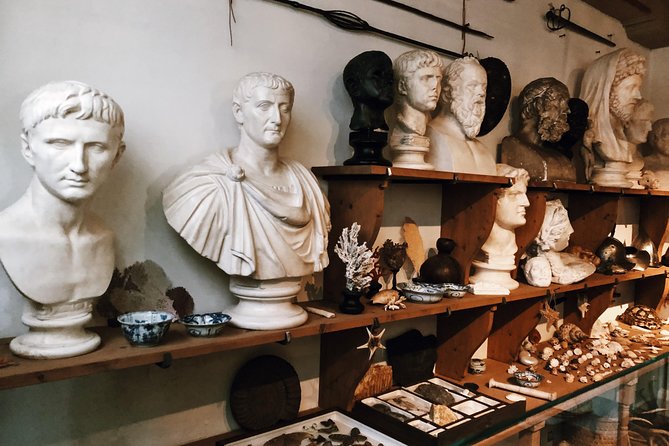
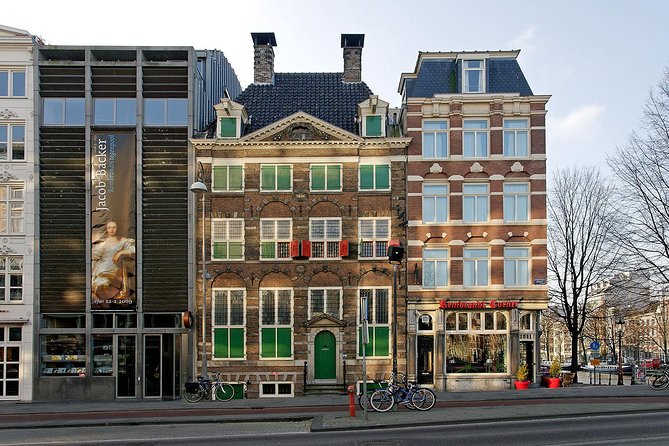
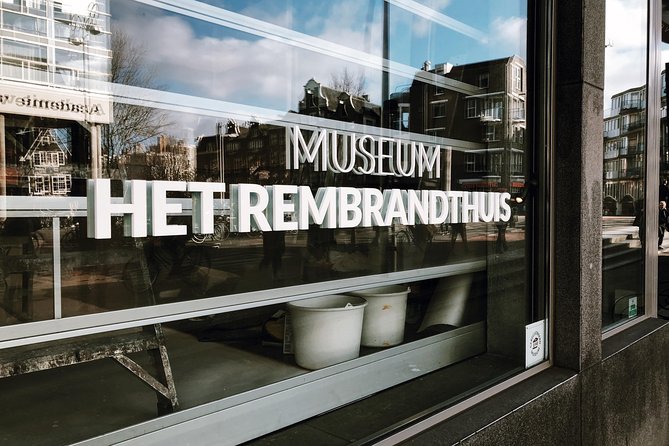
The final stop is Museum Het Rembrandthuis at Jodenbreestraat 4. Rembrandt lived and worked in this building from 1639 to 1656. The museum preserves the historic house and presents a collection that includes his etchings and paintings of contemporaries.
This is where the tour earns much of its price. A house can tell you things a gallery cannot. Rooms, work spaces, household objects, and personal items help you think about Rembrandt as a working artist living in Amsterdam, not only as the creator of famous paintings.
You spend about one hour inside. That is enough time for a guided overview, though not enough to study every object at length. I would use the walking portion to ask broad questions about Rembrandt’s career and save specific questions about the museum collection for this final section.
The museum may have quiet or restricted-speaking areas. Your guide will explain those rules before entering them. Large bags and suitcases are not allowed inside, while handbags and small, thin backpacks can pass through security. Some collections and displays may change during the year.
Occasional museum closures can happen without advance warning. If the opening is delayed by more than one hour after the scheduled start, an alternative is provided, but the stated terms do not promise a refund or discount in that situation. That is worth knowing if the museum is the main reason you are booking.
What $159.21 buys you
The listed price is $159.21 per person. That is a serious charge for 2.5 hours, especially if you are traveling alone or as a couple. The value improves for a small group because the private guide cost is shared among the people in your party.
You are paying for more than admission. The price covers the guide, the walking route, the museum tour, and the private arrangement. You also avoid having to build your own route between the canal district, Rembrandtplein, the Amstel, the Jodenbuurt, and the museum.
The strongest value comes from the guide’s role. A good guide can connect Ferdinand Bol, Rembrandtplein, the Night Watch, and Rembrandt’s home into one story. Haas is described as pleasant and clear, with useful explanations of Rembrandt’s life, house, and artistic development.
I would not choose this tour solely for skip-the-line convenience. Security checks can still create lines, and the museum may impose quiet rules. Choose it because you want a human explanation and a private route through several Amsterdam districts.
Who should book this private walk
I would recommend this experience to:
- Art lovers who want more than a stand-alone museum visit
- First-time Amsterdam visitors who enjoy seeing several central districts on foot
- Small groups willing to share the cost of a private guide
- People interested in Rembrandt’s working life and artistic development
- Visitors who prefer a guided route to planning canals, bridges, squares, and museums alone
I would hesitate if you want a slow museum study, a canal cruise, or a full tour of every site along the way. The schedule gives most landmarks only 10 minutes. It is a broad introduction followed by a focused visit to Rembrandt House.
You should also think about the start time. The tour begins at 1:30 pm and finishes at Rembrandt House, so it works well as an afternoon plan. Since there is no hotel transfer, leave extra time to reach Cobra Café and remember that you will need to arrange your own return from the museum.
The tour runs rain or shine. Amsterdam weather can change quickly, so bring suitable clothing and shoes. Appropriate dress may be required at some sites, and the walking route is best for anyone with moderate fitness.
Should you book the Rembrandt House and Neighborhood tour?
Book it if you want Rembrandt explained through Amsterdam itself. The combination of canals, art districts, the Amstel, the Jodenbuurt, and the preserved house gives you a fuller picture than visiting the museum alone.
The private format is the key decision. At $159.21 per person, it is expensive for a short activity, but reasonable for a small group that wants its own English-speaking guide and a carefully connected route. If cost matters most, compare it with visiting Rembrandt House independently and exploring the neighborhoods on your own.
For a focused afternoon centered on one of Amsterdam’s most important artists, I would choose this tour. Just arrive ready to walk, keep your bag small, and remember that the museum at the end is the part you should protect your energy for.
FAQ
Where does the tour begin?
It begins at Cobra Café, Hobbemastraat 18, 1071 ZB Amsterdam, at 1:30 pm.
Where does the tour end?
The tour ends at Museum Het Rembrandthuis, Jodenbreestraat 4, 1011 NK Amsterdam.
Is the tour private?
Yes. Only your group participates when you select the private tour option. A separate semi-private option is also available at a lower price.
Is admission to Rembrandt’s House included?
Yes. The guided museum tour and entrance fees are included. Some listed stops, including Museum Van Loon, the Munttoren, and the National Opera and Ballet, are not included as separate admission visits.
How much walking is involved?
The route takes about 2.5 hours in total and covers roughly two miles, with several short stops before the one-hour visit inside Rembrandt’s House. Moderate physical fitness is recommended.
What happens if Rembrandt’s House closes unexpectedly?
The museum can occasionally close without advance warning. If its opening is delayed by more than one hour after the tour begins, an appropriate alternative is provided. The stated conditions do not provide a refund or discount for that situation.
Newest Amsterdam write-ups
- Zaanse Schans: Half-Day Private Guided Tour★ 5.0 · 4 reviews
- Zaanse Schans: Private Cruise + Live Guide, Optional Drinks★ 4.7 · 26 reviews
- Zaanse Schans: Wooden Shoe Painting Workshop★ 4.9 · 23 reviews
- Amsterdam: Private Zaanse Schans Windmills and Volendam Trip★ 4.9 · 31 reviews
- Zaanse Schans: Pancake Restaurant Visit★ 4.5 · 26 reviews
- Amsterdam: Zaanse Schans E-Bike Tour with Windmills & Cheese★ 4.5 · 12 reviews
- Zaandam: Paint a Perfect Portrait workshop★ 5.0 · 5 reviews
- Volendam: Volendams Museum Entry Ticket★ 4.4 · 14 reviews
Rembrandt Experience Tickets, compared.
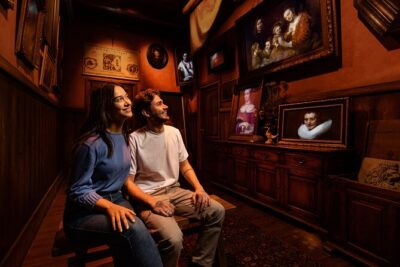
Rembrandts Experience Amsterdam Admission Ticket
Read our review →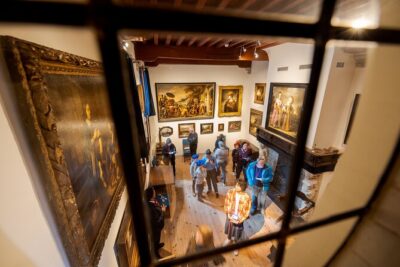
Rembrandt House Museum Amsterdam Entrance Ticket
Read our review →
Van Gogh and Rembrandt Immersive Experience Entry
Read our review →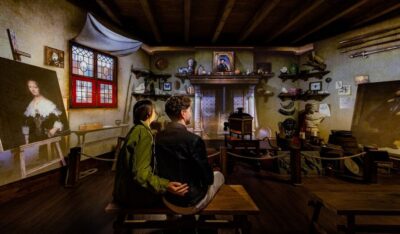
Rembrandts Immersive Experience Admission Ticket
Read our review →
Private Rijksmuseum Tour- The Dutch Masters, Rembrandt & Vermeer
Read our review →
Rembrandt Experience VIP Admission Ticket + Photo
Read our review →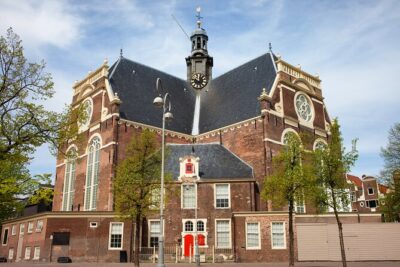
Van Gogh and Rembrandt Immersive Experience Entry Amsterdam
Read our review →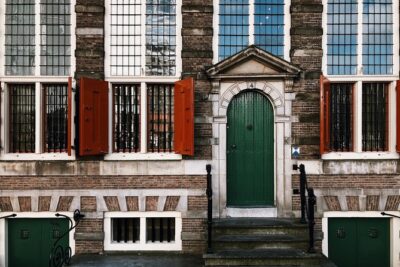
Skip-the-line Rijksmuseum & Rembrandt House Semi-Private 8ppl Max
Read our review →Browse the lists this tour appears in