
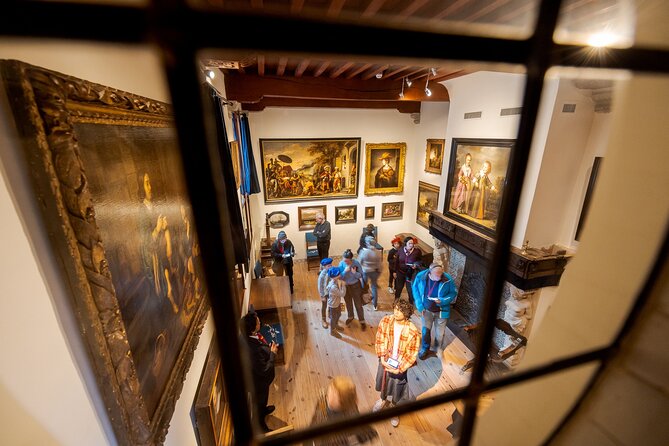
Reviewed · REMBRANDT EXPERIENCE TICKETS
Rembrandt House Museum Amsterdam Entrance Ticket
Rembrandt’s house is most valuable for the rooms where he actually lived and worked. You can enter his studio, stand in the place where he made paintings, and watch demonstrations of paint-making and etching. The museum turns a famous name into a working artist with bills, students, family troubles, and a very practical craft.
I like the paint-making lesson in Rembrandt’s studio and the etching demonstration in the new attic. Both show how much physical work sat behind a finished image. I also like the audio tour’s focus on Rembrandt’s life, from his arrival as a celebrated artist to his forced departure after debts piled up.
The main caution is the building itself. Its stairs are steep, narrow, and difficult for some people with mobility limits. The official visit takes about an hour, but I would allow closer to two hours if you want to hear the audio guide, watch the demonstrations, and see the extra museum rooms without rushing.
Key points before you book
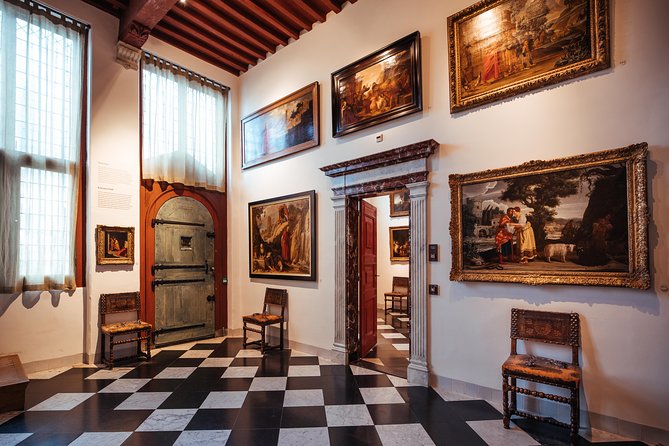
- Five new spaces opened in 2023: The expansion added an epilogue room, an etching attic, and a third exhibition room, giving the museum about 30 percent more Rembrandt-related content.
- The studio is the star: A daily demonstration explains how paint was made in the very room where Rembrandt worked.
- Etching becomes hands-on history: The attic presentation shows how copper plates and printing helped Rembrandt spread his work.
- The audio guide carries the visit: It follows Rembrandt’s rise, marriage, family life, teaching, financial problems, and decline.
- Expect steep, narrow stairs: The historic house feels authentic partly because it has not been made into an easy modern building.
- The $26.01 price is fair if you stay: The ticket includes admission, a multilingual multimedia guide, daily demonstrations, and a family version of the tour.
Entering Rembrandt’s Amsterdam home
Museum Het Rembrandthuis is not mainly a gallery of famous paintings. It is a house museum built around the place where Rembrandt lived and worked for almost 20 years. That difference matters. You are not simply looking at finished art behind glass. You are following the rooms, tools, materials, and household pressures that shaped the artist’s working life.
The visit follows a clear story. Rembrandt arrives in Amsterdam as an ambitious artist with money and status. He builds a successful career, teaches students, collects objects, and lives with his wife Saskia. Later, financial problems grow until he can no longer keep the house. The final stages of the story give the visit an emotional edge without turning it into a simple hero tale.
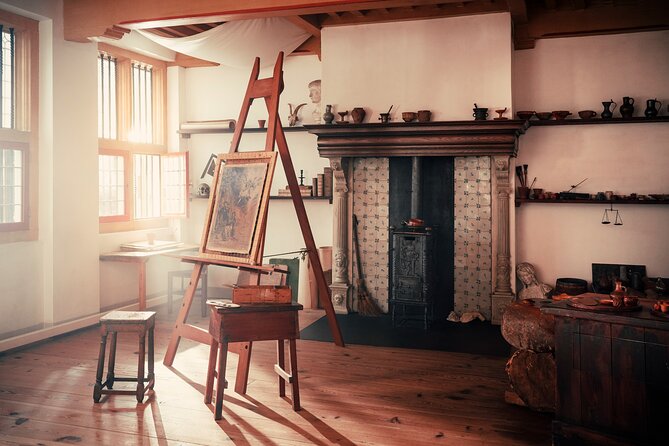
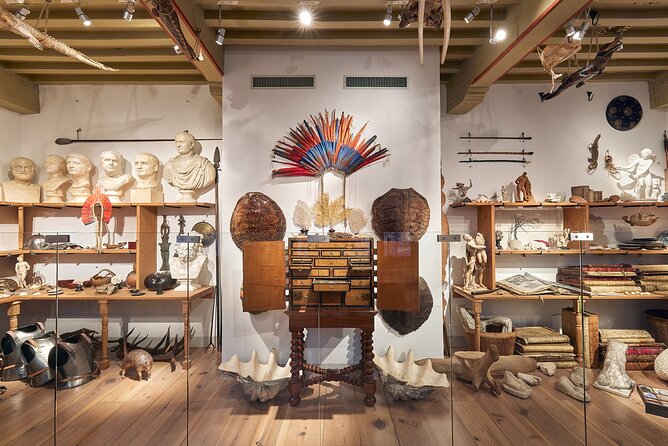
Many furnishings and objects are presented in period style, but you should not expect every item to have belonged to Rembrandt. One useful part of the experience is seeing how the house has been reconstructed and furnished to suggest 17th-century Amsterdam life. The setting gives context to his work even when the object in front of you is not one of his personal possessions.
The museum reopened in March 2023 with five additional spaces. The expansion adds an epilogue room, an etching attic, and a third exhibition room. These rooms help prevent the visit from feeling like a quick walk through a narrow old house. They also provide more space for drawings, prints, and changing displays connected to Rembrandt and his contemporaries.
More Rembrandt tickets in Amsterdam:
- Rembrandts Experience Amsterdam Admission Ticket
★ 4.5 · 521 reviews - Amsterdam: Van Gogh and Rembrandt Immersive Experience Entry
★ 4.2 · 334 reviews - Amsterdam: Rembrandts Immersive Experience Admission Ticket
★ 4.2 · 249 reviews
Following the house from room to room
The visit is self-guided, supported by a free multimedia tour. It is available in several languages, with the museum information listing 13 language options. The audio gives you more than dates and labels. It explains Rembrandt’s early life in Amsterdam, his short marriage to Saskia, his teaching, his working methods, and the financial troubles that eventually changed his life.
I recommend using the guide from the start rather than wandering first and trying to match the rooms later. The house is compact, and the route can make backtracking awkward. Some visitors have found it hard to identify which room matches the next audio section, so pay close attention to the room images and sequence on the device.
The audio guide is especially useful if you do not already know much about Rembrandt. It connects the domestic rooms to his professional life. A bedroom or reception room becomes more meaningful when you understand who used it and how Rembrandt’s growing fame affected his spending and social position.
Families can use a separate multimedia tour designed for children. That is a good feature for parents who want more than a silent walk through old rooms. Adults who prefer to move quickly can also keep their own pace. There is no live group lecture to hold you in place, and the ticket information lists a maximum group size of 15.
The studio where Rembrandt made paint
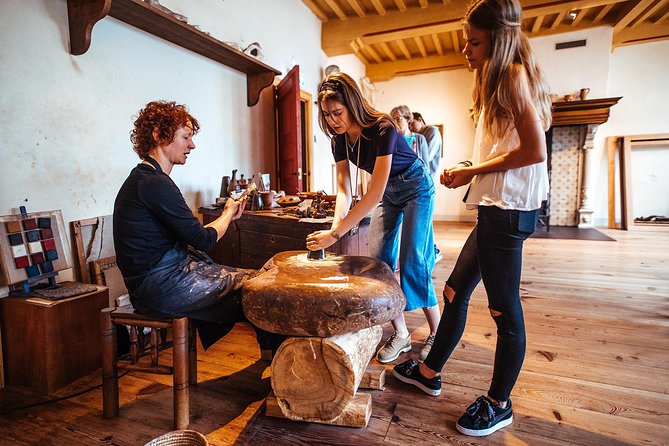
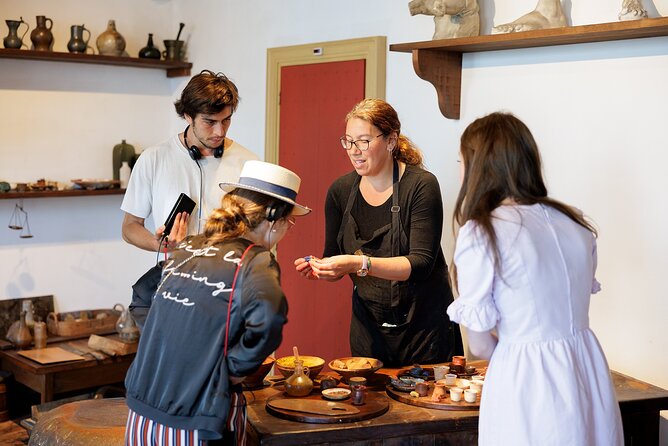
The studio is the heart of the visit. This is where you get the clearest sense of Rembrandt as a working craftsman rather than a distant artistic genius. A daily demonstration explains how paint was made from basic materials, using the same room where Rembrandt created his paintings.
That detail gives the museum real value. A finished painting can make the work look effortless. The demonstration brings back the physical side of the job: preparing materials, mixing colors, and controlling the consistency of paint before it ever reached the canvas.
I would plan your visit around the daily demonstration if possible. The exact schedule is not provided with the ticket information, so check at the museum when you arrive. If you rush through the house in an hour, this may be the part you miss, and it is one of the most useful features included with admission.
The studio also helps explain Rembrandt’s role as a teacher. He trained students and worked in an environment where artistic knowledge passed from master to pupil. The displays connect his process with the people around him, including his student Samuel van Hoogstraten, whose work receives attention in the museum.
The new etching attic and copper plates
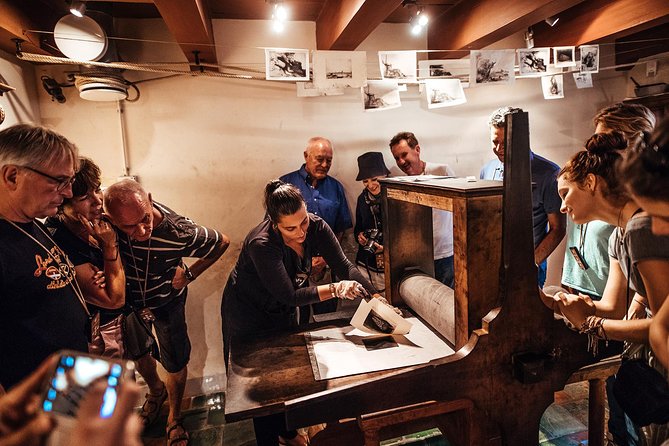
Rembrandt is famous for paintings, but his etchings are central to his reputation. The new etching attic gives this side of his work a dedicated place. Here you learn how he used etching techniques and how prints were made from copper plates.
A live demonstration of the printing process is one of the strongest moments in the museum. You can watch how an image is transferred from a plate to paper, making the method easier to understand than a label or diagram alone. It also shows why small changes in line, pressure, and ink could alter the final print.
This is a good stop for people who are not art specialists. You do not need to know the difference between drypoint and other printmaking methods to appreciate the basic idea. The demonstration lets you see the process from close range and makes Rembrandt’s working life more concrete.
The attic also adds variety to the house visit. Instead of looking only at rooms and furnishings, you see a technique in action. If you have already visited Amsterdam’s larger art museums, this smaller presentation can still add something useful because it focuses on how the image was produced.
More museums and galleries in Amsterdam:
- Amsterdam: The Upside Down Museum Entrance Ticket
★ 4.4 · 9,506 reviews - Amsterdam: Red Light Secrets Museum Entry Ticket
★ 4.2 · 5,722 reviews - Amsterdam’s Weirdest Museum: Believe It or Not!
★ 4.5 · 4,086 reviews - Amsterdam: Van Gogh Museum Ticket and City Canal Cruise
★ 4.6 · 3,899 reviews
Rembrandt’s family, fortune, and debts
The museum does not present Rembrandt as a flawless celebrity. It follows his personal and financial problems as carefully as his success. You learn about his early years in Amsterdam, his marriage to Saskia, and the pressure of living in a large house while buying art, objects, and other materials.
His financial collapse is an important part of the story. Rembrandt’s forced departure was not a minor footnote. It shows the cost of his lifestyle and the unstable side of success in 17th-century Amsterdam. The final part of the visit works as an epilogue, bringing his story beyond the rooms where he was most successful.
I like this balance. You see why Rembrandt mattered, but you also see the practical problems behind his public image. The home becomes a record of changing fortunes. One room can suggest status and comfort, while the broader story explains how quickly that position could disappear.
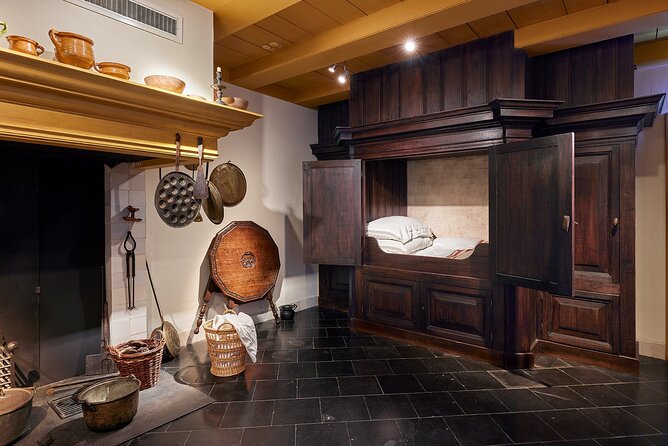
The museum also gives you a sense of 17th-century domestic life. Period furnishings and household objects help you picture the scale and routines of the home. Do not expect a broad survey of all Dutch life, but do expect a focused look at one artist’s household and working world.
How much time should you allow?
The stated duration is about one hour. That is enough for a brisk visit, especially if you skip some audio sections and do not wait for a demonstration. I would allow at least 90 minutes, and closer to two hours if you want to listen carefully, pause at the displays, and see the live presentations.
The extra time matters because this is not only a series of rooms. The multimedia guide carries much of the biography, and the demonstrations are scheduled experiences rather than objects you can absorb in a few seconds. You may also find two additional exhibition rooms near the museum entrance after moving through the house.
A practical plan is to start with the main route, listen to the sections about the house and studio, then spend time in the etching attic and exhibition rooms. If the guide loads slowly, give yourself extra time. This has been a problem with some audio devices, so do not schedule the museum so tightly that a delay causes you to miss your next Amsterdam plan.
The route can be difficult to reverse. Once you have moved upstairs or into a new section, returning to an earlier room may not be simple. Take a moment at the beginning to understand the route, and do not race past a room assuming you can easily come back.
Steep stairs and practical comfort
The old house has steep, narrow staircases. This is one of the clearest practical drawbacks. The stairs help preserve the feeling of a historic home, but they can be hard for anyone with mobility issues, balance problems, or a fear of tight spaces.
Most people can take part, according to the admission information, but that does not mean the building is easy for everyone. If you need step-free access or have serious difficulty with stairs, contact the museum before booking. The ticket details do not provide a full accessibility plan, so you should not assume every part of the route is accessible.
Wear comfortable shoes and avoid bringing a schedule that requires you to hurry. The house is not a place for a quick, careless pass. The physical layout is part of what makes the setting convincing, but it also requires patience.
The museum is near public transportation, making it straightforward to add to an Amsterdam day. You can combine it with nearby food and shopping stops, though the exact route depends on your plans. A café is reported at the corner near the museum, and a flea market nearby can make the visit part of a longer neighborhood outing.
Is the $26.01 ticket good value?
At $26.01 per person, the ticket is not a bargain basement museum admission. It becomes fair value if you use what is included: the house, the multimedia guide, the daily live demonstrations, the added exhibition spaces, and the family audio option.
The value is strongest for visitors who want process and biography, not a large collection of major Rembrandt paintings. If your main goal is to see many finished masterpieces, this is not the right substitute for a major art museum. The Rembrandt House gives you a more personal setting, with tools, rooms, drawings, etchings, and demonstrations doing much of the work.
The ticket is also useful for independent sightseeing. You are not paying for a private guide, and you can move at your own speed. The maximum group size of 15 applies to the activity information, but the visit itself is self-guided rather than a traditional escorted tour.
I would book ahead if the museum fits a fixed Amsterdam itinerary. It is booked an average of 33 days in advance, which suggests that popular dates can fill. Check the date carefully, especially around holidays. One booking problem reported for New Year’s Day shows why you should confirm that the museum is open on your chosen date rather than assuming a ticket sale guarantees it.
Free cancellation is available up to 24 hours before the experience start time. Inside that window, the amount is not refunded and changes are not accepted. Also make sure your mobile ticket displays properly. The museum uses a scannable code, and a booking number or email alone may not be enough at the entrance.
Who will enjoy this museum most?
I would recommend it to anyone curious about how artists actually worked. The paint-making and etching demonstrations are more useful than a long wall of text, and the studio gives you a direct connection to Rembrandt’s professional life.
It also suits visitors interested in social history. You see a famous artist as a husband, teacher, collector, homeowner, and debtor. The house explains how personal choices and money shaped his career.
Families have a reason to consider it because of the separate multimedia tour for children. Art enthusiasts will appreciate the etchings, drawings, and references to Rembrandt’s students and contemporaries. First-time Amsterdam visitors can use it as a compact introduction to Dutch art and 17th-century city life.
I would be more cautious if you dislike audio guides, cannot manage steep stairs, or only want a large display of major paintings. The museum’s strength is the setting and the working process. It is not a substitute for every other Rembrandt collection in Amsterdam.
Should you book the Rembrandt House Museum?
Book this experience if you want to stand in Rembrandt’s studio, understand how he made paint and prints, and follow the personal story behind his fame. Allow more than the advertised one hour, use the audio guide, and time your visit to include the demonstrations.
Skip it only if stairs are a serious problem or your Amsterdam schedule leaves no room for a slow, self-guided museum visit. For most art and history fans, the $26.01 ticket earns its place through the house, the studio, and the chance to see artistic methods explained where they were practiced.
FAQ
How long does the Rembrandt House Museum visit take?
The listed duration is approximately one hour. You should allow 90 minutes to two hours if you want to use the multimedia guide, see the demonstrations, and visit the added exhibition spaces without rushing.
Is an audio guide included?
Yes. A free multimedia guide is included, with options in multiple languages. The museum information lists 13 languages, and a separate multimedia tour is available for families with children.
What demonstrations are included?
Daily live demonstrations and workshops are included. The museum demonstrates how paint was made in Rembrandt’s studio and explains etching and printing techniques in the etching attic.
Are there many original Rembrandt paintings on display?
The experience focuses on Rembrandt’s home, studio, drawings, etchings, working methods, furnishings, and objects connected with his period. It does not function mainly as a large gallery of his finished paintings.
Are the stairs difficult?
Yes. The house has steep, narrow staircases. This may be difficult for people with mobility issues, so consider your comfort with stairs before booking.
Is the museum near public transportation?
Yes. The museum is described as being near public transportation.
Can I cancel for a refund?
You can cancel up to 24 hours before the experience start time for a full refund. Cancellations or changes made less than 24 hours before the start time are not accepted for a refund.
Newest Amsterdam write-ups
- Zaanse Schans: Half-Day Private Guided Tour★ 5.0 · 4 reviews
- Zaanse Schans: Private Cruise + Live Guide, Optional Drinks★ 4.7 · 26 reviews
- Zaanse Schans: Wooden Shoe Painting Workshop★ 4.9 · 23 reviews
- Amsterdam: Private Zaanse Schans Windmills and Volendam Trip★ 4.9 · 31 reviews
- Zaanse Schans: Pancake Restaurant Visit★ 4.5 · 26 reviews
- Amsterdam: Zaanse Schans E-Bike Tour with Windmills & Cheese★ 4.5 · 12 reviews
- Zaandam: Paint a Perfect Portrait workshop★ 5.0 · 5 reviews
- Volendam: Volendams Museum Entry Ticket★ 4.4 · 14 reviews
Rembrandt Experience Tickets, compared.

Rembrandts Experience Amsterdam Admission Ticket
Read our review →
Van Gogh and Rembrandt Immersive Experience Entry
Read our review →
Rembrandts Immersive Experience Admission Ticket
Read our review →
Private Rijksmuseum Tour- The Dutch Masters, Rembrandt & Vermeer
Read our review →
Rembrandt Experience VIP Admission Ticket + Photo
Read our review →
Van Gogh and Rembrandt Immersive Experience Entry Amsterdam
Read our review →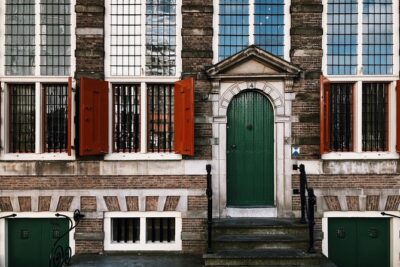
Skip-the-line Rijksmuseum & Rembrandt House Semi-Private 8ppl Max
Read our review →
Browse the lists this tour appears in