
Reviewed · AMSTERDAM WALKING TOURS
Private Amsterdam Walking Tour
Amsterdam is a city of small streets and big subjects. In just two hours, this private walking tour takes you from the Red Light District and its coffee shop culture to Anne Frank’s neighborhood, Albert-Cuyp Market, Begijnhof, and Dam Square. It is an ambitious route, but a useful way to get your bearings fast.
I like the private format, since your guide can shape the walk around your interests. I also like the human touch shown by guides such as Pilar, Andrea, Ian, and a Dutch guide praised for adapting to the customer’s wishes. The main consideration is time: two hours is short for such a wide route, especially if you stop for food or drinks.
Key points at a glance
- The route covers a lot: See the Red Light District, Jordaan, Rembrandtplein, Leidseplein, Albert-Cuyp Market, Begijnhof, the Jewish quarter, and Dam Square.
- Your guide can adjust the walk: The private group format lets you focus more on history, culture, daily life, or particular neighborhoods.
- The Red Light District comes with context: Learn about prostitution, coffee shop culture, political questions, and Amsterdam’s past.
- The Jordaan adds a quieter change of pace: Visit the area around the Anne Frank House and West Church.
- The market stop is practical and lively: Albert-Cuyp Market sells food, clothes, and a wide range of everyday goods.
- The route is brisk: A two-hour overview is best for first impressions, not a slow, detailed visit to every stop.
Starting near Amsterdam Central Station
The meeting point is in front of the main entrance of the Park Plaza Victoria Hotel at Damrak 1-5, near Amsterdam Central Station. You can also arrange to meet your guide at your hotel, according to the tour information.
This location is useful if you have just arrived by train or want to begin in the center. Damrak leads directly into the city, so you are quickly among the narrow streets and canals rather than spending the first part of the tour getting across town.
Before you set out, keep the two-hour length in mind. The route includes many districts, and the guide may need to keep a steady pace. If you have a strong priority, tell the guide at the start. The private setup makes this much more useful than a fixed group walk where every stop gets the same amount of time.
Guides are available in Dutch, English, German, and Spanish. The individual guide matters here because the tour covers sensitive subjects as well as famous sights. Past guide names connected with especially strong feedback include Pilar, Andrea, and Ian. One guide was praised for adapting to personal wishes, while Ian was singled out for explaining Amsterdam’s culture, history, and everyday life in an easy, engaging way.
More walking tours in Amsterdam:
- Anne Frank’s Story – Guided Walking Tour through Amsterdam
★ 5.0 · 11,619 reviews - Amsterdam: Life of Anne Frank and World War II Walking Tour
★ 4.8 · 10,467 reviews - Absolutely Amsterdam – the Essential Introductory Walking Tour
★ 5.0 · 3,629 reviews
The Red Light District and Amsterdam’s difficult subjects
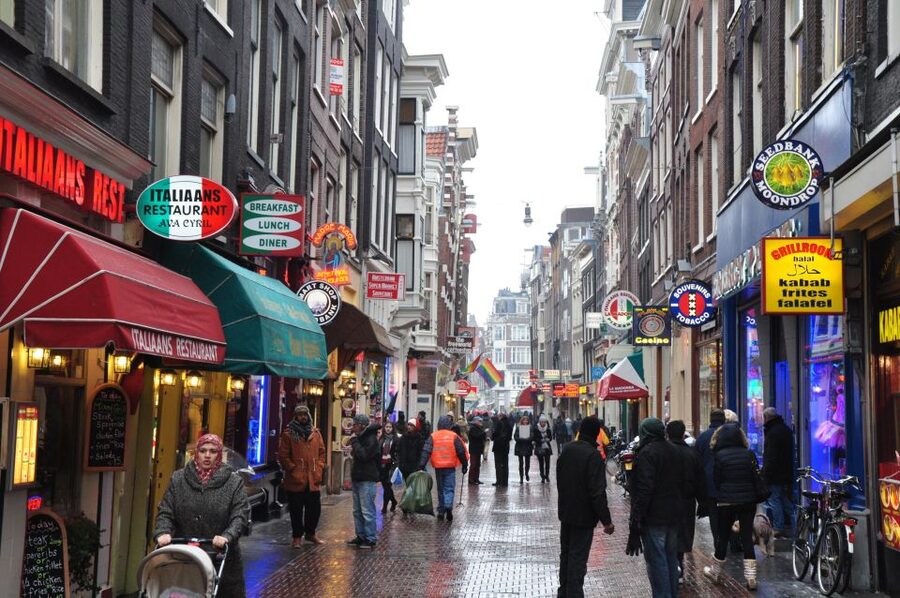
The first major section visits the Red Light District. You walk through its atmospheric streets while the guide explains coffee shop culture, prostitution, political issues, and the area’s history.
This is one of the strongest parts of the route because the district is easy to misunderstand if you only see it as a row of unusual storefronts. A local guide can provide the social and political background that turns a quick walk into a more useful introduction to Amsterdam.
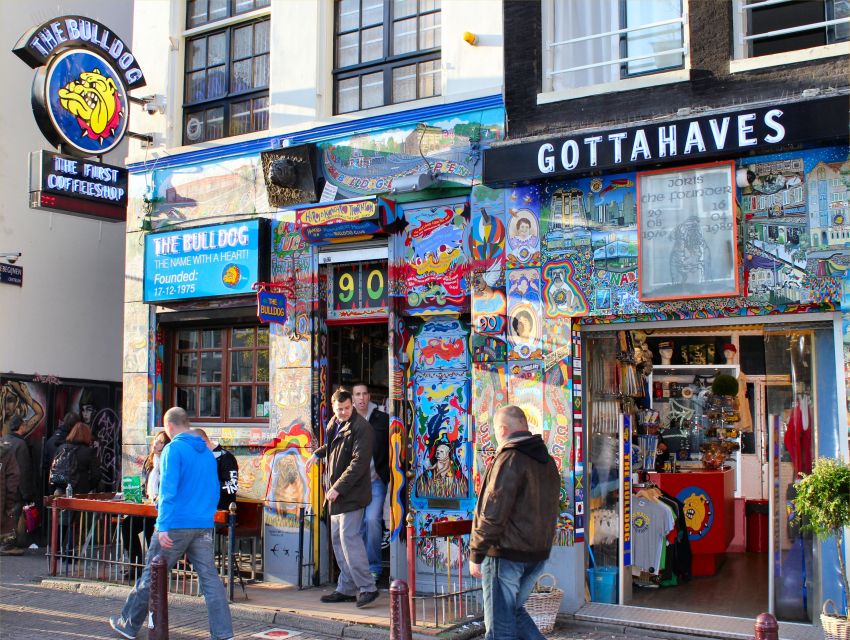
You also see Amsterdam’s narrowest street, the first coffee shop in the world, and the first condom shop in the world. These details give the opening section a distinctly local character. They are small sights, but they help explain the city’s long association with personal freedom, regulation, and practical public discussion.
The subject matter is not for everyone, especially families or visitors who prefer a traditional monuments-only walk. Still, the tour presents the area as part of Amsterdam’s culture and history rather than treating it as a cheap spectacle. Ask questions if you want more context, or tell your guide if you would rather spend more time elsewhere.
Because the district is near the starting point, this section also gets you into the city quickly. You are not merely looking at buildings from a distance. The format is a walking conversation, with the guide explaining what you are seeing as you move through the streets.
Jordaan, Anne Frank, and West Church
The tour then moves to the Jordaan, a former working-class area that now draws visitors for its streets and cultural sights. The route includes the Anne Frank House and West Church, as well as a walk through the neighborhood itself.
The Jordaan is an important contrast to the Red Light District. The first area raises questions about public policy and social custom. The Jordaan gives the walk a more residential and historical feel, with attention to the people and communities connected to the area.
The guide explains Anne Frank and the setting around the Anne Frank House. This is not described as an entry ticket to the house, so you should not expect admission to the museum. Instead, treat this part as an orientation and background stop. If visiting the Anne Frank House is a priority, you will need to arrange that separately.
West Church adds another recognizable point to the walk. The guide can connect the church and surrounding streets to the story of the neighborhood, giving you more than a quick photograph. With only two hours, the stop is likely to be concise, but it can help you decide which parts of the Jordaan deserve a longer return visit.
I would tell the guide early if Anne Frank’s story is your main interest. The private format gives you a better chance of adjusting the pace, although the route still has many remaining stops.
Rembrandtplein and Leidseplein for a short break
The itinerary continues to the areas around Rembrandtplein and Leidseplein. These are lively parts of central Amsterdam, and the plan allows time for a relaxing break with the option to buy drinks or food.
This pause is useful in practical terms. Two hours of walking through central Amsterdam can feel quick but tiring, and a short stop gives you time to talk with the guide about what you have seen. It also lets you make a small purchase if you need a drink or snack.
The tradeoff is simple: time spent sitting or eating is time not spent walking. If your priority is to see every listed neighborhood, keep the break brief. If you want a more relaxed private experience, use the pause to ask about culture, daily life, or places you may want to visit later.
The route does not promise a meal or any included food. You purchase your own drinks and food, so budget separately for that. The value of this section is the flexibility, not a formal dining experience.
Same city, a completely different afternoon:
- Amsterdam Classic Saloon Boat Cruise with Drinks and Cheese
★ 5.0 · 31,825 reviews - Amsterdam Luxury Canal Cruise + Unlimited Drinks & Bites option
★ 5.0 · 30,518 reviews - Amsterdam: Heineken Experience Ticket
★ 4.6 · 30,055 reviews - Amsterdam: Rijksmuseum Entry Ticket
★ 4.7 · 25,535 reviews
Albert-Cuyp Market and everyday Amsterdam
After the central squares, the walk reaches Albert-Cuyp Market, described as the largest street market in the Netherlands. You can find food, clothes, and many other everyday goods here.
This is a welcome change from the major sightseeing stops. A market shows how a city functions in ordinary life. You can browse practical items, look at food stalls, and see a part of Amsterdam that is less focused on famous names and historic landmarks.
The market also gives the guide a chance to explain local habits and daily routines. Since the tour is private, you can ask about the products that catch your eye instead of following a standard script.
Do not expect a long shopping session. The full walk still has the Begijnhof, Jewish quarter, and central sights ahead. If you love markets, tell your guide that this is a priority. If your main interest is architecture or political history, you may prefer to keep moving.
The market is also a reason to wear comfortable shoes. The route includes several districts, and even a quick stop means time on your feet. The operator does not provide transportation, so this is a walking experience from start to finish.
Begijnhof, the Jewish quarter, and Dam Square
The final part returns toward central Amsterdam and includes the Begijnhof, the Jewish quarter, and more central sights. The walk ends at Dam Square or another location you choose.
Begijnhof gives the route another change of mood. After the commercial energy of Albert-Cuyp Market, this is a quieter historic place within the center. The Jewish quarter adds another layer to the city’s story and lets the guide connect Amsterdam’s neighborhoods with its people and communities.
Ending at Dam Square is practical for many visitors. You are left in a central area with easy access to more sightseeing, shopping, dining, or your next appointment. If you have a hotel or meeting point elsewhere, ask whether the guide can finish at your chosen location.
The final stretch is also where the tour’s wide scope becomes clearest. You have moved through areas linked with nightlife, working-class neighborhoods, markets, religion, Jewish history, and central Amsterdam. You will not get a detailed study of every district in two hours, but you will have a useful map in your head.
What $235 means for a private two-hour walk
The listed price is $235 per group up to 1. The wording is unusual, so check the booking details carefully before paying to confirm how the group price applies to your party. The important point is that this is priced as a private experience rather than as an inexpensive group walking tour.
That can be good value if you are traveling with people who want different things. You can ask for more history, more local culture, more market time, or more attention to a particular neighborhood. A private guide also avoids waiting for a large group and makes it easier to ask direct questions.
The value is weaker if you only want a basic introduction and are happy to follow a fixed route with strangers. The two-hour limit also affects the calculation. You are paying for personal attention and flexibility, not a long tour with extended visits at each sight.
The tour includes a private local guide. Food, drinks, and entry to attractions are not listed as included. Keep that in mind at the Anne Frank House, where this walk provides outside context rather than confirmed museum admission.
Free cancellation is available up to 24 hours before the start for a full refund. You can also reserve now and pay later, which helps if your Amsterdam schedule is still changing.
Who will get the most from this tour
I would recommend this walk most strongly to first-time visitors who want a fast orientation with a local person. It is also a good fit if you have only a short stay and want to see several districts before deciding where to return.
The private format suits couples, families, and small groups with specific interests. A Dutch-speaking visitor might ask for more local detail, while an English, German, or Spanish speaker can choose the language that makes the history easiest to follow.
It is less suitable if you want a slow museum-focused tour or a deep visit to one neighborhood. The route is broad, and the two-hour schedule means you will often see a place, hear its main story, and move on.
This walk also suits visitors who want help with subjects that need explanation. The Red Light District, coffee shop culture, prostitution, Anne Frank, and the Jewish quarter are not simple postcard topics. A guide can help you understand the setting and avoid reducing Amsterdam to a list of famous sights.
Practical tips for making the two hours count
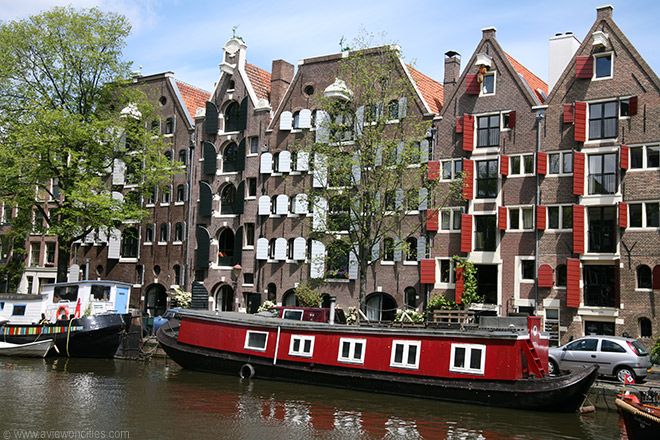
Tell your guide your priorities before the walk begins. The available route is broad enough that your choices matter. If you care most about Anne Frank and the Jordaan, ask for more time there. If you want markets and everyday culture, protect time for Albert-Cuyp Market.
Wear comfortable shoes and expect continuous city walking. The tour covers several central districts and does not include transportation.
Plan food and drinks as optional personal purchases during the break. They are not included in the tour price.
If you want to enter the Anne Frank House or another attraction, arrange that separately. The tour describes visits to the surrounding areas and explanations from the guide, not included admission.
Choose your language carefully when booking. Dutch, English, German, and Spanish are available, which is helpful when the tour touches on history, politics, and social customs.
Should you book this Amsterdam walking tour?
Book it if you want a private, fast-moving introduction that connects Amsterdam’s famous sights with its neighborhoods and social history. The best reasons are the flexible guide, the wide route, and the chance to ask questions in your own language.
Skip it if you want a slow walk, included museum entry, or a detailed visit to one district. Two hours can cover a surprising amount of ground, but it cannot give every stop equal attention.
For a first morning or afternoon in Amsterdam, I see this as a useful orientation. Guides such as Andrea, Pilar, and Ian have been praised for adapting the walk and explaining the city in an approachable way. Just set realistic expectations: this is a broad city sampler, not a full tour of every attraction.
FAQ
Where does the tour meet?
The listed meeting point is in front of the main entrance of the Park Plaza Victoria Hotel at Damrak 1-5, 1012LG, Amsterdam, near Amsterdam Central Station.
Can I meet the guide at my hotel?
The tour information says you can meet the private guide at your hotel or at Amsterdam Central Station. Confirm the exact meeting arrangement when booking.
How long does the tour last?
The walking tour lasts two hours.
Is this a private tour?
Yes. It is offered as a private group experience with a private local guide.
Which languages are available?
The guide can provide the tour in Dutch, English, German, or Spanish.
Does the tour include Anne Frank House admission?
The tour includes the Jordaan area and information about Anne Frank and the Anne Frank House. Entry admission is not listed as included.
Does the tour include food or drinks?
No. You may take a break around Rembrandtplein or Leidseplein and purchase your own food or drinks.
Where does the tour finish?
The stated ending point is Dam Square or another location chosen by you.
What areas does the tour visit?
The route includes the Red Light District, Jordaan, Rembrandtplein, Leidseplein, Albert-Cuyp Market, Begijnhof, the Jewish quarter, and central Amsterdam.
Can I cancel for a full refund?
Yes. You can cancel up to 24 hours in advance for a full refund. You can also reserve now and pay later.
Newest Amsterdam write-ups
- Amsterdam: Self-Guided Food Tour in De Jordaan Neighbourhood★ 3.4 · 10 reviews
- Amsterdam: Sex, Drugs, and Freedom Walking Tour★ 4.6 · 74 reviews
- Amsterdam: Self-Guided Food Tour in De Pijp Neighbourhood★ 3.7 · 20 reviews
- Amsterdam Light Festival Boat Cruise★ 5.0 · 3 reviews
- Amsterdam: ARTIS-Groote Museum Entry Ticket★ 4.2 · 21 reviews
- Amsterdam: Treasure Hunt Walking Tour “A Secret Sender”★ 4.7 · 71 reviews
- Amsterdam: Rijksmuseumtour incl. Ticket German or English★ 5.0 · 7 reviews
- Amsterdam: Roller Dreams & Amsterdam Nightlife Experience★ 3.7 · 3 reviews
Amsterdam Walking Tours, compared.

Anne Frank’s Story – Guided Walking Tour through Amsterdam
Read our review →
Life of Anne Frank and World War II Walking Tour
Read our review →
Absolutely Amsterdam – the Essential Introductory Walking Tour
Read our review →
Anne Frank Walking Tour – Guided in EN/DE/IT/ES
Read our review →

Anne Frank Walking Tour Amsterdam Including Jewish Cultural Quarter
Read our review →Browse the lists this tour appears in