

Reviewed · AMSTERDAM RED LIGHT DISTRICT TOURS
MUST DO: Amsterdam’s Red Light District tour with a local
Amsterdam’s Red Light District is far more than neon windows and late-night crowds. This two-hour walk uses the area as a doorway into Amsterdam’s oldest streets, covering wooden buildings, medieval defenses, trade, sex work, cannabis culture, and the city’s changing rules. The best guides, including Ben, Robin, Sander, and Max, bring plenty of stories and local context.
I like the way the tour links famous sights to everyday history, especially the wooden foundations beneath the city and the old Waag. I also like that it is not focused only on the sex industry. The main drawback is that guide quality can vary, and one poor account describes a guide who walked too fast and was hard to hear.
Key points at a glance
- Amsterdam’s oldest quarter: Walk through the Old Town, part of the Red Light District, where many stops connect to the city’s early growth.
- History beyond the neon: Learn about medieval defenses, guilds, wooden foundations, trade, and Amsterdam’s unusual buildings.
- A clear local perspective: Guides such as Ben, Robin, Sander, Robin, and Max have been praised for humor, stories, and practical tips.
- An after-dark setting: The tour is offered in the evening, when the district takes on a very different feel.
- A small but not guaranteed group: The maximum is 20 people, though some departures have been much smaller.
- A tour for adults and mature teenagers: An earlier 6 p.m. version may suit families better, while later departures are intended more for adults.
What the Red Light District reveals about Amsterdam
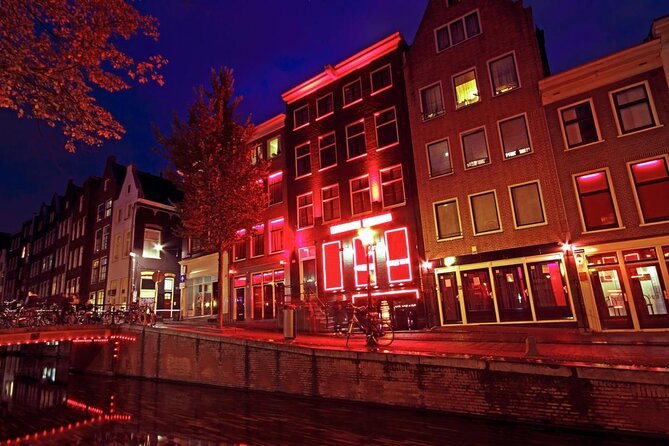
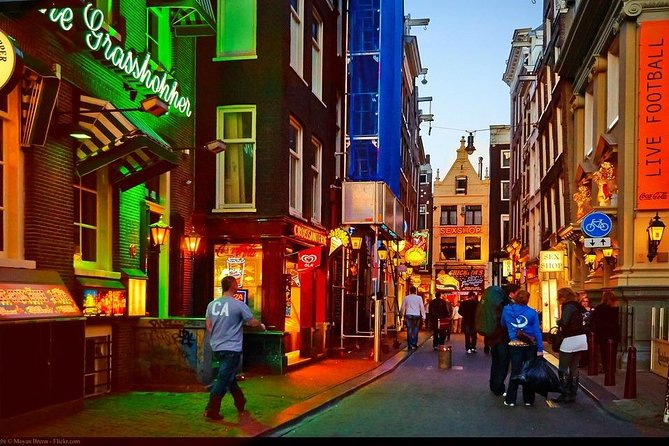
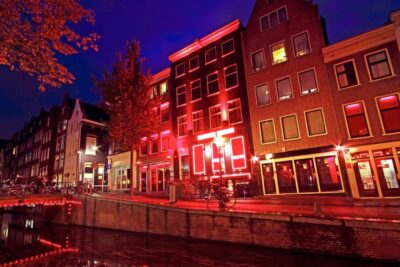
The Red Light District is one of Amsterdam’s most misunderstood areas. You will see sex-work windows, adult shops, cafés, narrow lanes, and crowds, but the district also occupies the oldest part of the city. That makes this tour useful for putting the visible modern scene into a longer story.
Your guide explains how the area developed and discusses its current situation without treating it as a simple spectacle. The strongest parts of the walk connect the sex industry to Amsterdam’s trading past, local regulations, tourism, and the changing character of the Old Town.
I would not book this as a purely historical walking tour. You will spend time discussing the Red Light District and its customs, and some parts may feel direct or uncomfortable. But I would not book it only for the windows, either. Much of the value comes from seeing how this famous quarter fits into the wider city.
The tour is offered in English and lasts about two hours, although one account describes a walk of roughly one hour and 35 minutes. That difference may depend on the guide, group pace, and stops on the evening. Plan for a real walking tour rather than a quick photo stop.
More Red Light District tours:
- Amsterdam: Red Light Secrets Museum Entry Ticket
★ 4.2 · 5,722 reviews - Amsterdam: Red Light District Tour in German/English/Italian
★ 4.9 · 5,623 reviews - Amsterdam Red Light District & Coffee Shop Tour
★ 4.6 · 4,134 reviews
Starting at Geldersekade 2
The walk begins at Geldersekade 2, near the edge of the Old Town and the Red Light District. You return to the same meeting point at the end, which makes the tour easy to fit into an evening plan.
You should arrive early. One traveler arrived two minutes after the 6 p.m. start in icy weather and found the group had already left. The operator stated that the guide waited until 6:10 and attempted to call and send messages, but the missed start still caused a serious problem. In practical terms, Amsterdam’s narrow streets, traffic, and evening crowds make it hard to catch a walking group once it moves off.
The meeting point is near public transportation, and confirmation is provided when you book. Since you will be on foot for the full experience, wear shoes with good grip. This matters even more in wet or icy conditions, when the district’s old streets can be unpleasant underfoot.
The group limit is 20 people. That is small enough for a personal feel when everyone stays close, though it is not a private tour in the ordinary sense. Some groups have been as small as five, while the maximum allows for a more crowded experience.
Wooden foundations and the city built on trees
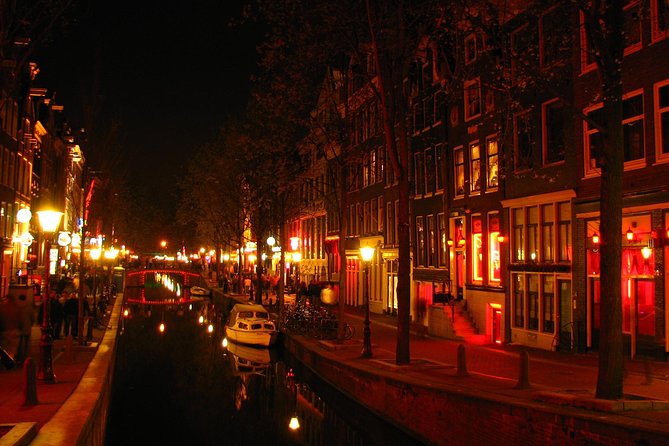
One of the most useful early lessons concerns Amsterdam’s ground. The city sits on layers of peat and clay, so builders historically drove long wooden poles down through the soft soil until they reached a stronger sandy layer about 11 meters below ground.
This explains why Amsterdam’s buildings can appear narrow, tall, and slightly tilted. You are not just hearing a strange construction fact. You are learning why the city required such unusual engineering and why old buildings need constant care.
The story also gives the tour a welcome shift away from the obvious Red Light District material. If you arrive expecting two hours of adult-themed commentary, this stop sets a broader tone. The neighborhood becomes a record of how Amsterdam was built, not just a place for nightlife.
The exact route can vary with the guide, but this foundation story is especially helpful near the start because it gives you something to watch for as you walk. Look up at the facades and notice how closely the buildings stand together. The guide’s explanation makes the city’s architecture easier to read.
Int Aepjen, one of two wooden buildings
Pub Int Aepjen, also known as The Ape, dates to around 1540. It is one of only two remaining wooden buildings in Amsterdam, which makes it an unusual stop in a city where brick facades became the rule.
A major fire in 1452 led the government to require brick facades after the destruction caused by timber buildings. Int Aepjen survived that change and gives the tour a physical link to an earlier Amsterdam, when wood was much more common.
This is the kind of stop I value on a city walk. You can pass the building on your own and see an old pub, but you may not understand why its material matters. The guide supplies that missing piece.
The stop is also a reminder that the Red Light District is not a separate entertainment zone built recently for tourists. It is woven into the old city, where pubs, trade, religion, housing, and adult businesses have shared tight streets for centuries.
Same city, a completely different afternoon:
- Amsterdam Classic Saloon Boat Cruise with Drinks and Cheese
★ 5.0 · 31,825 reviews - Amsterdam Luxury Canal Cruise + Unlimited Drinks & Bites option
★ 5.0 · 30,518 reviews - Amsterdam: Heineken Experience Ticket
★ 4.6 · 30,055 reviews - Amsterdam: Rijksmuseum Entry Ticket
★ 4.7 · 25,535 reviews
The Waag and Amsterdam’s medieval edge
The Waag is one of the most important architectural stops on the route. It began as one of Amsterdam’s city gates and formed part of the defensive wall in the 1400s. It is described as the second-oldest building in Amsterdam.
Later, the building housed guilds, the organizations that represented craftsmen and tradespeople. That changing role tells you something about Amsterdam’s growth. A defensive structure became part of the working city, linking military protection with commerce and skilled labor.
The Waag also helps explain the layout of the surrounding square. Instead of seeing a collection of old facades, you begin to recognize a former entrance to the city and a place where trades were organized. A good guide will help you picture the medieval town around the surviving building.
This is one of the tour’s strongest history stops because it gives the evening a solid anchor. Even if the Red Light District discussion is not your main interest, the Waag alone adds useful context to a walk through the Old Town.
The smallest house and Amsterdam’s tight spaces
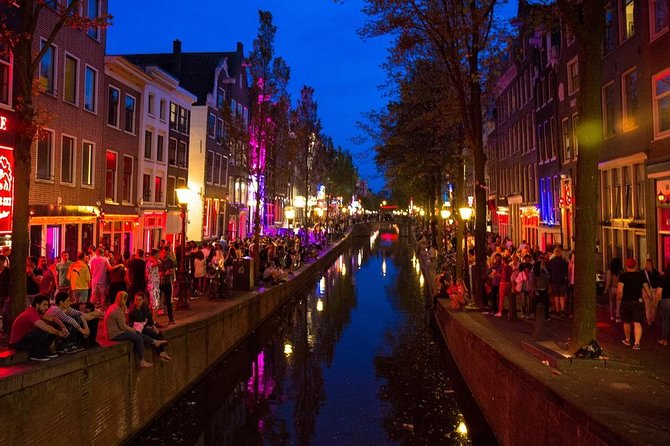
Another stop is a tiny house built around the 1700s. It first served as a storage place for the Dutch East India Company, known as the VOC, before later becoming a home.
Its size reflects the pressure on space in central Amsterdam. Land was valuable, buildings were narrow, and commercial storage could sit directly beside living quarters. The stop connects domestic life with the city’s trading past without requiring a long museum visit.
You should expect the guide to point out the exterior and explain its former uses rather than offer a lengthy indoor visit. The appeal is in the story and the scale. After walking past larger historic buildings, a very small house makes Amsterdam’s old urban limits easy to understand.
This also adds variety to the route. The tour moves from adult businesses to engineering, pubs, defenses, guilds, and trade. That range is why the experience can work for someone who wants to understand Amsterdam as a city, not simply photograph the district’s most famous signs.
Sex work, adult shops, and the modern district
The tour does discuss the Red Light District’s sex industry and its present-day situation. Your guide provides information about local customs and the way the area functions now, rather than leaving you to form conclusions from the crowds outside the windows.
You should expect direct language. This is not a sanitized family sightseeing walk, especially on later evening departures. One earlier 6 p.m. version was described as more suitable for families and a 17-year-old, while the later tour was considered better for adults. That distinction is useful when choosing your start time.
The route also includes a stop at a condom shop that has been in place since 1987. It is described as the world’s first shop devoted specifically to condoms, with customized sizing and a wide range of products. This is a quirky stop, but it fits the tour’s effort to explain the district through practical details rather than simple shock value.
One account also describes a cannabis shop visit. Since the stated route does not guarantee that stop, I would treat it as a possible guide-dependent addition rather than a fixed feature. If that subject matters to you, ask the operator before booking.
The best approach is to listen with an open mind and remember that the area is a working neighborhood as well as a tourist attraction. Avoid photographing people in windows. Keep your voice down near residents and businesses, and follow the guide’s instructions about where to stand.
The guides make the biggest difference
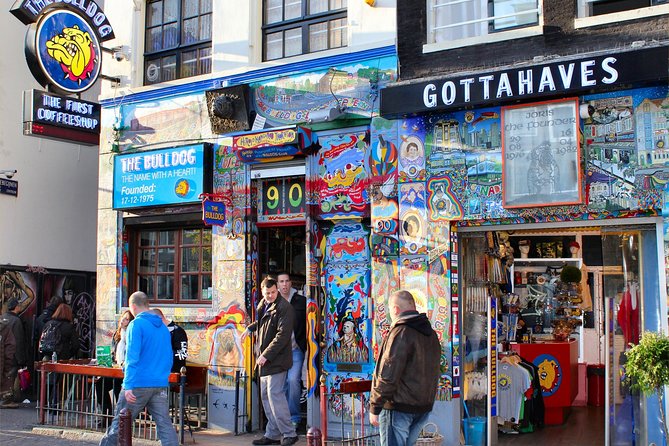
Guide quality is the main variable here. Ben has been praised for making history lively and for explaining the area clearly. Robin has been credited with local tips and an easy manner, while Sander has been noted for clear storytelling about Amsterdam’s past. Max has been described as funny and well informed.
Those comments point to what you should want from the guide: a clear voice, a sense of humor, and the ability to move between history and current affairs. The strongest guides do not simply point at buildings. They explain why a stop matters, then connect it to what you are seeing around you.
There is also a warning. One group found its guide difficult to hear because he walked and talked without making sure everyone was together. Another person reported rude and inappropriate comments and said the provider did not respond to a complaint. Those accounts are serious, even though the overall score is 4.5 from 26 ratings.
Stay close to the guide and speak up if you cannot hear. A group of 20 on narrow streets can stretch out quickly. If the guide’s manner feels inappropriate, report it to the operator promptly and keep a record of the communication.
Is $31.32 fair for two hours?
At $31.32 per person, the price is reasonable if you value explanation more than admission tickets. The walk includes no food or drinks, and there are no major paid attractions listed. You are paying mainly for the guide’s time, local interpretation, and a route through a difficult area to understand on your own.
I think the price works best for a first visit. You can walk through the Red Light District without paying anything, but it is easy to miss the older buildings and misunderstand what you are seeing. A guide gives you a structure and helps you notice details such as the wooden foundations, the Waag, and Int Aepjen.
The value is less clear if you have already spent several days studying Amsterdam’s Old Town or mainly want a short look at the windows. The tour is history-led and explanatory, not a fast nightlife orientation.
The fact that it is booked an average of 47 days ahead suggests you should not leave it until the last minute if the timing matters. Free cancellation is available until 24 hours before the start time. Within 24 hours, cancellations and changes are not accepted for a refund.
Who will enjoy this walk most?
I would choose this tour for a first-time visitor who wants context before exploring the district independently. It suits adults, curious older teenagers on the earlier departure, and anyone who enjoys city history mixed with social issues and local customs.
It is less suitable if you want a quiet architectural tour, dislike frank discussion of sex work, or have difficulty walking on narrow streets for close to two hours. The activity is not recommended for people with limited mobility. Service animals are allowed, and most people can participate, but the walking conditions deserve attention.
The tour can also work well early in an evening. You finish back at the starting point, so you can decide what to do next rather than being left across town. Do not assume the walk itself includes dinner or drinks. Those are not included.
My verdict on this Amsterdam evening tour
I recommend booking this if you want the Red Light District explained rather than simply observed. The route’s best feature is its mix of subjects: the city’s wooden foundations, a rare timber pub, the medieval Waag, a tiny former VOC storage house, the condom shop, and the modern sex industry.
Go in expecting a walking lesson, not a theatrical show. Arrive well before the start, wear practical shoes, stay near the guide, and choose an earlier departure if you are bringing a mature teenager. If you need a perfectly consistent experience, the mixed guide feedback gives you reason to be cautious.
For about $31.32, this is a useful introduction to one of Amsterdam’s most famous and easily misunderstood quarters. Book it when history and local explanation matter as much to you as the district’s nightlife.
FAQ
How long does the Amsterdam Red Light District tour last?
The tour is scheduled for approximately two hours. One account describes a walk lasting about one hour and 35 minutes, so the exact length may vary by guide and group pace.
Where does the tour begin and end?
It begins at Geldersekade 2, 1012 BH Amsterdam, Netherlands, and ends back at the same meeting point.
What language is the tour offered in?
The tour is offered in English.
What is included in the price?
The price includes the two-hour walking tour and guide. Food and drinks are not included.
How large is the group?
The maximum group size is 20 people. Some departures may be smaller.
Can I cancel for a full refund?
Yes. You can cancel at least 24 hours before the local start time for a full refund. Cancellations or changes made less than 24 hours before the start are not accepted for a refund.
Newest Amsterdam write-ups
- Zaanse Schans: Half-Day Private Guided Tour★ 5.0 · 4 reviews
- Zaanse Schans: Private Cruise + Live Guide, Optional Drinks★ 4.7 · 26 reviews
- Zaanse Schans: Wooden Shoe Painting Workshop★ 4.9 · 23 reviews
- Amsterdam: Private Zaanse Schans Windmills and Volendam Trip★ 4.9 · 31 reviews
- Zaanse Schans: Pancake Restaurant Visit★ 4.5 · 26 reviews
- Amsterdam: Zaanse Schans E-Bike Tour with Windmills & Cheese★ 4.5 · 12 reviews
- Zaandam: Paint a Perfect Portrait workshop★ 5.0 · 5 reviews
- Volendam: Volendams Museum Entry Ticket★ 4.4 · 14 reviews
Amsterdam Red Light District Tours, compared.

Red Light District Tour in German/English/Italian
Read our review →
Amsterdam Red Light District & Coffee Shop Tour
Read our review →
Red Light District Pub Crawl with Unlimited Shots
Read our review →
Private Amsterdam Red Light District and Coffee Shop Tour
Read our review →Browse the lists this tour appears in