
Reviewed · AMSTERDAM DIAMOND EXPERIENCES
Diamond Museum Amsterdam Admission Ticket
Amsterdam’s Diamond Museum takes you from diamonds formed about 200 kilometers below the earth’s surface to glittering crowns, jewelry, and modern works of art. You’ll learn how these stones are cut, graded, and valued, then see the craft up close through displays about stone polishing and goldsmithing.
I like the museum’s setting between the Rijksmuseum and Van Gogh Museum, which makes it an easy add-on to a Museum Square day. I also like the royal crowns and diamond artifacts, plus the chance to watch professionals work rather than only stare at finished jewelry.
The main caution is scale. This is a small museum, and the $72 admission feels worthwhile only if you are genuinely interested in diamonds, jewelry, or the history of Amsterdam’s cutting trade. Some exhibits and audio equipment also need updating, and several displays use replicas or imitations rather than priceless original stones.
Key points before you go
- Museum Square location: The museum sits between the Rijksmuseum and Van Gogh Museum, making it easy to combine with Amsterdam’s major art museums.
- One to two hours: You can see the main displays fairly quickly, especially if you read selectively rather than study every panel.
- From mine to jewelry: The exhibits explain diamond formation, cutting, grading, valuation, and the path from rough stone to finished setting.
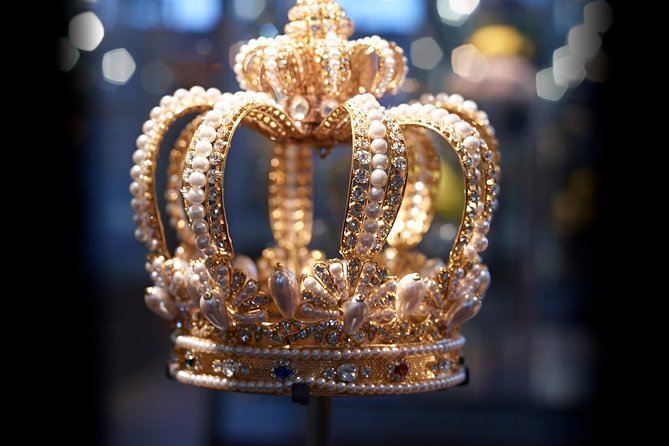
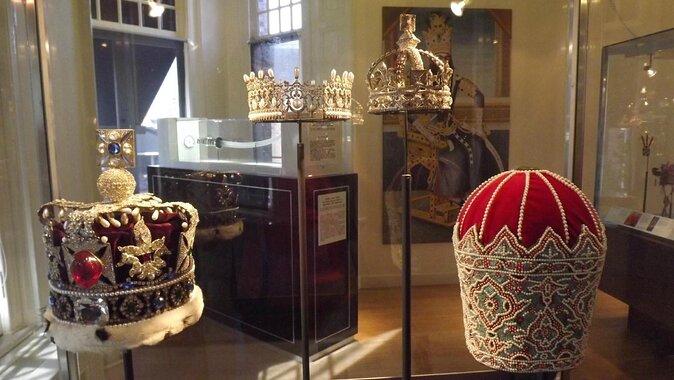
- Royal crowns and famous artifacts: The crown collection is one of the museum’s strongest visual attractions.
- Working craft demonstrations: You may watch stone polishers and goldsmiths at work, though the experience can also include films and written explanations.
- Allow for a small, crowded interior: The building may feel cramped, particularly for anyone with mobility concerns.
What the Diamond Museum sets out to explain
The museum’s central idea is simple: a diamond is not just a shiny stone. It is the end result of geology, mining, cutting, valuation, craftsmanship, trade, and marketing.
You begin with the stone’s origin far below the surface of the earth. The museum explains that diamonds form through a process lasting billions of years, then travel through mining and cutting before reaching a ring, crown, necklace, or other object.
I like this structure because it gives the glitter some context. A finished diamond can look effortless, but its shape depends on careful decisions about angles, symmetry, clarity, and how much of the rough stone must be removed.
The displays also introduce the qualities that affect value and explain that not all diamonds are alike. You’ll encounter information about different types of diamonds, the reasons some stones cost far more than others, and the role of Amsterdam in the diamond trade.
Do not expect a large natural-history museum with huge mineral halls. This is a focused attraction built around diamonds and jewelry. Its strength is the clear journey from rough stone to finished object. Its weakness is that the museum sometimes presents the subject in a compact, commercial way.
More diamond workshops and museum visits:
- Amsterdam: Diamond Museum Entrance Ticket
★ 3.9 · 460 reviews - Royal Experience – Private Tour in World’s Oldest Diamond Polishing Factory
★ 4.5 · 75 reviews - Amsterdam: Jewish Cultural Quarter & Gassan Diamonds
★ 4.2 · 32 reviews
The Amsterdam connection and Royal Coster Diamonds
The museum is operated by Royal Coster Diamonds, a company with a long association with Amsterdam’s diamond-cutting tradition. The displays connect the city with famous stones cut by Amsterdam polishers, including the Cullinan, described as the largest diamond ever found, and the Koh-I-Noor, known as the Mountain of Light.
These names give the museum more weight than a simple jewelry showroom. You are not only learning how diamonds are cut. You are also seeing how Amsterdam developed a reputation for skilled polishers and diamond merchants.
At the same time, the museum’s connection to a diamond company is worth keeping in mind. Parts of the experience naturally emphasize the beauty, craftsmanship, and commercial value of diamonds. If you want a detailed examination of mining conditions, labor, colonial trade, or modern ethical sourcing, the coverage may feel too brief.
One visitor described the museum as informative from a commercial point of view, with historical material and interactive rooms. That is a fair way to approach it. You’ll get a useful introduction, but not a full academic treatment of the global diamond industry.
The most memorable displays: crowns, artifacts, and replicas
The royal crowns are among the best reasons to visit. Their scale, decoration, and theatrical sparkle give you something impressive to look at after the more technical panels about formation and grading.
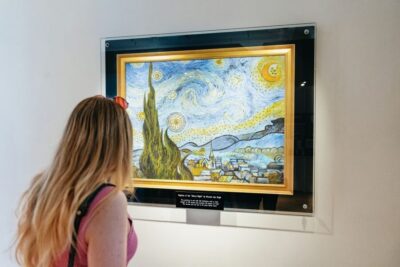
The museum also presents diamond artifacts and a small diamond described as the smallest ever cut. A diamond-encrusted version of Van Gogh’s Starry Night adds a playful Amsterdam link, combining a famous Dutch artwork with the museum’s favorite material.
Here, it helps to manage your expectations. The collection is not made up entirely of unique, priceless natural diamonds. Some displays use reproductions, replicas, or glass imitations. That does not make them useless, but it changes the experience.
I would think of these objects as teaching tools and visual examples. They help you understand styles, settings, and the effect of light. If your main goal is to see a room filled with large authentic diamonds, the museum may disappoint.
The crown display can still make the admission worthwhile for the right person. You receive a concentrated look at how precious stones are used to project power and status. The museum is at its best when it lets you compare geology and craftsmanship with ceremony and fashion.
Watching polishers and goldsmiths at work
The working area gives the visit a practical edge. Instead of seeing only finished pieces behind glass, you may watch professional stone polishers and goldsmiths creating or working on jewelry.
This is valuable because diamond cutting is difficult to understand from text alone. A rough stone has no obvious sparkle. Its brilliance comes from the way a skilled craftsperson shapes its surfaces to reflect light.
Do not assume this is always a live, personal demonstration. One appointment holder expected a direct presentation of cutting or setting but found a film and written explanation of the tools instead. The experience can vary depending on what is operating at the time.
That distinction matters at a $72 price point. If you are paying mainly to watch a craftsperson work in real time, confirm what is available on your date before booking. If the polishing area is active, it can be one of the most interesting parts of the visit. If not, you’ll receive a more traditional museum explanation.
Some admission holders also received access to a diamond factory two doors away. Treat that as a possible bonus rather than the central promise of the museum ticket. The core visit is the Diamond Museum itself.
More museums and galleries in Amsterdam:
- Amsterdam: The Upside Down Museum Entrance Ticket
★ 4.4 · 9,506 reviews - Amsterdam: Red Light Secrets Museum Entry Ticket
★ 4.2 · 5,722 reviews - Amsterdam’s Weirdest Museum: Believe It or Not!
★ 4.5 · 4,086 reviews - Amsterdam: Van Gogh Museum Ticket and City Canal Cruise
★ 4.6 · 3,899 reviews
Interactive touches and the diamond heist game
The museum is not entirely made up of labels and display cases. Interactive rooms and a diamond heist game add a lighter side to the visit.
The heist activity has been compared to a Mission Impossible-style challenge. That gives families and older children something active to do after the geological and technical sections. It also helps break up the information for anyone who is not naturally drawn to jewelry.
The game should not be the only reason you book, since the supplied information does not guarantee that every feature operates at every visit. Still, it can turn a short museum stop into a more memorable outing.
I especially like this kind of addition when you are visiting Museum Square with mixed interests. One person can study the crowns and diamond grades while another tries the interactive challenge. The attraction is not simply aimed at serious jewelry buyers.
How long the visit takes
Plan on about one to two hours. You can move through the main displays in less time if you focus on the objects, film, and major explanations. A slower visit takes longer, especially if you stop at each section or spend time watching the craftspeople.
The short length is both an advantage and a drawback. It fits neatly before or after the Rijksmuseum or Van Gogh Museum without taking over your day. You will not need to protect half a day for it.
On the other hand, $72 is a substantial cost for a one to two-hour museum visit. The value depends on what you want from Amsterdam. If you have a strong interest in diamonds, jewelry, or craft, the specialized focus may justify the price. If you are choosing between this and one of Amsterdam’s major art museums, the diamond museum is less essential.
I would not book it as a general sightseeing stop simply because you have extra time. I would book it as a specific interest visit, or as a compact activity for a family that likes unusual museums and interactive features.
Location at Museum Square
The museum’s location is one of its practical strengths. It is between the Rijksmuseum and the Van Gogh Museum at Museum Square, an area already on most first-time Amsterdam itineraries.
That makes pairing easy. You could visit the Diamond Museum before an art museum, use it as a shorter afternoon activity, or stop in after spending several hours with Dutch paintings. Its one to two-hour format is far easier to fit around other timed admissions than a long guided excursion.
The museum is near public transportation, so you do not need hotel pickup or drop-off. Food and drinks are not included, but Museum Square and central Amsterdam provide plenty of places to eat before or after your visit.
The building itself may feel small and cramped. If you have mobility concerns, keep that in mind before booking. The compact layout is manageable for many people, but it does not offer the spacious circulation of a large national museum.
Language, technology, and presentation
The museum uses films, written explanations, displays, and listening devices. The basic material covers the diamond’s formation, types, valuation, and transformation into jewelry.
The presentation is not perfect. Some audio devices have been reported as broken, and parts of the audiovisual material feel dated. A visitor also found some content incorrectly titled. These problems may not ruin the visit, but they can interrupt the flow.
Language support may also be uneven. A French-speaking visitor noted the absence of a French booklet and limited staff assistance. If you depend on a particular language, check what is available before you pay.
You can still get value from the museum without using every audio feature. The major objects are easy to appreciate visually, and the basic story is straightforward. Just do not expect a highly polished, fully guided presentation at every station.
Is $72 good value?
At $72, this is not a casual, low-cost museum admission. You are paying for access to a specialized collection, the Royal Coster Diamonds connection, the educational displays, possible craft viewing, and any active interactive features.
I would call the price reasonable only for a visitor who values the subject. The royal crowns, historic Amsterdam cutting connections, and polishing demonstrations give the visit more substance than a simple jewelry shop. The short duration and occasional use of replicas pull the value in the other direction.
For a family, the heist game and interactive areas may help justify the cost. For a jewelry enthusiast, the explanation of cutting and valuation may be the main draw. For a general visitor who has never shown interest in diamonds, the price is harder to defend.
There is free cancellation if you cancel at least 24 hours before the scheduled start time. Cancellations within 24 hours are not refunded, and changes in that period are not accepted. That policy gives you some flexibility, but you should still check your plans carefully before the final day.
Who will enjoy this museum most?
I would recommend the Diamond Museum to:
- People interested in jewelry design, precious stones, and craft
- Families who like short, unusual museums with interactive elements
- Visitors already spending time at Museum Square
- Anyone curious about Amsterdam’s diamond-cutting tradition
- Shoppers who want background before looking at diamond jewelry
- Children old enough to enjoy the heist game and visual displays
I would be more cautious if you want a large museum, a fully guided personal tour, extensive original artifacts, or a detailed account of the social and environmental cost of diamond mining.
The museum can also work well for a mixed group. One person may enjoy the crowns, another the technical story, and another the game. But because the building is small, it will not feel like a grand attraction with endless rooms.
My practical verdict
The Diamond Museum Amsterdam is an appealing specialist stop, not a must-see for every Amsterdam visit. I like its clear journey from a stone formed far underground to a cut diamond set in a crown or piece of wearable art. The royal jewels, Amsterdam connections, and working craft area give it real character.
I would book it if diamonds are already on your list, if you want a short Museum Square activity, or if your family enjoys hands-on challenges. I would skip it if you are trying to keep costs low or want only major, original museum collections.
Before booking, make one practical check: confirm the current ticket delivery and entry instructions. Several people had trouble receiving the QR code or being located in the system, which caused delays and, in one case, confusion about the correct building. The museum itself can be worthwhile, but smooth arrival matters when the admission is this expensive.
FAQ
Where is the Diamond Museum Amsterdam?
It is located at Museum Square, between the Rijksmuseum and the Van Gogh Museum in Amsterdam.
How long does the museum visit take?
The visit takes approximately one to two hours.
What are the museum’s opening hours?
The museum is open daily from 9 a.m. to 5 p.m., including weekends and holidays.
Is the entrance ticket included with the experience?
Yes. The entrance ticket is included.
Are food and drinks included?
No. Food and drinks are not included.
Does the museum provide hotel pickup and drop-off?
No. Hotel pickup and drop-off are not included.
Can you watch diamonds being polished?
You may watch professional stone polishers and goldsmiths at work. The available presentation can vary, and some visits may use a film or written explanation instead of a live demonstration.
Does the museum display real diamonds?
The museum presents diamond artifacts and jewelry, but some displays also use reproductions, replicas, or glass imitations.
Can you cancel the ticket for a refund?
Yes. You can receive a full refund if you cancel at least 24 hours before the experience start time. Cancellations or changes made less than 24 hours in advance are not refunded or accepted.
Newest Amsterdam write-ups
- Zaanse Schans: Half-Day Private Guided Tour★ 5.0 · 4 reviews
- Zaanse Schans: Private Cruise + Live Guide, Optional Drinks★ 4.7 · 26 reviews
- Zaanse Schans: Wooden Shoe Painting Workshop★ 4.9 · 23 reviews
- Amsterdam: Private Zaanse Schans Windmills and Volendam Trip★ 4.9 · 31 reviews
- Zaanse Schans: Pancake Restaurant Visit★ 4.5 · 26 reviews
- Amsterdam: Zaanse Schans E-Bike Tour with Windmills & Cheese★ 4.5 · 12 reviews
- Zaandam: Paint a Perfect Portrait workshop★ 5.0 · 5 reviews
- Amsterdam Central Walking Tour★ 4.9 · 11 reviews
Amsterdam Diamond Experiences, compared.

Royal Experience – Private Tour in World’s Oldest Diamond Polishing Factory
Read our review →

Royal Engagement Experience at Royal Coster Diamonds in Amsterdam
Read our review →Browse the lists this tour appears in