
Reviewed · AMSTERDAM WALKING TOURS
Amsterdam City Center & History – Exclusive Guided Walking Tour
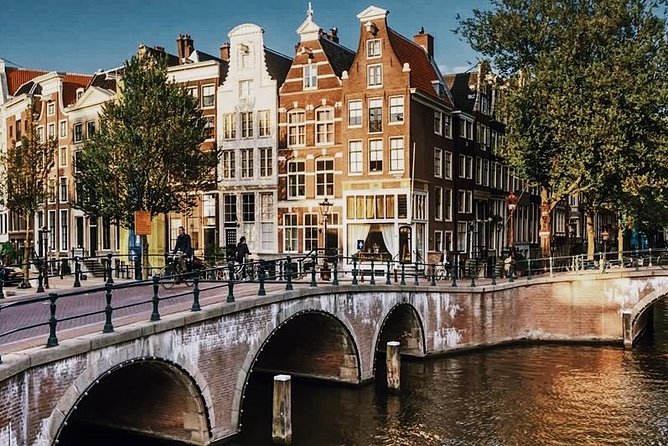
Amsterdam’s story unfolds best on foot, and this 2.5-hour route covers a remarkable sweep of it, from a medieval sea gate and Roman Catholic basilica to Rembrandt’s former home, the Anne Frank House, and a 1642 brown café. You get the city’s big themes without spending half the day inside a museum.
I like the private-guide format, which lets you ask about whatever catches your eye, and I like the way the route connects grand sights with small details such as gable stones, hofjes, narrow houses, and old canal locks. The main drawback is pace: twenty stops in 150 minutes means many are outside views rather than full visits.
Key points to know before you book
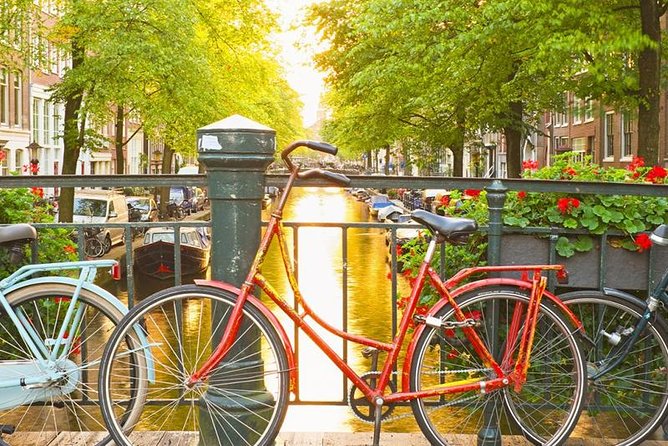
- A full old-city sweep: Walk from Prins Hendrikkade to the Jordaan, passing churches, canals, company headquarters, royal buildings, and wartime landmarks.
- Private attention is available: The standard option includes a guide exclusively for your group. A Save! Book Semi-Private option does not.
- The route is heavy on context: Your guide connects Amsterdam’s religious divisions, maritime trade, architecture, and social history.
- Most stops are brief: Expect several five-minute pauses, with only outside viewing at places such as the Anne Frank House and Rembrandthuis.
- Good first-days activity: Anita, Diana, and Pedro are named guides associated with especially strong praise for clear explanations, warmth, and keeping the group engaged.
- Plan for Dutch weather: The tour runs rain or shine, and comfortable shoes, water, an umbrella, and a summer hat are sensible.
Why this route gives you Amsterdam in miniature
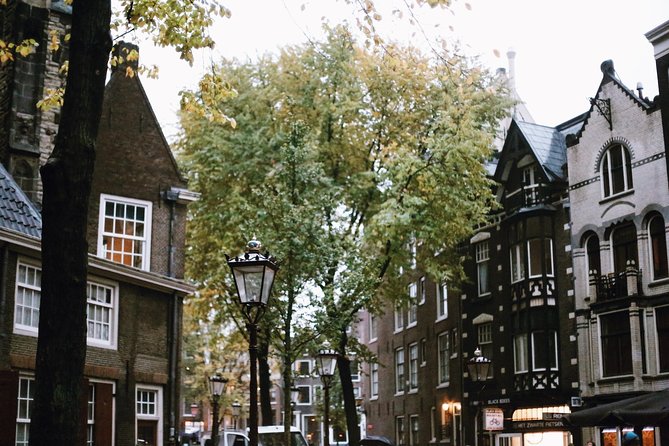
The walk begins at Prins Hendrikkade, close to Amsterdam Centraal, and ends at Het Papeneiland in the Jordaan. That is a useful line through the city. You start near the old harbor and medieval center, then move through former commercial districts before reaching the quieter canals and small courtyards west of the center.
The route is not built around one blockbuster sight. Its strength is the way the pieces fit together. You see how water shaped the city, how trade made some families wealthy, how Protestant and Catholic worship developed side by side, and how ordinary people lived in narrow houses and almshouses.
At $62.48 per person, the value depends largely on group size. For a private group of two or four, the price buys a focused orientation with a guide who can respond to your interests. If you are booking the semi-private option to save money, confirm exactly what level of exclusivity applies. The tour lasts only 150 minutes, so think of it as a smart introduction rather than a substitute for Amsterdam’s major museums.
More walking tours in Amsterdam:
- Anne Frank’s Story – Guided Walking Tour through Amsterdam
★ 5.0 · 11,619 reviews - Amsterdam: Life of Anne Frank and World War II Walking Tour
★ 4.8 · 10,467 reviews - Absolutely Amsterdam – the Essential Introductory Walking Tour
★ 5.0 · 3,629 reviews
St. Nicholas Basilica and the old harbor
The first stop is St. Nicholas Basilica, Amsterdam’s primary Roman Catholic church. Its late 19th-century construction tells an important story: Catholic worship had been restricted for centuries, so this grand church reflects a later period when Catholics could again build openly.
You have about ten minutes here, with no admission charge listed. The outside alone gives you a quick lesson in the city’s changing religious life. If seeing the interior matters to you, ask the guide about the visit, since the tour does not promise interior access.
From there, the walk reaches the Schreierstoren, often called the Weeping Tower. This medieval structure is tied to the women who watched loved ones leave by ship. The emotional story fits Amsterdam’s old harbor district, where departure, trade, danger, and family separation were part of daily life.
Admission is not included at the tower, and the stop lasts about ten minutes. Treat it as a historical pause rather than a full museum visit. The guide’s explanation is likely to be the main value here.
Zeedijk, Nieuwmarkt, and The Waag
Zeedijk is one of Amsterdam’s oldest streets. Its name points to its original role as a sea dike holding back the waters of the IJ. You will pass the Kolksluis, a picturesque lock bridge that shows how much of Amsterdam’s daily life depended on controlling water.
The Zeedijk stop is short, just five minutes, but it helps you read the city. Amsterdam’s canals are pretty today, yet they were also working infrastructure. A guide can make that practical side easier to see.
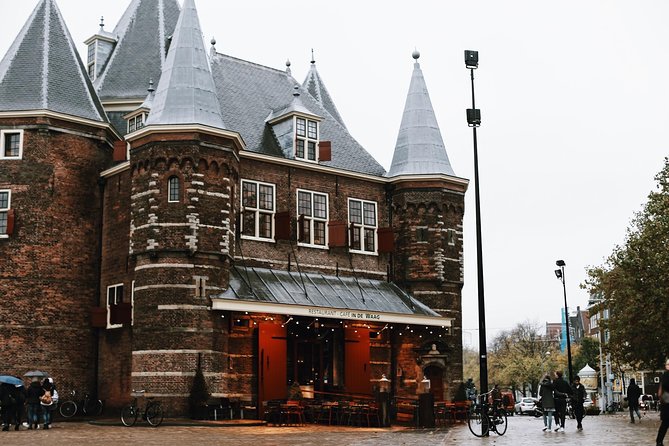
At Nieuwmarkt, the route moves into one of the old center’s main gathering places. The square has served commerce and social life since the 17th century, helped by its position just inside the former city gate. The Waag sits here, a 15th-century building that has served as a city gate, guildhall, museum, and fire station.
This is one of the more rewarding clusters of stops because you do not need a long interior visit to see the point. The square, the building, and the old street pattern all show how Amsterdam mixed business, defense, and public life. Five minutes at each stop is enough for a good explanation, but not enough for lingering photographs or a detailed look inside.
The Trippenhuis and the Dutch East India Company

The Trippenhuis offers one of Amsterdam’s best architectural contrasts. It was the grand home of the wealthy Trip family, while the Kleine Trippenhuis opposite is famously narrow. Together, the two buildings turn a lesson about wealth and taxation into something you can see at street level.
Amsterdam’s narrow houses were not only a style choice. Land taxes helped encourage tall, compact buildings, and the small house opposite the Trippenhuis makes that idea memorable. The stop is brief, and admission is not included, so expect exterior viewing.
The Oost-Indisch Huis adds a darker and larger chapter. This courtyard was the headquarters of the Dutch East India Company, a powerful trading corporation that helped shape Amsterdam’s wealth and global reach. The company is often described as the world’s first multinational corporation.
The courtyard is listed as free to visit. It is worth paying attention here, because the building can look ordinary if you do not know what happened within its walls. Your guide can connect the elegant architecture to the machinery of commerce, shipping, and empire.
More history walks in Amsterdam:
- Amsterdam Food and Cultural Tour with Tastings
★ 5.0 · 2,442 reviews - Amsterdam: Haunted History and Ghost Walking Tour
★ 4.5 · 488 reviews - Amsterdam High-End Dutch Food & History Tour – Up to 8 guests
★ 5.0 · 482 reviews - Amsterdam: Historic City Sightseeing Canal Cruise
★ 4.5 · 444 reviews
Churches, Rembrandt, and the Stopera
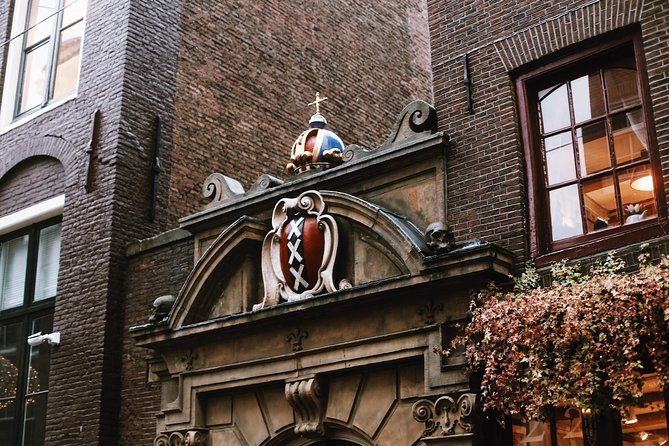
The Zuiderkerk was Amsterdam’s first purpose-built Protestant church. Designed by Hendrick de Keyser, it has an elegant tower that remains one of the city’s familiar markers. The stop is short and admission is not included, so plan on hearing the story and viewing the building from outside.
Nearby, the Museum Het Rembrandthuis marks the former home and studio of Rembrandt. He lived and worked here for nearly twenty years. The tour allows about five minutes, which is enough to locate the building and understand its importance, but not enough to explore the museum properly.
If Rembrandt interests you, make a separate visit later. This walking tour gives you an address and context, not the full museum experience. That is a recurring pattern on this route, and it is useful to know before you book.
The Stopera follows, housing Amsterdam’s city hall and the Dutch National Opera and Ballet. The complex took at least sixty years to come together, making it a modern counterpoint to the older buildings around it. The contrast is worthwhile: Amsterdam is not only canals and 17th-century houses. It is also a city that spent decades arguing, planning, and building for present-day civic and cultural life.
Three canals, a quiet courtyard, and Dam Square
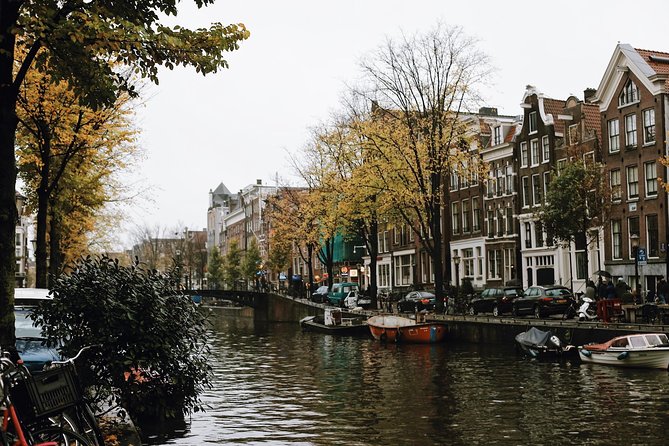
Huis aan de Drie Grachten is a rare 17th-century canal house with façades facing three canals. This is a quick architectural stop, but it rewards anyone who likes Amsterdam’s buildings more than formal museum visits. Look at how the house responds to its corner position rather than simply repeating one façade.
Begijnhof offers a change of mood. This peaceful medieval courtyard was home to Beguines, devout women who lived in a religious community without taking formal vows. One of Amsterdam’s oldest wooden houses is here, making the courtyard important for both social and architectural reasons.
The quiet setting can feel surprising after the traffic and crowds of the center. Keep your voice low and treat it as a residential and religious site, not simply a photo stop. The tour lists no admission charge, but the route may still be affected by access rules or security measures.
Dam Square is Amsterdam’s historic heart. The Royal Palace, the 15th-century New Church, and the National Monument to WWII victims frame the square. This is one of the few points where several major symbols come together in one view.
You get only five minutes, so the guide will likely focus on orientation and key facts. If you want to visit the Royal Palace or New Church, plan separate time. The value here is knowing what you are looking at before you return on your own.
The Golden Bend and the Anne Frank House
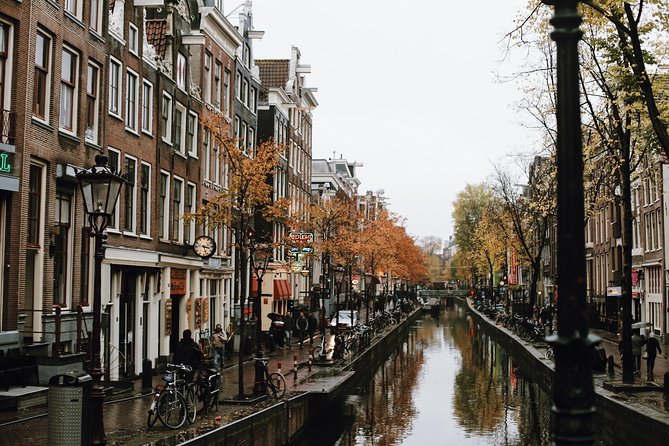
Herengracht brings the walk to Amsterdam’s grand canal belt. The Golden Bend is lined with some of the city’s richest and most ornate canal mansions, built during the Dutch Golden Age. The contrast with the narrow houses earlier in the route is sharp and useful. Amsterdam’s wealth was not spread evenly, and the architecture makes that plain.
The walk then reaches the Anne Frank House. The guide pauses outside the building where Anne Frank hid during World War II. Next door is the Westerkerk, whose tower is the tallest church tower in Amsterdam.
This is an emotionally important stop, but it is not an interior visit. The tour does not include admission, and the short pause cannot replace time inside the Anne Frank House. If you want to enter, arrange that separately and well ahead of time. This walking tour helps place the building within the canal district and wartime story, but you should not book it expecting entry.
Gable stones, almshouses, and the Jordaan
Along Bloemgracht, the De Drie Hendricken houses offer a chance to look up. Gable stones carved with allegories and trade symbols decorate some of Amsterdam’s most ornate façades. These details are easy to miss when you are focused on canals and bicycles, which is one reason a guide adds value.
The Karthuizerhof is Amsterdam’s largest hofje, an almshouse courtyard built for poor and elderly residents. Hofjes are among the city’s most humane pieces of urban planning: modest homes arranged around a calm shared space.
The tour then reaches Noorderkerk, a 17th-century Protestant church built for the Jordaan district. Its cross-shaped floor plan reflects new ideas about worship during the Reformation. Again, the stop is brief and free admission is listed, but the route does not promise a long interior visit.
These final stops feel more local and less ceremonial than Dam Square or the Golden Bend. You see how Amsterdam provided for people with limited means, organized neighborhood worship, and decorated everyday buildings with clues about their first owners and trades.
Ending at Het Papeneiland
The walk ends at Het Papeneiland, a brown café dating to 1642 at the corner of Prinsengracht and one of the city’s prettiest canal views. It is said to serve the best apple pie in town, though the tour does not include food or drinks.
This is a pleasant ending because you finish with a place where you can sit, order something, and continue exploring the Jordaan. The end point is not the same as the starting point, so you should be comfortable making your own way afterward. The route begins at Prins Hendrikkade 73 and ends at Prinsengracht 2.
Guide style, weather, and walking demands
The strongest part of this experience is the guide. Anita is praised for keeping the group moving through rain and wind while still answering questions. Diana is associated with clear answers and a pleasant walking style, while Pedro is praised for holding attention and making the history easy to follow.
Those details matter because the route is long in coverage even if it is moderate in duration. You will be outside for the entire tour, and the company runs it in all weather. Wear comfortable shoes, bring water, and carry an umbrella if rain is possible. A hat helps in summer.
The route requires a moderate level of physical fitness. Large bags and suitcases are not allowed. There is no hotel pickup or drop-off, so use public transportation, a taxi, or Uber to reach the start if needed.
National celebrations can alter the route. An alternative route may be used while still covering the major highlights, and no refund or discount is offered for such changes. Security rules can also prevent entry to some attractions, so keep your expectations focused on guided exterior views and context.
Should you book this Amsterdam walking tour?
Book it if you want a strong first orientation to Amsterdam and prefer stories, streets, and architecture to a single museum visit. It suits first-time visitors, history fans, and anyone who wants practical tips for exploring independently afterward.
The private format is especially useful for couples, families, and small groups who want to ask questions about food, museums, neighborhoods, or local customs. At $62.48 per person, it is easier to justify with a small private group than if you are seeking a cheap group walk.
Skip it if your priority is entering the Anne Frank House, Rembrandthuis, the Royal Palace, or the churches. The schedule allows only short pauses, and most sights are viewed from outside. For everyone else, this is a well-planned way to connect Amsterdam’s harbor origins, trading wealth, religious change, wartime memory, and Jordaan neighborhoods in one walk.
Free cancellation is available if you cancel at least 24 hours before the local start time. That gives you some flexibility, but confirm your mobile phone number with country code when booking so the operator can contact you.
FAQ
How long does the Amsterdam walking tour last?
The tour lasts approximately 2 hours and 30 minutes.
Where does the tour begin?
It begins at Prins Hendrikkade 73, 1012 AD Amsterdam, Netherlands.
Where does the tour end?
It ends at Het Papeneiland, Prinsengracht 2, 1015 DV Amsterdam, Netherlands.
Is this a private tour?
Yes. The standard tour is a private activity for your group only. The Tour Guide Exclusively For You benefit does not apply if you select the Save! Book Semi-Private option.
What language is offered?
The tour is offered in English.
Is hotel pickup included?
No. Hotel pickup and drop-off are not included. Uber or a taxi is recommended for transportation if needed.
Does the tour operate in bad weather?
Yes. It runs rain or shine, so dress appropriately for the forecast.
Are admission tickets included?
The guided walking tour is included, but admission is not included for several attractions. The route mainly provides exterior views and short stops.
Can I bring a large bag or suitcase?
No. Large bags and suitcases are not allowed during the tour.
What should I bring?
Wear comfortable shoes and bring a bottle of water. An umbrella is recommended in rainy weather, and a hat is useful during summer.
Can I cancel for a full refund?
Yes, if you cancel at least 24 hours before the experience start time. Cancellations or changes made less than 24 hours before the start are not refunded or accepted.
Newest Amsterdam write-ups
- Zaanse Schans: Half-Day Private Guided Tour★ 5.0 · 4 reviews
- Zaanse Schans: Private Cruise + Live Guide, Optional Drinks★ 4.7 · 26 reviews
- Zaanse Schans: Wooden Shoe Painting Workshop★ 4.9 · 23 reviews
- Amsterdam: Private Zaanse Schans Windmills and Volendam Trip★ 4.9 · 31 reviews
- Zaanse Schans: Pancake Restaurant Visit★ 4.5 · 26 reviews
- Amsterdam: Zaanse Schans E-Bike Tour with Windmills & Cheese★ 4.5 · 12 reviews
- Zaandam: Paint a Perfect Portrait workshop★ 5.0 · 5 reviews
- Volendam: Volendams Museum Entry Ticket★ 4.4 · 14 reviews
Amsterdam Walking Tours, compared.

Anne Frank’s Story – Guided Walking Tour through Amsterdam
Read our review →
Life of Anne Frank and World War II Walking Tour
Read our review →
Absolutely Amsterdam – the Essential Introductory Walking Tour
Read our review →

Anne Frank Walking Tour – Guided in EN/DE/IT/ES
Read our review →

Anne Frank Walking Tour Amsterdam Including Jewish Cultural Quarter
Read our review →Browse the lists this tour appears in