
Reviewed · AMSTERDAM WALKING TOURS
Amsterdam City Center Guided Walking Tour – 12 guests 2,5h
Amsterdam reveals itself best on foot, and this 2.5-hour private walking tour gives you a useful first look at its old center. You’ll follow canals, bridges, merchant houses, courtyards, churches, and lively squares while your guide explains how a small settlement by the Amstel became a trading city.
I like the route’s variety, from the grand Royal Palace on Dam Square to the quieter Begijnhof and the crooked houses along the canals. I also like the practical angle: your guide can help you plan the rest of your stay, including which parts of Amsterdam deserve more of your time.
The main consideration is pace. The route lists more than 20 sights, so most are viewing stops rather than full visits. You will not tour every museum or church interior, and people with limited mobility should note that wheelchair-accessible tours must be arranged in advance.
Key points to know before you book
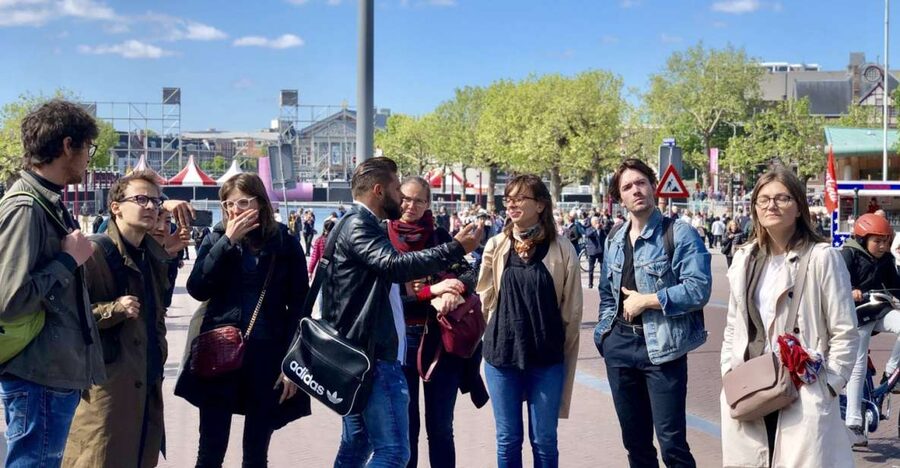
- The walk begins by St Nicholas Church, across from Amsterdam Central Station, making it easy to reach when you first arrive.
- You see far more than canals, including the Begijnhof, Jewish Quarter, Chinatown, Nieuwmarkt, Dam Square, and the Jordaan.
- A private guide keeps the tour flexible, with room for questions about art, architecture, food, history, and local life.
- The route covers 21 listed sights in 2.5 hours, so expect outside views and short explanations rather than extended museum visits.
- Guiding is available in six languages, English, Portuguese, Spanish, Dutch, French, and Italian.
- The $61 price is strongest for small groups, especially if you value personal attention and useful advice for the rest of your visit.
Starting beside Amsterdam Central Station
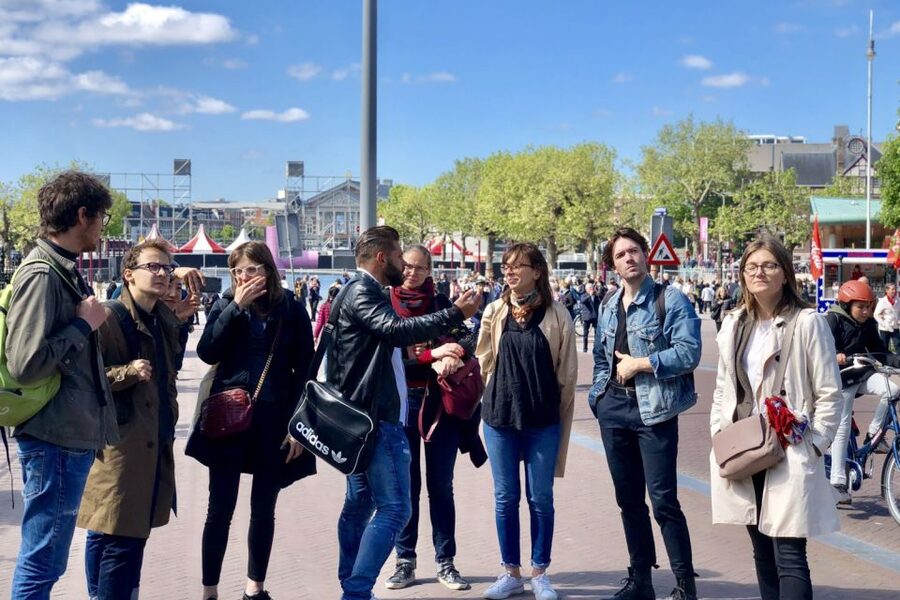
You meet your guide outside the entrance to the Basilica of Saint Nicholas, on the side opposite Central Station. This is a sensible meeting point for a first day in Amsterdam. You do not need to find a tucked-away hotel lobby or cross the city before the walk begins.
The tour information also gives Prins Hendrikkade 73 as the starting address. Check the exact meeting instructions before setting out, since the practical landmark is the entrance of St Nicholas Church. If you have trouble locating your guide, the operator sends contact details by the morning of the tour under Babylon Tours Amsterdam. Check your spam folder if the message does not appear.
The first part of the walk introduces Amsterdam’s position between water and trade. Your guide explains how the city developed from a settlement near the Amstel River in the 12th century. That basic story helps the rest of the route make sense. Amsterdam’s canals are not just pretty waterways. They shaped commerce, housing, transport, and the city’s unusual street plan.
More walking tours in Amsterdam:
- Anne Frank’s Story – Guided Walking Tour through Amsterdam
★ 5.0 · 11,619 reviews - Amsterdam: Life of Anne Frank and World War II Walking Tour
★ 4.8 · 10,467 reviews - Absolutely Amsterdam – the Essential Introductory Walking Tour
★ 5.0 · 3,629 reviews
From St Nicholas Church to the old harbor edge
The Basilica of Saint Nicholas is the first major landmark. Its location near Central Station places you at the edge of Amsterdam’s oldest center, where trains, boats, shopping streets, and historic buildings meet. You stop here for a look and an explanation rather than a long interior visit.
The nearby Weeping Tower adds an older, more human detail to the port area. This is the sort of stop that can be easy to miss when you explore alone. Your guide connects the tower and waterfront streets with Amsterdam’s former life as a working harbor.
From there, the route moves along Zeedijk Street. The name means sea dike, a reminder that water control was a daily concern in early Amsterdam. Today, the street also leads into the city’s Chinatown area, giving you a quick change of mood from old maritime Amsterdam to one of the center’s most distinct urban districts.
You then pass Our Lord in the Attic Museum, a former hidden Catholic church inside a canal house. The route treats it as an outside stop, but the building points to an important part of Amsterdam’s religious past. If this catches your interest, you can return later for the full museum visit.
Oude Kerk, Nieuwmarkt, and Amsterdam’s trading past
The Oude Kerk is one of the oldest buildings in Amsterdam and sits in the middle of the modern Red Light District. On this walk, you see the church as part of its surrounding neighborhood rather than as an isolated monument. That setting matters. Amsterdam’s religious, commercial, and nightlife districts have long overlapped in a very compact area.
The next stretch brings you to Nieuwmarkt Square and De Waag. The old gatehouse now used as De Waag restaurant once served a practical civic purpose. The square gives you a good place to pause and picture the walls, gates, and market activity that shaped the old city.
The route also points out Het Trippenhuis, a grand canal-side house tied to Amsterdam’s merchant elite. This is where the city’s mercantile story becomes visible in brick and stone. Wealthy trading families built narrow but impressive homes along the canals, often with elaborate fronts and steep staircases.
These stops are especially useful if you want more than a postcard view. A guide can point out why the houses are narrow, why many lean, and how the canal belt reflected status and business. You will hear the broad story without committing an entire day to a history museum.
The Jewish Quarter, Rembrandt, and the Amstel
The walk continues through Amsterdam’s Jewish Quarter and past the Museum Rembrandthuis. The house is connected with Rembrandt’s working life, but this tour offers a street-level introduction rather than admission and a full museum visit. If you plan to enter, treat this stop as a way to decide if it belongs on your own schedule.
The Dutch National Opera and Ballet and the Zuiderkerk add two different views of Amsterdam’s cultural and religious life. The Zuiderkerk, in particular, gives you another reminder that historic Amsterdam is not only canals and merchant homes. Churches, civic buildings, theaters, and markets all sit close together.
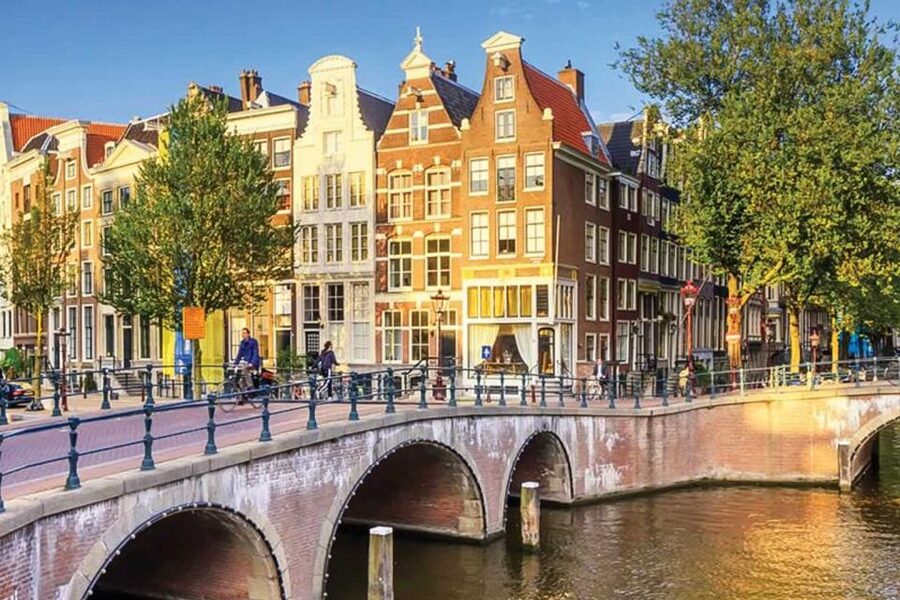
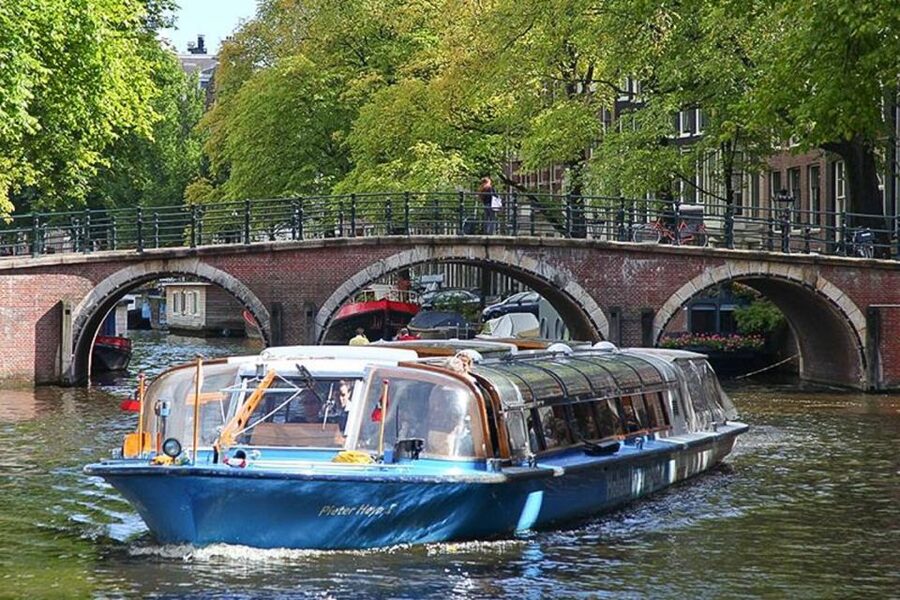
At the Amstel River, the city’s name and early development come into focus. You then reach the Magere Brug, or Skinny Bridge, one of Amsterdam’s most recognizable bridges. It is a natural photo stop, though the tour’s short format means you should not expect a long pause for photography.
The Blauwbrug follows, offering another bridge view and another look at how water divides and connects the city. The canals can seem orderly at first glance, but the bridges and bends make more sense once you understand that Amsterdam grew in stages around water rather than from one neat master plan.
Same city, a completely different afternoon:
- Amsterdam Classic Saloon Boat Cruise with Drinks and Cheese
★ 5.0 · 31,825 reviews - Amsterdam Luxury Canal Cruise + Unlimited Drinks & Bites option
★ 5.0 · 30,518 reviews - Amsterdam: Heineken Experience Ticket
★ 4.6 · 30,055 reviews - Amsterdam: Rijksmuseum Entry Ticket
★ 4.7 · 25,535 reviews
A quieter pause at the Begijnhof
The Begijnhof is one of the most rewarding stops on the route. This enclosed inner court is tucked behind the busy center, and its quieter atmosphere feels far removed from the nearby shopping streets.
Your guide introduces the courtyard and its history, but this is also a place where you should slow down and look carefully. Tree-lined paths, old houses, and a sense of enclosure make it different from the grand public spaces elsewhere on the walk. The tour lists the Begijnhof as a guided stop, not a lengthy private visit, so be respectful of the residential setting and follow any posted rules.
I especially like that the route includes this kind of place. Amsterdam is easy to reduce to canals, bicycles, and crowded squares. The Begijnhof shows a more private side of the historic center and gives you a break from the steady movement of the streets.
The Amsterdam Museum, Prinsengracht, and the Jordaan
After the Begijnhof, the route passes the Amsterdam Museum and then heads toward Prinsengracht. The museum can help you understand the city’s growth, but again, this walking experience only offers an outside orientation. You can use your guide’s comments to decide if a return visit fits your interests.
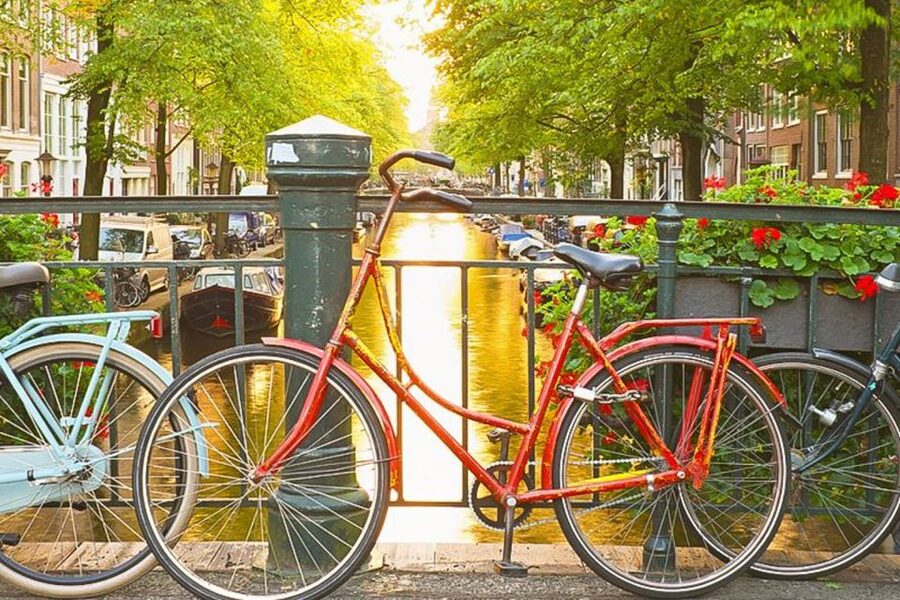
Prinsengracht is one of the major canals in the Canal Belt. Here you see the features people usually come to Amsterdam hoping to find: bridges, barges, houseboats, canal-side buildings, and tall merchant houses that do not always stand perfectly straight.
The guide also takes you toward the Westerkerk in the Jordaan. This district is known for its canals and narrow streets, but the walk adds a less polished detail by pointing out a street associated with artists’ squats. That gives you a glimpse of Amsterdam’s creative and alternative side without turning the tour into a formal art walk.
The leaning houses are another highlight. Their angles are not simply a quirky photo opportunity. Amsterdam’s old buildings were shaped by narrow plots, timber foundations, shifting ground, and the practical need to move furniture through upper windows. Your guide can help you notice these details instead of walking past them as background scenery.
Dam Square closes the city-center loop
The final major stop is Dam Square, where the Royal Palace and the Nieuwe Kerk face one another. This is Amsterdam’s grand civic stage, and it feels very different from the Begijnhof or the smaller canal streets.
The Royal Palace gives you a look at the city’s political and royal associations. The Nieuwe Kerk adds religious and national significance. The tour focuses on orientation and outside views, so you should not expect palace or church admission to be included.
Ending at Dam Square is practical. After the walk, you are close to shops, restaurants, museums, and the main streets of central Amsterdam. More important, you have a mental map. You can connect the station, old harbor, Chinatown, Nieuwmarkt, Amstel, Canal Belt, Jordaan, and Dam Square instead of treating them as unrelated points.
What the 2.5-hour format really means
The route names 21 stops, each shown as a roughly 10-minute photo or sightseeing point. That timing does not fit neatly into 2.5 hours once walking between locations is included, so read the schedule as a list of landmarks covered along the way, not 21 full activities.
You should expect short explanations, outside views, photographs, and movement through the historic center. The tour is not designed for a museum interior, a long church visit, or a leisurely coffee break. That is a strength if you want to see a broad section of central Amsterdam early in your stay.
Wear comfortable, weather-appropriate clothes. Amsterdam’s weather can change, and the walk spends the full time outdoors. Do not bring luggage or large bags, which is particularly important if you are coming directly from a train or airport connection.
A passport or ID card is listed among the items to bring. Food, drinks, hotel pickup, hotel drop-off, and gratuity are not included. Plan a snack or drink before or after the walk rather than expecting a refreshment stop as part of the route.
The guide and the value of personal attention
The strongest part of this experience is the chance to ask questions as you walk. One guide associated with the tour, Monique, has been praised for answering questions across art, history, architecture, and food while staying attentive and friendly. You cannot assume Monique will lead every departure, but the example gives you a useful sense of the guide style to hope for.
The language choice is also generous. You can request English, Portuguese, Spanish, Dutch, French, or Italian, subject to availability. A guide who speaks your preferred language can explain small details more naturally, especially when the route moves quickly between architecture, local customs, and city history.
At $61 per person, the price is not the cheapest way to see Amsterdam’s center. You are paying for a guide, a planned route, and the chance to shape the conversation around your interests. The value improves for a couple, family, or small group that would otherwise book several separate orientation activities.
The private format is worth clarifying before you pay. The experience is offered as a private tour or a semi-private tour with a maximum of eight guests, while the product title refers to 12 guests. Ask the operator to confirm the exact group size for your chosen departure. A small group generally means more time for questions and less time waiting for people to regroup.
Who should book this walk
I would choose this tour for a first visit, especially if I wanted a broad orientation before deciding which museums and neighborhoods deserved more time. It suits people who enjoy history, architecture, city planning, and local stories but do not want a long lecture in one place.
It is also a good fit if you have only a short stay. In 2.5 hours, you see the old center, Canal Belt, Jordaan, Amstel, and Dam Square. You will not master Amsterdam, but you will know where the main pieces fit.
Families and small private groups may appreciate the ability to ask the guide to slow down, explain a building, or suggest what to do next. The walk can also help you avoid spending your first day zigzagging between sights without a clear sense of direction.
I would choose a different plan if you want detailed museum visits, lots of free time for photos, or a relaxed canal-side stroll. This is an orientation walk, and the number of listed sights creates a fairly active pace.
Wheelchair users should contact the operator before booking. Accessible tours are available only by request, while the standard activity is marked as unsuitable for wheelchair users.
Cancellation and planning details
You can cancel up to 24 hours before the tour for a full refund, and the reserve-now, pay-later option keeps your plans flexible. Starting times vary, so check availability for the date you want.
The guide’s contact details should arrive by the morning of the tour. Save them before leaving, especially if you are meeting near Central Station, where the surrounding streets can be busy and confusing.
Should you book the Amsterdam city-center walk?
Book it if you want a fast, well-rounded introduction to Amsterdam with a guide who can answer questions and point out details you might miss alone. The route includes the city’s famous sights, but its better moments may be the quieter ones: the Begijnhof, the old inner courts, the leaning houses, and the transition from Chinatown to Nieuwmarkt and the Canal Belt.
Skip it if your main goal is to go inside museums or spend a full morning in just one neighborhood. For most first-time visitors, though, the combination of private attention, broad coverage, and practical advice makes $61 reasonable, particularly when shared by a small group.
FAQ
Where does the Amsterdam walking tour meet?
Meet your guide outside the entrance of the Basilica of Saint Nicholas, on the side opposite Amsterdam Central Station. Prins Hendrikkade 73 is also provided as the starting address.
How long does the tour last?
The tour lasts 2.5 hours.
Is the tour private?
The experience is offered as a private tour or a semi-private tour. Semi-private tours have a maximum of eight guests. Because the product title refers to 12 guests, confirm the group size for your selected departure.
Which languages are available?
Guides are available in Portuguese, Spanish, Dutch, French, English, and Italian.
What sights are included?
The route includes St Nicholas Church, the Weeping Tower, Zeedijk, Our Lord in the Attic Museum, Oude Kerk, Nieuwmarkt, De Waag, Het Trippenhuis, the Jewish Quarter, Museum Rembrandthuis, the Dutch National Opera and Ballet, Zuiderkerk, the Amstel, Magere Brug, Blauwbrug, the Begijnhof, Amsterdam Museum, Prinsengracht, Westerkerk, and Dam Square.
Are museum and church admissions included?
The activity includes a private guide, but food, drinks, and hotel pickup and drop-off are not included. The route describes photo stops and sightseeing, so admission to museums and other interiors is not included in the stated activity.
What should I bring?
Bring a passport or ID card and wear comfortable, weather-appropriate clothing. Large bags and luggage are not allowed.
Is the tour wheelchair accessible?
Wheelchair-accessible tours are available only by request, and the standard tour is marked as unsuitable for wheelchair users. Contact the operator before booking if you need an accessible route.
Newest Amsterdam write-ups
- Zaanse Schans: Half-Day Private Guided Tour★ 5.0 · 4 reviews
- Zaanse Schans: Private Cruise + Live Guide, Optional Drinks★ 4.7 · 26 reviews
- Zaanse Schans: Wooden Shoe Painting Workshop★ 4.9 · 23 reviews
- Amsterdam: Private Zaanse Schans Windmills and Volendam Trip★ 4.9 · 31 reviews
- Zaanse Schans: Pancake Restaurant Visit★ 4.5 · 26 reviews
- Amsterdam: Zaanse Schans E-Bike Tour with Windmills & Cheese★ 4.5 · 12 reviews
- Zaandam: Paint a Perfect Portrait workshop★ 5.0 · 5 reviews
- Volendam: Volendams Museum Entry Ticket★ 4.4 · 14 reviews
Amsterdam Walking Tours, compared.

Anne Frank’s Story – Guided Walking Tour through Amsterdam
Read our review →
Life of Anne Frank and World War II Walking Tour
Read our review →
Absolutely Amsterdam – the Essential Introductory Walking Tour
Read our review →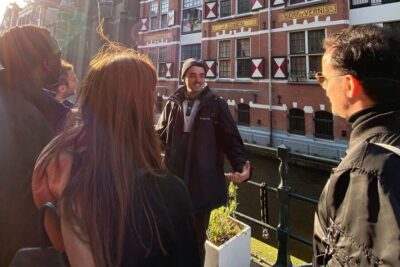

Anne Frank Walking Tour – Guided in EN/DE/IT/ES
Read our review →

Anne Frank Walking Tour Amsterdam Including Jewish Cultural Quarter
Read our review →Browse the lists this tour appears in