
Reviewed · AMSTERDAM WALKING TOURS
Amsterdam: 2.5-Hour Historic Private Walking Tour
Amsterdam reveals itself best on foot, one narrow lane and crooked gable at a time. This private 2.5-hour walk with guide Jan moves beyond the postcard canals to gable stones, hidden churches, the Begijnhof courtyard, Nieuwmarkt, and the Amstel’s Seven Bridges.
I like the personal route and the chance to ask questions as you go. I also like the mix of famous sights and easy-to-miss places, including courtyards and old buildings that many people pass without noticing. The main drawback is simple: you need to walk for at least 45 minutes without sitting, and the $283 group price makes the most sense for up to four people.
Key points to know
- A private route through old Amsterdam: The guide can shape the walk around what you already know.
- Jan is the named guide: He speaks Dutch and English and has adjusted tours for returning visitors and cruise passengers.
- Historic details at street level: Look for gable stones, ornate facades, old gateways, and the former Hidden Church.
- A strong mix of districts: The route includes Nieuwmarkt, the Red Light District, Rembrandtsquare, the Amstel, Spui, and Begijnhof.
- Two possible rest stops: You may pause at Rembrandtsquare or Amstelveld.
- Best for active walkers: The tour is not suited to people with mobility impairments and does not include food or drinks.
Starting opposite Central Station
The walk begins at the Victoria Hotel, directly opposite Amsterdam Central Station. That is a practical meeting point if you have just arrived by train, though pickup can also be arranged at a central hotel, railway station, or another agreed location in central Amsterdam.
Starting here puts you right at the edge of Amsterdam’s oldest core. You do not spend the first part of the tour riding across town. Instead, you step straight into the city’s historic center, where large commercial buildings quickly give way to narrow streets, old canal houses, and small architectural clues.
Because this is a private group, you can tell Jan what you have already seen. One useful feature of this walk is that it need not be a fixed speech delivered to everyone in the same way. If you have visited Amsterdam before, Jan can spend less time on obvious sights and seek out places you missed. If this is your first visit, you can use the opening section to get your bearings.
The tour lasts 2.5 hours, so expect a steady walk rather than a stop-and-start photo outing. Wear comfortable shoes, and keep in mind that Amsterdam’s old streets can be uneven and crowded. You should be able to walk for at least 45 minutes without sitting.
More walking tours in Amsterdam:
- Anne Frank’s Story – Guided Walking Tour through Amsterdam
★ 5.0 · 11,619 reviews - Amsterdam: Life of Anne Frank and World War II Walking Tour
★ 4.8 · 10,467 reviews - Absolutely Amsterdam – the Essential Introductory Walking Tour
★ 5.0 · 3,629 reviews
Gable stones and Amsterdam’s old houses
One of the most interesting parts of the walk is the large collection of gable stones. These carved or decorated stones were used to identify houses before modern street numbering became common. They give you a reason to look up and study the fronts of buildings instead of treating the canal belt as one long row of pretty facades.
Jan also points out the House of Riga and the Congac House. These names may sound like minor details, but that is exactly the point. A private guide can explain the individual buildings and the clues built into their exteriors, helping you see Amsterdam as a collection of distinct homes and businesses rather than a single historic quarter.
The route also includes the former Hidden Church. Its importance is easy to miss if you are simply walking from one major square to another. The stop adds social and religious context to the city’s old center, and it gives the tour more depth than a standard list of canals and photo spots.
I particularly like this part for visitors who enjoy architecture but do not want a formal museum lecture. You are learning through doorways, facades, stones, and side streets, with the city itself providing the setting.
Narrow lanes in the Red Light District
The walk passes through some very narrow streets in the Red Light District. This is not presented as a separate nightlife experience. Instead, the district forms part of the old city route, giving you a chance to see how this well-known area fits into Amsterdam’s wider street plan.
The narrow lanes can feel tight, especially when many people are moving through them. That is worth knowing before you book. The route is better suited to someone who wants context and observation than to someone looking only for quick photographs.
A private guide is useful here because you can ask questions without having to speak in front of a large group. You can also keep moving if the area feels too crowded, though the exact pace and route may depend on conditions on the day.
The stop works best as part of the broader story of Amsterdam. After seeing quiet courtyards, old houses, and former religious buildings, you get a different side of the center, one shaped by narrow streets and public activity.
Nieuwmarkt and the old city gateway
From the Red Light District, the route continues to Nieuwmarkt. The square’s most striking historic feature is its former gateway to the city, dating from the late 1400s. This gives the stop a clear visual focus and helps explain how Amsterdam’s old defenses and entry points shaped the city.
Nieuwmarkt is also a useful place to pause and compare old and newer layers of Amsterdam. The tour does not treat it as an isolated monument. It appears within a walking route that links the eastern side of the center with the Amstel and the squares farther west.
You will want to give yourself time to look closely at the gateway and its setting. A guide can point out details you might otherwise miss, especially if you are more focused on finding your next canal view.
The route then passes Rembrandtsquare. This is one of the possible places for a break, so it can serve as a natural pause after the first substantial stretch of walking. Food and drinks are not included, but the break gives you a chance to buy something independently if you choose.
More history walks in Amsterdam:
- Amsterdam Food and Cultural Tour with Tastings
★ 5.0 · 2,442 reviews - Amsterdam: Haunted History and Ghost Walking Tour
★ 4.5 · 488 reviews - Amsterdam High-End Dutch Food & History Tour – Up to 8 guests
★ 5.0 · 482 reviews - Amsterdam: Historic City Sightseeing Canal Cruise
★ 4.5 · 444 reviews
The Amstel and the Seven Bridges
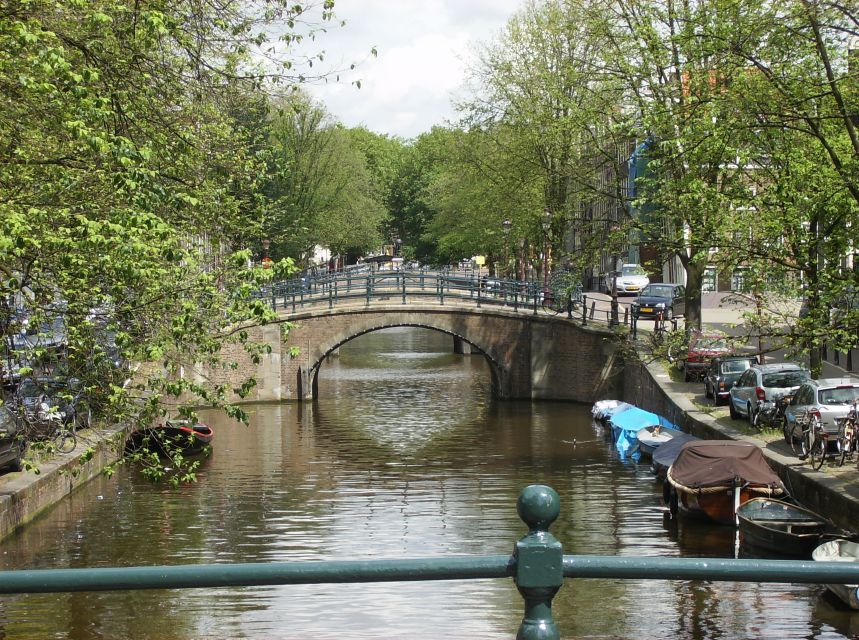
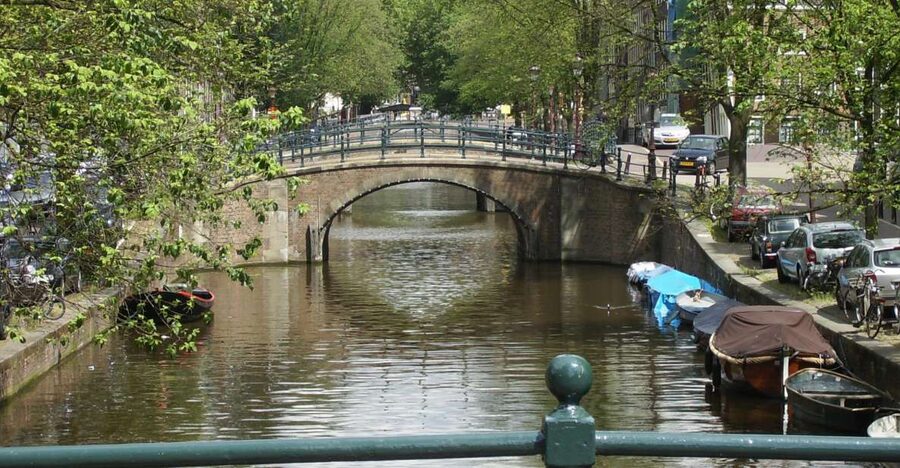
The walk next reaches the Amstel River, including the famous Seven Bridges view. This is one of the most photogenic sections of the tour, but it also rewards simply standing still for a moment and taking in the way the bridges and waterways meet.
The tour description calls attention to the breathtaking intersections of the Amstel. That wording matters because this is not only a riverfront walk. You are looking at how canals, bridges, and streets connect, producing the layered views that make Amsterdam so recognizable.
This section provides a welcome change from the tight lanes of the Red Light District and Nieuwmarkt. The views open up, and the water gives you a different sense of the city’s layout. If you have a camera, this is likely to be one of the better places to use it, though the value is not limited to photographs.
The second possible break is Amstelveld. Having two possible rest locations gives Jan some flexibility, and it means the pause can fit the route and the group’s energy. Since the walk is private, you can communicate if you need a slower pace or a short rest.
Mansions, Spui, and the Begijnhof courtyard
After the Amstel section, the route heads toward Spui. Along the way, you pass mansions with large late-century ornaments. These facades add another architectural layer to the tour, showing how Amsterdam’s central streets changed over time without losing their older urban shape.
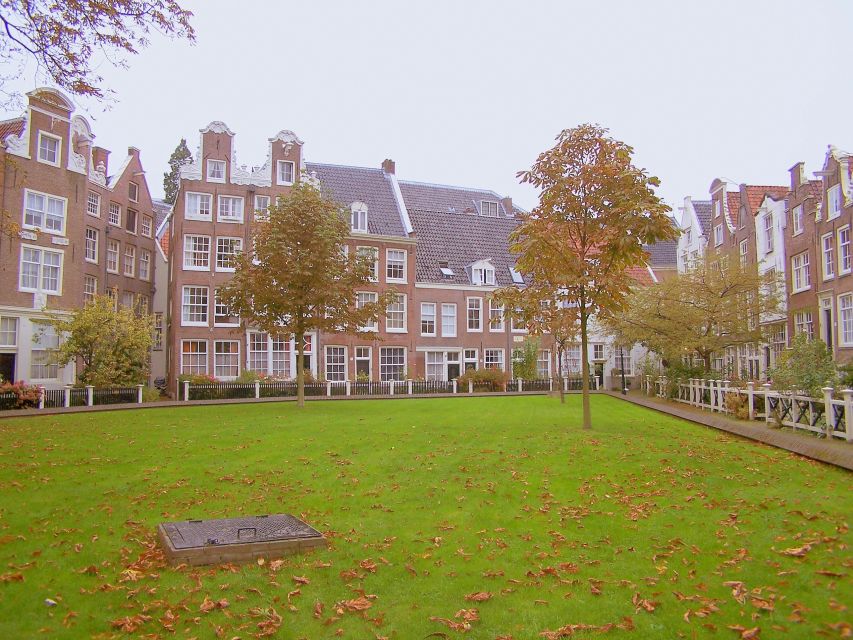
Spui is the gateway to one of the most memorable stops, the Begijnhof courtyard. The courtyard offers a quieter contrast to the busy streets outside. Its enclosed setting is valuable because it changes the pace of the walk and gives you a chance to appreciate Amsterdam’s smaller, more sheltered spaces.
The Begijnhof is also the kind of place that benefits from a guide’s explanation. Without context, you might see only a peaceful courtyard surrounded by old buildings. With Jan, you can ask about the site and understand why it matters within Amsterdam’s story.
This is one of the tour’s strongest combinations: a busy public square, decorated urban houses, then a calm courtyard hidden behind the street front. It shows why walking with someone who knows the center can be more rewarding than following a simple map between major attractions.
Original paintings at the Civic Guards Gallery
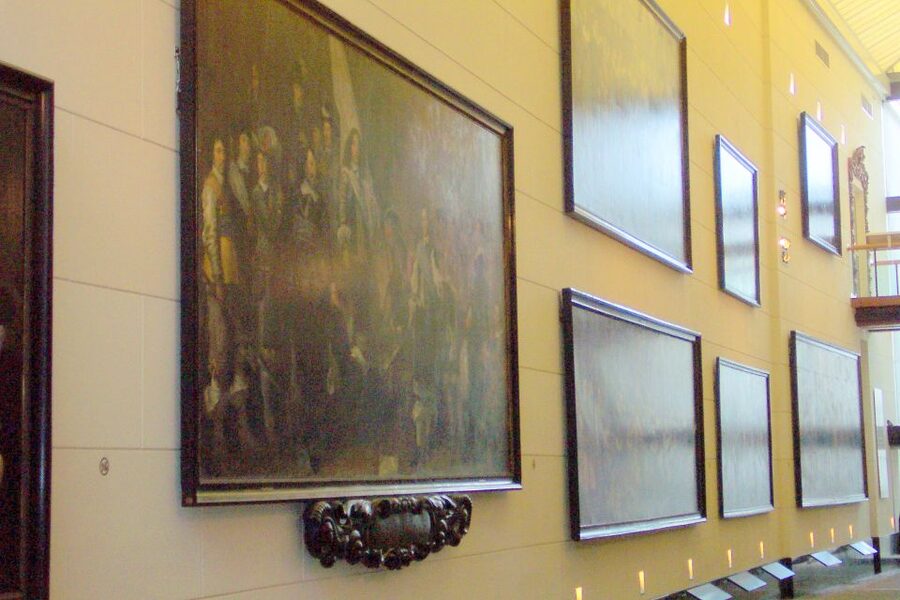
Near the Begijnhof is the Civic Guards Gallery, where you can see original paintings. This stop adds an art element without turning the entire outing into a museum tour.
The gallery is especially useful for anyone who wants more than exterior architecture. Much of the walk happens outdoors, so the paintings give you a change of pace and a chance to look at Amsterdam’s civic and artistic past in a more focused setting.
The supplied tour details do not promise a long museum visit, and the overall duration remains 2.5 hours. Think of this as a compact cultural stop within a walking route, not a replacement for a full day at Amsterdam’s major museums.
One German-language booking account specifically appreciated a short visit to the Amsterdam Museum during a longer version of the walk. That extra stop is not guaranteed in the stated itinerary, so you should ask Jan about current possibilities if it is important to you. The tour’s flexible nature may allow adjustments, but the published route specifically guarantees the Civic Guards Gallery and its original paintings.
How private guiding changes the experience
The biggest practical benefit is control. With a private group, you are not trying to keep up with strangers or wait while a large crowd takes photographs. You can tell Jan if you have already seen the main sights, ask about a building that catches your eye, or request more detail about architecture, local life, or the city’s past.
Several bookings describe Jan as friendly and responsive to personal requests. One group had already visited Amsterdam several times, and the route was adjusted to show them places they did not know. That makes this a good choice for repeat visitors who feel they have already covered the standard canal belt.
Another useful detail is pickup flexibility. A cruise passenger was met directly at the pier, according to the supplied booking information, though the formal pickup terms specify central Amsterdam locations and an agreed meeting point. If you are arriving by ship, confirm the exact pickup arrangement before booking.
The language choices are Dutch and English. If you need another language, this tour should not be treated as a match unless the provider confirms it separately.
Is $283 good value for four people?
The price is $283 for a private group of up to four people. At full capacity, that works out to $70.75 per person for 2.5 hours of guiding. For two people, the per-person cost is much higher, so the value depends heavily on your group size and how much you want personal attention.
I see the strongest value for a family or small group of four that wants one guide focused entirely on them. You are paying for route flexibility, direct questions, and a walk that combines well-known districts with places you might pass without noticing.
The value is weaker if you want a cheap overview or plan to move quickly between only the most famous photo stops. Amsterdam’s center can be explored independently, and this tour does not include food, drinks, or a broad museum admission package.
Still, the route covers a lot in a short time: gable stones, the House of Riga, the former Hidden Church, narrow Red Light District lanes, Nieuwmarkt, Rembrandtsquare, the Amstel, Seven Bridges, Spui, Begijnhof, and the Civic Guards Gallery. For a small group that values explanation and flexibility, that is a fair amount of ground.
You can cancel up to 24 hours in advance for a full refund, and the reserve-now-pay-later option lets you hold a place without paying immediately. Those terms are useful if your Amsterdam plans are still shifting.
Who should book this walk?
I would choose this tour for active walkers who want the old center explained at street level. It suits first-time visitors who want a strong orientation, but it may be even better for repeat visitors who have already seen the obvious landmarks.
It also works well for families, couples, or friends who would rather ask their own questions than listen to a fixed group presentation. The tour can be adjusted to your interests, and Jan has shown a willingness to respond to requests.
You should think twice if anyone in your group has mobility impairments or cannot walk for 45 minutes without sitting. The tour is not designed for that need. You should also avoid booking it if you want a seated sightseeing experience, a food tour, or a full museum visit.
Bring comfortable shoes and plan for a steady pace. A small notebook or phone can be useful because the details about gable stones, buildings, and courtyards are easy to forget once you move on.
Should you book it?
Book this private walk if you want Amsterdam’s center explained through its small details: a carved gable stone, a former hidden church, a medieval gateway, an enclosed courtyard, or a bridge view that looks different from street level.
The tour’s best qualities are Jan’s personal approach, its mix of famous areas and less obvious stops, and the freedom to adjust the route. The main tradeoff is price, especially for one or two people, plus the amount of walking required.
For up to four people who want a focused introduction or a fresh look at Amsterdam after previous visits, I think it is a strong choice. If your priority is the lowest possible cost or a relaxed ride with frequent seating, choose a different way to see the city.
FAQ
How long is the Amsterdam historic walking tour?
The tour lasts 2.5 hours.
Where does the tour begin?
It starts at the Victoria Hotel opposite Amsterdam Central Station. Pickup can also be arranged at a central hotel, railway station, or another agreed location in central Amsterdam.
Is the tour private?
Yes. It is a private group tour for up to four people.
Which languages are available?
The live guide is available in Dutch and English.
Are food and drinks included?
No. Food and drinks are not included. The tour may include a break at Rembrandtsquare or Amstelveld.
Is the tour suitable for people with mobility impairments?
No. You need to be able to walk for at least 45 minutes without sitting, and the activity is not suitable for people with mobility impairments.
Newest Amsterdam write-ups
- Harderwijk: Dolfinarium Entry Ticket★ 4.4 · 81 reviews
- Amsterdam: Waterland District Countryside Villages Bike Tour★ 4.7 · 67 reviews
- Half-Day Private Guided Sightseeing Tour of Zaanse Schans★ 5.0 · 3 reviews
- Amsterdam 5-Hour Guided Canoe Trip in the Wetlands★ 5.0 · 16 reviews
- Amsterdam: Giethoorn, Afsluitdijk and Zaanse Schans Day Trip★ 4.9 · 83 reviews
- From Amsterdam: Giethoorn Guided Day Trip with Canal Cruise★ 4.8 · 133 reviews
- From Amsterdam: Windmills of Zaanse Schans Tour★ 4.4 · 115 reviews
- Full-day excursion to Edam, Volendam, and Marken★ 3.7 · 3 reviews
Amsterdam Walking Tours, compared.

Anne Frank’s Story – Guided Walking Tour through Amsterdam
Read our review →
Life of Anne Frank and World War II Walking Tour
Read our review →
Absolutely Amsterdam – the Essential Introductory Walking Tour
Read our review →

Anne Frank Walking Tour – Guided in EN/DE/IT/ES
Read our review →


Anne Frank Walking Tour Amsterdam Including Jewish Cultural Quarter
Read our review →Browse the lists this tour appears in