
Reviewed · AMSTERDAM HISTORY WALKING TOURS
Amsterdam: Private World War Two History Walking Tour
Amsterdam’s wartime story is not confined to a museum. It is written into Dam Square, the canals, old civic buildings, and ordinary streets. This private walk follows those traces, from the German army’s arrival in 1940 to the shooting on Dam Square just after liberation, and the deportation of Amsterdam’s Jewish population.
I like the tiny group of no more than four and the use of wartime photographs at the places where events happened. I also like the personal material about Jewish residents of one Amsterdam street, including their names and the camps where they died. The main consideration is that this is a serious, sometimes painful three-hour history walk, not a light sightseeing tour.
Key points to know before booking
- A maximum of four people makes it easy to ask questions and set the walking pace.
- Peter Schaapman and two other retired historians lead the walks in English.
- The route begins outside the old Anne Frank House, but the Anne Frank House is not visited.
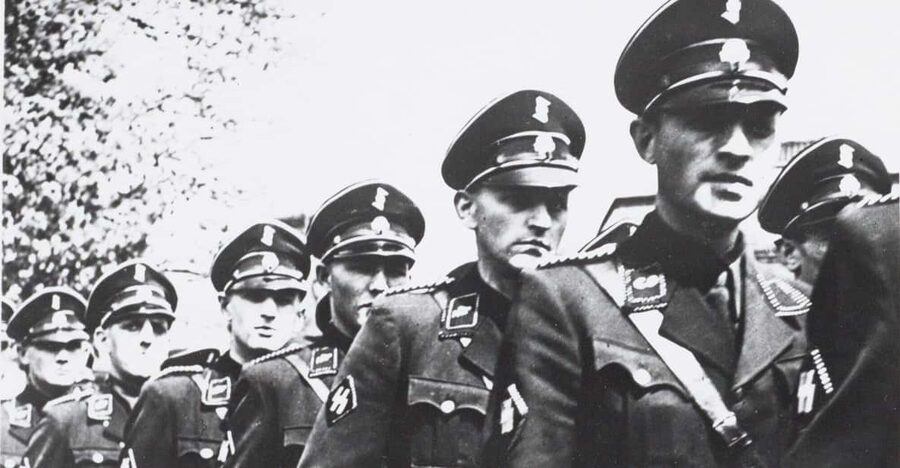
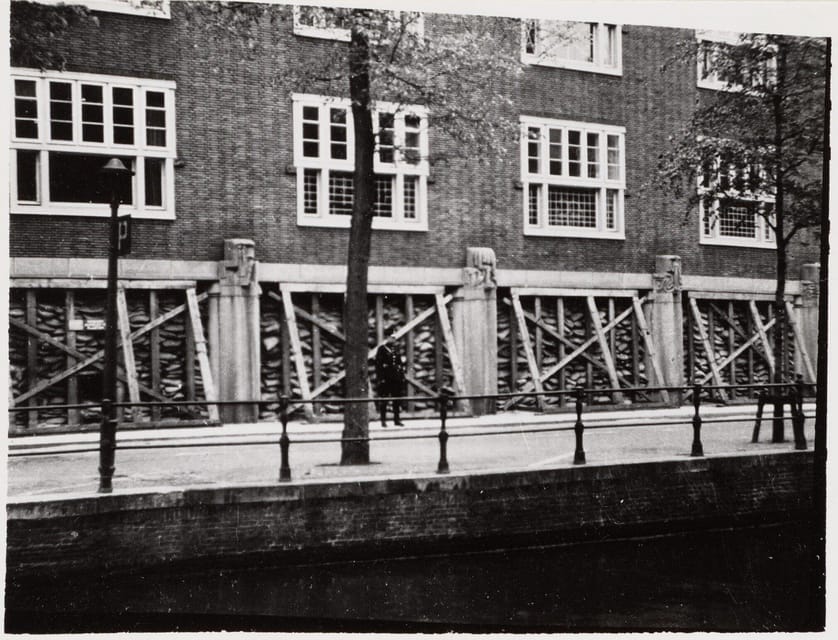
- Original photographs and printed information help connect present-day Amsterdam with the occupation years.
- A coffee and restroom break comes about halfway through, with drinks paid separately.
- The walk is wheelchair accessible, but you should contact the guide ahead of time so the route and break can be planned.
Why this walk adds something beyond Amsterdam’s major museums
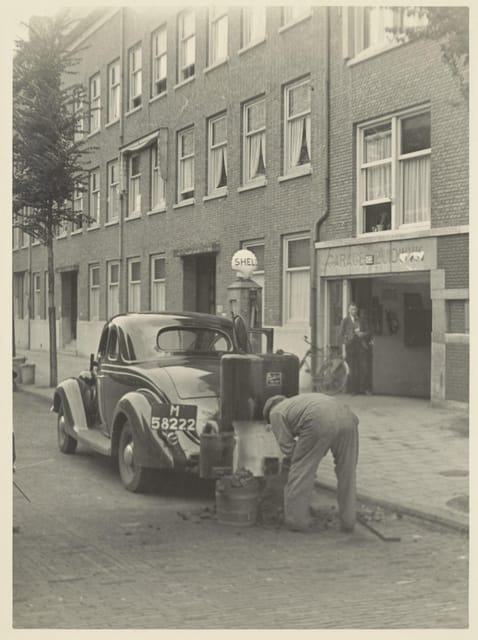
Amsterdam is often introduced through canals, paintings, bicycles, and grand merchant houses. That picture is incomplete without the German occupation from 1940 to 1945. This tour gives you a way to see how the war affected the city itself, not just the people and objects displayed behind museum glass.
I like the fact that the walk deals with several stages of the period. You hear about the arrival of the Wehrmacht, the years of occupation, resistance activity, the persecution and deportation of Jewish residents, the Hunger Winter, and the uneasy days around liberation. The story has a clear sequence, so you can follow how one event led to another.
The guides are three retired historians with a strong personal interest in this subject. Peter Schaapman is specifically named as one of the guides. His explanations are paired with photographs and paper material, giving the walk more substance than a guide simply pointing at a building and reciting dates.
This is also a useful choice if you have already seen Amsterdam’s headline sights. You will not be taken inside the Anne Frank House, the Resistance Museum, or the Hollandsche Schouwburg. Instead, the route takes you to places that may be easy to pass without noticing. That makes the experience feel more like a lesson in reading the city.
More history walks in Amsterdam:
- Amsterdam: Life of Anne Frank and World War II Walking Tour
★ 4.8 · 10,467 reviews - Amsterdam: Dutch WWII Resistance Museum Entry Ticket
★ 4.7 · 951 reviews - Amsterdam High-End Dutch Food & History Tour – Up to 8 guests
★ 5.0 · 482 reviews
Starting at Prinsengracht 263, beside the Anne Frank House
The meeting point is in front of the old Anne Frank House at Prinsengracht 263. The guide waits between the museum and the Lunch Cafe, holding a large notebook and a sign marked Anne Frank Huis. The number 263 is the useful landmark, so check that you are near the correct doorway before the 9:30 a.m. start.
Beginning here makes sense, even though the Anne Frank House itself is not part of the tour. The address immediately places you in the story of Jewish hiding, persecution, and Amsterdam under German rule. It also prevents a common misunderstanding: buying this walking tour does not provide museum entry, and no visit inside the Anne Frank House is included.
If you have already booked an Anne Frank House ticket, this walk can work well as a separate experience. You will approach the wartime period from a wider city perspective, with attention to government, resistance, public violence, deportations, and liberation.
The early start is practical. Amsterdam streets are often easier to navigate in the morning, and you have the rest of the day for a museum visit or another part of the city. Bring an umbrella. The tour runs outdoors, and the weather in the Netherlands can change quickly.
The German army arrives in Amsterdam
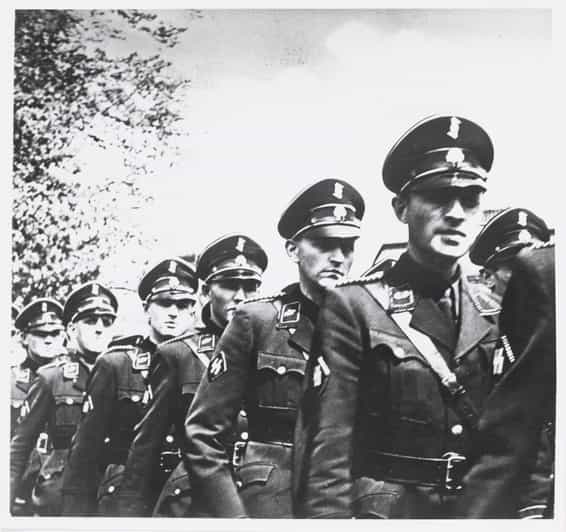
One of the first themes is the entry of the German army, known as the Wehrmacht, in 1940. The guide uses preserved photographs, including images connected with the arrival, to show how the city looked during those days.
That visual comparison matters. A photograph shown at the same place where the event happened can make the past easier to picture than a date in a book. You are not only told that German forces arrived. You are asked to consider how public buildings, streets, and crowds were used as the setting for political change.
The walk also discusses a former town hall, now the Grand hotel. Photographs show the German army being welcomed there, followed later by celebrations when Canadian troops arrived. That contrast gives the occupation story a sharp visual turn. The same civic setting could represent submission, waiting, and relief at different moments.
This part of the route should suit you if you like political and social history. It is less about military hardware or battlefield tactics and more about what occupation looked like in the center of a European capital.
Dam Square and the shooting of May 7, 1945
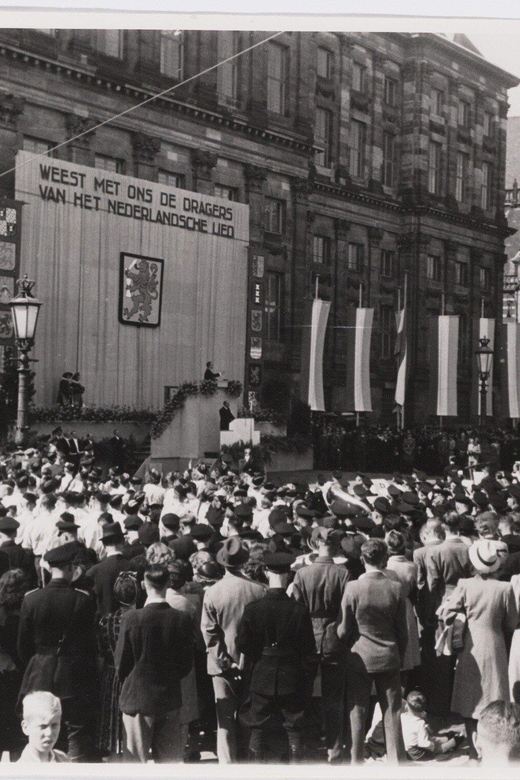
Dam Square is one of Amsterdam’s busiest public spaces, which makes its wartime story easy to overlook. The tour focuses on the shooting incident there on May 7, 1945, after the German surrender and before the city had fully settled into peace.
That date is important because liberation was not a simple switch from danger to safety. Even after German defeat, violence and confusion could still erupt. The guide explains what happened at the square and uses the location to show how public celebrations could turn tragic.
I find this kind of stop especially useful because it corrects the tidy version of liberation often taught in broad outlines. You learn that the end of occupation came with uncertainty and loss, not just flags and cheering crowds.
The square itself can be crowded and noisy. That is part of the challenge, but also part of the lesson. You may need to concentrate while other city life continues around you. A private group helps here because you can ask the guide to repeat a point without trying to hear it through a large crowd.
More walking tours in Amsterdam:
- Anne Frank’s Story – Guided Walking Tour through Amsterdam
★ 5.0 · 11,619 reviews - Absolutely Amsterdam – the Essential Introductory Walking Tour
★ 5.0 · 3,629 reviews - Amsterdam: Anne Frank Guided Small Group Walking Tour
★ 4.8 · 2,722 reviews - Amsterdam: Anne Frank Walking Tour – Guided in EN/DE/IT/ES
★ 4.9 · 2,676 reviews
Resistance photographs and monuments around the city
The walk passes resistance monuments and explains the stories behind them. Several photographs taken by Dutch resistance fighters are shown at the locations where they were made or where their subject matter belongs.
This is one of the tour’s strongest features. Resistance is often reduced to a heroic label, but photographs can show the practical risks behind it: recording events, preserving evidence, and sharing information under occupation. The images give you something specific to examine rather than leaving resistance as an abstract idea.
The guide also provides information on paper that you can keep. That is helpful after the walk, especially because the subject includes many names, dates, and connected events. I would keep the pages with your Amsterdam notes rather than treating them as disposable tour handouts.
Because the group is private, the guide can spend more time on the questions that interest you. You might ask about a particular monument, the photographs, or the difference between the occupation and liberation periods. The pace can also be adjusted, which is useful if you want time to look carefully at a memorial.
The deportation of Amsterdam’s Jewish residents
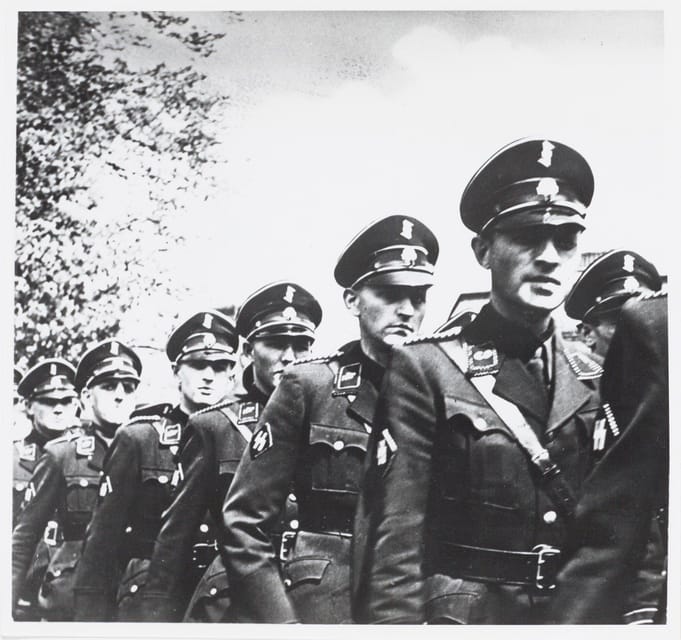
The most difficult part of the walk concerns the deportation and murder of Amsterdam’s Jewish population. The guide discusses Auschwitz and Sobibor and explains what happened to people sent from the city to the extermination camps.
A particularly personal element focuses on all the Jewish residents of one Amsterdam street. The guide has assembled a small book with their names, photographs, and information about the camp where each person died. This changes the scale of the story. Instead of hearing only a large figure, you encounter neighbors connected to one ordinary street.
That choice gives the walk a local focus without pretending that one street can represent every victim. You may find this section emotionally heavy, especially because it connects familiar Amsterdam buildings with individual lives that were destroyed.
The wording and tone matter here. This is not presented as a dramatic spectacle. It is a quiet act of remembrance, using names and photographs to restore some individuality to people who were otherwise reduced to numbers in historical accounts.
The Hollandsche Schouwburg, Amsterdam’s former deportation center, is not visited. If you want to see that site, you will need to arrange it separately. The same applies to the Anne Frank House and the Resistance Museum. This tour complements those places rather than replacing them.
Hunger Winter and the city’s struggle to eat
The walk also covers food dropping during the Winter of Hunger. In the final months of the war, food supplies in the Netherlands became desperately short, and the guide explains how aid was delivered from the air.
This topic broadens the tour beyond persecution and resistance. It shows how occupation affected daily life for people across the city through hunger, shortages, and uncertainty. You hear about war not only in terms of arrests and shootings, but also through the basic question of how people found enough to eat.
The subject works well within a walking tour because the city becomes the setting for ordinary survival. You may look at a street or public place differently when you understand that residents there experienced the end of the war under severe food pressure.
A short break comes roughly halfway through the route. You can buy coffee or something to eat, perhaps turning it into a late breakfast. Refreshments are not included, so keep some money available. The stop also gives you a chance to rest before the more demanding sections of the walk.
The Auschwitz violin player memorial
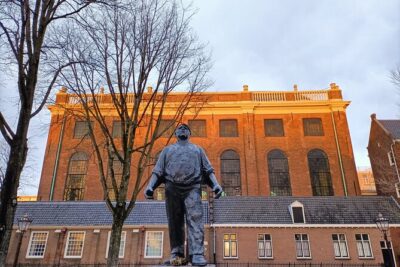
One of the stops is a statue of a famous violin player from Auschwitz. The memorial adds another personal story to the tour’s discussion of deportation and the extermination camps.
A named individual can make a large historical subject easier to approach. The statue is not simply another monument on a route. It gives the guide a point from which to explain one life, one talent, and the destruction caused by the camp system.
The tour’s memorial stops work best when you take time to listen rather than rushing from one attraction to the next. This is not a checklist of statues. The guide explains why each memorial exists and how it fits into Amsterdam’s wartime story.
A personal walk instead of an audio tour
There is no audio system. The guide speaks directly to your small group, and you can ask questions throughout the walk.
I see this as a real advantage for a subject that needs context. An audio recording can deliver facts, but it cannot easily adjust when you want a date explained, a photograph examined, or a sensitive point handled more slowly. Here, the guide sets the pace with you.
The group never exceeds four people. At $188 per group, that works out to $47 per person if four people attend, or a higher per-person cost for a smaller party. For a couple, it is not a budget walking tour. For four people, the price is easier to justify because you are effectively hiring a private historian for three hours.
The value depends on your priorities. If you want a quick overview of wartime Amsterdam, a larger group tour or museum may cost less. If you want direct conversation, a flexible walking pace, and a guide focused on one subject, this private format offers something more personal.
The advertised duration is about three hours, though the walk may run a little longer. You can also eat during the coffee break. That flexibility is useful if you book it as a morning activity rather than trying to fit it between tight appointments.
Who should book this Amsterdam history walk?
I would choose this tour if you have a serious interest in World War II, Jewish Amsterdam, resistance activity, or the way historical events remain visible in a modern city. It is also a good fit if you prefer discussion with a person rather than an audio guide.
Families with older children may find the small group helpful, since questions can be answered without holding up a large crowd. The subject is serious, so parents should decide if the material about deportation and extermination camps is suitable for their children.
You should also choose it if you enjoy going beyond the usual Amsterdam route. The tour does not focus on canals, art, or general city orientation. Its purpose is to examine a specific and painful period.
The walk is wheelchair accessible, and the pace can be adjusted. If you use a wheelchair, email in advance so the guide can account for the route and coffee stop. The tour is offered in English.
Should you book it?
Book this walk if you want a focused, personal account of Amsterdam during the Nazi occupation and you are comfortable spending three hours with difficult material. The strongest reasons are the maximum group size of four, the use of photographs at relevant sites, and the small book documenting Jewish residents of one street.
Do not book it expecting entry to the Anne Frank House, the Resistance Museum, or the Hollandsche Schouwburg. Those visits are separate. Also, do not choose it if you want a cheerful overview of Amsterdam’s main attractions.
For the right reader, this is a careful way to understand how occupation, persecution, hunger, resistance, and liberation shaped the city. Peter Schaapman and the other retired historians give you time to ask questions, pause at monuments, and connect names with places. That personal scale is what makes the $188 group price worth considering.
FAQ
Where does the tour begin?
The meeting point is at 9:30 a.m. in front of the old Anne Frank House at Prinsengracht 263, between the museum and the Lunch Cafe. The guide carries a large notebook and a sign marked Anne Frank Huis.
How long does the walking tour last?
The tour lasts about three hours, though it may run a little longer. You can also eat something during the coffee stop, such as a late breakfast.
Is the Anne Frank House included?
No. The tour begins outside the old Anne Frank House, but it does not enter the museum. Admission is not included.
Does the tour visit the Resistance Museum?
No. The Resistance Museum is not part of the walking route, and tickets to it are not included.
Does the route include the Hollandsche Schouwburg?
No. The Hollandsche Schouwburg, the former deportation center, is not visited on this tour.
How many people can join the private group?
The group never has more than four people. This allows direct conversation with the guide and room for questions.
Who leads the tour?
The walks are led by three retired historians with a strong interest in the German occupation of Amsterdam. Peter Schaapman is one of the named guides.
Is the tour wheelchair accessible?
Yes. The walking pace can be adjusted, and wheelchair users can participate. You should email ahead so the guide can plan the route and coffee stop.
Are coffee and other refreshments included?
No. The coffee stop is included in the route, but you pay separately for drinks or food.
Newest Amsterdam write-ups
- Amsterdam: Self-guided Red Light District Pub Crawl Mystery★ 3.7 · 6 reviews
- Amsterdam: Queer Nightlife Tour★ 4.8 · 7 reviews
- From Amsterdam: Windmills, Volendam, & Marken Private Tour★ 4.2 · 3 reviews
- Amsterdam: Private Red Light District and Food Tour★ 4.8 · 62 reviews
- Zaanse Schans Windmills, Fishing Villages & Countryside★ 5.0 · 18 reviews
- Amsterdam Old City Private Walking Tour★ 4.6 · 33 reviews
- Amsterdam: Volendam, Windmill, and Cheese Farm Private Tour★ 4.9 · 10 reviews
- Amsterdam: Windmills, Edam, Volendam and Marken Private Tour★ 5.0 · 9 reviews
Amsterdam History Walking Tours, compared.
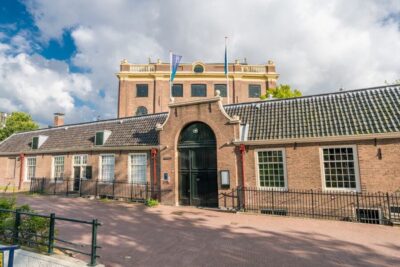
Life of Anne Frank and World War II Walking Tour
Read our review →

Amsterdam High-End Dutch Food & History Tour – Up to 8 guests
Read our review →
Anne Frank and Amsterdam Jewish History Walking Tour
Read our review →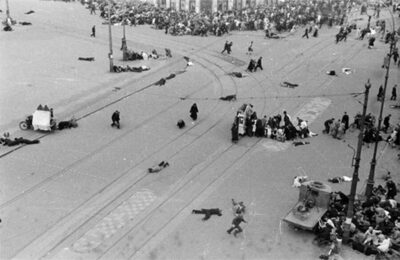
Anna Frank and World War II History Walking Tour
Read our review →
Skipping Lines & Sipping Beers: A History Tour of Amsterdam
Read our review →
Ghastly Grachten: ghost stories&dark history tour
Read our review →Browse the lists this tour appears in