
Reviewed · AMSTERDAM RED LIGHT DISTRICT TOURS
Amsterdam Red Light District & Coffee Shop Tour
Amsterdam’s Red Light District is far more than glowing windows and late-night curiosity. This two-hour walk explains how the area developed, how Dutch drug and prostitution policies work, and why canals, churches, Chinatown, and old trading streets all belong to the same story. You explore with a local guide instead of wandering without context.
I like the historical angle, which gives the district more substance than a quick look at the windows. I also like the route through Chinatown, Zeedijk, Nieuwmarkt, and the old canal streets, since it connects the famous district to everyday Amsterdam. The main consideration is that this is a walking tour through crowded, narrow streets, so it is not suited to people with mobility impairments.
- A local-led walk through Amsterdam’s most misunderstood neighborhood
- Context on prostitution, sex work, coffee shops, and Dutch policy
- Stops near The Jolly Joker, Oude Kerk, Casa Rosso, and the Condomerie
- A look at Amsterdam’s narrowest streets and the Narrowest House in Europe
- A useful introduction to local safety, etiquette, and district history
- Two hours for $29, with private and small-group options available
Why this Red Light District tour is more than a night-time stroll
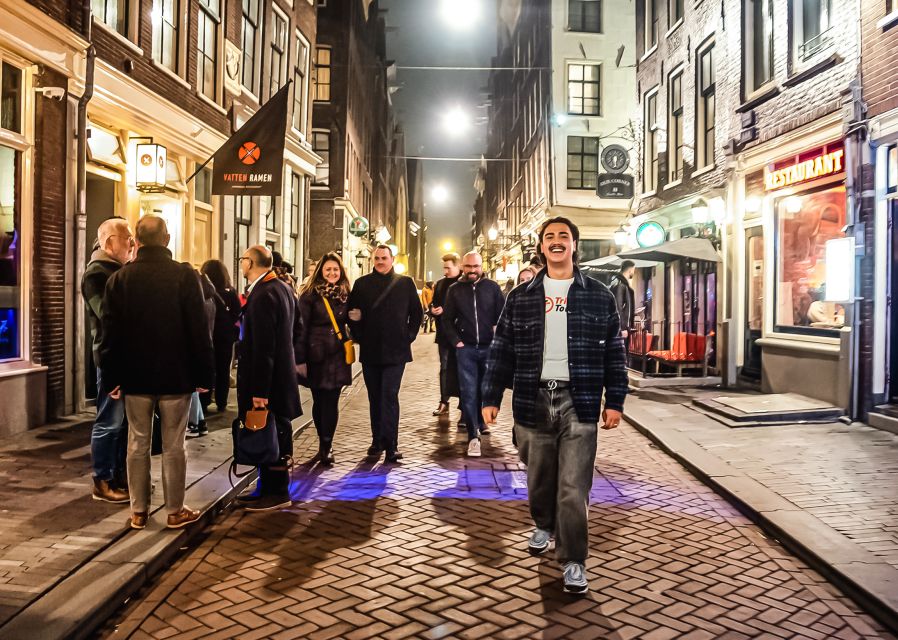
The best reason to book this experience is simple: the Red Light District makes more sense when someone explains it as you walk. On your own, you may notice red-lit windows, coffee shops, old churches, souvenir stores, and canals, but the connection between them is easy to miss.
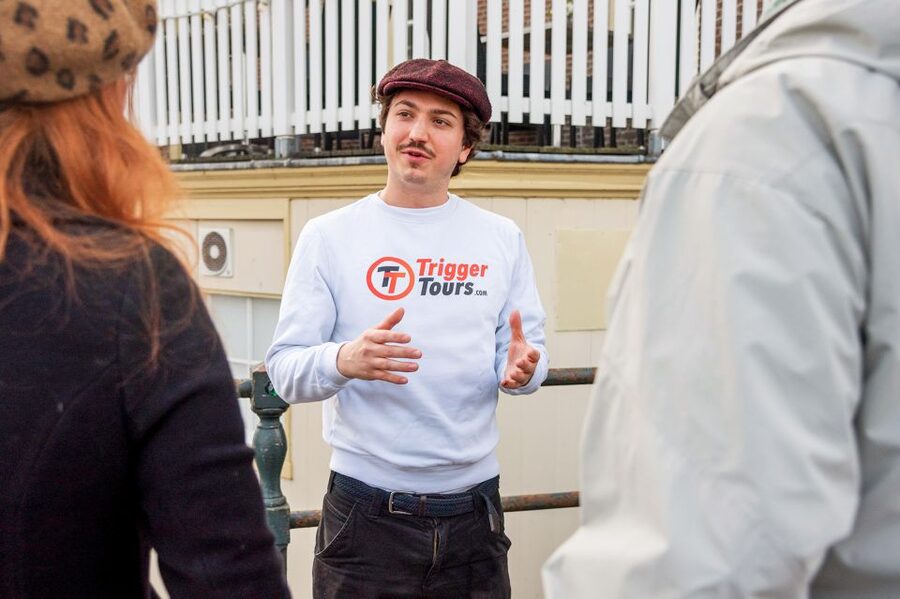
A guide such as Ben, Robin, Pilar, Aarre, Adam, or Sophia helps turn those sights into a story about Amsterdam’s trading past, changing laws, religious buildings, sex work, tourism, and modern political debate. The guides are praised for being funny, clear, and open to questions, but the strongest feature is their ability to make the subject informative without treating the neighborhood as a sideshow.
The tone matters here. This is a learning walk, not permission to gawk at workers or photograph private people. One useful part of the experience is the attention given to respectful behavior and safety. That makes the tour particularly helpful if you are visiting the area for the first time, or if you want a more comfortable introduction as a solo woman.
Starting near the old city center
The meeting point depends on the option you book. Possible starting locations include ParkBee NH Collection Amsterdam Barbizon Palace, the Basilica of Saint Nicholas, and Voyager Hotel Amsterdam. These locations sit near the historic center and the main station area, but check your voucher carefully because more than one starting point is listed.
The walk begins close to the Red Light District, then moves through a chain of compact neighborhoods and landmarks. You do not need a bus or tram during the tour. The route is on foot, with the listed sections generally taking about ten minutes each.
That sounds easy, but Amsterdam’s center can be awkward underfoot. Streets are narrow, bicycles move quickly, and the district can feel tight when busy. Wear shoes with good grip and keep your group together. People with mobility impairments should choose another activity, since the route includes narrow streets and steady walking.
More coffeeshop and cannabis tours:
- Amsterdam: Guided Ganja Walking Tour of Coffee Shops
★ 4.2 · 2,092 reviews - Amsterdam: Cannabis Museum Entry Ticket
★ 4.2 · 1,244 reviews - Private Amsterdam Red Light District and Coffee Shop Tour
★ 5.0 · 763 reviews
Chinatown, the Schreierstoren, and Zeedijk
Amsterdam Chinatown is one of the first useful stops because it widens the story beyond the red-lit windows. You see small shops, restaurants, and the He Hua Temple, a striking Buddhist temple on Zeedijk. The area shows how Amsterdam’s old center has gathered different communities and businesses around its historic streets.
From there, the route reaches Café the Schreierstoren, linked to one of the old defensive towers by the water. The name refers to a place associated with sailors and departures, and the stop helps connect the district to Amsterdam’s maritime past. You also hear about the canals and their place in Dutch culture, rather than treating them as pretty scenery alone.
Zeedijk is one of the more atmospheric parts of the walk. Its old buildings, food businesses, bars, and narrow roadway give you a sense of how the city grew in layers. The drawback is that this can be a busy area, and the guide may need to pause or raise their voice so the whole group can follow.
Nieuwmarkt and the streets around it
The route continues toward Nieuwmarkt Square, a broad open space surrounded by old buildings, cafés, and city traffic. It gives the group a little breathing room after the tighter streets. It also provides a good place to discuss how Amsterdam changed from a working port city into a major visitor destination.
This is where a good guide earns the $29 price. You are not simply ticking off landmarks. You can ask how prostitution became regulated, why coffee shops developed their particular status, and how current political debates affect the district. The tour does not present Amsterdam’s liberal reputation as a simple success story. It also addresses the pressures faced by sex workers and the difficult gap between legal policy and life on the street.
The guides are available in English, German, Dutch, and Spanish. That range is useful for mixed groups, though the exact language depends on the departure you select. Private and small-group formats are also available if you want more room for questions or a quieter pace.
The Jolly Joker and coffee shop culture
One of the central stops is Coffeeshop The Jolly Joker. The tour explains Amsterdam’s coffee shop culture and points out several locations, including what is described as the city’s first coffee shop. The purpose is to explain the system and its place in Dutch society, not to turn the walk into a shopping trip.
This distinction is important. The $29 price includes the guide and the Red Light District tour, but it does not list cannabis, food, or drinks as included. You should not assume that a purchase or consumption is part of the experience. The coffee shop portion is best understood as an explanation and visit to the setting.
The minimum age is 18 if you wish to visit a coffee shop. If you are under 18, this experience does not provide a coffee shop visit. The supplied information does not give a separate alternative route, so ask before booking if that part matters to you.
More Red Light District tours:
- Amsterdam: Red Light Secrets Museum Entry Ticket
★ 4.2 · 5,722 reviews - Amsterdam: Red Light District Tour in German/English/Italian
★ 4.9 · 5,623 reviews - Amsterdam: Red Light District Pub Crawl with Unlimited Shots
★ 4.1 · 2,130 reviews - Amsterdam Red Light District Pub Crawl
★ 4.5 · 1,497 reviews
The Narrowest House in Europe
The stop at the Narrowest House in Europe adds a lighter moment to a serious subject. Amsterdam’s compact center is full of unusually narrow buildings, and this stop gives you a quick look at how limited space shaped the old city.
It also helps you read the street more carefully. Buildings that appear narrow from the outside may have deep interiors, and the tight façades are part of the city’s old urban character. The guide uses these small details to keep the walk from becoming a nonstop lecture about crime, sex, and drugs.
The stop is brief, so think of it as a street-side sight rather than a full museum visit. You do not get a separate entry experience listed here. The value comes from seeing it in context while moving through the district.
Casa Rosso, Oude Kerk, and Warmoesstraat
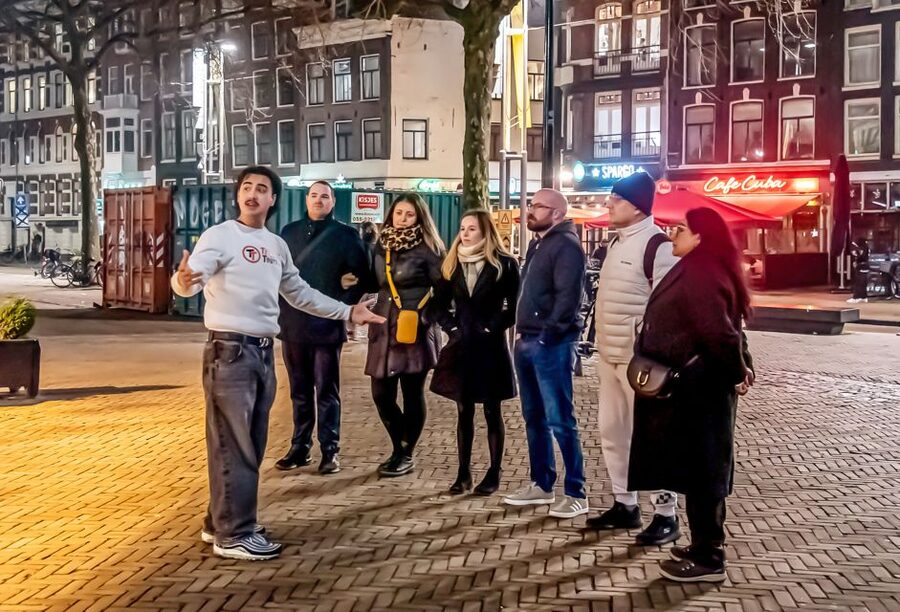
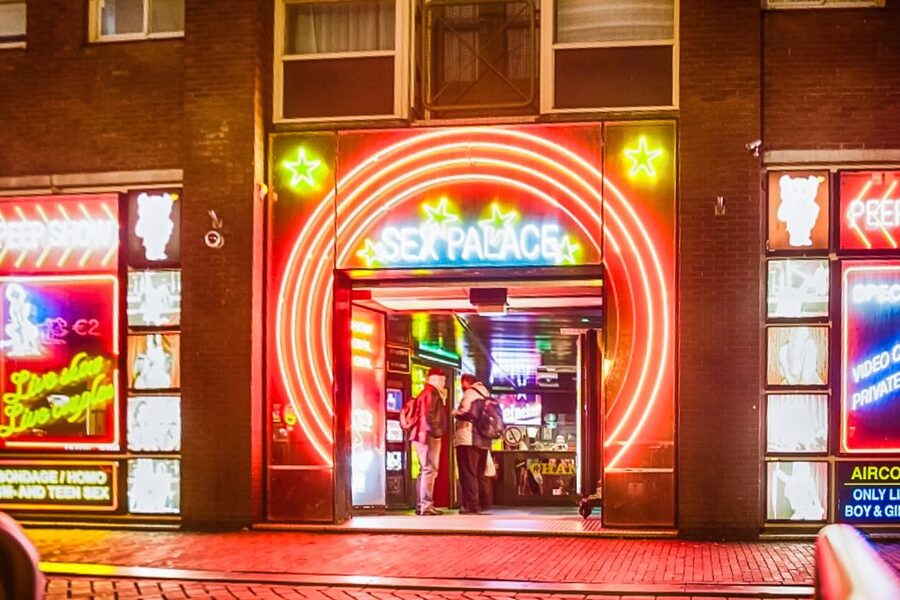
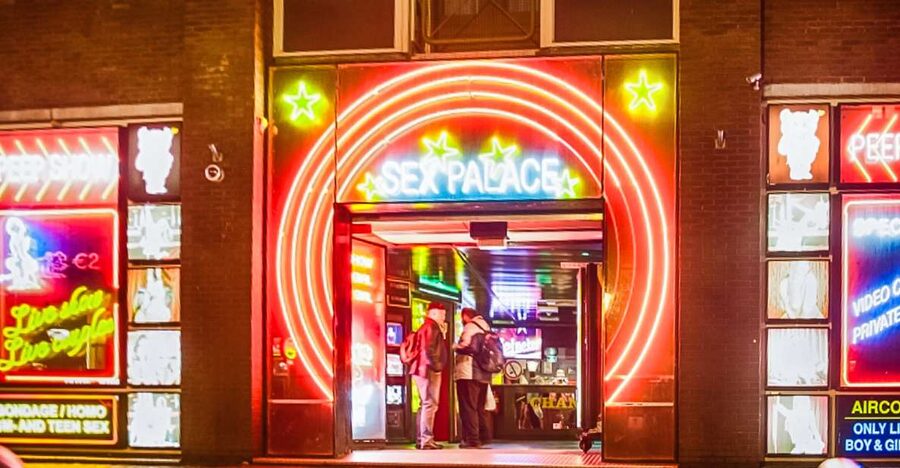
Casa Rosso is among the best-known adult entertainment venues in the area, while Oude Kerk is Amsterdam’s oldest church. Their proximity tells you much about the district’s long and sometimes uneasy mix of religion, commerce, nightlife, and private life.
The guide discusses the legalization of prostitution and the challenges sex workers face today. This is one of the most valuable parts of the walk because it moves beyond the usual tourist shorthand. You get a chance to think about regulation, safety, working conditions, public attitudes, and the effects of heavy tourism.
Warmoesstraat continues that blend of old Amsterdam and modern nightlife. It is one of the key streets in the district, with businesses aimed at both locals and visitors. The guide’s job here is partly to explain what you are seeing and partly to show you how to behave. Keep your camera away from the windows, do not block doorways, and remember that the people working there are not attractions.
The Condomerie and the final look at the district
The Condomerie is another memorable stop because it reflects Amsterdam’s practical approach to sex education and safer sex. It is a small but telling detail in a district often reduced to stereotypes. Alongside the red-lit windows, you see a city that has built businesses, policies, and public conversations around sexual health.
The final section brings together the main themes: coffee shop culture, prostitution, political questions, the old city, and Amsterdam’s canals. Depending on the guide and group, the discussion may also include local suggestions for places to visit afterward. Several guides are praised for helping people plan the rest of their time in Amsterdam, so booking this early in your stay can be useful.
The walk ends near the Basilica of Saint Nicholas, Voyager Hotel Amsterdam, or ParkBee NH Collection Amsterdam Barbizon Palace, depending on the option chosen. These are central drop-off areas, but the exact end point may vary just as the meeting point does.
What the guides add to the experience
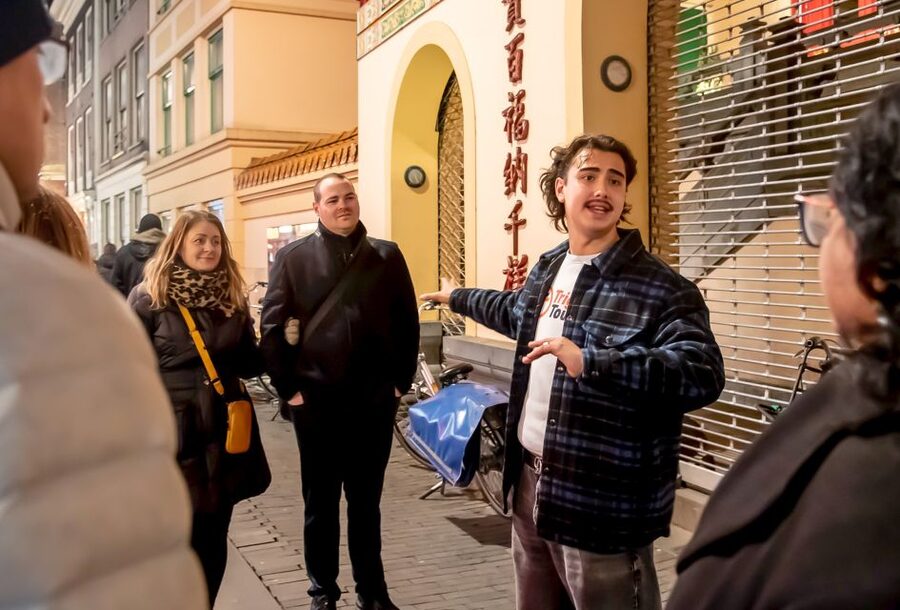
The guide can shape this tour more than any individual landmark. Ben receives repeated praise for his humor, historical explanations, and ability to keep the group involved. Robin is noted for a friendly manner and for connecting the district to Amsterdam’s wider story. Pilar is particularly useful for visitors seeking a careful and comfortable walk through the area.
Other named guides, including Aarre, Ari, Adam, Kevin, Collin, Jesse, Sophia, and Aaron, are praised for different strengths: lively storytelling, clear safety advice, patience with questions, or a welcoming approach. The consistent pattern is that the guide makes the walk feel like a conversation rather than a script.
That also means the experience can vary slightly from one departure to another. Some guides may lean more toward history, others toward present-day policy or personal observations about living in Amsterdam. If you have a specific interest, ask your guide during the walk. The format supports questions, and that is where much of the value lies.
Is $29 good value for two hours?
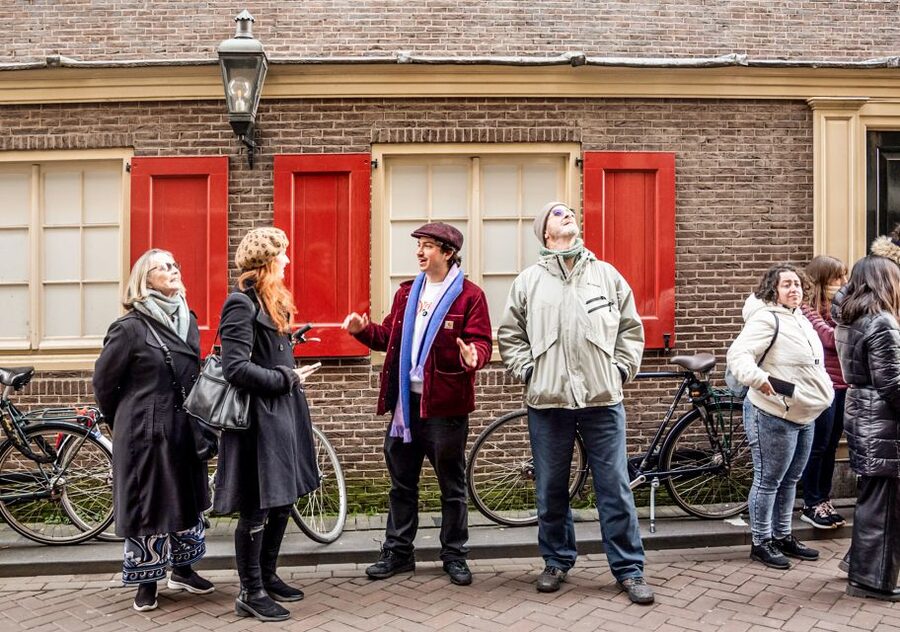
At $29 per person, this is a fair price for a two-hour guided walk in central Amsterdam. You are paying for orientation, explanation, and local context, not for entry to several attractions. If you only want to see the red lights and take a few quick photographs, you can walk through the area without paying.
I think the tour earns its price if you want to understand what you are looking at. It covers a wide range of subjects and includes several well-known streets and landmarks. It can also help you avoid common mistakes, such as treating sex workers as scenery or assuming coffee shops operate like ordinary cafés.
Private and small-group options may offer better value for couples, families of adults, or friends who want more time for questions. Larger groups can still work well, but narrow streets and street noise may make the guide harder to hear.
Free cancellation up to 24 hours before the activity gives you some flexibility, and you can reserve now and pay later. The duration is fixed at two hours, with starting times shown according to availability.
Who should book this walk?
I would recommend it to first-time visitors who want a clear introduction to the Red Light District without spending the evening wandering aimlessly. It suits adults interested in urban history, public policy, Dutch culture, and the reality behind Amsterdam’s famous liberal image.
It is also a good choice for solo visitors who would rather explore the area with a guide. The route is social and can be a simple way to meet other people, while the guide provides a sense of structure and safety.
I would be more cautious if you want a private, quiet experience or if you dislike crowded streets. This is not a museum tour, and it does not include long indoor visits. It is a walking lesson through an active neighborhood, with all the noise and street traffic that implies.
Should you book the Amsterdam Red Light District and Coffee Shop Tour?
Book it if you want context instead of spectacle. The strongest parts are the local guides, the frank discussion of prostitution and coffee shop policy, and the way the route links Chinatown, canals, old churches, narrow houses, and nightlife streets.
Skip it if you only want independent sightseeing, cannot manage a two-hour walk, or are mainly looking for included food, drinks, or cannabis. For most adults visiting Amsterdam for the first time, $29 is a sensible way to understand one of the city’s most famous and most easily misunderstood neighborhoods.
FAQ
How long is the Amsterdam Red Light District and Coffee Shop Tour?
The tour lasts two hours.
How much does the tour cost?
The listed price is $29 per person.
Is a coffee shop visit included?
The route includes a stop at Coffeeshop The Jolly Joker and explanations of coffee shop culture. The tour price does not list cannabis, food, or drinks as included.
How old do I need to be to visit a coffee shop?
You must be at least 18 years old if you wish to visit a coffee shop during the activity.
Which languages are available?
The live tour guide may speak English, German, Dutch, or Spanish, depending on the option booked.
Is this a private tour?
Private and small-group options are available.
Where does the tour start and finish?
The meeting point and drop-off point may vary. Possible locations include the Basilica of Saint Nicholas, Voyager Hotel Amsterdam, and ParkBee NH Collection Amsterdam Barbizon Palace.
Is the tour suitable for people with mobility impairments?
No. The activity is not suitable for people with mobility impairments.
More Coffee Stops in Amsterdam
- Amsterdam: Coffee Shops Walking Tour
★ 4.5 · 55 reviews - Amsterdam: Red Light Tour with Bar Visit + Free Drink and Stop at a Coffee Shop
★ 5.0 · 11 reviews - Amsterdam City Center, Red Light District and Coffee Shops Tour
★ 5.0 · 4 reviews
Newest Amsterdam write-ups
- Zaanse Schans: Half-Day Private Guided Tour★ 5.0 · 4 reviews
- Zaanse Schans: Private Cruise + Live Guide, Optional Drinks★ 4.7 · 26 reviews
- Zaanse Schans: Wooden Shoe Painting Workshop★ 4.9 · 23 reviews
- Amsterdam: Private Zaanse Schans Windmills and Volendam Trip★ 4.9 · 31 reviews
- Amsterdam: Zaanse Schans E-Bike Tour with Windmills & Cheese★ 4.5 · 12 reviews
- Zaandam: Paint a Perfect Portrait workshop★ 5.0 · 5 reviews
- Zaanse Schans: Pancake Restaurant Visit★ 4.5 · 26 reviews
- Volendam: Volendams Museum Entry Ticket★ 4.4 · 14 reviews
Amsterdam Red Light District Tours, compared.
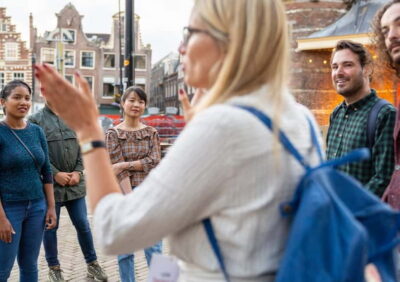
Red Light District Tour in German/English/Italian
Read our review →
Red Light District Pub Crawl with Unlimited Shots
Read our review →
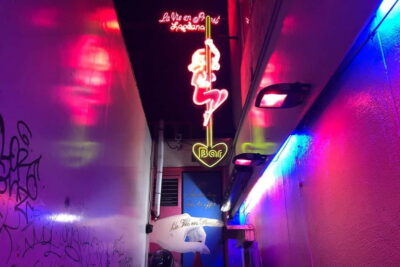
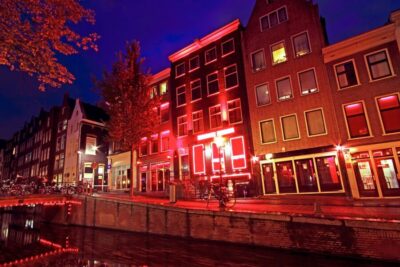
Private Amsterdam Red Light District and Coffee Shop Tour
Read our review →
Browse the lists this tour appears in