
Reviewed · AMSTERDAM WALKING TOURS
Amsterdam: Small-group Guided Walking Tour (French/English)
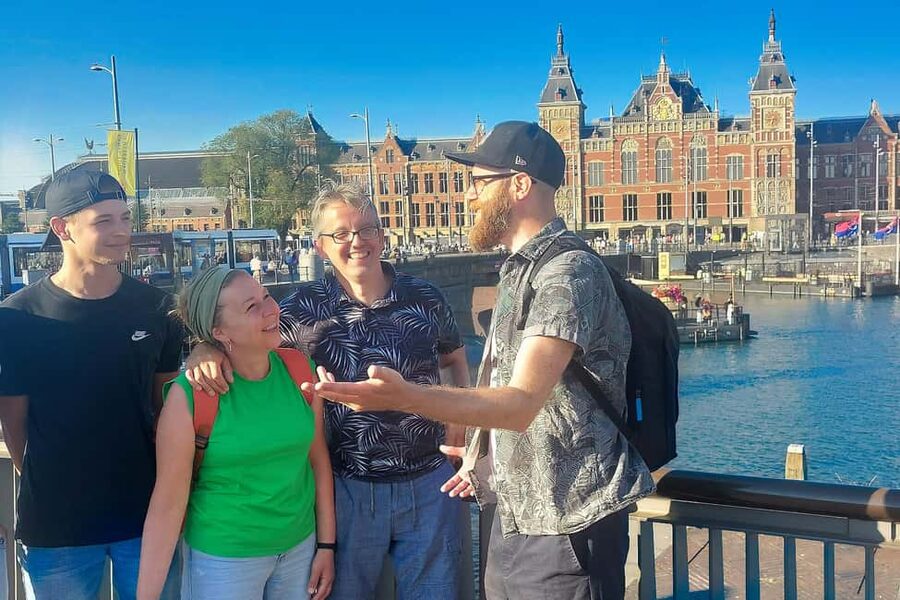
Amsterdam’s story comes alive on foot, from the old harbor behind Centraal Station to the canal houses, courtyards, churches, and narrow streets of the Jordaan. Chris guides you through Amsterdam’s past as a fishing village, trading power, and modern multicultural city, using small details to make the streets easier to read.
I like the well-paced route and the practical recommendations for food, drinks, shopping, boats, and later sightseeing. I also like the small-group format, which leaves room for questions and can make the walk feel more like a local introduction than a lecture. The main drawback is that 21 stops in two to three hours means most places are photo stops from outside, not long visits indoors.
Key points to know before booking
- Start behind Centraal Station: Meet near Pancakes Amsterdam at the IJ, beside the white and blue ferries and the large D ferry halte sign.
- See a wide slice of central Amsterdam: The route links the old center, Chinatown, Dam Square, the canal belt, Anne Frank House area, and Jordaan.
- Chris is the main strength: He is praised for clear history, humor, patience with questions, and useful restaurant and café suggestions.
- Expect an orientation walk, not museum entry: The tour explains buildings and neighborhoods, but food, drinks, and admission tickets are not included.
- English or French are available: You can choose a small-group or private format, with wheelchair access noted.
- Plan for city streets and weather: Wear comfortable shoes and bring water, an umbrella, and suitable clothing.
Starting beside the IJ and Centraal Station
The meeting point is easy to place once you know the landmarks, but it is not simply the main station entrance. Walk behind Amsterdam Centraal toward the water, where the free ferries leave for Amsterdam North. Look for Pancakes Amsterdam at the IJ, the large D ferry halte sign, and the guide described as wearing glasses, a beard, and a baseball hat.
This opening point gives the walk a useful bit of context. Centraal Station is not just a transport hub. It marks the edge between the waterfront and the old center, so you begin with Amsterdam’s relationship to trade, shipping, and movement before turning into the historic streets.
The first stop is Amsterdam Centraal, with a short explanation and photo opportunity. From there, the route moves to the Dancing Houses, a row of narrow, leaning buildings that makes an immediate introduction to Amsterdam’s distinctive architecture. Your guide can help you notice how the city’s older buildings fit into tight plots along canals and streets.
The nearby Basilica of Saint Nicholas adds another layer. Its prominent domes and church design contrast with the narrow historic buildings around it. You will not spend long inside, but the exterior stop helps show that Amsterdam’s religious history is more varied than its famous Protestant churches might suggest.
More walking tours in Amsterdam:
- Anne Frank’s Story – Guided Walking Tour through Amsterdam
★ 5.0 · 11,619 reviews - Amsterdam: Life of Anne Frank and World War II Walking Tour
★ 4.8 · 10,467 reviews - Absolutely Amsterdam – the Essential Introductory Walking Tour
★ 5.0 · 3,629 reviews
Zeedijk, Chinatown, and the old harbor streets
Zeedijk is one of the most atmospheric sections of the route. This old street runs through an area shaped by the port, migration, nightlife, and changing city life. It is also close to Amsterdam Chinatown, so you get a quick look at how the center has taken on different cultural identities over time.
The Major Alida Bosshardt Statue is a particularly human stop. The statue honors Major Alida Bosshardt, a well-known Salvation Army figure associated with care for people in need in Amsterdam. A guide can add the social context that you would likely miss if you simply walked past the statue.
You then pass Ons’ Lieve Heer op Solder, or Our Lord in the Attic Museum. This former clandestine church is one of Amsterdam’s best clues to the way religious life once operated behind closed doors. The tour uses it as an exterior stop, so you should not expect admission or a full visit to the museum. Still, the story makes the plain canal house much more interesting.
The Oude Kerk follows, near the old red-light district. It is Amsterdam’s oldest building, and its location creates a sharp contrast between sacred architecture, commercial streets, nightlife, and modern city life. Five minutes is enough for an introduction, but not enough to inspect the church interior or its exhibitions.
Burgwallen, De Waag, and Amsterdam’s trading past
The walk continues through Burgwallen Oude Zijde, the old side of the city. This is where Amsterdam’s early center feels most concentrated, with old lanes, canals, churches, shops, and buildings packed into a small area.
At De Waag, your guide connects the building with Amsterdam’s civic and trading past. The structure has served different purposes over time and now houses a restaurant. It is a useful place to think about how city gates, markets, guilds, and public institutions shaped the old center.
The VOC stop adds a direct link to the Dutch East India Company. Here, the focus shifts from street-level Amsterdam to the overseas trade that helped make the city wealthy during the Dutch Golden Age. A good guide should also help you see this history with some balance. The money and architecture came with a human cost, including colonial exploitation and unequal power.
The Narrowest House in Europe is a lighter stop, though its real value is the chance to look closely at Amsterdam’s cramped building plots. The famous facade gives you a quick photo, while the surrounding streets show that narrow houses were not a novelty. They were part of the practical limits and tax pressures of building in a crowded canal city.
Tulip mania is another story you may hear during this part of the walk. It is a memorable way to discuss commerce, speculation, and the myths that grow around a city’s past. Chris is praised for using small facts and side stories rather than giving only dates and names, which suits this kind of street tour.
Dam Square and the center of modern Amsterdam
Dam Square is the grand central pause in the route. It brings together the Royal Palace, the National Monument area, nearby shops, and a steady flow of city life. The square is busy and open, so your guide’s explanation helps you sort out what you are seeing.
The Royal Palace is visited from outside on this walk. Its facade gives you a clear sense of Amsterdam’s civic importance and royal connections, but admission is not part of the tour. If you want to see the interior, treat this stop as an introduction and plan a separate visit.
Magna Plaza, the former main post office now used for shopping, gives you a change of architectural mood. Its elaborate design contrasts with the plain brick canal houses. This is a quick stop rather than a shopping session, but you can ask your guide for suggestions if you want to browse later.
The route then heads toward Torensluis Bridge. This bridge crosses one of Amsterdam’s older canals and provides a useful point for talking about bridges, water, and the city’s dense street plan. The bridge is also a practical reminder that Amsterdam is best understood as a place built around water, not simply a city with canals added for decoration.
Same city, a completely different afternoon:
- Amsterdam Classic Saloon Boat Cruise with Drinks and Cheese
★ 5.0 · 31,825 reviews - Amsterdam Luxury Canal Cruise + Unlimited Drinks & Bites option
★ 5.0 · 30,518 reviews - Amsterdam: Heineken Experience Ticket
★ 4.6 · 30,055 reviews - Amsterdam: Rijksmuseum Entry Ticket
★ 4.7 · 25,535 reviews
The 400-year-old canal belt and Anne Frank House area
The Grachtengordel, or canal belt, is the visual heart of the walk. Its major canals form the organized expansion that helped Amsterdam manage trade, housing, and transport during its period of growth. The canal belt is a UNESCO World Heritage site, but you do not need a formal lecture to appreciate it. Look at the house fronts, rooflines, bridges, houseboats, and changing angles along the water.
This is one of the best parts of the tour for learning how to read Amsterdam. Your guide can point out features you might otherwise pass without noticing, from the practical shapes of canal houses to the way narrow facades conceal deeper buildings.
The Anne Frank House is another exterior stop. The guide can explain Anne Frank’s story and the place it holds in Amsterdam’s memory, but the walking tour does not include entry. Tickets for the museum are separate and should be handled independently. Do not assume that a stop outside gives you access or replaces a museum visit.
Westerkerk is close by and helps connect the area’s religious, architectural, and personal stories. The church tower is one of the area’s defining sights, and its location near the Anne Frank House gives the neighborhood a serious tone. Expect a short explanation and photo stop, not a full church tour.
Finishing in Jordaan
The walk ends in the Jordaan, one of the city’s most appealing areas for wandering after the tour. The neighborhood is known for canals, narrow streets, local businesses, and a more residential feel than the busiest parts around Dam Square.
The value of finishing here is practical. You can keep exploring on your own, stop for food or coffee, browse shops, or use Chris’s recommendations to plan the rest of the day. Several people who took the walk specifically appreciated receiving links to restaurants, cafés, pubs, souvenir shops, Dutch food, and other activities afterward.
The tour may also include courtyards and small gardens when the route and access allow. These quieter spaces are a welcome change from the crowded central streets. Since construction, local conditions, and your group’s interests can affect the route, do not treat every stop as fixed in exactly the same order.
What the guide adds to the walk
Chris is the clear personality at the center of this experience. His strengths are history, local stories, humor, and a willingness to answer questions. He is also praised for helping people understand Dutch daily life rather than presenting Amsterdam as a collection of pretty buildings.
That matters because the route covers a lot of ground. Without a guide, you can photograph the Dancing Houses, De Waag, Dam Square, and the canals, but you may not understand why those places belong together. Chris connects the fishing village on the Amstel River with the trading city, canal expansion, religious tensions, migration, and present-day culture.
You should also make use of the question time. Ask about Dutch food, places to eat, bars, shopping, boat trips, or neighborhoods you want to see later. The guide provides links after the walk, and one particularly helpful feature is the willingness to give directions and point out areas that fit your interests.
The tour is offered in English or French. Private and small-group formats are available, so the experience can be more personal than a large city walk. Group size is not specified, so check the option you book if crowd size matters to you.
Pace, comfort, and practical value
The walk lasts two to three hours and includes many short stops. That makes it efficient for a first day in Amsterdam, especially if you want to get your bearings before choosing museums or longer canal activities.
I would not book this expecting long rests or extensive time inside attractions. The route keeps moving, and the many five-minute stops mean you will cover a lot in a short period. Comfortable shoes matter, as does clothing suited to changing weather. Bring water and an umbrella.
The tour is listed as wheelchair accessible, but Amsterdam’s historic streets can be busy and uneven. If you use a wheelchair, contact the provider before booking to confirm the current route and any access issues caused by construction or temporary changes.
At $33 per person, the value is strongest if you use the walk as an orientation and planning tool. You are paying for a local guide, a tightly packed route, historical context, questions, and practical advice for the rest of your stay. The value is weaker if you mainly want museum entry, a relaxed pace, or extended time at each landmark, since food, drinks, tickets, and other admissions are not included.
Free cancellation up to 24 hours before the start and the option to reserve now and pay later make it easier to fit into a changing itinerary. Check available start times when booking, since the exact schedule is not fixed here.
Who should book this Amsterdam walking tour?
I would choose this tour if you are visiting Amsterdam for the first time, have only a few hours, or want a clear introduction before exploring alone. It also suits curious walkers who like history mixed with daily-life details, odd facts, architecture, food advice, and neighborhood tips.
It is a good fit for couples, families with older children, and small groups who prefer questions and conversation to a scripted city tour. The English and French choices also help if you want the explanation in one of those languages.
I would look elsewhere if you need a museum-heavy experience, dislike walking, or want a highly fixed route with long visits inside landmarks. For those needs, this is better used as a starting point, followed by separate visits to places such as the Anne Frank House, Our Lord in the Attic Museum, or the Royal Palace.
Should you book it?
Book it if you want a lively central Amsterdam orientation with strong history, useful food tips, and a guide who makes room for questions. Chris’s friendly manner, local detail, and practical links give the tour more value than a simple checklist of sights.
Just keep your expectations clear. You will see many landmarks from outside, move at a steady pace, and cover a large section of the center in two to three hours. For $33, that is a fair deal for a first look at Amsterdam, especially when you plan to use the final Jordaan stop and the guide’s recommendations to shape the rest of your visit.
FAQ
Where does the Amsterdam walking tour meet?
Meet behind Amsterdam Centraal Station, near the water and Pancakes Amsterdam at the IJ. The guide will be beside the white and blue ferries, near the large D ferry halte sign and the bike lane.
How long does the tour last?
The tour lasts approximately two to three hours. Check availability when booking for the starting time.
Is the tour offered in English and French?
Yes. A live guide is available in English or French.
Is this a private tour or a group tour?
You can book a small-group or private format, depending on availability.
What places do you see on the route?
The route includes Centraal Station, the Dancing Houses, Saint Nicholas Basilica, Zeedijk, Our Lord in the Attic Museum, Oude Kerk, Amsterdam Chinatown, De Waag, Dam Square, the Royal Palace, the canal belt, Anne Frank House, Westerkerk, and Jordaan.
Are museum tickets included?
No. The experience includes the walking tour and guide, but food, drinks, and admission tickets are not included.
Is the tour wheelchair accessible?
The activity is listed as wheelchair accessible. The route may still change because of construction or other conditions, so confirm current details before booking if access is important to you.
What should I bring?
Bring comfortable shoes, water, an umbrella, and clothing suited to the weather.
Newest Amsterdam write-ups
- Zaanse Schans: Half-Day Private Guided Tour★ 5.0 · 4 reviews
- Zaanse Schans: Private Cruise + Live Guide, Optional Drinks★ 4.7 · 26 reviews
- Zaanse Schans: Wooden Shoe Painting Workshop★ 4.9 · 23 reviews
- Amsterdam: Private Zaanse Schans Windmills and Volendam Trip★ 4.9 · 31 reviews
- Amsterdam: Zaanse Schans E-Bike Tour with Windmills & Cheese★ 4.5 · 12 reviews
- Zaandam: Paint a Perfect Portrait workshop★ 5.0 · 5 reviews
- Zaanse Schans: Pancake Restaurant Visit★ 4.5 · 26 reviews
- Volendam: Volendams Museum Entry Ticket★ 4.4 · 14 reviews
Amsterdam Walking Tours, compared.

Anne Frank’s Story – Guided Walking Tour through Amsterdam
Read our review →
Life of Anne Frank and World War II Walking Tour
Read our review →
Absolutely Amsterdam – the Essential Introductory Walking Tour
Read our review →

Anne Frank Walking Tour – Guided in EN/DE/IT/ES
Read our review →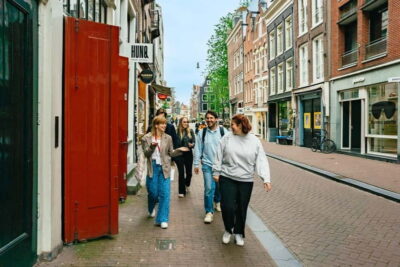

Anne Frank Walking Tour Amsterdam Including Jewish Cultural Quarter
Read our review →Browse the lists this tour appears in