
Reviewed · AMSTERDAM DIAMOND EXPERIENCES
Amsterdam: Diamond Museum Entrance Ticket
The most playful part of Amsterdam’s Diamant Museum is the Laser Room, where you weave between beams and try to reach a diamond without setting off the alarm. It gives this small museum a welcome burst of action after the displays and films.
I like the clear journey from a diamond’s formation 200 kilometers underground to its finished place in a ring or necklace. I also like the royal connection, with jewelry linked to the House of Oranje-Nassau and replicas of 22 famous diamonds. The main drawback is its size and self-guided format, so visitors seeking a long, detailed museum tour may find the experience brief.
Key points to know before you go
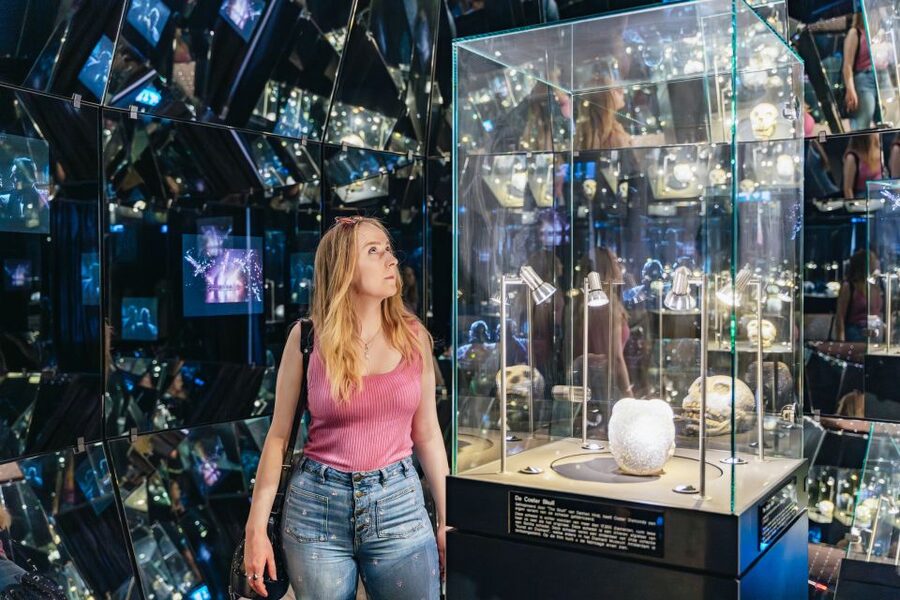
- A diamond’s 3-billion-year journey: Follow the stone from deep underground through mining, trade, cutting, and jewelry design.
- The Laser Room adds hands-on fun: Try to cross the beams without triggering the alarm.
- Royal jewelry brings history to life: See pieces connected with the Dutch House of Oranje-Nassau.
- Replicas make famous diamonds accessible: Examine recreations of 22 well-known stones without the security drama of the originals.
- Your ticket covers two nearby stops: Admission includes the Diamant Museum and adjacent Coster Diamonds.
- Plan for a compact museum visit: The ticket is valid for one day, but the museum is open daily from 9:00 AM to 5:00 PM.
Amsterdam’s diamond story begins underground
At Paulus Potterstraat 8, near Amsterdam’s major museum district, you enter a museum built around one simple question: how does a rough stone become a polished diamond?
The answer starts far below your feet. The museum presents diamond formation as a natural process that began about 3 billion years ago, roughly 200 kilometers beneath the earth’s surface. That enormous time scale gives the visit a useful sense of proportion. The finished jewelry may look delicate, but the stone itself began in a place and period far removed from human life.
I appreciate this opening because it avoids treating diamonds as only luxury objects. You first see them as products of geology, pressure, heat, and time. Only later do you move into the human work of mining, cutting, polishing, selling, and wearing them.
A short film follows this entire route. It covers formation, mining, distribution, trade, and processing. This is helpful if you know little about the diamond business, and it also gives children a clear story to follow before they reach the more detailed displays.
The museum does not require you to understand technical diamond terms before arriving. Instead, the basic sequence makes sense as you move through the exhibits. A raw stone has potential, but its final appearance depends on the skill of the people who cut and polish it.
More diamond workshops and museum visits:
- Royal Experience – Private Tour in World’s Oldest Diamond Polishing Factory
★ 4.5 · 75 reviews - Diamond Museum Amsterdam Admission Ticket
★ 3.5 · 71 reviews - Amsterdam: Jewish Cultural Quarter & Gassan Diamonds
★ 4.2 · 32 reviews
From rough stone to finished jewelry
The museum’s strongest educational feature is the explanation of processing. You see how a diamond changes from an unworked stone into an object designed for a finger, wrist, or neck.
That transformation is not instant or automatic. Cutting removes material, creates facets, and determines how the stone catches light. Polishing gives the finished surface its shine. Jewelry design then places the stone within a setting intended to show it at its best.
You might find the displays especially useful if you have looked at diamonds in a shop but never understood why two stones can appear so different. The museum connects the appearance of the final jewel with the work that came before it.
This part also gives Amsterdam a clear role in the story. The city has a long association with diamond cutting and trade, and the museum presents that connection through its displays about the diamond business. You come away with a better sense that Amsterdam’s diamond identity is tied to craftsmanship and commerce, not simply to expensive jewelry in shop windows.
The experience is self-guided. There is no guide included, so you can read at your own speed and spend more time with the displays that interest you. That freedom suits independent visitors, families, and anyone fitting the museum between other Amsterdam sights.
The trade-off is that you will not have a guide on hand to answer questions or explain the finer points of cutting. If you want a personal demonstration or a long technical talk, this ticket may feel limited.
Famous diamonds without the museum-case pressure
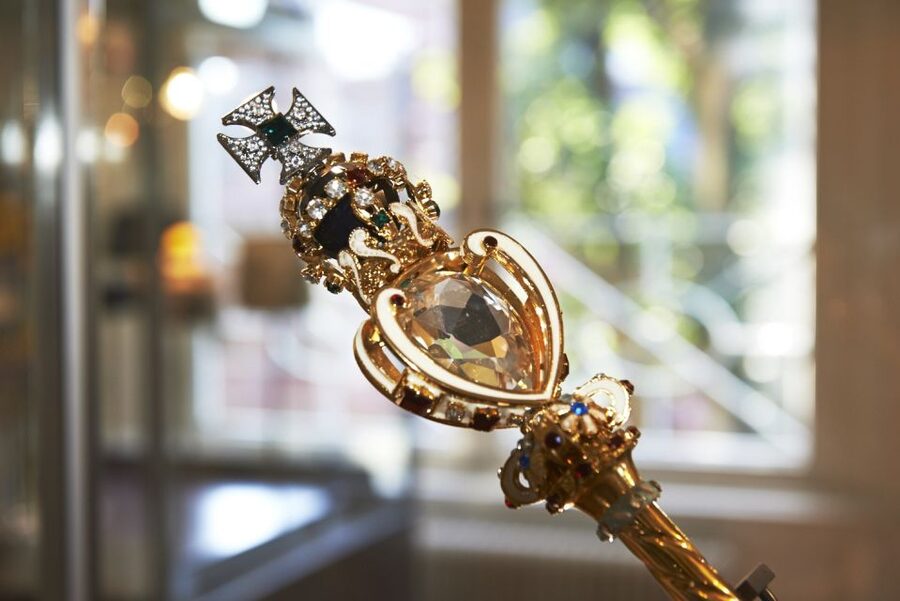
One of the most appealing sections presents replicas of 22 famous diamonds. These recreations let you study the shape and story of notable stones without needing to view the originals under heavy security.
The replicas are particularly useful because famous diamonds can otherwise remain abstract names. Here, the stones become part of a visual account of ownership, fame, craftsmanship, and public fascination. Each one has a story connected with its past, its appearance, or the people associated with it.
The displays also help you compare styles. Some diamonds are remembered for size, others for an unusual shape or a dramatic history. You may not remember every name afterward, but you will better understand why certain stones became famous beyond their value as jewelry.
I would give this section time rather than rushing through it. The museum is not only showing large or beautiful objects. It is explaining how a diamond can gain meaning through the way it moves through the world.
Keep your expectations sensible. These are replicas, not the original famous stones. For many visitors, that is a fair exchange because the display focuses on stories and visual comparison rather than a rare chance to see an original under glass.
Royal diamonds and the House of Oranje-Nassau
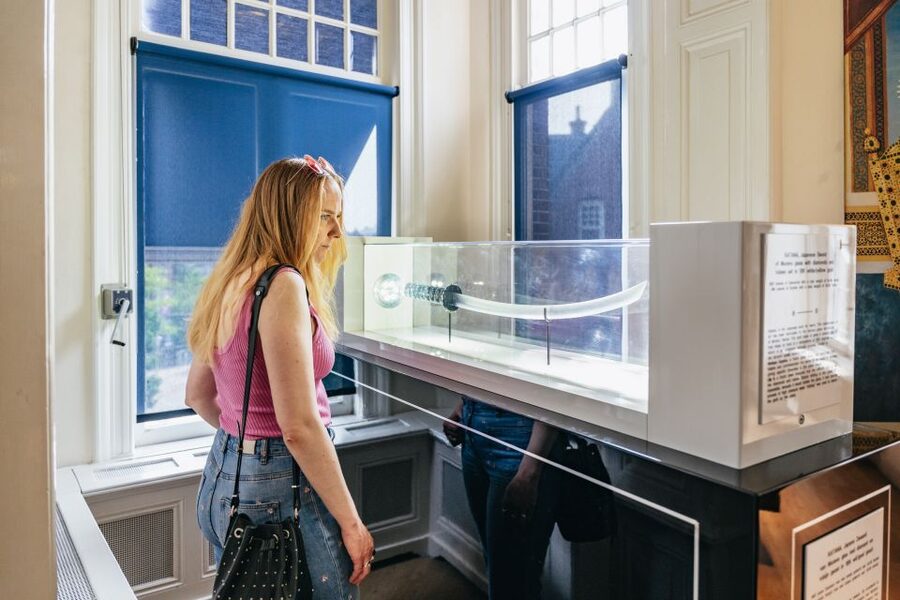
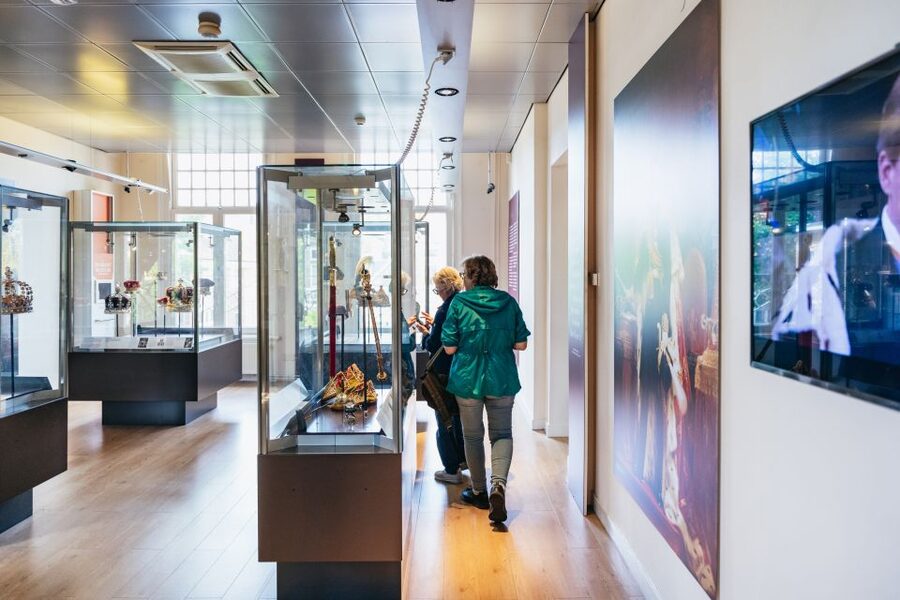
The connection with Dutch royalty gives the museum a more personal side. You see jewelry and diamonds associated with the House of Oranje-Nassau, linking the stones to ceremonial life and national history.
This section is valuable because jewelry often says something about the person wearing it. A royal necklace, bracelet, or other ornament is not only a collection of stones. It can signal rank, family ties, public duty, and the changing taste of a royal household.
The royal pieces also provide a contrast with the technical displays. Earlier, you are thinking about underground pressure and polishing wheels. Here, you see the finished result in a social setting, where diamonds become part of formal dress and public image.
I like this change of focus. It keeps the visit from becoming a simple lesson in geology or a showroom of glittering objects. The museum asks you to consider the full life of a diamond, from natural formation to human ceremony.
The exhibits include other jewelry and stones known for their beauty or historical importance. Because the experience is not guided, take time to read the descriptions rather than relying only on the sparkle. The written context is what turns a pretty object into a meaningful one.
More museums and galleries in Amsterdam:
- Amsterdam: The Upside Down Museum Entrance Ticket
★ 4.4 · 9,506 reviews - Amsterdam: Red Light Secrets Museum Entry Ticket
★ 4.2 · 5,722 reviews - Amsterdam’s Weirdest Museum: Believe It or Not!
★ 4.5 · 4,086 reviews - Amsterdam: Van Gogh Museum Ticket and City Canal Cruise
★ 4.6 · 3,899 reviews
The Laser Room turns the visit into a game
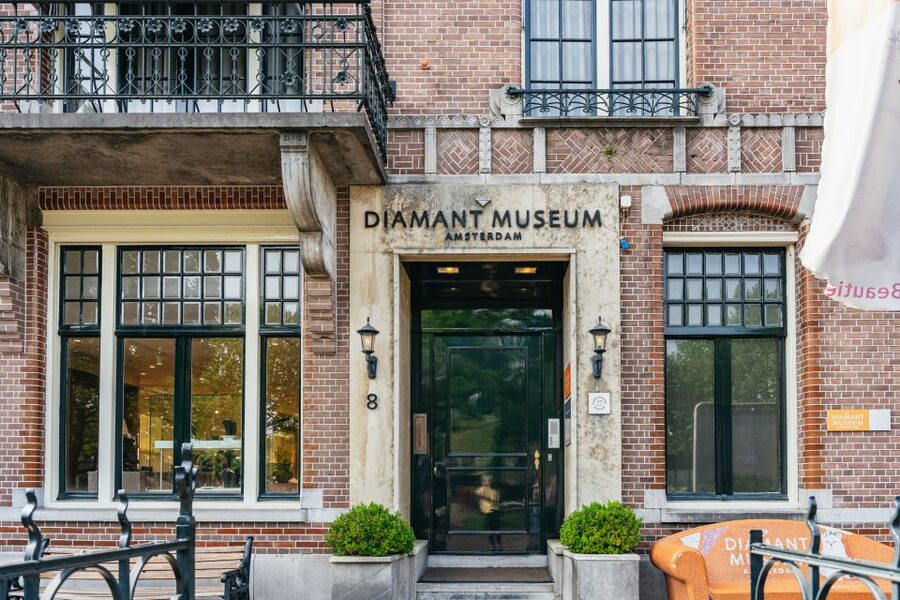
The Laser Room is the museum’s most memorable interactive feature. Your task is simple: move through a field of laser beams and try to reach the diamond at the end.
Touch a beam and an alarm sounds. That small consequence changes the mood immediately. You stop being a quiet museum visitor and start planning each step like someone attempting a very low-stakes heist.
The activity is a smart addition for families. Children who might hurry past a display often slow down for the laser challenge, and adults usually want to try it too. It adds movement to a museum experience that otherwise depends on watching films, reading panels, and looking closely at jewelry.
Do not expect a full escape-room production. The attraction is a short challenge within the museum, not a separate timed adventure. Its value comes from the change of pace and the chance to test your coordination.
If you are visiting with children, this may be the detail they talk about afterward. If you are visiting alone, you can still try it, but the fun comes partly from watching someone carefully negotiate the beams and hearing the alarm when a plan goes wrong.
Your ticket also includes Coster Diamonds
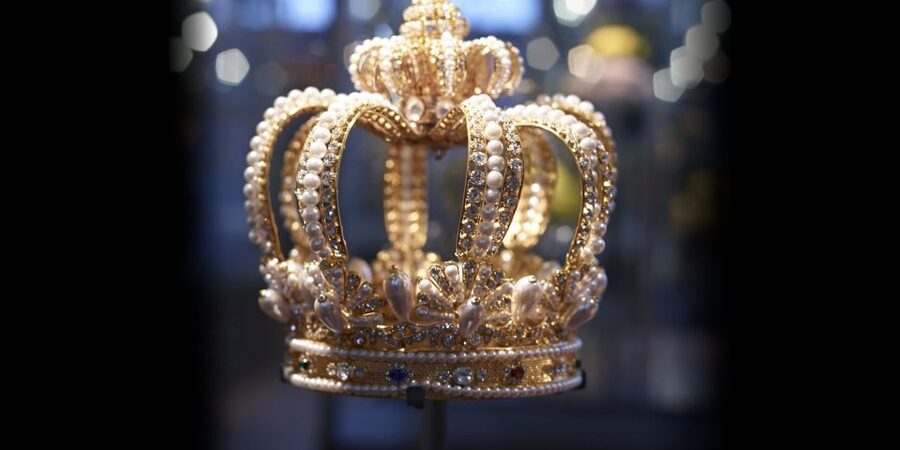
Admission includes the Diamant Museum and the adjacent Coster Diamonds. This matters when judging the $14 price, since you are not paying for only one set of displays.
The museum gives you the historical and educational framework. The nearby Coster Diamonds visit adds a connection to the working side of diamond cutting and jewelry. Together, the two stops make more sense than either one viewed alone.
You should treat the combination as a compact museum outing rather than a full-day attraction. The ticket remains valid for one day, so you have flexibility about when you visit during opening hours. The museum is open from 9:00 AM to 5:00 PM every day, including weekends.
At $14 per person, I consider the ticket a reasonable purchase for visitors already planning to see the museum district. You receive access to two related places, a short film, historical displays, royal jewelry, famous-diamond replicas, and the Laser Room.
The value is less certain if your main goal is to see a large collection of original diamonds or spend several hours with a specialist guide. No guide is included, and the museum is compact. You are paying for a focused introduction, not an all-day institution.
One practical point: a direct purchase at the door may be possible, so do not assume advance booking is essential. If you use a prepaid reservation, remember that a missed visit can become wasted money, especially if one person in your party can no longer attend.
Location, timing, and practical details
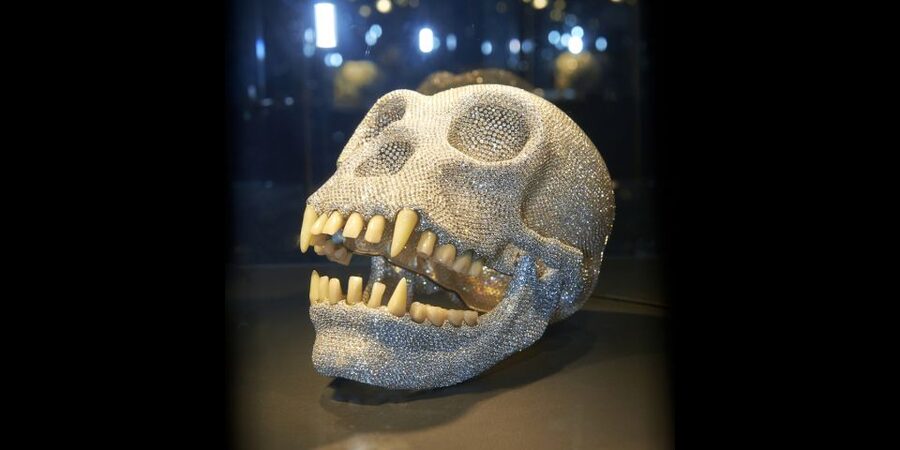
The meeting point is the Diamant Museum at Paulus Potterstraat 8, 1071 CZ Amsterdam. The activity finishes at the same location, so there is no separate return journey to arrange.
Because the museum is in North Holland’s capital and near a major concentration of cultural sights, it can fit neatly into a museum-district day. You might visit before another attraction, use it as a shorter indoor stop, or pair it with the adjacent Coster Diamonds experience.
The ticket is valid for one day, with starting times based on availability. The stated opening hours are 9:00 AM to 5:00 PM daily, including weekends. Check the available entry time when booking so you do not arrive outside the period offered for your ticket.
Large bags and luggage are not allowed. Smoking and pets are also prohibited. Leave bulky items elsewhere before arriving, since this is not the place to bring suitcases or a full day pack.
The museum is not suitable for wheelchair users. That is an important limitation to consider before booking, particularly because the Laser Room and other displays may require movement through the exhibition areas.
Free cancellation is available up to 24 hours in advance for a full refund. You can also reserve now and pay later, which helps if your Amsterdam schedule is still shifting.
Who will enjoy the Diamant Museum most?
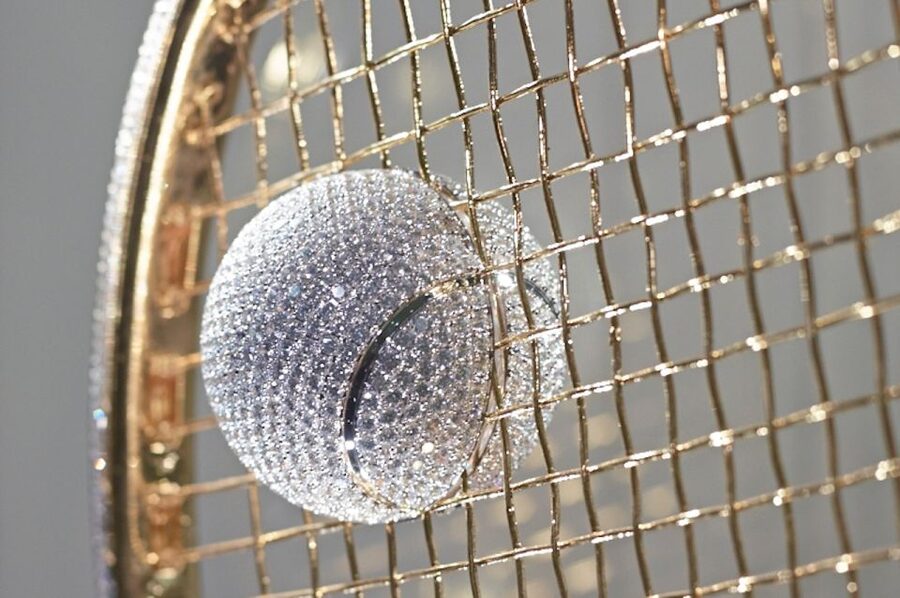
I would recommend this experience to families looking for a museum with an activity built in. The Laser Room gives children a clear goal, while the film and displays explain the diamond story in a way that does not depend entirely on long reading.
It also suits adults who want a short, focused visit with a clear subject. If you are curious about jewelry, royal collections, famous stones, or the mechanics of polishing, the museum offers several points of entry.
It is a good choice for a rainy morning or a break from larger museums. You can learn something, see attractive objects, and take part in a playful challenge without committing a whole day.
I would be more cautious if you dislike replicas, prefer guided tours, or expect a large museum with extensive original collections. The attraction works best when you see it as an introduction to diamonds and Amsterdam’s connection with the trade.
The rating of 3.9 from 460 ratings suggests a generally positive but not flawless experience. That feels fair. The museum’s best features are specific and appealing, but its compact size and lack of a guide will not suit everyone.
Should you book the Amsterdam Diamant Museum?
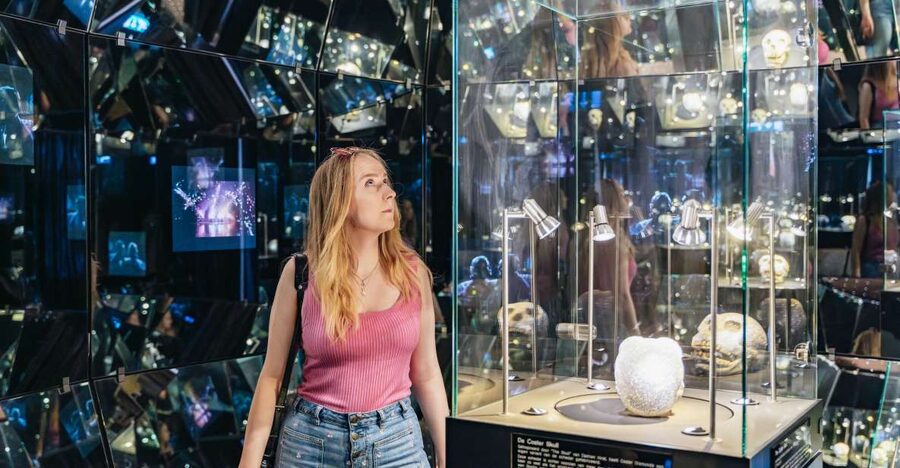
Book it if you want a reasonably priced, self-guided museum visit with three strong ingredients: the 3-billion-year story of diamond formation, royal and famous-diamond displays, and the Laser Room.
I especially recommend it for families, jewelry enthusiasts, and visitors already near the museum district. The inclusion of adjacent Coster Diamonds improves the value, and the one-day validity gives you room to fit both stops around the rest of your plans.
Skip it if you need wheelchair access, want a guide included, or expect to see original versions of every famous diamond. For everyone else, $14 buys a compact but varied look at how nature, skilled workmanship, commerce, royalty, and a little playful mischief turn a rough stone into a celebrated jewel.
FAQ
Where does the Amsterdam Diamant Museum experience begin?
It begins at the Diamant Museum, Paulus Potterstraat 8, 1071 CZ Amsterdam. The activity ends at the same meeting point.
How long is the ticket valid?
The ticket is valid for one day. Available starting times depend on the date and booking availability.
What are the museum’s opening hours?
The Diamant Museum is open daily from 9:00 AM to 5:00 PM, including weekends.
Is a guide included?
No. The ticket provides admission, but no guide is included.
What does the admission ticket include?
It includes entrance to the Diamant Museum and the adjacent Coster Diamonds.
Can I bring luggage or a large bag?
No. Luggage and large bags are not allowed. Pets and smoking are also prohibited.
Is the museum suitable for wheelchair users?
No. The experience is not suitable for wheelchair users.
Newest Amsterdam write-ups
- Zaanse Schans: Half-Day Private Guided Tour★ 5.0 · 4 reviews
- Zaanse Schans: Private Cruise + Live Guide, Optional Drinks★ 4.7 · 26 reviews
- Zaanse Schans: Wooden Shoe Painting Workshop★ 4.9 · 23 reviews
- Amsterdam: Private Zaanse Schans Windmills and Volendam Trip★ 4.9 · 31 reviews
- Zaanse Schans: Pancake Restaurant Visit★ 4.5 · 26 reviews
- Amsterdam: Zaanse Schans E-Bike Tour with Windmills & Cheese★ 4.5 · 12 reviews
- Zaandam: Paint a Perfect Portrait workshop★ 5.0 · 5 reviews
- Volendam: Volendams Museum Entry Ticket★ 4.4 · 14 reviews
Amsterdam Diamond Experiences, compared.

Royal Experience – Private Tour in World’s Oldest Diamond Polishing Factory
Read our review →

Royal Engagement Experience at Royal Coster Diamonds in Amsterdam
Read our review →Browse the lists this tour appears in