
Reviewed · AMSTERDAM RED LIGHT DISTRICT TOURS
Red Light District private tour with a local
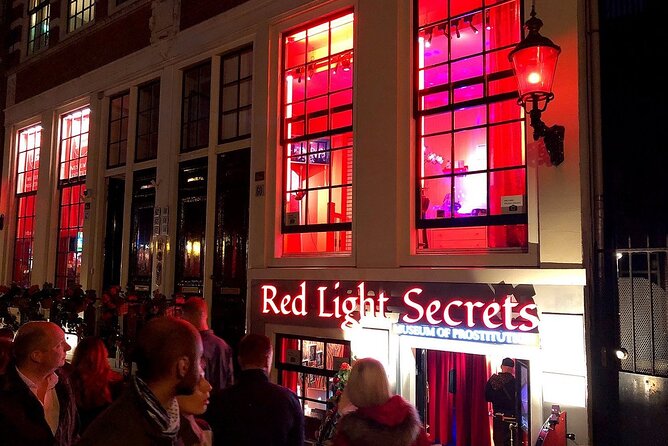
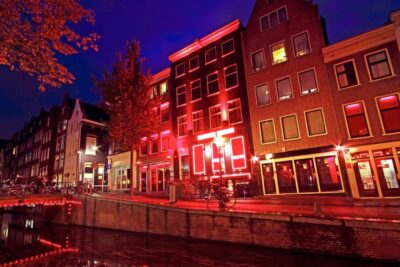
Amsterdam’s Red Light District is more than glowing windows and late-night headlines. This private walking tour uses the streets around De Wallen to explain how prostitution, religion, trade, drug policy, and Amsterdam’s tolerant image became tangled together. Since guided tours inside the district were prohibited in 2020, your guide stays on the outskirts, then sends you off with a map for the final stretch.
I like the private format, since your group can ask direct questions without keeping pace with strangers. I also like the local angle: Manouk, a longtime resident of the area, brings personal anecdotes and practical details that give the neighborhood a human scale. The main drawback is clear: you do not receive a guided walk through the central Red Light District itself.
Key points
- Local guide Manouk: A longtime resident who shares personal stories and knows the area well.
- 90-minute walking route: Covers De Wallen, Dam Square, Warmoesstraat, Zeedijk, Nieuwmarkt, and Kloveniersburgwal.
- Outskirts-only access: Guided tours inside the Red Light District have been prohibited since 2020.
- Private group experience: Your party alone takes part, with space for questions and discussion.
- Map for independent exploring: The tour ends with information to help you see the final stretch yourself.
- Good value for groups: The price is $231.72 for up to 15 people, not per person.
Starting at Beursplein and setting the tone
The tour begins at Beursplein in central Amsterdam and returns there at the end. That makes the meeting point practical if you are already sightseeing near Dam Square or the city center, though you should still allow time to find the guide in a busy area.
The walk lasts about 1.5 hours. You are not simply led from one photo stop to another. The route uses the streets between the main points to explain Amsterdam’s social history, local customs, and changing policies. That matters here because the Red Light District makes little sense if you treat it as a row of attractions. Its story is tied to the city’s religious past, port activity, nightlife, and efforts to control or regulate sex work and drugs.
Because this is a private tour, the pace can suit your group better than a large public walk. You can ask about a specific street, policy, or custom without worrying that you are holding up a crowd. A small group also makes it easier to discuss a sensitive subject respectfully.
The tour is suitable for most people, and service animals are allowed. It takes place outdoors and involves walking between stops, so comfortable shoes and weather-ready clothing are sensible. One group completed the walk in Dutch rain and still found the conversation worthwhile, but Amsterdam weather can be damp and unpredictable.
More Red Light District tours:
- Amsterdam: Red Light Secrets Museum Entry Ticket
★ 4.2 · 5,722 reviews - Amsterdam: Red Light District Tour in German/English/Italian
★ 4.9 · 5,623 reviews - Amsterdam Red Light District & Coffee Shop Tour
★ 4.6 · 4,134 reviews
De Wallen: history behind the famous windows
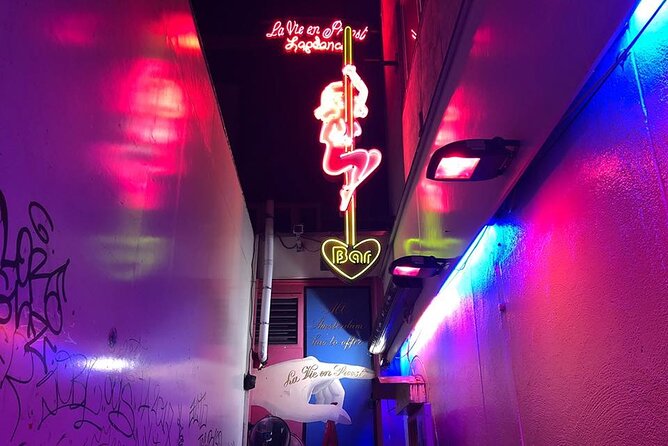
The first major stop focuses on De Wallen, Amsterdam’s Red Light District. Here you learn how prostitution developed in this part of the city and why sex workers settled near this sacred area.
That pairing of religion and sex work is one of the tour’s more revealing themes. The district’s identity was not created in a vacuum. Amsterdam’s old center contains churches, canals, former commercial streets, and places linked to the city’s maritime past. The tour sets out to explain why a profession that many societies pushed out of sight became associated with this central neighborhood.
You also hear how Amsterdam gained its reputation for a liberal attitude toward sex. The useful point is that tolerance does not mean a simple anything-goes policy. The Netherlands has long tried to manage activities that exist regardless of official approval, and the modern debate includes questions about safety, exploitation, public order, and the rights of sex workers.
The guide also covers the day-to-day realities of sex work. That keeps the subject from becoming a sideshow. You are encouraged to think about the people who work in the area, not only the visitors who come to look at it.
Dam Square and the roots of tolerance
From De Wallen, the walk continues to Dam Square. The square is one of Amsterdam’s best-known public spaces, but here it serves a specific purpose: explaining the origins of the coffeeshop concept and the city’s earlier approach to tolerance and freedom.
This stop helps separate popular images from legal facts. Amsterdam’s coffeeshops are often treated abroad as a symbol of total drug freedom, yet the legal status is more complicated. The tour returns to this subject later at Kloveniersburgwal, giving you a chance to place coffeeshops within wider Dutch policy.
Dam Square also gives the guide a useful setting for discussing how Amsterdam developed a reputation that still shapes the city’s tourism. You can expect stories about the difference between what is permitted, what is tolerated, and what is formally legal. Those distinctions are easy to miss if you only see the district at night.
The stop is listed as about 10 minutes. That is enough time for an explanation without turning the whole square into a long lecture. You will still be walking soon after, so the tour keeps moving.
Warmoesstraat and a view of the Old Church
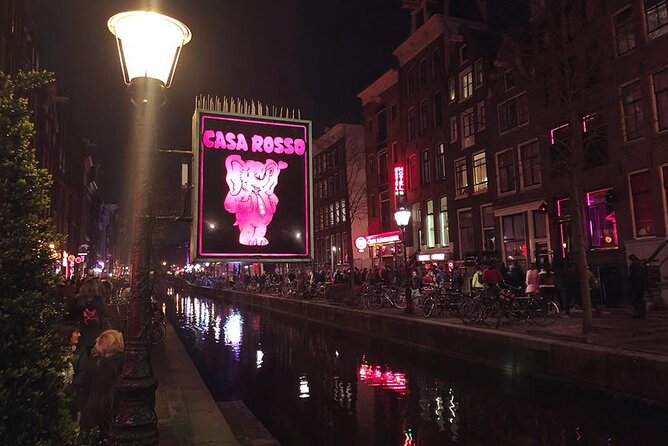
Warmoesstraat is one of Amsterdam’s oldest streets and now functions as an entertainment center. The route also gives you a glimpse of the Old Church, or Oude Kerk, one of the district’s most striking reminders of its religious past.
This is where the tour’s themes come together in a compact space. An old street, a church, nightlife, and the Red Light District all exist within a short walk. Your guide uses the setting to explain how the neighborhood changed over time and how its public image developed.
The stop lasts about 15 minutes, making it one of the longer pauses on the route. That gives you time to look around rather than simply hear a name and move on. Still, this is an exterior walking tour, so do not expect admission to the Old Church or a guided interior visit.
For me, the value here is the contrast. Amsterdam’s historic center is not arranged into neat categories. Sacred buildings, commercial streets, adult entertainment, restaurants, and daily city life sit close together. The walk helps you read that mixture instead of treating the district as a single-purpose attraction.
A few more Amsterdam tours and tickets worth comparing
- Rijksmuseum Amsterdam Small-Group Tour with Private Upgrade
★ 4.5 · 1,547 reviews - Van Gogh Museum Tour Reserved Entry Semi Private
★ 5.0 · 1,437 reviews - Private Amsterdam Red Light District and Coffee Shop Tour
★ 5.0 · 763 reviews - Anne Frank and Jewish Quarter Amsterdam Private Walking Tour
★ 5.0 · 684 reviews
Zeedijk and Amsterdam’s changing Chinatown
Next comes Zeedijk, an area associated with Amsterdam’s Chinatown. The guide discusses how the street was viewed as one of the city’s most dangerous places during the 1970s, then explains how it changed into a popular spot for local residents.
This stop gives the tour a wider focus. You are no longer hearing only about sex work or coffeeshops. You are also looking at how an urban neighborhood can decline, gain a bad reputation, and later become part of everyday city life again.
The 15-minute discussion is useful for anyone interested in Amsterdam beyond its postcard center. Zeedijk shows that the Red Light District is not a sealed-off world. It is part of a living neighborhood with restaurants, shops, residents, and changing public attitudes.
The term Chinatown is part of the stop’s identity, but the tour’s point is not just to label the street. It is to explain the area’s past and the changes that made it more welcoming. That local context adds balance to the darker stories connected with De Wallen.
Nieuwmarkt and the modern questions around prostitution
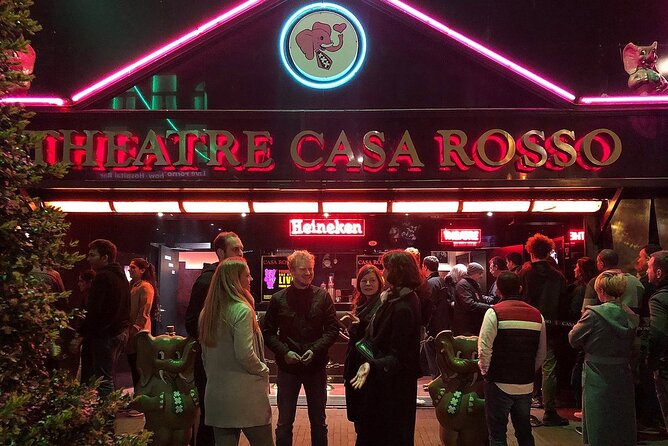
At Nieuwmarkt, the focus turns to the legalization of prostitution and the problems sex workers face today. This is one of the most important stops if you want more than colorful stories about Amsterdam’s permissive reputation.
Legalization is often presented as a simple success story, but the real issues are more complicated. The discussion here covers the pressures facing sex workers and the way regulation affects their lives. You can expect the guide to connect the legal framework with current concerns rather than treating the policy as a finished solution.
Nieuwmarkt is also a good place to consider why guided access inside the Red Light District was prohibited in 2020. The change reflects concerns about crowd behavior, local life, and the way visitors treat the area. The tour does not pretend that an outside walk gives you the full experience of the district. Instead, it explains the boundaries and gives you a map for the last part.
That honesty is useful. You know in advance that you are getting context and a nearby walking route, not a guided circuit through the central window area.
Kloveniersburgwal and the facts behind coffeeshops
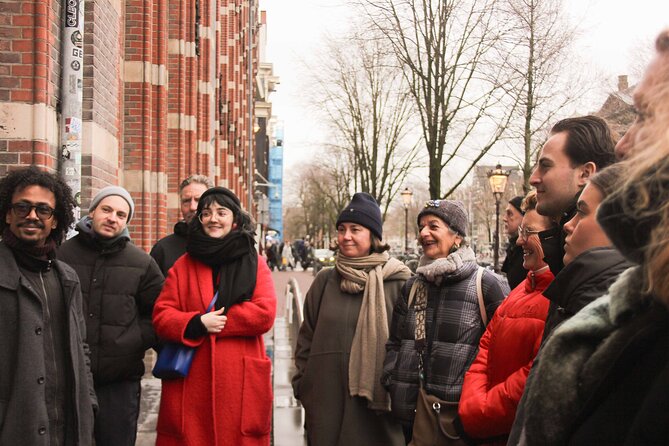
The walk continues along Kloveniersburgwal, where your guide explains coffeeshops and their cultural role. You also learn more about their legal status, an area where many visitors arrive with mistaken assumptions.
The Dutch approach is famous, but it is not always easy to summarize in one sentence. The tour helps you understand how coffeeshops fit into the country’s system of tolerance and control. That is a practical benefit if you plan to visit one during your stay, since you will have a clearer sense of the difference between reputation and law.
This stop also links back to Dam Square. Rather than discussing coffeeshops as a novelty, the route places them within Amsterdam’s broader approach to managing controversial activities. You get a more grounded explanation of why they became part of the city’s culture and why their position remains subject to rules and debate.
The stop lasts around 10 minutes. Since the tour covers several subjects in a short time, ask questions as you go. The private format makes that easier, especially if your group wants to focus more on policy than on street history.
Ending at Paulusbroederssluis with your own map
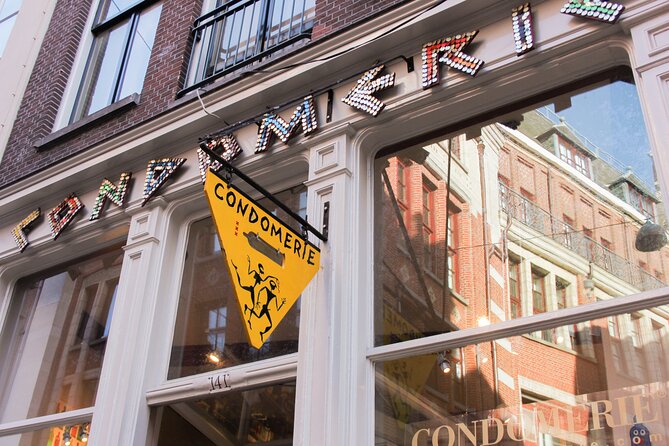
The final stop is Paulusbroederssluis. Here you receive a map with information about the Red Light District and set off to explore the final stretch independently.
This ending is not just a handoff. It is the practical answer to the 2020 restriction on guided tours inside the district. You get the background first, then the freedom to look around on your own without a guide narrating every step.
The map should help you make sense of the area after the tour. Since the route ends back at Beursplein, you can continue exploring or return to the center from there. The map is especially useful if you want to see the district at your own pace and quietly observe how the streets function as part of Amsterdam rather than as a staged attraction.
You also receive a small gift. The details are not specified, but it is intended as a lighthearted souvenir at the end of a serious and sometimes sensitive subject.
What the private price means for your group
The listed price is $231.72 per group of up to 15 people. That works out to about $15.45 per person if you fill all 15 places. For a couple or a very small party, the per-person cost is much higher, but the private arrangement gives you something a standard group tour cannot: the guide’s attention belongs to your party.
Value depends on how many people are sharing the cost. A family group, group of friends, or organized party can make good use of the flat rate. A solo visitor or pair may prefer a lower-cost public walk if available, though that would not offer the same private format.
The tour runs for roughly 90 minutes, so you are paying for a compact introduction rather than a full-day activity. I think the price makes the most sense if you care about social history, want to ask frank questions, and would rather have a local conversation than simply wander through the area with a phone map.
The high advance booking pattern, about 98 days on average, is worth noting. If your dates are fixed, book early rather than assuming you can arrange it at the last minute.
The guide makes the difference
Manouk is the named guide associated with this experience. She is described as a longtime resident of the Red Light District and brings personal anecdotes to the route. That local connection is the strongest reason to choose this walk instead of reading a short guidebook entry and exploring alone.
Her style appears friendly and open to questions. She has guided people through rain, answered practical questions about the neighborhood, and shared stories about the area from personal experience. One account also praises her ability to explain the streets from memory, which matters in a district where the history is spread across several short blocks.
Do not expect a formal academic lecture. The appeal is a local guide who can connect facts with lived experience and explain why the neighborhood feels the way it does today. The subject matter can be sensitive, so a guide who treats it with humor but also respect is a real asset.
Who should book this walk
I would recommend this tour to you if you want context before exploring the Red Light District independently. It suits adults interested in urban history, sex-work policy, coffeeshop law, and the way Amsterdam handles activities that other cities often hide.
It also fits a private group that wants a flexible conversation. The tour can work well for friends, couples, or families with older members who are comfortable discussing prostitution and drug policy in a factual way.
I would not choose it if your main goal is to enter the Red Light District with a guide or spend the full 90 minutes among the famous windows. That is not what this experience provides, and guided tours inside the district are no longer allowed. You should also avoid booking it if you want an attraction with indoor admission, since the listed route is an outdoor walk and none of the stops includes an entry ticket.
Free cancellation is available up to 24 hours before the start time. Changes or cancellations inside that window are not refundable, so keep your plans firm once the deadline passes.
Should you book the Red Light District private tour?
Book it if you want the stories behind the streets, especially if you value a local guide and a private setting. Manouk’s personal connection, the frank discussion of sex work and coffeeshops, and the final map make this more useful than a simple photo walk.
Skip it if you expect a guided tour inside De Wallen or want a longer, more conventional sightseeing route. The best way to judge this experience is to see it as a thoughtful introduction to a complicated neighborhood, followed by independent exploration. For a full group of up to 15, the flat price is reasonable. For only one or two people, the value is less clear, but the local perspective may still justify it.
FAQ
Where does the tour start?
The tour starts at Beursplein, 1012 Amsterdam, Netherlands.
Where does the tour end?
The activity ends back at the meeting point at Beursplein.
How long does the walking tour last?
The walking tour lasts approximately 1.5 hours, or 90 minutes.
Is this a private tour?
Yes. Only your group participates, with up to 15 people included in the group price.
Does the tour go inside the Red Light District?
No. Guided tours inside the Red Light District have been prohibited since 2020, so this experience visits the surrounding streets and outskirts. You receive a map to explore the final stretch independently.
What places does the route cover?
The route includes De Wallen, Dam Square, Warmoesstraat, Zeedijk, Nieuwmarkt, Kloveniersburgwal, and Paulusbroederssluis.
Is a map included?
Yes. You receive a map with information about the Red Light District for the final part of your visit.
Can I cancel for a refund?
You can cancel up to 24 hours before the experience starts for a full refund. Cancellations or changes made less than 24 hours before the start time are not refunded.
Newest Amsterdam write-ups
- Zaanse Schans: Half-Day Private Guided Tour★ 5.0 · 4 reviews
- Zaanse Schans: Private Cruise + Live Guide, Optional Drinks★ 4.7 · 26 reviews
- Zaanse Schans: Wooden Shoe Painting Workshop★ 4.9 · 23 reviews
- Amsterdam: Private Zaanse Schans Windmills and Volendam Trip★ 4.9 · 31 reviews
- Zaanse Schans: Pancake Restaurant Visit★ 4.5 · 26 reviews
- Amsterdam: Zaanse Schans E-Bike Tour with Windmills & Cheese★ 4.5 · 12 reviews
- Zaandam: Paint a Perfect Portrait workshop★ 5.0 · 5 reviews
- Volendam: Volendams Museum Entry Ticket★ 4.4 · 14 reviews
Amsterdam Red Light District Tours, compared.
Red Light District Tour in German/English/Italian
Read our review →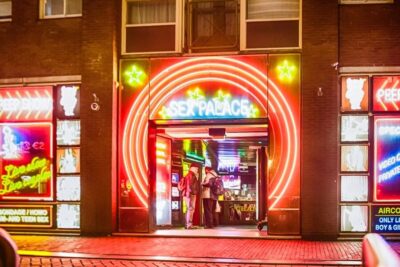
Amsterdam Red Light District & Coffee Shop Tour
Read our review →
Red Light District Pub Crawl with Unlimited Shots
Read our review →
Private Amsterdam Red Light District and Coffee Shop Tour
Read our review →Browse the lists this tour appears in