
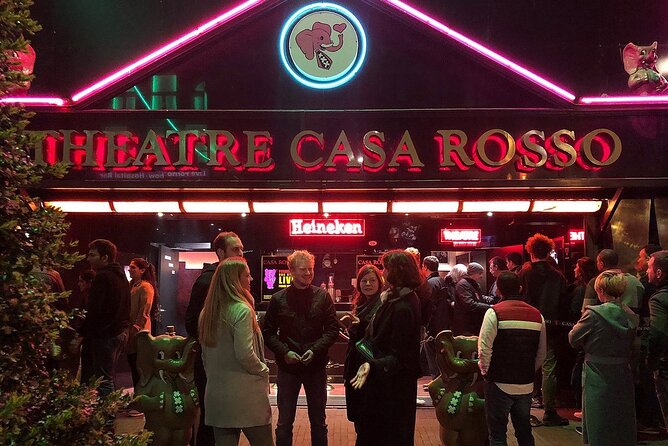
Reviewed · AMSTERDAM RED LIGHT DISTRICT TOURS
Red Light District tour in Amsterdam
Amsterdam’s Red Light District is not simply a row of glowing windows. It is a compact piece of Amsterdam where religion, trade, immigration, sex work, drug policy, and the city’s idea of tolerance all meet. This 90-minute walk stays around the district rather than entering its central streets, giving you context before you explore independently.
I like the small maximum group of 15, which makes it easier to ask direct questions. I also like the clear focus on the area’s past and present, including prostitution, coffee shops, Chinatown, and the Old Church. The main drawback is important: guided tours have not been allowed inside the district since 2020, so anyone expecting to walk directly past the windows with a guide should choose another plan.
Key points to know before booking
- The tour stays on the outskirts of De Wallen, then provides a map for self-guided exploration.
- The route covers seven stops, including Dam Square, Warmoesstraat, Zeedijk, Nieuwmarkt, and the canals.
- Guides such as Manouk, Carlos, Nadav, David, and Valeria bring different personalities and local perspectives.
- The focus is educational and direct, covering sex work, drug policy, tolerance, and the changing face of Amsterdam.
- The walk is generally easy, but you may spend time standing while the guide talks.
- The price is about $31.44 per person, with free cancellation up to 24 hours before the start.
What this Amsterdam Red Light District walk really offers
The central question is simple: are you looking for a guided walk through the famous window streets, or are you looking for an explanation of how the area came to be?
This experience offers the second option. You begin near Bistro Berlage at Beursplein, then walk around the perimeter of the Red Light District. Along the way, the guide explains the area’s past, the role of prostitution, Amsterdam’s tradition of tolerance, and the legal position of coffee shops.
That distinction matters. The route lets you look toward the district and understand its setting, but it does not take a tour group through the streets where sex workers operate. At the end, you receive a map with information for exploring on your own.
I see this as a useful introduction for a first visit. You can ask questions in a small group, get your bearings, and then decide how much of De Wallen you want to see independently. It is less useful if your main goal is a guided stroll through the busiest red-light lanes.
More Red Light District tours:
- Amsterdam: Red Light Secrets Museum Entry Ticket
★ 4.2 · 5,722 reviews - Amsterdam: Red Light District Tour in German/English/Italian
★ 4.9 · 5,623 reviews - Amsterdam Red Light District & Coffee Shop Tour
★ 4.6 · 4,134 reviews
From sacred ground to Amsterdam’s most famous neighborhood
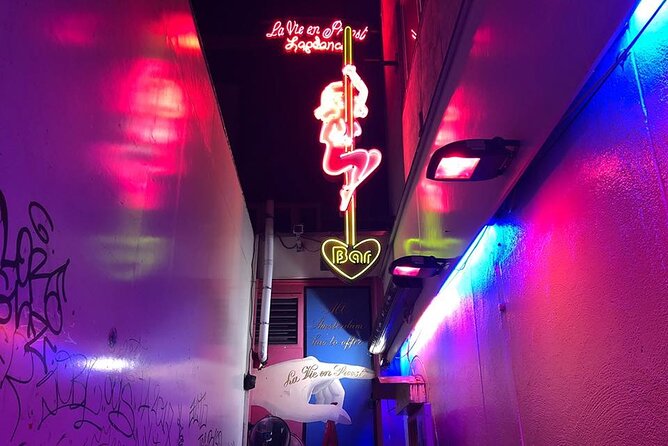
The first stop focuses on De Wallen, the historic center of the Red Light District. The guide explains how prostitution developed here and why sex workers settled in an area connected with religious buildings and old city trade.
The point is not just to collect colorful facts. You begin to see how Amsterdam’s character developed through practical compromises. Commerce, religion, shipping, housing, and sex work have long shared a very small area. The famous liberal reputation did not appear overnight, and the guide connects it to the city’s wider approach to tolerance.
This part can be especially useful if your understanding of Amsterdam begins and ends with neon windows and coffee shops. The conversation places those images inside a larger story about city rules and social attitudes.
You should expect frank discussion. The subject is prostitution, so the guide may address topics that feel awkward in a mixed group. The strongest guides handle this with humor and respect, but the tour is not designed to avoid adult subjects.
Dam Square and the roots of the coffee shop idea
At Dam Square, the discussion shifts toward coffee shops and the idea of regulated tolerance. The stop lasts around 10 minutes, enough time for an explanation without turning the entire walk into a lecture about cannabis.
You learn about the place where the coffee shop concept began and how Amsterdam’s approach to soft drugs fits into its wider culture of freedom and tolerance. The useful part is the distinction between what is tolerated, what is legal, and what remains controlled by law.
That distinction is easy to miss when you explore on your own. Visitors often treat the words legal and tolerated as if they mean the same thing. A guide can explain the difference in plain terms and answer questions as they arise.
This stop also helps explain why the Red Light District attracts so much attention. Prostitution and coffee shops are often treated as separate subjects, but Amsterdam’s public image links them through its long debate over personal freedom, public order, and city control.
Warmoesstraat, the Old Church, and a changing entertainment zone
Warmoesstraat is one of Amsterdam’s oldest streets and now functions as an entertainment center. The route also gives you a glimpse of the Old Church, one of the most striking landmarks in this part of the city.
This is one of the tour’s more revealing contrasts. A medieval church sits close to businesses associated with nightlife and sex work. That physical closeness makes the guide’s explanation of sacred space, commerce, and tolerance easier to grasp than a list of dates would.
The stop is brief, around 10 minutes, and the walk between locations gives the guide room to connect the landmarks. You should not expect a formal church visit or a long architecture talk. The Old Church serves mainly as an important marker in the story of De Wallen.
If you enjoy city history tied to ordinary streets, this section should work well. If you want extensive architectural detail, the tour’s focus is elsewhere.
Same city, a completely different afternoon:
- Amsterdam Classic Saloon Boat Cruise with Drinks and Cheese
★ 5.0 · 31,825 reviews - Amsterdam Luxury Canal Cruise + Unlimited Drinks & Bites option
★ 5.0 · 30,518 reviews - Amsterdam: Heineken Experience Ticket
★ 4.6 · 30,055 reviews - Amsterdam: Rijksmuseum Entry Ticket
★ 4.7 · 25,535 reviews
Zeedijk and Amsterdam’s Chinatown
The route continues to Zeedijk, an old street associated today with Amsterdam’s Chinatown. The guide explains how the area was once viewed as one of the city’s most dangerous places during the 1970s, then discusses its later change into a popular spot for local residents.
This stop adds needed breadth. The Red Light District is not only about window prostitution. It is also a neighborhood shaped by immigration, food, nightlife, housing, and changes in public safety.
Some people book this experience expecting every minute to focus on the window streets. If that is your plan, Zeedijk may feel like a detour. It is, however, part of the stated route and helps show that the district is a living part of Amsterdam rather than a sealed-off attraction.
You also get a more balanced view of how neighborhoods change. The guide does not present the area as permanently dangerous or permanently carefree. Instead, you hear how its reputation and daily use have shifted.
Nieuwmarkt and the reality of legal prostitution
At Nieuwmarkt, the guide turns to the legalization of prostitution and the problems sex workers face today. This is one of the most important stops because it moves the tour beyond the city’s marketing image.
Legalization does not remove every difficulty. The discussion helps you think about safety, regulation, public attitudes, and the gap between a legal framework and the lived experience of people working within it.
This is where the tour can feel more human. A good guide keeps the subject from becoming a collection of jokes or tourist curiosities. Several guides are praised for making people comfortable while still treating the topic with care.
You should listen with an open mind and expect direct questions from the group. This is not a photo stop. It is a chance to understand why the city has changed its rules and why debates around the district continue.
Kloveniersburgwal and what coffee shops actually mean
The next stop, near Kloveniersburgwal, returns to coffee shops and their place in Amsterdam culture. In about five minutes, the guide covers their cultural role and legal status.
The short timing means this is a quick explanation, not a detailed policy seminar. Still, it helps tie together points raised earlier at Dam Square. You learn why coffee shops became part of Amsterdam’s identity and why the rules surrounding them are not as simple as visitors sometimes assume.
I like having this subject handled within a broader neighborhood tour. If you visit a coffee shop later, you will have a better sense of the policy background instead of treating it as an isolated novelty.
The guide can also answer questions, though the quality of the explanation will depend on who leads your group. Names praised in the feedback include Carlos, Manouk, Nadav, David, and Valeria. Some visitors describe Carlos as funny and able to handle questions. Manouk is noted for local experience and a relaxed way of discussing sensitive subjects. Guides vary, so the tone may not be identical from one departure to the next.
The final map and your independent walk through De Wallen
The tour ends near Paulusbroederssluis, where you receive a map with information about the Red Light District. This final five-minute section is important because it turns the tour into a two-part experience.
First, you get a guided explanation from outside the central zone. Then, if you want, you can return independently and use the map to understand what you are seeing. The guide can also offer practical suggestions about what to expect and which parts of the area may suit your interests.
This arrangement follows the city’s restriction on guided tours inside the district. It also gives you more freedom than a group tour would. You can walk at your own pace, leave when you have seen enough, and avoid adding a large organized group to narrow streets.
You must be comfortable with self-guided exploring, though. The map is useful as a handoff, but it is not the same as having a guide beside you. If you expect commentary at every turn, this final part may feel incomplete.
The walking pace, group size, and guide style
The advertised duration is about 90 minutes, with a maximum of 15 people. That is a sensible size for a route where you need to hear explanations and ask questions.
Amsterdam is largely flat, and the walk is generally manageable for anyone with moderate physical fitness. You will be on your feet between stops, and some of the experience involves standing while the guide speaks. Wear comfortable shoes, and bring rain protection. One group completed the walk in snowy conditions, while another had to make the best of a rainy afternoon.
Timing can vary. A small group with few questions may finish in about an hour, while another group may take the full 90 minutes or run slightly longer. If you value questions and conversation, speak up during the walk. The guide’s pace can feel quick when someone talks rapidly, especially if English is not your first language.
The style is part of the gamble. Guides such as David and Manouk are praised for warmth, humor, patience, and strong answers. Carlos is described as entertaining and well prepared. At the same time, one person found the tour more like a lecture and another felt some information was basic. Your experience will depend on the guide, group questions, weather, and how much discussion develops.
What the $31.44 price buys you
At about $31.44 per person, this is not the cheapest way to hear a few facts about the Red Light District. You could read about De Wallen, walk around the edges, and enter the area independently without paying for a guide.
The value comes from structure and context. In 90 minutes, you cover several connected parts of Amsterdam and can ask questions about subjects that are not always easy to explain through a guidebook. The small gift at the end, described by several people as a humorous treat shaped like genitalia, is a novelty rather than a reason to book.
I think the price is fair if you want an organized introduction and prefer not to arrive in the district without any background. It is less convincing if you already know Amsterdam well or simply want to see the area for yourself.
The experience is booked, on average, more than a month ahead, which suggests you should reserve early for a preferred time. Free cancellation is available until 24 hours before the start. The ticket is mobile, the tour is offered in English, and the meeting point is Bistro Berlage at Beursplein 1.
Finding the exact meeting spot may take a little care. One person had trouble locating it, so give yourself extra time rather than arriving at the last minute. The tour ends back at the meeting point.
Who should book this tour
I would choose this walk if you are visiting Amsterdam for the first time, want an adult subject handled respectfully, and prefer a guide to connect the district with the city’s larger story.
It also suits you if you are curious about:
- The history of prostitution in Amsterdam
- The difference between legal and tolerated activity
- The role of coffee shops in Dutch culture
- The changes around Zeedijk and Chinatown
- The city’s effort to manage tourism and public space
- The practical layout of De Wallen before exploring alone
I would skip it if your only goal is to enter the central Red Light District with a guide. That is not permitted, and the tour makes its route around the outskirts. I would also skip it if you dislike standing discussions or adult topics.
The experience is not meant for young children, and the subject matter may feel too direct for some families. Service animals are allowed, and the route is near public transportation, but you should still expect a regular city walk rather than a seated presentation.
Should you book the Amsterdam Red Light District tour?
Book it if you want a thoughtful introduction before seeing De Wallen on your own. The best part is not the map or the small gift. It is the chance to connect prostitution, coffee shops, migration, religion, city regulation, and Amsterdam’s reputation for tolerance in one compact walk.
Go in with the right expectation. You will walk around the district, not through the central red-light streets. With that understood, the tour offers a relaxed way to ask questions, learn the local context, and explore more respectfully afterward. If that sounds useful, the $31.44 price is reasonable. If you want the spectacle alone, spend the money elsewhere and walk the area independently.
FAQ
Does the tour enter Amsterdam’s Red Light District?
No. Guided tours have been prohibited inside the district since 2020. This experience walks around the outskirts and provides a map so you can explore the area independently afterward.
How long does the walking tour last?
The advertised duration is about 1.5 hours. It can finish earlier or run slightly longer depending on group size and how many questions people ask.
Where does the tour start and finish?
It starts at Bistro Berlage, Beursplein 1, 1012 JW Amsterdam. The activity ends back at the meeting point.
What topics are covered?
The guide discusses the history of De Wallen, prostitution, legalization, challenges faced by sex workers, coffee shops, Amsterdam’s culture of tolerance, Chinatown, and the area’s changing reputation.
Is the tour offered in English?
Yes. The tour is offered in English and includes a mobile ticket.
How many people can join the group?
The maximum group size is 15 people. A small group makes it easier to hear the guide and ask questions.
What happens if I need to cancel?
You can cancel for a full refund if you do so at least 24 hours before the experience begins. Cancellations or changes made less than 24 hours before the start are not refunded or accepted.
Newest Amsterdam write-ups
- Zaanse Schans: Half-Day Private Guided Tour★ 5.0 · 4 reviews
- Zaanse Schans: Private Cruise + Live Guide, Optional Drinks★ 4.7 · 26 reviews
- Zaanse Schans: Wooden Shoe Painting Workshop★ 4.9 · 23 reviews
- Amsterdam: Private Zaanse Schans Windmills and Volendam Trip★ 4.9 · 31 reviews
- Zaanse Schans: Pancake Restaurant Visit★ 4.5 · 26 reviews
- Amsterdam: Zaanse Schans E-Bike Tour with Windmills & Cheese★ 4.5 · 12 reviews
- Zaandam: Paint a Perfect Portrait workshop★ 5.0 · 5 reviews
- Volendam: Volendams Museum Entry Ticket★ 4.4 · 14 reviews
Amsterdam Red Light District Tours, compared.
Red Light District Tour in German/English/Italian
Read our review →
Amsterdam Red Light District & Coffee Shop Tour
Read our review →
Red Light District Pub Crawl with Unlimited Shots
Read our review →
Private Amsterdam Red Light District and Coffee Shop Tour
Read our review →Browse the lists this tour appears in