

Reviewed · ANNE FRANK WALKING TOURS
Amsterdam: Anne Frank and World War II Walking Tour (TOP RATED)
Amsterdam’s Jewish Quarter is best understood on foot, where memorial stones, old synagogues, canals, and quiet streets connect the city’s Jewish past with the Nazi occupation. This two-hour walking tour covers a lot of ground, from the Portuguese Synagogue to Dam Square, with a local guide explaining Anne Frank’s story, Jewish Amsterdam, deportation, resistance, and remembrance.
I like the route’s range: you see real places rather than only hearing a lecture, and the group is capped at 15 people. I also like the guides’ personal approach. James, Misha, Keese, Stan, Aaron, Peter, and others are praised for clear explanations and family stories. The main catch is important: Anne Frank House entry is not included, and the tour title can make that easy to miss.
Key points to know before booking
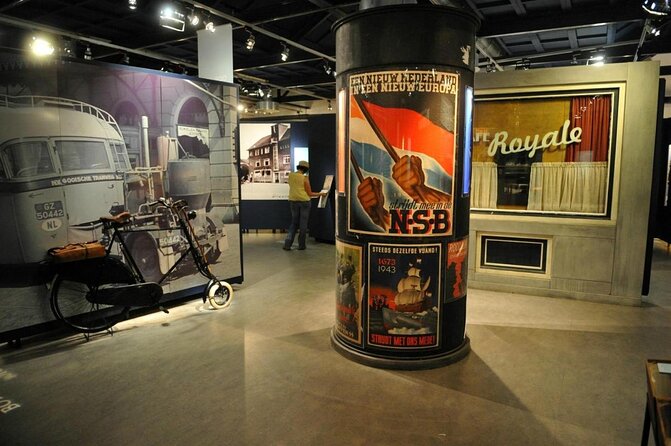
- Anne Frank House is not part of the ticket, so arrange that separately if you want to visit the hiding place.
- The walk links major Jewish and WWII sites, including the Portuguese Synagogue, Auschwitz Monument, Hollandsche Schouwburg, and Dam Square.
- Guides bring different strengths, with James, Misha, Keese, Stan, Aaron, and Peter all noted for clear storytelling and personal detail.
- A maximum of 15 people keeps the group small enough for questions and conversation.
- The route may feel long for young children, even though the scheduled time is about two hours.
- The price is $29.45 per person, with a private-tour upgrade and group discounts available.
A serious walk through Amsterdam’s Jewish Quarter
This is not a light sightseeing stroll. The subject is the destruction of Amsterdam’s Jewish community during World War II, along with the choices made by neighbors, officials, resisters, and occupiers. You will hear about deportation, concentration camps, resistance, and the people whose lives were cut short.
That sober tone is part of the value. Amsterdam can be easy to experience as canals, bicycles, and pretty brick buildings. This walk adds the harder story beneath those familiar views. It helps you understand that the Jewish Quarter was once a living community, not simply a collection of memorials.
The route also places Anne Frank’s story in a wider setting. You learn about her family and diary, but the focus reaches beyond one famous name. The walk explains Jewish life in Amsterdam before the war, the pressure placed on the community during the occupation, and how the city remembers those who were deported and killed.
Guides have different styles. James is praised for personal stories and modern perspective. Keese connects the subject to his own family history. Misha is described as flexible and clear, while Stan receives strong praise for his command of Anne Frank and Jewish history. Aaron is noted for going beyond the basic Anne Frank material, and Peter for explaining difficult subjects in a way that is easy to follow.
Because the guide matters so much on a history walk, these names are useful when you are comparing recent availability. You cannot assume which guide you will get, but the repeated strength of the guiding is a good reason to value the experience for its interpretation rather than for admission to a building.
More Anne Frank walking tours:
- Anne Frank’s Story – Guided Walking Tour through Amsterdam
★ 5.0 · 11,619 reviews - Amsterdam: Life of Anne Frank and World War II Walking Tour
★ 4.8 · 10,467 reviews - Amsterdam: Anne Frank Guided Small Group Walking Tour
★ 4.8 · 2,722 reviews
Starting at the Portuguese Synagogue
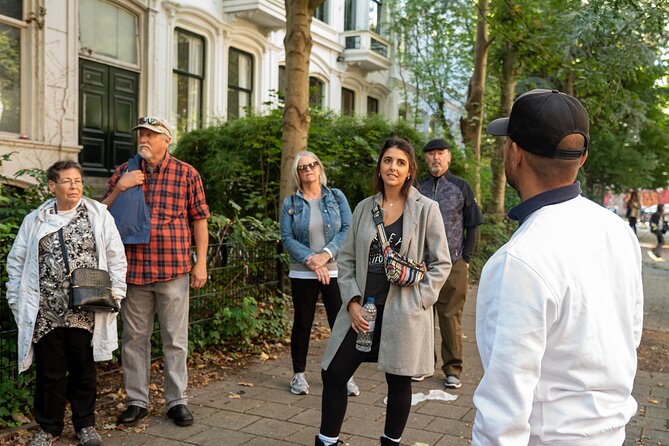
The meeting point is Amstel 51C, 1018 EJ Amsterdam. The first listed stop is the Portuguese Synagogue, also called the Portugese Synagoge in the tour details. You spend about 10 minutes here, with no admission ticket included or required for the stop.
The synagogue introduces Amsterdam’s Sephardic Jewish community, which grew during the Dutch Golden Age. This community became one of the largest and wealthiest Jewish communities in Europe, and the size of its synagogue reflected that status.
That opening is useful because it begins with Jewish life and achievement, not only persecution. You get a sense of the community that existed before the war, including its religious and cultural importance. The synagogue remains an active place of worship and is also a visitor attraction, but this walking tour does not include an interior admission.
Expect a short explanation rather than a full museum visit. If you want to spend time inside the synagogue, check separately for an admission option and opening details. The tour’s strength here is context: your guide uses the building as a starting point for the story of Amsterdam’s Jewish community.
Remembering deportation at the Auschwitz Monument
The Auschwitz Monument is another short stop, listed at about 10 minutes. Here the guide explains the monument and the deportation of Amsterdam’s Jewish population.
Memorials can be easy to pass without understanding. A guide gives the site meaning and helps you connect the physical place with the people it commemorates. This is one of the points where the walk shifts from community history to the machinery of persecution.
You should expect a quiet, serious pause. There is no entrance fee, but this is not a photo stop in the usual sightseeing sense. You can take pictures when appropriate, yet the main reason to linger is to listen and reflect.
The Resistance Museum and the story of opposition
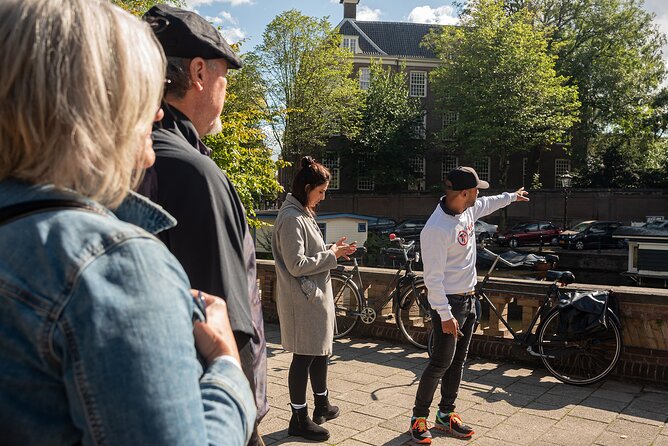
The route continues to the Verzetsmuseum Amsterdam, or Resistance Museum Amsterdam. The planned stop lasts around 10 minutes, and the guide discusses resistance within the Jewish community.
The tour does not include museum admission. Instead, you receive an outdoor explanation of the resistance story and its place in wartime Amsterdam. That distinction matters if you are hoping to explore museum exhibits, photographs, or documents. This walk gives you an introduction, not the full museum experience.
Still, the stop adds needed complexity. The wartime story was not only about victims and perpetrators. There were also people who resisted, helped, hid others, or tried to oppose Nazi rule. The guide’s role is to connect those actions to the streets and institutions around you.
More history walks in Amsterdam:
- Amsterdam: Dutch WWII Resistance Museum Entry Ticket
★ 4.7 · 951 reviews - Amsterdam High-End Dutch Food & History Tour – Up to 8 guests
★ 5.0 · 482 reviews - Amsterdam: Highlights & History Walking Tour
★ 4.8 · 266 reviews - Anne Frank and Amsterdam Jewish History Walking Tour
★ 5.0 · 259 reviews
Hollandsche Schouwburg and the road to the camps
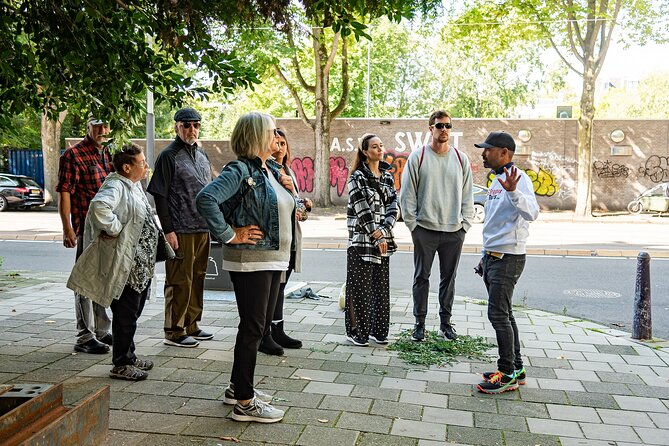
At the Hollandsche Schouwburg, the guide explains deportation camps and the role of this former theater in that process. The stop is scheduled for about 10 minutes.
This is one of the route’s most important locations because it makes deportation feel less abstract. You are not simply hearing dates and names. You are learning how a specific Amsterdam site became linked to the removal of Jewish people from their homes and communities.
Again, the stop is outside and does not include an admission ticket. That keeps the tour affordable, but it also means you should not expect a full indoor visit at every location. The walk works best if you see it as a guided introduction to several places, not as a series of museum tours.
De Plantage, Spinoza, and Amsterdam’s changing streets

The Plantage area brings a visual change. Your guide points out the district and explains its place in Amsterdam’s history. About 10 minutes are planned here.
This part gives the route some breathing room. You move through an attractive area while continuing to hear how Jewish life, wartime events, and later remembrance shaped the city. The scenery does not erase the subject, but it helps you see how ordinary streets can hold difficult memories.
The Spinoza Monument follows, with another short explanation. Baruch Spinoza was a major philosopher associated with Amsterdam’s Jewish community, and the monument offers a chance to discuss his place in the city’s intellectual and religious story.
This is one of the route’s broader historical moments. The tour is not limited to Anne Frank or the years 1940 to 1945. It also gives you a longer view of Jewish Amsterdam, from community life and philosophy to occupation and memorial culture.
Walking to Dam Square and the Royal Palace
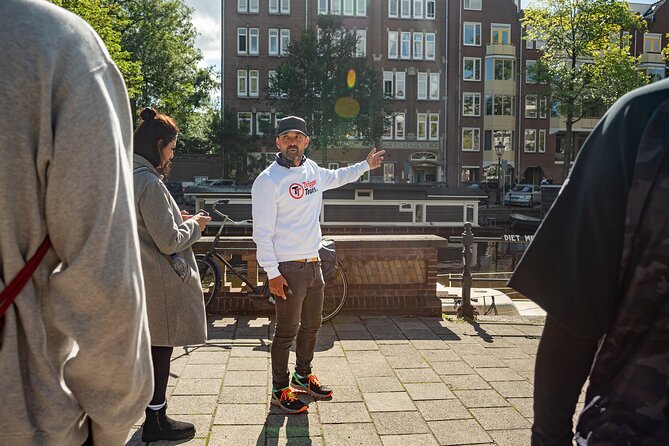
The route then heads toward Dam Square and the Royal Palace. This section is where the walking format earns its keep. You move between areas instead of being delivered from one isolated stop to another, and your guide can point out how the city’s streets fit together.
The published schedule lists about 10 minutes at Dam Square. You see the national monument and hear about its meaning. The Royal Palace provides a familiar Amsterdam landmark, but the guide places the square within the larger story of Dutch wartime memory.
Dam Square is often crowded and active, so keep close to the group and listen carefully. The setting can feel less quiet than the earlier memorial sites. That contrast is useful, though. It shows how remembrance exists alongside everyday city life.
The route details say the activity ends back at the meeting point. Since the walk includes several districts and a route toward Dam Square, confirm the final meeting arrangement when you arrive. The practical point is simple: allow a little extra time after the scheduled two hours before booking another timed activity.
De Schaduwkade and the value of small memorials
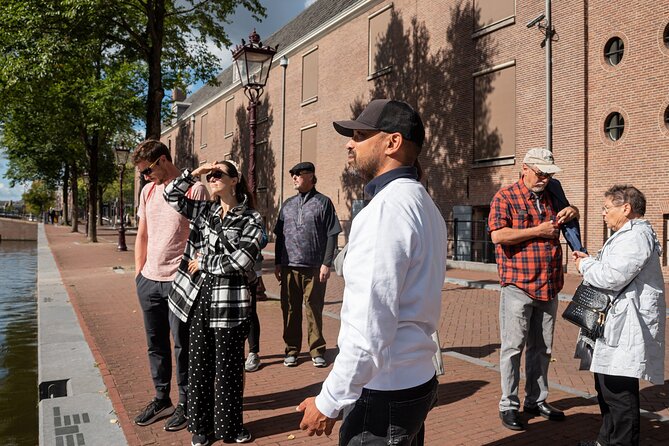
The final listed stop is De Schaduwkade, a memorial along the canal. The guide explains the monument and its connection to remembrance.
Small memorials can be the most affecting part of a city walk. You might pass them without noticing on your own, especially when Amsterdam’s canals and narrow streets demand your attention. A guide helps you see why a particular location matters and how memorials are placed within the city rather than kept only in formal museums.
The stop also reinforces the tour’s main idea: the story is spread across Amsterdam. You are not relying on one building to explain Anne Frank, Jewish life, and the Holocaust. You are piecing together a larger account from synagogues, monuments, former institutions, public squares, and canal-side memorials.
What the $29.45 price gives you
At $29.45 per person, the tour is priced as an affordable guided introduction rather than a full museum package. Your fee covers a local guide, the walking route, and explanations at the listed sites. Food, drinks, and Anne Frank House admission are not included.
I think the price works well if you want historical orientation early in your Amsterdam visit. A guide can help you understand what you are seeing before you visit museums or memorial sites on your own. The value depends heavily on the guide’s ability to explain clearly, answer questions, and connect the stops into one story.
The private-tour upgrade may suit couples, families, or small groups that want more control over pace and questions. The standard experience allows up to 15 people, which is still a manageable group size. Group discounts are available, and the mobile ticket makes the booking simple to carry.
The one price-related warning is the Anne Frank House. If you want to enter the house, you need a separate ticket. Do not assume the tour includes it because Anne Frank appears in the title. Several people have misunderstood this point, and it can be especially frustrating if house tickets are already sold out.
Pace, children, and practical comfort
The tour lasts about two hours, but it is a true walking experience. You move between several locations, with roughly 10 minutes listed at many stops. The route gives you time for photographs, but it is not designed as a slow café-to-café outing.
For adults interested in history, the pace should feel purposeful. For children, it may be tiring. An eight-year-old and a 10-year-old were described as exhausted by the long walk, particularly by the time the route reached the Anne Frank Museum area. If you bring young children, explain the subject in advance and consider whether two hours of walking and serious history is a good match.
Wear comfortable shoes. The tour is near public transportation, and most people can take part, but the supplied details do not promise a step-free route or a precise distance. Service animals are allowed. If you need specific mobility information, ask the provider before booking.
The tour is offered in English. Confirmation arrives at booking, and the mobile ticket is useful if you are moving around Amsterdam without a printed voucher. The experience requires good weather, so poor conditions can lead to a new date or a full refund.
Why the guide can make or break the experience
This kind of tour depends less on scenery than on explanation. The stops are meaningful, but many are short and have no admission included. A strong guide turns them into a connected story.
The most praised qualities are clear speech, personal stories, passion for the subject, and the ability to answer questions. James is singled out for combining wartime facts with modern perspective. Keese adds family connections. Misha is described as flexible, while Stan is praised for detailed Anne Frank and Jewish history. Other guides, including Aaron and Peter, are noted for making difficult material understandable.
There is one serious service concern in the available feedback: one booking had no guide appear, leaving the group waiting 30 minutes. That appears to be an exception rather than the normal pattern, but it is worth knowing. Arrive at the meeting point a little early, keep your confirmation available, and contact the provider promptly if the guide has not arrived after the scheduled start.
The experience has a 4.7 rating from 72 reviews, with 90 percent recommending it. Those figures suggest a strong overall experience, while the lower scores point to two real concerns: confusion about Anne Frank House entry and occasional problems with tour operations.
Should you book this Amsterdam WWII walk?
Book it if you want a guided, outdoor introduction to Amsterdam’s Jewish Quarter and World War II history. It suits adults, older children, and anyone who wants the Anne Frank story placed within the wider history of Jewish Amsterdam, deportation, resistance, and remembrance.
Do not book it expecting entry to the Anne Frank House. That is the key limitation. Arrange the house separately, and treat this tour as the city walk that gives your visit context.
For the price, the small maximum group, the range of sites, and the strong guide feedback make it a good choice for many visitors. I would schedule it early in your stay, leave room for the walk to run a little beyond two hours, and wear shoes made for city streets. If you prefer a private pace or have a group willing to pay more, the private upgrade may be worthwhile.
FAQ
Is Anne Frank House admission included?
No. The entrance ticket to Anne Frank House is not included in this walking tour.
How long does the tour last?
The tour lasts approximately two hours.
Where does the tour start?
The meeting point is Amstel 51C, 1018 EJ Amsterdam, Netherlands.
Where does the tour end?
The activity details say it ends back at the meeting point.
What language is the tour offered in?
The tour is offered in English.
How many people can join the standard tour?
The maximum group size is 15 people.
Is a private tour available?
Yes. You can upgrade to a private tour for a more personal experience.
Are food and drinks included?
No. Food and drinks are not included.
Are entrance tickets to the listed sites included?
The listed walking stops show free admission. Anne Frank House admission is specifically excluded.
Can I cancel for a full refund?
Yes, if you cancel at least 24 hours before the experience start time. Cancellations made less than 24 hours in advance are not refunded. If poor weather causes the tour to be canceled, you will be offered another date or a full refund.
More Walking Tours in Amsterdam
- Absolutely Amsterdam – the Essential Introductory Walking Tour
★ 5.0 · 3,629 reviews - Amsterdam: Anne Frank Walking Tour – Guided in EN/DE/IT/ES
★ 4.9 · 2,676 reviews - Amsterdam: Guided Cultural Walking Tour
★ 4.9 · 2,384 reviews - Amsterdam: Guided Ganja Walking Tour of Coffee Shops
★ 4.2 · 2,092 reviews
Newest Amsterdam write-ups
- Open Dutch Boat! Silent electric drive. Nice cosy boat ride…★ 5.0 · 6 reviews
- Private Hostess Bar Tour in Amsterdam Red Light District (3h)★ 5.0 · 10 reviews
- Professional Photo Shoot in Amsterdam★ 5.0 · 38 reviews
- Visit the Girl with the Pearl Earring, The Hague & Delft City★ 5.0 · 63 reviews
- Private Tour to Tulips, Keukenhof, Windmills & Cheese Farm★ 5.0 · 4 reviews
- 1-15 persons Taxi or Bus Transfer Amsterdam in Amsterdam City★ 5.0 · 8 reviews
- Zaanse Schans Windmills Private Tour from Amsterdam Airport★ 5.0 · 14 reviews
- Rotterdam, The Hague, Delft Private Tour from Amsterdam★ 5.0 · 44 reviews
Anne Frank Walking Tours, compared.

Anne Frank’s Story – Guided Walking Tour through Amsterdam
Read our review →
Life of Anne Frank and World War II Walking Tour
Read our review →

Anne Frank Walking Tour – Guided in EN/DE/IT/ES
Read our review →
Anne Frank Walking Tour Amsterdam Including Jewish Cultural Quarter
Read our review →
Anne Frank’s Last Walk & See Anne Frank House in Virtual Reality
Read our review →
Anne Frank and Jewish Quarter Amsterdam Private Walking Tour
Read our review →
Browse the lists this tour appears in