
Reviewed · AMSTERDAM RED LIGHT DISTRICT TOURS
Exclusive small-group Amsterdam Red Light District tour
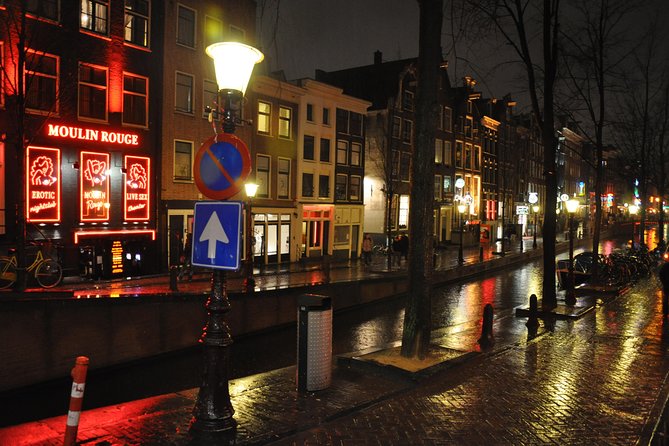
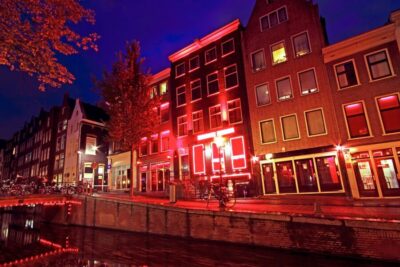
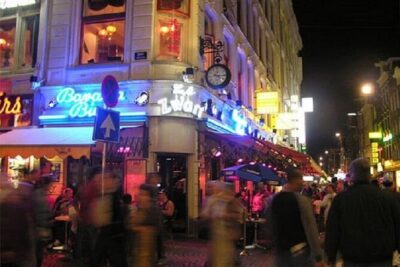
Amsterdam’s Red Light District is more than neon windows and late-night stories. This two-hour walk takes you through De Wallen and the Old Town, where Amsterdam’s oldest streets, wooden foundations, former city gates, sex work, coffeeshop culture, and odd little shops all sit close together. The guide helps sort fact from folklore without treating the district as a sideshow.
I like the short, focused format, which fits neatly into a busy Amsterdam day, and I like the mix of social history with small physical details, such as the wooden poles beneath city buildings and the surviving timber pub Int Aepjen. The main consideration is group size: a maximum of 32 people is not intimate by walking-tour standards, and narrow streets may make it harder to hear at times.
Key points to know before booking
- Two hours on foot: A compact way to see De Wallen when your schedule is tight.
- Local perspective: Expect context about coffeeshop culture, sex work, and how the district developed.
- A surprising Old Town route: The walk includes the Waag, Dam area, Int Aepjen, the smallest house, and a specialist condom shop.
- Guides with personality: Adam and Aarre are named guides connected with this experience, with Adam praised for an entertaining approach and Aarre noted for adapting the walk to a group’s needs.
- Maximum 32 people: The tour is marketed as small-group, but the upper limit is worth considering before you book.
- $63.67 per person: The price is reasonable if you value clear local explanation, but less so if you only want a quick stroll through the district.
Starting at Geldersekade 2HS
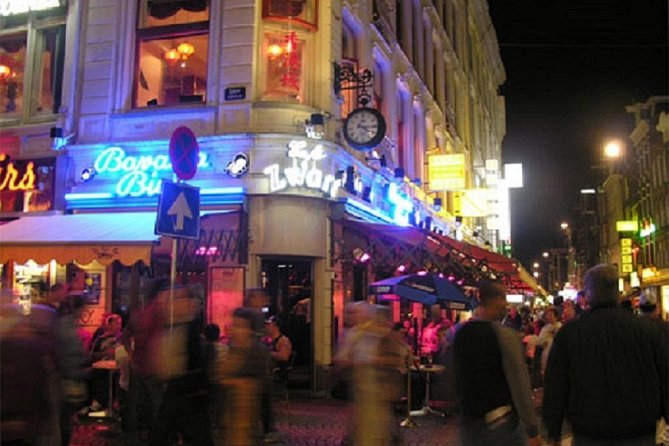
The meeting point is at Geldersekade 2HS, in the 1012 BH area of Amsterdam. The tour finishes back at the same place, so you do not need to arrange a second meeting point or figure out how to get back from an unfamiliar corner of the city.
That simple loop helps with planning. You can place the walk before dinner, after an afternoon museum visit, or near the start of an evening in the Old Town. Several starting times are offered, so you have some room to fit it around the rest of your day.
You will be walking for about two hours. Wear shoes that are comfortable on city streets, and keep in mind that De Wallen has narrow lanes and busy pedestrian areas. The tour is near public transportation, and a mobile ticket makes arrival straightforward.
More Red Light District tours:
- Amsterdam: Red Light Secrets Museum Entry Ticket
★ 4.2 · 5,722 reviews - Amsterdam: Red Light District Tour in German/English/Italian
★ 4.9 · 5,623 reviews - Amsterdam Red Light District & Coffee Shop Tour
★ 4.6 · 4,134 reviews
Dam Square and Amsterdam’s wooden foundations
The walk introduces the Old Town through the Dam area, a useful place to understand why Amsterdam looks and feels the way it does. The city was built on soft fen and clay, so many buildings rest on long wooden poles driven down to a firmer layer of sand around 11 meters below ground.
This is a practical piece of city history, not just an architectural curiosity. Amsterdam’s buildings can look solid and permanent, yet their foundations reflect the city’s constant negotiation with water and unstable soil. Once you know what lies below the streets, crooked facades and leaning houses become easier to appreciate.
The guide uses this setting to place De Wallen in its wider context. The district is not a separate attraction built only for nightlife. It is part of the oldest section of Amsterdam, with ordinary homes, historic buildings, businesses, and working adult venues packed into the same small area.
That mix is important. It keeps the walk from becoming a simple tour of red-lit windows. You are seeing a working part of the city, with all the awkward overlaps that come with it.
De Wallen, Amsterdam’s oldest district
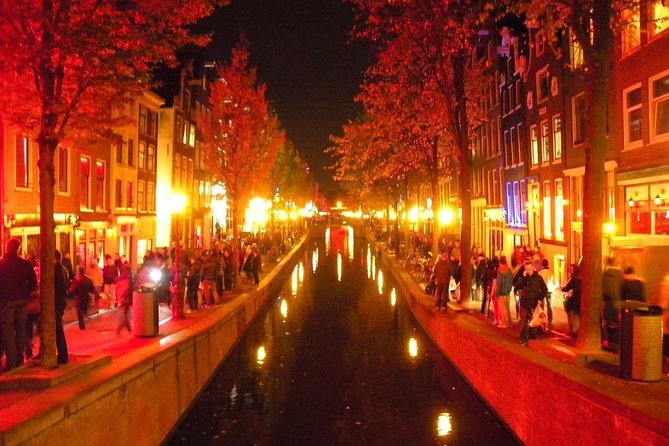
De Wallen is often treated as a place to pass through quickly, but its age gives it a different character. The area is part of the Old Town, and the narrow streets preserve the shape of early Amsterdam even as the district’s modern reputation draws much of the attention.
The guide explains how the Red Light District came to be and discusses the sex work industry in Amsterdam. That conversation is one of the main reasons to choose a guided walk instead of exploring alone. Without context, the area can seem like a collection of provocative storefronts. With context, you gain a clearer sense of how commerce, port activity, social rules, and city life shaped the district.
Expect the subject matter to be direct. This is not a sanitized family history walk, and the topic may not suit everyone. At the same time, the experience is framed as an explanation of the neighborhood rather than an invitation to treat the people working there as entertainment.
That distinction matters. You should approach the walk with respect, avoid photographing people at work, and listen to the guide’s instructions about appropriate behavior. The supplied details do not set out specific photography rules, so it is best to use ordinary courtesy and ask the guide if you are unsure.
Coffeeshop culture without the tourist clichés
Amsterdam’s coffeeshops are part of the city’s international image, and this walk includes an explanation of coffeeshop culture. The value here is not simply pointing out a coffeeshop. It is learning how this part of Amsterdam fits into the city’s wider social and legal setting.
The tour information does not promise a tasting, entry, or purchase, so you should book it as a walking and information experience. If you want time inside a coffeeshop, that is not listed as part of the two-hour route.
I like this approach because it gives you a chance to ask questions while you are already in the district. The guides are expected to explain the subject in plain terms, and the available feedback describes plenty of chances to ask questions. That makes a difference in an area surrounded by half-truths and exaggerated stories.
Adam is praised for combining an entertaining manner with strong subject knowledge. Aarre is noted for being accommodating and for adjusting the tour to suit a group’s needs. Guide quality can vary from date to date, but those names give you a sense of the personal style this experience aims for.
Same city, a completely different afternoon:
- Amsterdam Classic Saloon Boat Cruise with Drinks and Cheese
★ 5.0 · 31,825 reviews - Amsterdam Luxury Canal Cruise + Unlimited Drinks & Bites option
★ 5.0 · 30,518 reviews - Amsterdam: Heineken Experience Ticket
★ 4.6 · 30,055 reviews - Amsterdam: Rijksmuseum Entry Ticket
★ 4.7 · 25,535 reviews
Int Aepjen and the last wooden buildings
One of the more memorable stops is Pub The Ape, known in Dutch as Int Aepjen. The building dates to around 1540 and is one of only two remaining wooden buildings in Amsterdam.
That detail becomes more meaningful when you know about the major fire of 1452. After the fire, the city required brick facades to reduce the danger of future fires. Int Aepjen survived as a rare reminder of the earlier building tradition.
This is the kind of stop I value on a city walk. It takes only a few minutes to point out a pub, but the building opens up a larger story about fire, regulation, construction, and the way Amsterdam changed over time. It also gives the route a welcome pause from the more obvious Red Light District material.
You may not spend long inside the pub, and the information provided does not promise a drink or a seated visit. Think of it as an exterior landmark and historical stop within the walk.
The Waag and the old city walls
The Waag is another major landmark on the route. It began as one of Amsterdam’s city gates and formed part of the defensive wall in the 1400s. It is described as the second-oldest building in Amsterdam.
Later, the building housed guilds, the organizations that represented craftsmen and regulated their trades. Those guilds were based in and around the square, making the Waag a place tied not only to defense but also to the city’s working life.
This stop adds useful depth to the tour. The Red Light District can feel like a modern entertainment quarter, yet the Waag shows how long the area has been connected to trade, movement, work, and civic control.
You will probably appreciate the Waag most if you look closely at how the building occupies its public square. The tour does not list a separate interior visit, so do not expect a museum-style exploration inside. Its role here is to help you read the street plan and understand the district’s older purpose.
Amsterdam’s smallest house
The smallest house on the route brings the walk down to a much more personal scale. Built around the 1700s, it first served as storage for the Dutch East India Company, known as the VOC. Later, people lived there for a long time.
This tiny building offers a useful counterpoint to Amsterdam’s grander civic landmarks. The VOC connection also links the Old Town to the city’s trading past, while the later residential use shows how limited space was put to work in a tightly packed city.
The information supplied does not give the house’s exact dimensions or promise entry. You will see it as a street-level landmark and hear why it matters. That is enough to make the stop worthwhile, especially if you enjoy details that are easy to miss when you are walking alone.
It also reinforces a theme running through the whole route: Amsterdam’s oldest district is not made up of one single type of building or one single story. A defensive gate, a working pub, a storage building, and adult businesses can all exist within a short walk.
A condom shop with a practical Amsterdam twist
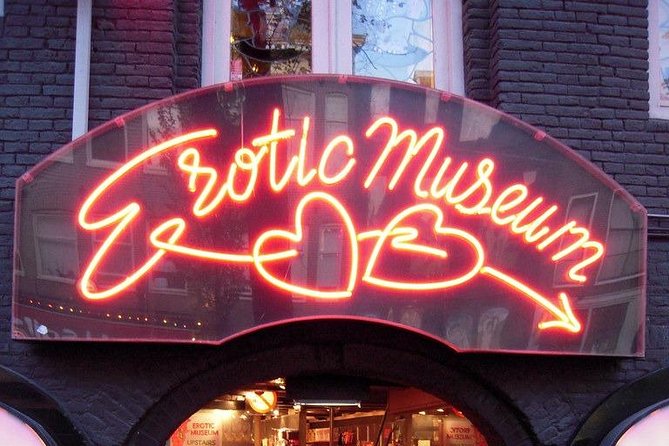
The final unusual stop is a specialist condom shop that has been in place since 1987. It sells condoms in different styles and offers size-customized condoms.
This is an amusing stop, but it also fits the tour’s broader purpose. Amsterdam’s Red Light District is not only about rumor and spectacle. It includes businesses shaped by the city’s adult industry, and this shop gives you a concrete example of how that market operates.
The wording of the experience does not include a purchase, demonstration, or discount, so you should treat the stop as part of the sightseeing route. It is a quick, distinctive detail that many independent walkers might miss.
The guide’s handling of this stop will matter. A good explanation should keep the tone light without turning the neighborhood or its workers into a joke. The strongest part of the experience is likely to be the balance between humor and basic respect.
What two hours can realistically cover
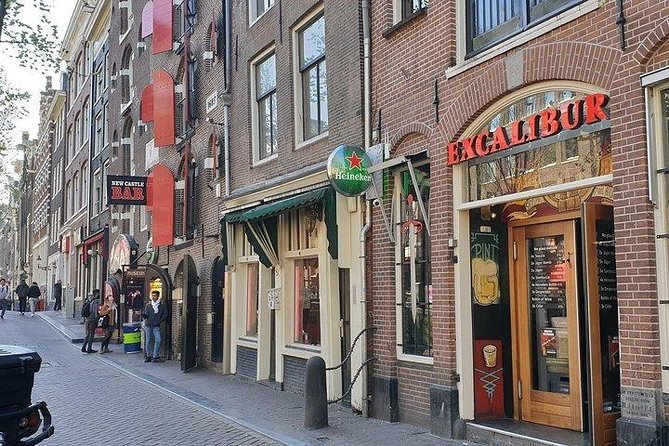
Two hours is enough to cover the main sights listed, but it is not enough for a full study of Amsterdam’s adult industry, architecture, or social policy. The route is best understood as an introduction.
You get a sequence of compact stops:
- Dam and the wooden foundations beneath Amsterdam
- The oldest part of the city and De Wallen
- Int Aepjen, one of the last wooden buildings
- The Waag and its former defensive role
- The smallest house and its VOC connection
- A specialist condom shop dating from 1987
The value comes from the connections between these places. You are not simply ticking off landmarks. You are learning how a city built on water developed its streets, regulated its buildings, organized its trades, and became associated with sex work and coffeeshops.
The downside is that the route may feel brisk if you prefer long stops or detailed architectural discussion. A group of up to 32 people can also make question time less personal, although the experience includes opportunities to ask questions and the guides are described as willing to adapt where possible.
Is $63.67 a fair price?
At $63.67 per person, this is not the cheapest way to walk through De Wallen. You can explore the streets without paying anything, and several landmarks can be seen from public areas.
The fee makes more sense if you want a guide to explain what you are seeing and answer questions about the district’s development, coffeeshop culture, and sex work industry. You are paying for interpretation, not admission to a major attraction. The listed stops do not carry separate entry fees, and the walk returns to its starting point.
I would consider the price fair for a visitor with limited time who wants a structured introduction. It is less appealing for someone who already knows Amsterdam well, dislikes group walks, or mainly wants to wander independently and take photographs of architecture.
The group discount may improve the value if you are booking for several people. Since the group can reach 32, compare the discount against your preferred group size and the level of personal attention you want.
Who should book this walk?
This experience suits you if you want a clear introduction to an often misunderstood neighborhood. It is especially useful on a first visit, when you may want to see De Wallen but would rather not rely on rumors or wander without context.
It also fits a tight itinerary. Two hours leaves room for a museum, canal cruise, meal, or evening plans. The multiple start times add flexibility, and the return to Geldersekade 2HS keeps the logistics simple.
I would be more cautious if you have limited mobility. The walk takes place through narrow Old Town streets, and the provider says it is not recommended for people with limited mobility. Service animals are allowed, and most people can participate, but the route’s street conditions may still be a concern.
The subject also calls for maturity and good judgment. If you want a serious explanation of the area, this could suit you well. If you want a sensational attraction or a party stop, the tour may not match your expectations.
Booking, cancellation, and practical details
You receive confirmation when you book, and the experience uses a mobile ticket. It is near public transportation, which helps if you are coming from another part of Amsterdam.
Free cancellation is available up to 24 hours before the start time for a full refund. Cancellations or changes made less than 24 hours before the start are not accepted for a refund, and the cut-off follows local Amsterdam time.
The current score is 5 out of 5 from four ratings. That is a small sample, so I would not treat it as a guarantee, but the repeated praise points to the guide’s role as the key strength. Adam is described as entertaining and well informed, while Aarre is praised for being accommodating and adjusting the route to a group’s needs.
Should you book the Amsterdam Red Light District tour?
Book it if you want more than a quick look at red-lit windows. The route combines De Wallen’s adult-industry context with old Amsterdam landmarks, including the Waag, Int Aepjen, the smallest house, and the city’s wooden foundations. The two-hour length and return to the meeting point make it easy to fit into a busy day.
Skip it if you prefer independent wandering, need a very small group, or expect extensive interior visits. A maximum of 32 people is a fairly large upper limit for a walk marketed as small-group, and the tour is an introduction rather than a full examination of Amsterdam’s social history.
For many first-time visitors, the strongest reason to book is the guide. Adam and Aarre are associated with a lively, flexible approach, and the walk gives you a place to ask direct questions in a setting that is often misunderstood. At $63.67, that explanation is the real product.
FAQ
How long does the Amsterdam Red Light District tour last?
The tour lasts approximately two hours.
Where does the tour start?
It starts at Geldersekade 2HS, 1012 BH Amsterdam, Netherlands.
Where does the tour end?
The activity ends back at the meeting point on Geldersekade.
What places are included on the walking route?
The route includes the Dam area, Amsterdam’s Old Town and Red Light District, Pub The Ape or Int Aepjen, the Waag, the smallest house of Amsterdam, and a specialist condom shop that has been in place since 1987.
How many people can join the tour?
The maximum group size is 32 people.
Can I cancel for a full refund?
Yes. You can cancel at least 24 hours before the experience starts for a full refund. Cancellations or changes made less than 24 hours before the start time are not accepted for a refund.
Newest Amsterdam write-ups
- Amsterdam Private & Personalized Full-Day Tour with a Local Guide★ 5.0 · 10 reviews
- Excursion to the mills of Zaanse Schans★ 5.0 · 97 reviews
- Full-Day Executive Chauffeur Service in Amsterdam★ 5.0 · 5 reviews
- Explore Amsterdam by Bike in the Company of a French Local Guide★ 4.5 · 31 reviews
- STRAAT Museum – Museum for Street Art Amsterdam Admission Ticket★ 5.0 · 192 reviews
- Private Tour to Windmills Zaanse Schans +Keukenhof – 7 Hours★ 5.0 · 3 reviews
- Amsterdam to Bruges – Private luxury Full-Day Tour Cristmasmarket★ 5.0 · 7 reviews
- Amsterdam’s Hidden Gems and Street Art Bike Tour★ 5.0 · 65 reviews
Amsterdam Red Light District Tours, compared.


Red Light District Tour in German/English/Italian
Read our review →
Amsterdam Red Light District & Coffee Shop Tour
Read our review →
Red Light District Pub Crawl with Unlimited Shots
Read our review →
Private Amsterdam Red Light District and Coffee Shop Tour
Read our review →Browse the lists this tour appears in