
Reviewed · AMSTERDAM HISTORY WALKING TOURS
Amsterdam in World War Two Cycle Tour
Amsterdam’s wartime story comes into sharp focus on this small-group bicycle tour through the quieter streets of Amsterdam South. Instead of staying around the Anne Frank House and central canals, you visit the actual neighborhoods where arrests, resistance work, Nazi administration, and liberation unfolded.
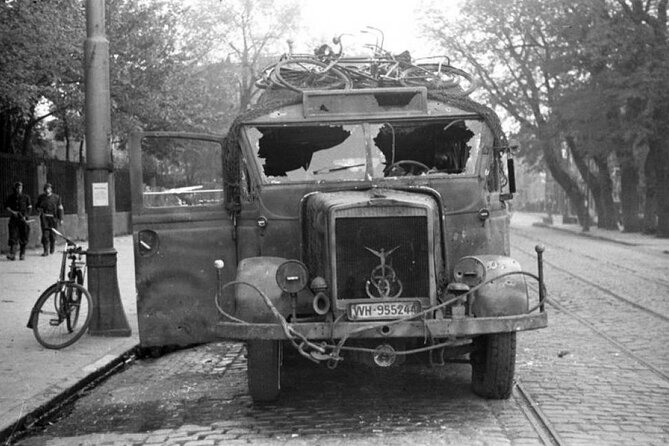
I like the use of wartime photographs at the exact locations you visit, and I like the personal connection of guide Rudi, also referred to as Rudy, who grew up in these neighborhoods and teaches history. The main consideration is that this is a serious history tour, not a relaxed sightseeing ride, and the published meeting information needs checking because the listed meeting point is Tesselschadestraat while the route description begins at Victorieplein.
Key points to know before booking
- A six-person maximum keeps the history personal, with plenty of room for questions.
- Amsterdam South is the focus, giving you access to streets and districts beyond the crowded center.
- Historic photographs match present-day views, making the wartime changes easier to understand.
- The route covers Jewish persecution, resistance, Nazi offices, and liberation, not just Anne Frank’s story.
- Café Wildschut provides a short coffee and restroom stop at Roelof Hartplein.
- Bring a bicycle and dress for the weather, then confirm the exact starting point before you set out.
Why Amsterdam South tells a different WWII story
Many Amsterdam history tours concentrate on the city center, the canals, and Anne Frank’s hiding place. This ride takes you south, where wide avenues, residential squares, schools, offices, and apartment blocks reveal a less familiar side of the occupation.
That setting matters. You are not looking at ruins or a preserved battlefield. You are cycling through ordinary streets that still function as part of modern Amsterdam. A house, café, school, or corner may look entirely unremarkable until Rudi shows you a photograph from the occupation and explains what happened there.
The route is also broad in scope. You learn about deportation and collaboration, but also about resistance photographers, forged or hidden information, armed retaliation, Allied action, and the tense days after the German surrender. This gives you a more complete picture of wartime Amsterdam than a single memorial or museum visit can provide.
The group limit of six is a real advantage. With a larger group, it would be harder to stop safely, see the photographs, or ask about a family story. Here, the format should feel more like a guided conversation than a procession of bicycles.
More history walks in Amsterdam:
- Amsterdam: Life of Anne Frank and World War II Walking Tour
★ 4.8 · 10,467 reviews - Amsterdam: Dutch WWII Resistance Museum Entry Ticket
★ 4.7 · 951 reviews - Amsterdam High-End Dutch Food & History Tour – Up to 8 guests
★ 5.0 · 482 reviews
Victorieplein and the June 1943 raid
The route description begins at Victorieplein, known during the occupation as Daniël Willinkplein. This was a major setting during the large raid of June 20, 1943.
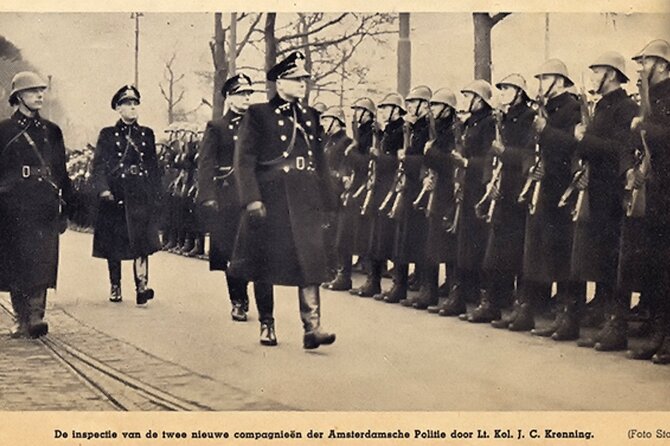
At the foot of the Skyscraper, Jewish residents were arrested during a so-called Judenaktion. Dutch police units and police volunteers connected with the Dutch National Socialist Movement helped gather people. Those arrested were taken to places including Olympiaplein for registration before deportation to Westerbork concentration camp.
This opening immediately sets the tone. You are not beginning with a general explanation of the war. You are standing in a place where local streets became part of a system of arrest and deportation. The route shows how occupation policy depended not only on German institutions, but also on Dutch police and collaborators.
You may find this first stop emotionally heavy. That is appropriate, but it also means you should not expect a light morning ride. The subject is handled through specific places and events rather than broad slogans.
Merwedeplein, the Frank family, and an ordinary bookstore
Merwedeplein adds a personal scale to the tour. At number 37-II, the Frank family lived before Otto Frank moved his family and acquaintances into the Secret Annex on Prinsengracht in the summer of 1942.
A statue of Anne Frank now marks the square. Around the corner, the Jimmink bookstore on Waalstraat is still active. During the war’s aftermath, Otto Frank bought a diary for his daughter there. The shop later sold the first edition of Het Achterhuis, published in 1947.
This stop is valuable because it places the Frank family in a real residential neighborhood before the hiding period. Anne Frank’s story is often presented through the annex alone. Here, you see the earlier home, the nearby shops, and the local setting that shaped the family’s life.
The route does not replace a visit to the Anne Frank House, and you do not enter the former family home. Instead, it gives you a useful second view of the story. If you plan to visit the Anne Frank House, this ride can provide context. If you cannot get a ticket there, Merwedeplein still offers a meaningful connection, though it is not a substitute for the museum.
Waalstraat and the story of Lex van Weren
At Waalstraat 48, now Café Blek, you hear about the former Tilex Bar, named for Tilly and Lex van Weren. Lex survived Auschwitz because he was required to play his trumpet at executions.
This is one of the route’s most difficult stories. It shows how survival under the Nazi system could depend on an arbitrary skill, while also placing a face and a profession within a much larger crime. The stop is brief in physical terms, but the subject may stay with you.
This kind of detail is one reason the tour benefits from a guide with local knowledge. A street address becomes more than a point on a map. You begin to see how homes, cafés, shops, and public squares were caught up in the machinery of occupation.
More bike tours in Amsterdam:
- Amsterdam: Guided Bike Tour City Centre in EN/DE/FR/ES
★ 4.7 · 4,187 reviews - Countryside Bike Tour from Amsterdam: Cheese, Clogs & a Windmill
★ 5.0 · 1,485 reviews - Amsterdam: Hidden Gems & Highlights Guided Bike Tour
★ 4.8 · 1,404 reviews - Amsterdam: Off the Beaten Path Bike Tour in French
★ 4.9 · 1,193 reviews
From a former convent to the Nazi stronghold at Museumplein
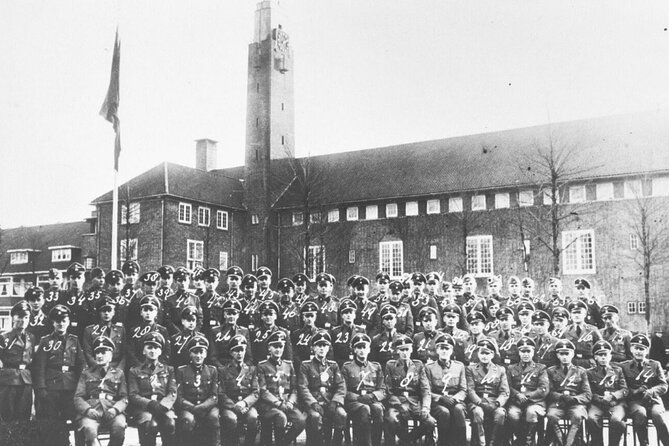
At Cornelis Troostplein, the building at number 23 once housed PBA barracks. Before the war, the complex was connected with Catholic institutions, including convents and a school. During the occupation, it became associated with the Amsterdam police battalion.
The route then reaches Museumplein, which the Germans turned into a military and administrative stronghold. The buildings near the Concertgebouw housed German offices, including the Zentralstelle für Jüdische Auswanderung, the Ortskommandantur, and the Feldgendarmerie. Other offices served Nazi party and military functions.
The square in front of these buildings, once used by the Amsterdam skating club, held bunkers and anti-aircraft batteries. The Amsterdam headquarters of the NSB stood beside the Concertgebouw. After the war, the bunkers were destroyed.
This is a strong part of the ride because the present-day square gives little hint of its wartime purpose. With the historic photographs in hand, you can compare the open public space you see now with a fortified administrative center under German control.
The ten-minute pause at Roelof Hartplein
At Roelof Hartplein, the tour stops at Café Wildschut for about ten minutes. This is a practical break for coffee and a restroom visit, not a long meal stop.
The pause comes at a useful point in the ride. You have already covered several significant locations, and a short break lets you reset before the tour moves into resistance activity and retaliation. Do not count on this as a full lunch, especially since the total experience lasts about two hours and thirty minutes to three hours and ten minutes.
Nearby, a former photo shop beside the library building on Roelof Hartstraat was used by the Dutch resistance. Resistance workers developed photographs there, including images by Charles Breijer showing an early roundup of Jewish residents by the SD, Gestapo, and German order police.
This stop explains why photography mattered. Pictures could preserve evidence, support resistance communication, and document events that the occupying authorities wanted concealed. The tour’s use of archival images echoes that same idea, connecting the work of wartime photographers with the way you see the route today.
Resistance, reprisals, and the Apollolaan
The tour passes a small memorial for Jewish people taken from the neighborhood, then reaches the corner of Beethovenstraat and Apollolaan.
Near number 6, a Dutch resistance member killed Herbert Oelschlägel, an SS officer and SD or Gestapo agent, in late October 1944. The German response was brutal. Two houses were burned, and 29 resistance fighters were executed.
This stop makes the cost of resistance plain. It is easy to talk about resistance groups in heroic terms, but the reprisals show the danger faced by people who acted against the occupation. You should allow time for the guide’s explanation here, since the setting helps connect an individual act with the collective punishment that followed.
The former Euterpestraat, now Gerrit van der Veenstraat, recalls Gerrit van der Veen, leader of an important Dutch resistance group. The changing street name also points to the way Amsterdam later chose to remember resistance figures while moving away from names imposed during the occupation.
Nazi offices and the Allied attack on Rubensstraat
At the corner of Memlingstraat and Rubensstraat, the route reaches the former offices of two major Nazi organizations. One was the Amsterdam SD headquarters under Willy Lages. The other was the Hausraterfassungsstelle, an office that catalogued and stole the possessions of deported Jewish residents.
The office was connected with the Zentralstelle für Jüdische Auswanderung and led by Dutch collaborator Henneicke. This section of the ride shows that persecution involved more than arrests and transport. It also included the systematic seizure of homes, furniture, clothing, and personal property.
In November 1944, the resistance sent a secret radio request to the Royal Air Force to attack the SD and Gestapo headquarters and the property office. Destroying files was a main aim. Group Captain Denys Gillam led the 149 Typhoon Wing operation.
You also see a former resistance safehouse near Rubensstraat and Gerrit van der Veenstraat. A Stolperstein marks the address. In June 1944, a female informant betrayed the safehouse to the SD and Gestapo.
This is a particularly good section for the before-and-after photographs. Offices that now look like ordinary buildings once held records that could expose resistance members and document stolen possessions. The route gives you a sense of how information itself became a weapon.
Olympiaplein and the machinery of registration
At Olympiaplein and Parnassusweg, the tour returns to the June 1943 raid. Jewish residents arrested at the sports complex were registered here by the SD and Gestapo, with help from Jewish camp police sent from Westerbork.
The detail is disturbing because it shows how the Nazi system forced some prisoners into roles within their own persecution. It also brings the route back to its opening theme: arrest, registration, and deportation were linked across several Amsterdam locations.
A monument near Parnassusweg marks the site. As you cycle between the locations, the geography becomes clearer. These were not isolated incidents. The city’s streets, squares, police buildings, and transport routes formed a connected system.
Luftwaffe offices, Queen Emma, and the final days
At Valeriusplein, the Amsterdam Lyceum served as Luftwaffe headquarters toward the end of the occupation. The school building gives another example of an ordinary civic structure being taken over for military use.
At the statue of Queen Emma on Emmalaan and Prins Hendriklaan, residents placed flowers in the summer of 1940 as a quiet act of defiance. Charles Breijer photographed a guard at the Kriegsmarine headquarters in 1944 from this area.
The final point concerns May 7, 1945, when Germany surrendered. The liberation did not instantly make Amsterdam safe. German troops and resistance fighters faced one another in tense conditions, and a monument marks victims of one shooting on the last day.
After this, the guide takes you through Vondelpark to Leidseplein, where the tour returns to its starting area. The route description also lists the activity ending back at the meeting point, so confirm the exact return arrangement when booking.
Price, timing, and who gets good value
The price is $66.09 per person. For a two-and-a-half to just over three-hour experience, that is a fair price if you want focused local history rather than a general city ride.
The value comes from four things: the very small group, the broad route, the archive photographs, and Rudi’s personal connection to Amsterdam South. You are paying for interpretation and access to a set of locations that would be hard to link together on your own in one morning.
The tour is offered in English and begins at 11:00 am. It is usually booked about 11 days ahead, so do not leave it until the last moment if your dates are fixed. A mobile ticket is provided, and most people can take part.
The cycling format is best for anyone comfortable riding through Amsterdam. It lets you cover more ground than walking and reach areas that cars cannot access easily. At the same time, cycling divides your attention. You need to listen, watch the road, stay with the group, and stop safely. If you prefer a slow, seated history talk, a museum may suit you better.
The supplied details indicate that you should bring a bicycle, so confirm bicycle arrangements before booking. Weather can also affect comfort, and the tour runs outdoors for several hours.
Is this Amsterdam WWII bicycle tour worth booking?
Book it if you want to understand Amsterdam’s occupation through real streets, not only through famous museums. It is especially well suited to history-minded visitors, repeat visitors who have already seen the central sights, and anyone interested in Dutch resistance and Jewish life before, during, and after the war.
I would be less likely to choose it for very young children, people uncomfortable on bicycles, or anyone looking for a casual ride with only a few historical comments. The material is serious, and several stops concern deportation, murder, collaboration, and reprisals.
For the right person, this is a strong use of a morning in Amsterdam. Rudi’s local roots, the six-person limit, and the matched wartime photographs give the route a level of detail that a large bus tour cannot easily provide. Confirm the starting location and bike details, then book at least 24 hours before the start if you want the option of a full refund.
FAQ
How long does the Amsterdam in World War Two Cycle Tour last?
The tour lasts approximately two hours and thirty minutes to three hours and ten minutes.
What time does the tour begin?
The stated start time is 11:00 am.
Where does the tour meet?
The listed meeting point is Tesselschadestraat 1, 1054 ET Amsterdam. The route description begins at Victorieplein, so confirm the exact starting arrangement before the tour.
How many people can join?
The activity has a maximum of six participants.
Is the tour offered in English?
Yes. English is the listed tour language.
Does the tour include a break?
Yes. There is a roughly ten-minute stop at Café Wildschut on Roelof Hartplein for coffee and a restroom visit.
What is the cancellation policy?
You can cancel up to 24 hours before the start time for a full refund. Cancellations or changes made less than 24 hours before the start are not accepted for a refund.
Newest Amsterdam write-ups
- Amsterdam local transfers★ 5.0 · 14 reviews
- Ultimate Combo: Rijksmuseum, Van Gogh Museum, Canal Boat Cruise★ 4.5 · 60 reviews
- Amsterdam countryside tour by car★ 5.0 · 41 reviews
- Amsterdam private guided tour with Marieke, local guide★ 4.5 · 8 reviews
- Amsterdam in World War II Tour★ 5.0 · 63 reviews
- Amsterdam Light Festival Winter Walk with Stroopwafel Workshop★ 5.0 · 66 reviews
- Amsterdam city center run tour★ 5.0 · 15 reviews
- Amsterdam and Countryside Private Full-Day Tour by luxury car★ 5.0 · 7 reviews
Amsterdam History Walking Tours, compared.
Life of Anne Frank and World War II Walking Tour
Read our review →
Amsterdam High-End Dutch Food & History Tour – Up to 8 guests
Read our review →
Anne Frank and Amsterdam Jewish History Walking Tour
Read our review →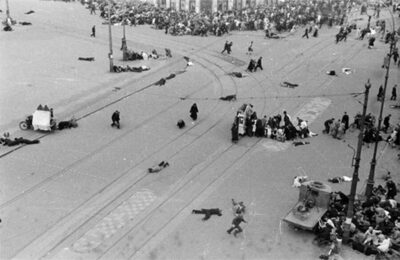
Anna Frank and World War II History Walking Tour
Read our review →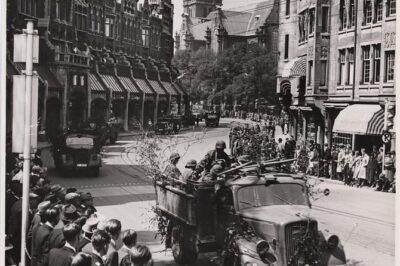
Browse the lists this tour appears in