
Reviewed · AMSTERDAM HISTORY WALKING TOURS
Amsterdam in World War II Tour
Amsterdam’s wartime story is written into ordinary streets, bridges, public buildings, and squares. This three to three-and-a-half-hour walk connects those places, beginning outside Anne Frank House and ending at the National Holocaust Names Monument. You get the German occupation, Jewish persecution, Dutch resistance, and liberation in one carefully paced route.
I like the small group of no more than eight and the use of wartime photos, maps, logbooks, and other papers carried by the guides. I also like that the guides are retired historians, including Peter and Ben, who can explain names and events instead of simply pointing at monuments. The main thing to note is that you do not enter Anne Frank House, and the walk can feel heavy because its subject includes deportation, executions, and the Holocaust.
Key points to know before you book
- Starts outside Anne Frank House: The tour explains the German attack and the story of Jewish refugees, but museum admission is not included.
- Led by retired historians: Peter and Ben are named guides, with a third retired historian also leading tours.
- A slow three-hour walking route: The pace is set so the slowest person can keep up.
- Connects everyday places to wartime events: Magna Plaza, Dam Square, the former city hall, and the Mozes en Aäronstraat all have specific WWII stories.
- Ends near the Jewish Quarter: The National Holocaust Names Monument is close to the Portuguese Synagogue and city hall.
- Strong value for serious history fans: At $46.44 per person, the price includes a long, personal guided walk but no drinks or private transport.
Why this Amsterdam WWII walk feels different
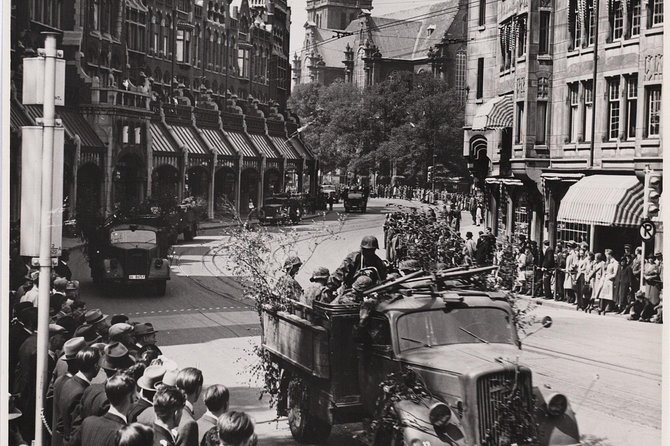
Many Amsterdam history walks give you a broad look at the city. This one keeps its attention on the years of German occupation from 1940 to 1945. You are not simply shown attractive canals with a few wartime facts added along the way. The route asks you to look again at familiar places and understand what happened there.
The guides are retired historians with a special interest in the German occupation of the Netherlands. Peter and Ben are mentioned by name, and the experience can be led by a third historian as well. Their background matters because the tour depends on context: who held power, how Dutch civil servants responded, where Jewish residents were targeted, and how resistance and collaboration shaped daily life.
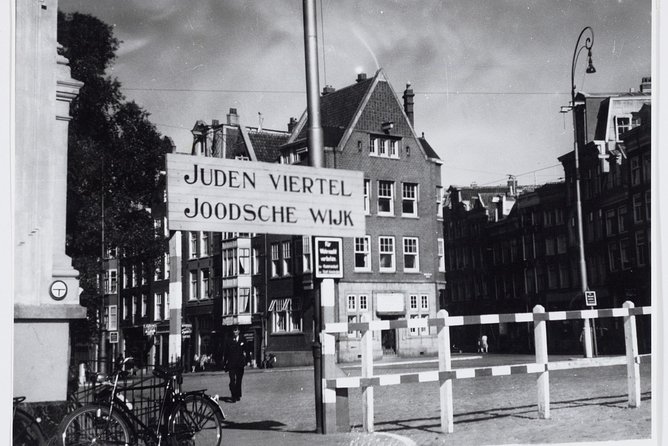
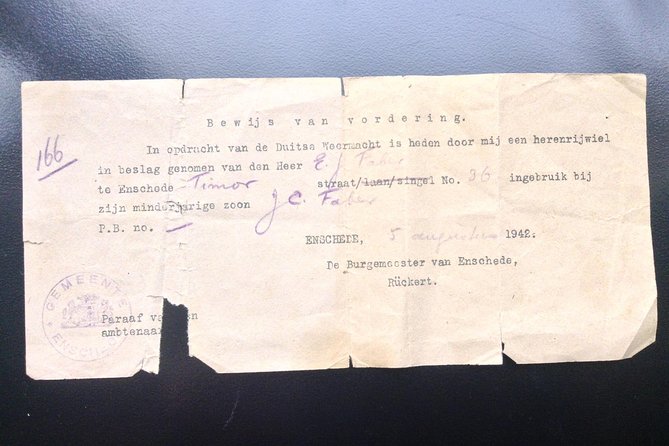
The guides use photographs, maps, logbooks, and printed material to connect the present street to its wartime appearance. That is especially useful in Amsterdam, where a canal bridge or public building may look unchanged but reveal little on its own. A period photograph can show you the people, uniforms, signs, or damage that are no longer visible.
The tone is serious, but it does not have to be grim every minute. The guide may also point out ordinary changes in Amsterdam since the war, which gives you a fuller sense of the city rather than leaving you with a list of atrocities. Still, this is not a light sightseeing outing. You should be ready for difficult material.
More history walks in Amsterdam:
- Amsterdam: Life of Anne Frank and World War II Walking Tour
★ 4.8 · 10,467 reviews - Amsterdam: Dutch WWII Resistance Museum Entry Ticket
★ 4.7 · 951 reviews - Amsterdam High-End Dutch Food & History Tour – Up to 8 guests
★ 5.0 · 482 reviews
Starting at Anne Frank House, without going inside
The meeting point is outside Anne Frank House at Prinsengracht 263. This is a practical starting place, since the address is easy to identify and the building gives immediate focus to the subject. The tour begins by explaining the German attack on the Netherlands and the situation faced by Jewish refugees.
It is important to set your expectations correctly. Admission to Anne Frank House is not part of this tour, and the group does not enter the museum. You stand outside while the guide tells the story and places Anne Frank’s experience within the wider history of Amsterdam under occupation.
That distinction can affect your booking decision. If you mainly want to see the interior of the Anne Frank House, you need a separate museum ticket and a separate visit. If you want to understand how Anne Frank’s story fits into the German occupation, the Jewish experience, and the city’s wider wartime events, this opening works well.
The stop itself is listed as about 10 minutes, but it launches the much longer walk. You should arrive ready to listen rather than expecting a museum visit.
Raadhuisstraat, the Singel, and the changing city
From Anne Frank House, the route moves through Raadhuisstraat and across the bridge over the Singel. The stop at the statue of Multatuli lasts about 10 minutes and uses the area to show how Amsterdam changed after WWII.
This is one of the tour’s quieter moments. There is no major battlefield monument here, and the value comes from comparison. You look at the city as it is now, then use the guide’s photographs and explanation to picture the same streets in the years after the war.
I like this approach because occupation history is not limited to dramatic sites. Cities carry war in their rebuilt buildings, renamed streets, altered neighborhoods, and changing public memory. The guide can help you notice those layers without asking you to treat every canal house as a memorial.
The route also gives you time to adjust to the walking pace. The tour moves slowly, and the guide is expected to keep the group together. That makes it easier to hear the explanation and ask questions, though it means the walk is not designed for people who want to cover Amsterdam quickly.
Magna Plaza and the fate of Amsterdam’s postmen
Magna Plaza is now a shopping mall, but during WWII it served as Amsterdam’s post office. The stop lasts about five minutes and focuses on Dutch postmen who were executed by the Germans.
This is a useful reminder that occupation affected public workers and ordinary institutions, not only soldiers or political leaders. A post office may seem like a neutral civic building, yet under German rule it became part of the machinery of communication, administration, and control.
The short stop is likely to work best when the guide supplies the surrounding context. The building itself does not tell the whole story, so listen for the explanation of why the postmen were targeted and how this event fits into Dutch resistance and German repression.
Because Magna Plaza is a working shopping mall today, this is also a good place to notice the contrast between present-day commerce and wartime fear. The tour repeatedly uses that kind of contrast, placing painful history beside familiar modern Amsterdam.
Same city, a completely different afternoon:
- Amsterdam Classic Saloon Boat Cruise with Drinks and Cheese
★ 5.0 · 31,825 reviews - Amsterdam Luxury Canal Cruise + Unlimited Drinks & Bites option
★ 5.0 · 30,518 reviews - Amsterdam: Heineken Experience Ticket
★ 4.6 · 30,055 reviews - Amsterdam: Rijksmuseum Entry Ticket
★ 4.7 · 25,535 reviews
Nieuwe Kerk and the Mozes en Aäronstraat story
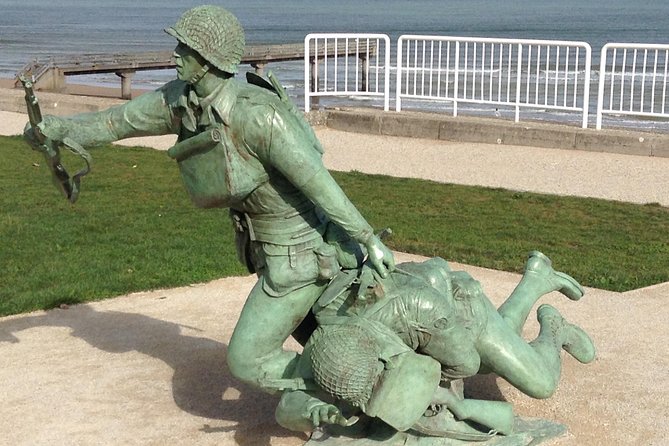
The Nieuwe Kerk, beside the Royal Palace, receives another short stop of about five minutes. The focus is the street between the palace and church, known as Mozes en Aäronstraat, and its connection to WWII.
This part of the walk shows why a focused guide is useful. A visitor walking between Dam Square sights could easily miss the wartime meaning of a small street name or passage. The stop is brief, so you should not expect a long lecture or a separate monument visit. Instead, it adds another piece to the route’s larger picture of how occupation touched Amsterdam’s central spaces.
The setting also helps you understand the symbolic importance of the city center. The Royal Palace, Nieuwe Kerk, and Dam Square were not just scenic landmarks. They were places where authority, public life, ceremony, and political messages came together.
Dam Square, from occupation to liberation
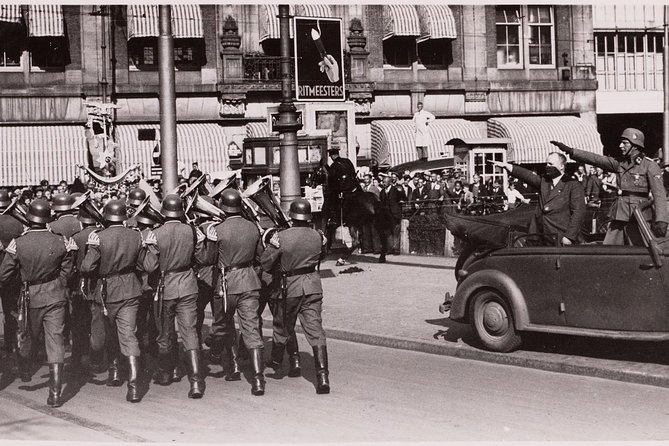
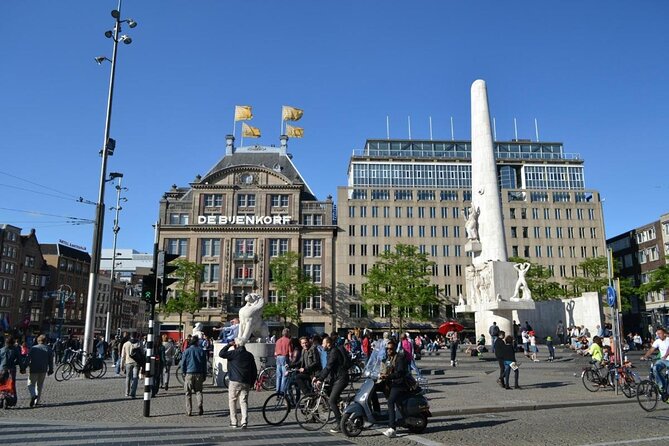
Dam Square is the longest named stop, at about 25 minutes, and it is the heart of the tour’s public-history section. The guide covers several separate events linked to the square.
You hear about the shooting incident on May 7, 1945, two days after the German surrender. The timing matters. Liberation was not a clean switch from war to peace, and the violence did not simply end the moment Germany surrendered.
The square also became a place where Dutch volunteers were recruited for what was presented as a crusade against Bolshevism. That detail points to the way political ideology and military recruitment operated in occupied or recently liberated Europe. It also keeps the story from becoming too simple. Amsterdam’s wartime record included resistance and courage, but also difficult choices and collaboration.
The guide discusses Remembrance Day on May 4 and the WWII monument. This gives you a chance to connect wartime memory with present-day civic ritual. The square is still part of Amsterdam’s public life, so the discussion is not only about what happened in 1940 to 1945. It is also about how the city remembers.
You may find Dam Square crowded and noisy, depending on the time and conditions. That can make it harder to hear, though the small group and the guide’s effort to speak so everyone can follow should help. Take this stop slowly. It contains several different stories, and rushing through them would weaken the point.
The former city hall at The Grand
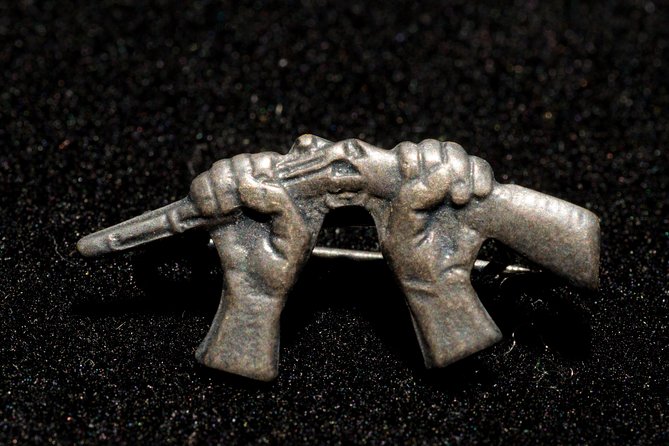
The Sofitel Legend The Grand Amsterdam occupies the building that served as Amsterdam’s city hall during WWII. The stop lasts about five minutes and centers on the arrival of German troops on May 15, 1940. Dutch civil servants welcomed them there.
This is a sharp example of the moral complications of occupation. The scene was not a battlefield. It involved officials in a civic building, facing a new power and responding in a way that remains part of the city’s wartime story.
The building is now a hotel, so you see a polished modern use of an old public structure. Again, the guide supplies the meaning. Without the explanation, you might pass through this part of central Amsterdam without knowing that German troops were welcomed at the former city hall.
The stop also reinforces a point made throughout the walk: wartime history is often found in places that look ordinary today.
Ending at the National Holocaust Names Monument
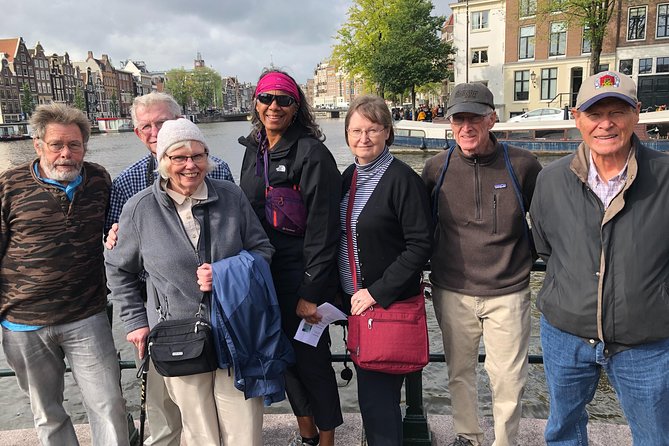
The tour ends at the National Holocaust Names Monument, near the Portuguese Synagogue and not far from city hall. This gives the walk a fitting final location, shifting attention from occupation and military events to the names and memory of Holocaust victims.
The endpoint is not just a convenient finish. It gives the earlier stories a human focus. Anne Frank House, Dam Square, government buildings, and public streets can sometimes feel like separate history lessons. Ending at a monument dedicated to names brings the consequences of persecution back to individuals.
You should allow yourself a little quiet time at the end if your schedule permits, even though the guided portion concludes there. The route does not include private transport back to your hotel, so plan to continue on foot or use Amsterdam’s public transport after the tour.
Group size, pace, and what to bring
The maximum group size is eight, and some departures may be even smaller. A small group makes a real difference on a history walk. You can ask about a name or event without holding up a large crowd, and the guide can show photographs and papers at close range.
The tour lasts about three to three-and-a-half hours and is described as a slow walk. One practical advantage is that the guide sets the speed to match the slowest person. That is helpful if you prefer a measured pace, but you should still wear comfortable shoes and be ready to remain outdoors for several hours.
The tour has no private transport. It operates on foot and is near public transportation. Service animals are allowed, and most people can take part. The experience requires good weather, so poor conditions can lead to a new date or a full refund.
Coffee and tea are not included. One person described enjoying a coffee break on a cold, windy day, but you should treat that as a possible pause rather than a promised part of the experience. If the forecast is unpleasant, bring suitable clothing and do not assume refreshments are covered.
Is $46.44 a fair price?
At $46.44 per person, this is not the cheapest way to spend three hours in Amsterdam, but the price is reasonable for a small guided group led by a retired historian. You are paying for the guide’s preparation, the slow pace, the visual material, and the chance to ask questions along the way.
The value is strongest if you want WWII history rather than general sightseeing. A large city walk may show you more landmarks, but it cannot give the same attention to the German occupation, Jewish persecution, resistance, and public memory.
The price is less attractive if you want entry tickets, food, or transportation included. Anne Frank House admission is not included, and there are no drinks or private transfers. Think of this as a specialist walking seminar with Amsterdam as its classroom.
The experience is often booked well ahead, around 44 days in advance on average. That suggests you should not wait until the last minute if your schedule is fixed, especially because the group is capped at eight.
Who should book this tour?
You should consider it if you want a serious look at Amsterdam during WWII, appreciate detailed explanation, and prefer a small group. It suits history fans, visitors who have already seen Amsterdam’s main sights, and anyone who wants to understand more than Anne Frank’s story alone.
It is also a good match if you enjoy learning through photographs and documents. Peter and Ben are both described as warm, patient, and well prepared, and the guides make a point of explaining names and showing period images.
You may want to skip it if you dislike long walking tours, difficult subject matter, or standing outside at several stops. It is also not the right choice if your main goal is to tour inside Anne Frank House.
The tour has a listed rating of 4.9 from 63 reviews, with 98 percent recommending it. Those figures fit the experience’s strongest features: a very small group, careful pacing, and guides who clearly care about the subject.
Should you book the Amsterdam in World War II Tour?
I would book this tour if WWII history is one of your main interests in Amsterdam. The route covers more than the familiar Anne Frank connection, linking Jewish history with occupation, resistance, political recruitment, public administration, liberation, and remembrance.
Book it early if you want a particular morning and arrive at Prinsengracht 263 before the 9:30 a.m. start. Bring comfortable shoes, dress for the weather, and remember that Anne Frank House is viewed from outside only.
For a focused, personal, and serious walk through Amsterdam’s wartime past, $46.44 is a fair price. Just make sure you want a history lesson on foot, not a general city tour or a museum visit.
FAQ
Where does the Amsterdam in World War II Tour start?
It starts at Prinsengracht 263, 1016 GV Amsterdam, outside Anne Frank House. The start time is 9:30 a.m.
Where does the tour end?
It ends at the National Holocaust Names Monument, near the Portuguese Synagogue and not far from city hall.
How long does the tour last?
The tour lasts about three to three-and-a-half hours. The walking pace is slow.
Does the tour enter Anne Frank House?
No. The guide begins outside Anne Frank House and explains the wartime story, but museum admission is not included.
What is included in the price?
A guided walking tour is included. Coffee, tea, and private transportation are not included.
How large is the group?
The tour has a maximum of eight participants.
Who leads the tour?
The tours are led by three retired historians. Peter and Ben are named guides associated with the experience.
Can I cancel for a full refund?
Yes, if you cancel at least 24 hours before the local start time. Cancellations made less than 24 hours in advance are not refunded. Poor weather or failure to meet the minimum number of participants may lead to a new date or a full refund.
Newest Amsterdam write-ups
- Amsterdam local transfers★ 5.0 · 14 reviews
- Amsterdam in World War Two Cycle Tour★ 5.0 · 7 reviews
- Ultimate Combo: Rijksmuseum, Van Gogh Museum, Canal Boat Cruise★ 4.5 · 60 reviews
- Amsterdam countryside tour by car★ 5.0 · 41 reviews
- Amsterdam private guided tour with Marieke, local guide★ 4.5 · 8 reviews
- Amsterdam Light Festival Winter Walk with Stroopwafel Workshop★ 5.0 · 66 reviews
- Amsterdam city center run tour★ 5.0 · 15 reviews
- Amsterdam and Countryside Private Full-Day Tour by luxury car★ 5.0 · 7 reviews
Amsterdam History Walking Tours, compared.
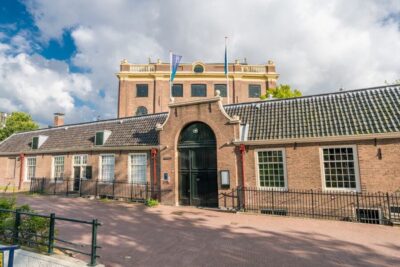
Life of Anne Frank and World War II Walking Tour
Read our review →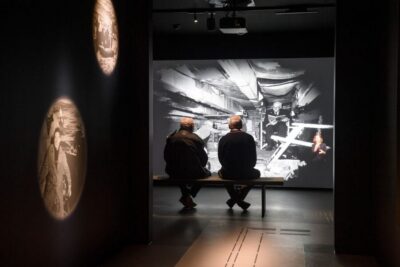

Amsterdam High-End Dutch Food & History Tour – Up to 8 guests
Read our review →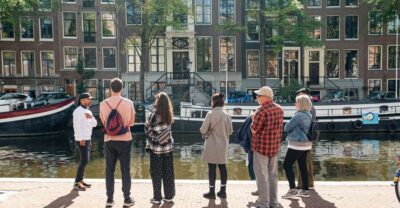
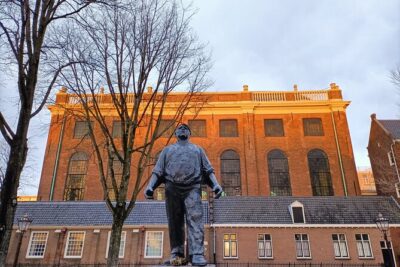
Anne Frank and Amsterdam Jewish History Walking Tour
Read our review →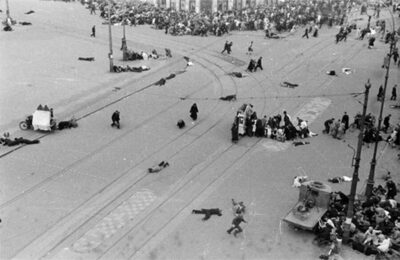
Anna Frank and World War II History Walking Tour
Read our review →
Amsterdam Highlights and History Walking Tour (MUST DO)
Read our review →Browse the lists this tour appears in