
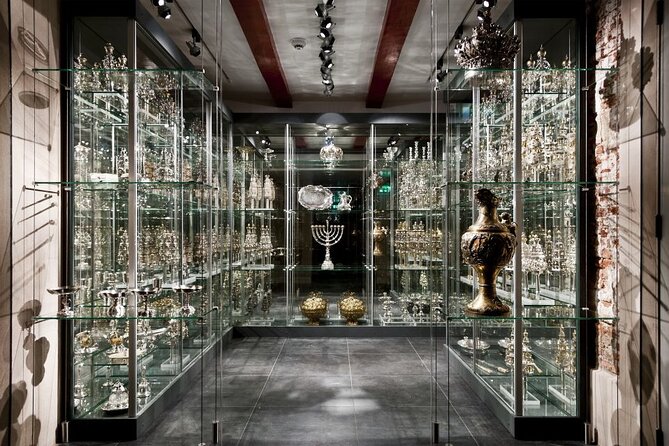
Reviewed · AMSTERDAM JEWISH HERITAGE TOURS
Jewish Amsterdam Private Walking Tour
Amsterdam’s Jewish Quarter is best understood on foot, where a memorial, synagogue, market, and quiet street can tell more together than any one museum. This private tour follows that story through Holocaust memorials, Sephardic and Ashkenazi landmarks, the world of Spinoza, and the final stop outside Anne Frank House.
I like the small group size, capped at four, and the guide’s flexibility. Aleks, also identified as Alex in guest correspondence, has adjusted meeting times, helped with directions, and adapted the walking pace. I also like the personal photographs used when museum interiors are closed. The main drawback is that several stops are brief, and Anne Frank House tickets are not included.
Key points to know before booking
- A private group of up to four gives you room to ask questions and set a comfortable walking pace.
- The 3.5-hour route connects Holocaust memorials with Jewish life, philosophy, art, and daily commerce.
- Museum entry is mostly extra, including the Jewish Historical Museum, Portuguese Synagogue, Rembrandt House Museum, and Anne Frank House.
- The Holocaust museums may be closed for construction, so confirm current access before you go.
- The tour begins at Amsterdam’s cruise terminal and ends by Anne Frank House, making it useful for a port day.
- The route is emotionally serious and physically demanding, with frequent stops but at least three and a half hours on foot.
Why this route matters in Amsterdam
Amsterdam’s former Jewish Quarter is not a single attraction with one entrance. It is a spread-out district where places of worship, markets, homes, monuments, and museums occupy the same streets. That makes a walking tour useful, particularly if you want the pieces connected rather than seen as isolated sights.
The route covers the Jewish community before, during, and after the Second World War. You hear about Sephardic Jews who arrived from the Iberian Peninsula, Ashkenazi institutions, Jewish merchants, philosophers such as Baruch Spinoza, and the destruction caused by Nazi occupation.
The subject is painful. The tour includes deportation, genocide, resistance, and memorials to people murdered in Nazi camps. I would not choose it as a light introduction to Amsterdam, but I would choose it if you want to understand how the city’s Jewish life shaped its streets and how much was lost.
Because this is private, you can ask for more time at a particular memorial or request a slower pace. That matters here. A quick group commentary can make these places feel like a checklist, while a personal guide can explain why a simple statue or empty building carries such weight.
More Jewish Quarter and museum tours:
- Anne Frank Walking Tour Amsterdam Including Jewish Cultural Quarter
★ 5.0 · 1,879 reviews - Anne Frank and Jewish Quarter Amsterdam Private Walking Tour
★ 5.0 · 684 reviews - Amsterdam: Anne Frank and Jewish Quarter Tour
★ 4.7 · 434 reviews
From the Namenmonument to the Auschwitz Monument
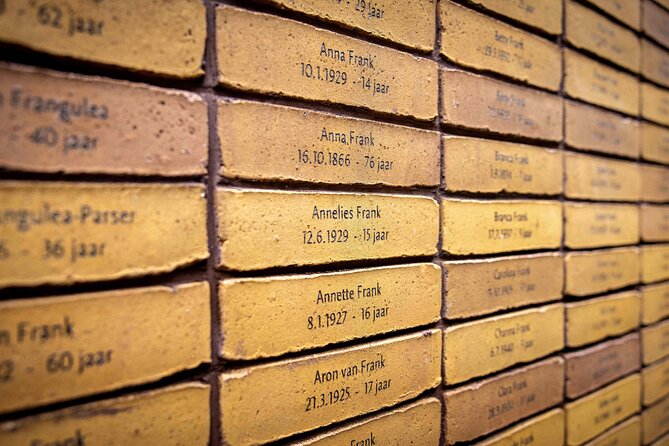
The first stop is the Holocaust Namenmonument, a memorial bearing the names of approximately 102,000 people who died in Nazi death camps and were not given a proper burial. The visit is scheduled for about 15 minutes and is free.
This is a strong beginning because it puts individual names before broader numbers. You are not simply hearing about a historical event. You are looking at a memorial built around people who once belonged to families, streets, workplaces, and neighborhoods.
The route then goes to the Auschwitz Monument, which uses broken glass to honor the victims of Auschwitz. The stop lasts about 10 minutes and costs nothing. These opening memorials set a serious tone before the tour moves into buildings connected with Jewish community life.
Allow time to pause. Fifteen minutes can be enough for an introduction, but it is not enough for a long personal visit. If you prefer to read every name or spend quiet time at each memorial, tell the guide early that you may need a little more time.
Hollandsche Schouwburg and the limits of an outdoor visit
Hollandsche Schouwburg, once the Dutch Theater, is connected with the story of Jewish persecution and deportation. The site includes two related buildings and monuments, presenting both the suffering caused by genocide and acts of courage and selflessness.
The supplied tour information says the Dutch Theater and Holocaust Memorial building were under construction until 2024, with interior access unavailable during that period. Since that date has passed, you should confirm the current status before booking or shortly before arrival. The description also says that the guide can explain the site from the outside and use a personal photo collection when interiors cannot be entered.
That arrangement can still be worthwhile, but you need to set your expectations correctly. This is not automatically a museum visit. It is a guided explanation of a place whose meaning depends heavily on what happened there. If you specifically want indoor exhibitions, check access and ticket arrangements in advance.
The guide’s photographs could add useful context, especially if construction or timing prevents entry. Still, the depth of this stop depends on the guide’s explanation rather than on displays you can examine yourself.
Jewish Historical Museum and the Portuguese Synagogue
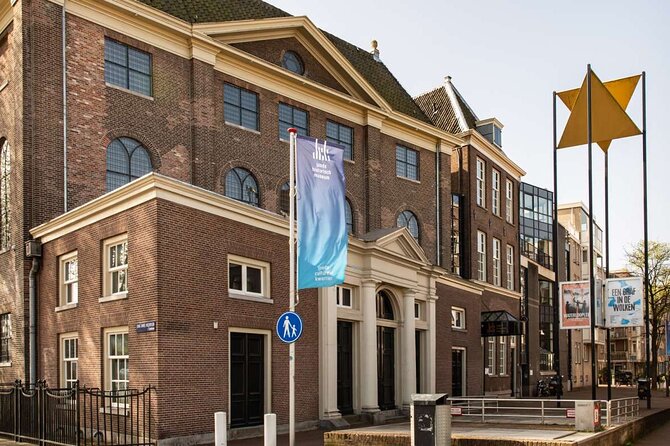
The Jewish Historical Museum occupies four former Ashkenazi synagogues. It presents Jewish life in the Netherlands, both past and present, and is one of the most important cultural stops on the route.
The tour allows only about 10 minutes here, and admission is not included. That is enough for an introduction from outside or a short orientation, but not enough for a serious museum visit. If you want to see the galleries properly, plan a separate visit or ask how the route can be adjusted.
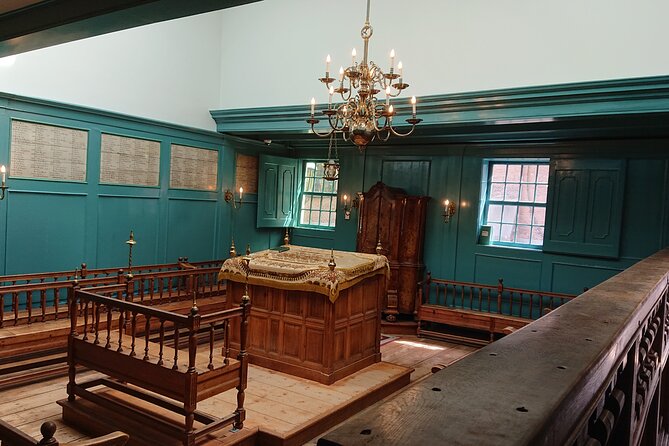
The combined ticket described for the Jewish Historical Museum and the Portuguese Synagogue gives you a useful way to extend your day. The Portuguese Synagogue, also called the Snoge or Esnoga, dates from 1675 and remains in use. It belongs to Amsterdam’s Sephardic Jewish tradition and is described as one of the two oldest synagogues of this tradition in Europe that are still in use, alongside the Great Synagogue in Prague.
Again, the scheduled visit is just 10 minutes and the ticket is extra. That is a small amount of time for a major religious building. You might prefer to treat the tour stop as an orientation, then return independently for a longer visit if your schedule allows.
More walking tours in Amsterdam:
- Anne Frank’s Story – Guided Walking Tour through Amsterdam
★ 5.0 · 11,619 reviews - Amsterdam: Life of Anne Frank and World War II Walking Tour
★ 4.8 · 10,467 reviews - Absolutely Amsterdam – the Essential Introductory Walking Tour
★ 5.0 · 3,629 reviews - Amsterdam: Anne Frank Guided Small Group Walking Tour
★ 4.8 · 2,722 reviews
The Dockworker and the February Strike
The Dockworker statue commemorates the dockworkers’ protest against Nazi anti-Semitic policies and the first deportations of Jews to Mauthausen in February 1941. The stop lasts about 10 minutes and is free.
This monument helps explain how the wider Amsterdam population responded during the occupation. The tour connects the statue with the February strike, giving you a place-based way to think about resistance rather than discussing it only in abstract terms.
The value here is the connection between a public square and a moment of collective action. You are not only looking at a statue. You are learning why it was placed there and what it represents in the story of Amsterdam under Nazi rule.
A church, diamond workshop, and old Jewish streets
The route includes a 19th-century Catholic church associated with the former residence of Baruch Spinoza and his family. The supplied details do not give the church’s name, so ask the guide to identify it clearly when you arrive.
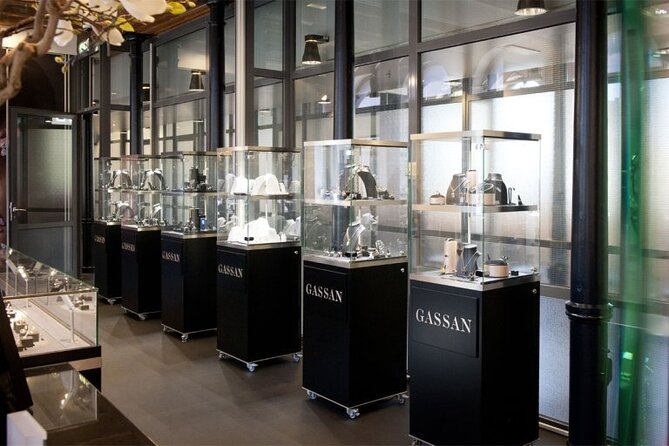
The stop at GASSAN offers a change of pace. GASSAN is a diamond company with a museum, workshop, and shop, and a free local-company tour lasting about 20 minutes may be available. This portion is not a Holocaust memorial or synagogue visit. It adds another side of Amsterdam’s Jewish commercial history, though you should be comfortable with a retail-oriented stop.
The Uilenburger synagogue is a historic Rococo building from 1766, built for Ashkenazi Jews. The scheduled visit is about 10 minutes and free. Its architectural style gives you a useful contrast with the Portuguese Synagogue and the former synagogue buildings now used by the Jewish Historical Museum.
Huis De Pinto, built in 1603, once belonged to the wealthy Jewish merchant Isaac de Pinto. It offers a glimpse of Jewish prosperity and civic life in Amsterdam before the twentieth-century catastrophe. These stops are brief, but they help prevent the tour from becoming only a sequence of wartime sites.
Rembrandt, Waterlooplein, and the city’s daily life
The Rembrandt House Museum is the former 17th-century town house where Rembrandt van Rijn lived from 1639 to 1658. The tour gives you about 15 minutes there, with admission extra.
Rembrandt’s work and daily life were closely connected with Amsterdam’s Jewish community, so the stop has a clear place on this route. Still, you should not expect a full museum visit in 15 minutes. If Rembrandt is a major interest, return on your own and allow more time.
Waterlooplein Market is described as Amsterdam’s oldest flea market and one of the centers of social life in the area for more than 150 years before the Second World War. The scheduled stop is 15 minutes and free.
This is one of the route’s most useful changes in mood. Markets show how neighborhoods function in ordinary times. After memorials and museums, Waterlooplein helps you picture the area as a place of trade, conversation, work, and family life, not only as a site of wartime suffering.
The market also makes the tour feel more connected to present-day Amsterdam. Conditions and vendors can vary, but the point of the stop is the square’s long social role.
Smaller memorials with large stories
The Deaf Memorial honors Jewish deaf people who were victims of the Nazi regime between 1940 and 1945. The stop takes about five minutes.
Because it is short, you may want to ask the guide to explain who is represented and how the memorial fits into the broader persecution of Jewish people with disabilities. Small memorials are easy to miss when you explore alone, and this is one of the clearest reasons to have a guide in this district.
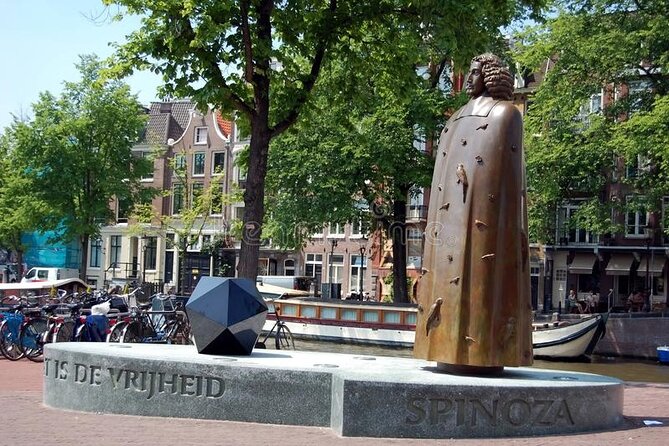
The Spinoza Monument honors Baruch Spinoza, an Amsterdammer descended from a prominent Portuguese Jewish family and one of Europe’s major philosophers of the 17th century. The scheduled stop is about 10 minutes and free.
Spinoza gives the route an intellectual thread. His ideas were unusual for his time and later influenced modern philosophical thought. You will not get a full philosophy course in 10 minutes, but the monument places his life within Amsterdam’s Portuguese Jewish community.
The Monument for Jewish Resistance honors Jewish resistance fighters who died during the Second World War. This stop lasts about 10 minutes and is free. Together, these memorials widen the story beyond victimhood, showing that Jewish people resisted even under terrible conditions.
Ending outside Anne Frank House
The tour ends at Anne Frank House on Westermarkt, beside the Western Church on Prinsengracht. The scheduled stop is about 15 minutes, and the museum admission is not included.
This distinction needs careful attention. The walking tour takes you to the building and explains Anne Frank’s hiding place, family, diary, and the secret annex. It does not automatically take you inside the museum.
The guide may help you understand ticket availability or assist with the booking process, but cannot personally obtain tickets as part of the tour. One guest described receiving help coordinating timing around an Anne Frank House visit, while another expected tickets to be included and was disappointed. The safe advice is simple: treat the museum as an optional, separate purchase and confirm your own admission before booking the walking tour.
The tour’s end point is convenient if you already have a timed ticket. It can also help you understand the exterior and surrounding area before entering. But do not count on walking up and buying a ticket at the end. The supplied information does not promise same-day entry.
Price, pace, and what you actually receive
The price is $540.69 per group of up to four. For four people, that works out to about $135 per person. For two people, the effective cost is about $270 each, and for one person it is the full group price.
That is a substantial fee for a walking tour, but the comparison should be made against a private guide, not a standard large-group excursion. You receive a route tailored to your party, the chance to slow down or ask questions, and a guide who can potentially help with timing and directions.
The value is strongest for a family or small group that wants personal attention and has a clear interest in Jewish Amsterdam. It is harder to justify if you mainly want museum interiors, because several important admissions cost extra and some scheduled stops last only 5 to 15 minutes.
The walking time also matters. The experience lasts at least three and a half hours. The guide can adjust speed and arrange more frequent five to ten minute breaks by agreement, but you should still be ready for an extended walk through the city.
The starting point is Passenger Terminal Amsterdam at Piet Heinkade 27. The end point is Anne Frank House at Westermarkt 20. Pickup is offered, and the route is near public transportation. If you are arriving by cruise ship, the starting point is especially practical, but confirm the exact pickup arrangement.
Who will get the most from this tour
I would choose this tour if you want a private conversation about Jewish Amsterdam rather than a short list of famous sights. It suits people who value context, memorials, and lesser-known places, and it works well for a family group that wants the guide’s attention.
It is also a good choice if your schedule begins at the cruise terminal and ends near Anne Frank House. The guide has adjusted timing for museum entry and helped people find their way back to hotels, which can be useful in a busy day.
I would be more cautious if your mobility is limited, if you dislike emotionally difficult subjects, or if you expect admission to every museum. The route can be adapted, but it remains a long walking experience. You should also be comfortable with the possibility that a museum building is closed or that a stop is explained from outside.
Should you book it?
Book this private tour if you want a serious, personal introduction to Amsterdam’s Jewish Quarter and can share the $540.69 cost among several people. Aleks or Alex appears to be the central guide, and the strongest part of the experience is the personal attention, flexible timing, and ability to connect memorials with Jewish life, philosophy, commerce, and art.
Do not book it expecting an all-inclusive museum package. Anne Frank House, the Jewish Historical Museum, the Portuguese Synagogue, and Rembrandt House Museum require separate admission, while some stops are brief exterior visits.
For the right small group, this is a thoughtful and useful route through a part of Amsterdam that deserves more than a quick photograph. Confirm museum access, arrange Anne Frank House tickets separately, and allow enough time for the walking and the subject matter.
FAQ
How long does the Jewish Amsterdam private walking tour last?
The tour lasts approximately 3 hours and 30 minutes, and the supplied information says it takes at least three and a half hours.
How many people can join the tour?
The tour has a maximum of four travelers in the private group.
What is the price?
The listed price is $540.69 per group of up to four people.
Where does the tour start?
The meeting point is Passenger Terminal Amsterdam, Piet Heinkade 27, 1019 BR Amsterdam.
Where does the tour end?
The tour ends at Anne Frank House, Westermarkt 20, 1016 GV Amsterdam, beside the Western Church at Prinsengracht.
Is pickup available?
Yes. Pickup is offered, although you should confirm the specific arrangement when booking.
Are Anne Frank House tickets included?
No. The walking tour does not include admission to Anne Frank House. The guide may assist with information about availability and ticket purchase, but cannot obtain the ticket personally as part of the tour.
Are museum admissions included?
No. Admission to the Jewish Historical Museum, Portuguese Synagogue, Rembrandt House Museum, and Anne Frank House is not included in the tour price.
Can the walking pace be adjusted?
Yes. The guide can adjust the walking speed, and more frequent five to ten minute breaks can be arranged by agreement.
What is the cancellation policy?
You can cancel at least 24 hours before the start time for a full refund. Cancellations or changes made less than 24 hours before the experience are not accepted for a refund.
Newest Amsterdam write-ups
- Keukenhof Gardens and Tulips Private Tour from Amsterdam★ 4.5 · 39 reviews
- Amsterdam: Keukenhof Tulip Gardens and Giethoorn with Boat Tour★ 4.5 · 76 reviews
- Private Keukenhof Gardens and Tulip Fields Tour from Amsterdam★ 5.0 · 12 reviews
- Van Gogh and Rembrandt Immersive Experience Entry Amsterdam★ 3.5 · 10 reviews
- Amsterdam Red Light District: Serene and Other!★ 5.0 · 5 reviews
- French Bistro-Style Dinner Overlooking Amsterdam’s Canals★ 5.0 · 19 reviews
- Guided Walking Street Food Tour of De Pijp & Beyond★ 5.0 · 57 reviews
- Self-Guided Audio Tour Holocaust Series: The Jewish Quarter★ 5.0 · 5 reviews
Amsterdam Jewish Heritage Tours, compared.
Anne Frank Walking Tour Amsterdam Including Jewish Cultural Quarter
Read our review →
Anne Frank and Jewish Quarter Amsterdam Private Walking Tour
Read our review →
Anne Frank and Jewish Quarter Walking Tour (TOP RATED)
Read our review →

Anne Frank and the Jewish History of Amsterdam Private Tour
Read our review →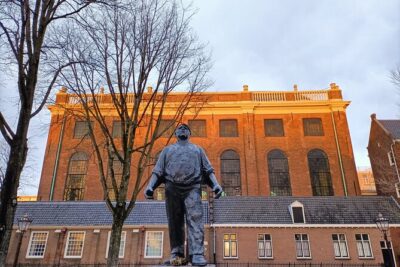
Anne Frank and Amsterdam Jewish History Walking Tour
Read our review →
Browse the lists this tour appears in