
Reviewed · AMSTERDAM HISTORY WALKING TOURS
Financial History Tour
Amsterdam’s canals and grand houses tell one story. Money tells another. This private tour follows Amsterdam’s financial rise through exchange buildings, merchant wealth, banking, and the famous tulip bubble. It turns familiar streets into clues about how commerce shaped the city.
I like the small private format, which lets your group ask questions and keep the pace personal. I also like the unusual stops, especially the former bank basement beneath Stadsarchief Amsterdam. The main consideration is walking: the tour lasts about two and a half hours, and you should have moderate physical fitness.
Key points
- See Amsterdam through its financial past: Learn how trade and money influenced the city’s culture and buildings.
- Visit Beurs van Berlage: Begin near the historic exchange buildings around Dam Square.
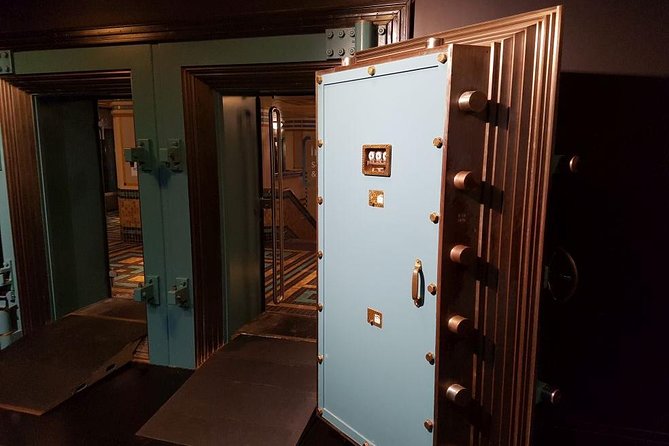
- Enter a former bank treasury: Stadsarchief Amsterdam occupies a 1920s bank building with a basement tied to the city’s archives.
- Connect commerce with Tulip Mania: Hear how the first economic bubble developed at Amsterdam’s floating flower market.
- Book a private group experience: One booking covers up to 10 people, with only your group taking part.
- Plan for a short city walk: The tour starts at Beursplein and ends near Rokin, about 500 meters away on the other side of Dam.
Why Amsterdam’s money story matters
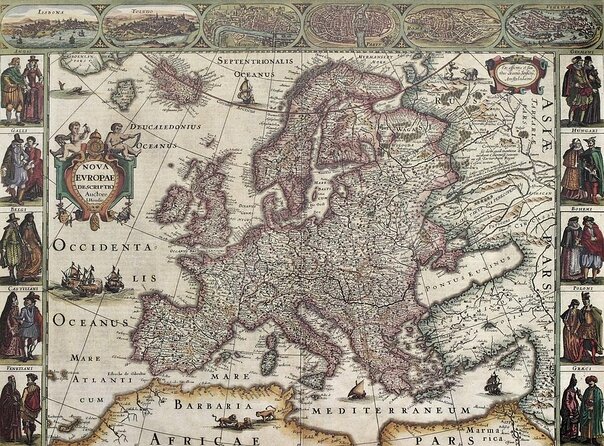
Amsterdam’s financial past is not tucked away in a distant museum. It is written into the city center, especially around Dam Square, where exchange buildings, merchants, archives, and markets connect the past to places you can see today.
That makes this a useful tour if you have already seen the postcard version of Amsterdam and want more context. Instead of treating the city as a collection of canals and handsome façades, you learn why commercial activity mattered so much to its culture and heritage.
The focus is broad but clear. You will look at the people who made money, the buildings designed for exchange, the systems that supported commerce, and the speculative fever behind Tulip Mania. It is a history tour with an economic thread, but you do not need a background in banking to follow it.
I especially like the way the subject reaches beyond dry figures. The tour asks who the wealthy merchants were, how they built their fortunes, and how a financial bubble could capture public attention. Those questions give the walk a human scale.
More history walks in Amsterdam:
- Amsterdam: Life of Anne Frank and World War II Walking Tour
★ 4.8 · 10,467 reviews - Amsterdam: Dutch WWII Resistance Museum Entry Ticket
★ 4.7 · 951 reviews - Amsterdam High-End Dutch Food & History Tour – Up to 8 guests
★ 5.0 · 482 reviews
Starting at Beurs van Berlage near Dam Square
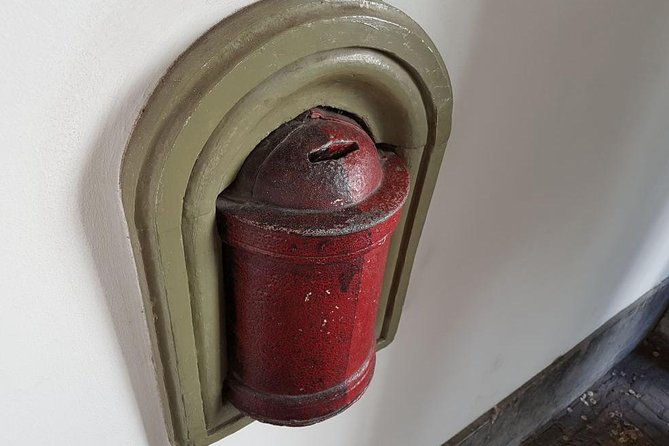
The tour begins at Bistro Berlage, at Beursplein 1, close to Beurs van Berlage. The meeting point is near public transportation, which helps if you are arriving from another part of central Amsterdam.
Beurs van Berlage is a fitting first stop. It was one of several exchange buildings built around Dam, and the area became a key part of Amsterdam’s commercial life. You spend about 10 minutes here, with admission included at no extra cost.
The value of this opening stop is not simply the building itself. It gives you a physical sense of where buying, selling, and financial exchange took place. Amsterdam’s business story begins in a real urban setting rather than with an abstract lecture.
You should expect an orientation rather than a long indoor visit at this point. The listed time is brief, so the guide’s explanation is likely the main event. Have your questions ready if you want to connect the exchange building to later parts of the walk.
This is also a good place for photographs. Beurs van Berlage and the surrounding Dam area provide some of the tour’s most recognizable city views, while the financial theme gives your pictures a little more meaning than a standard sightseeing stop.
Finding the financial heart of Amsterdam
After Beurs van Berlage, the tour moves through the historic center to explain why this part of Amsterdam became so important. The financial heart of the city was not chosen by accident. Its location, buildings, and commercial activity helped shape the city’s growth.
The exact duration for this portion is not specified, so think of it as the connecting part of the tour. You will be walking between major stops while the guide links the streets and buildings into one story.
This is where a private tour can be especially useful. A fixed group experience often has to move on after a set explanation. With only your group participating, you can ask how a particular building, merchant, or financial practice fits into the wider story.
The guide named in the available feedback is Tijs de Boer, who is praised for insights and local hints about Amsterdam. If he leads your tour, you can expect the financial subject to be paired with practical city knowledge. The information does not say that every departure is led by Tijs, so confirm the guide details when booking if that matters to you.
Entering the former bank basement at Stadsarchief
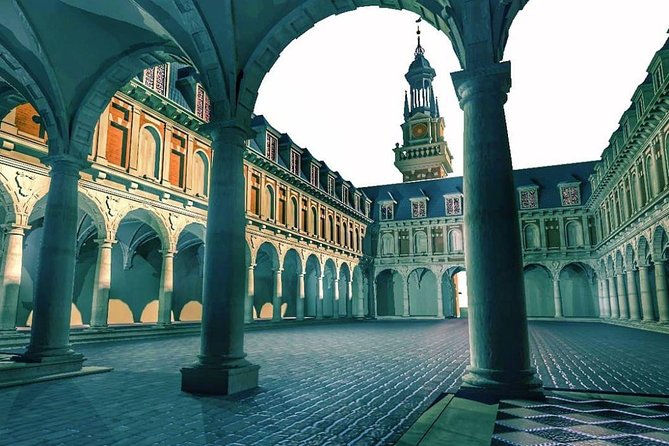
The next notable stop is Stadsarchief Amsterdam, the city archives. The archive occupies a 1920s bank building, and the tour takes you to its basement, where the former treasury reveals an unexpected side of Amsterdam’s financial past.
You spend about 10 minutes here, and admission is included. That short visit gives the stop a focused feel. You are not setting aside half a day for an archive collection. Instead, you get a glimpse of how a bank building was designed to protect and store wealth.
This is one of the tour’s most distinctive details. Many Amsterdam walks explain merchants or canals from the street. Few connect the city’s commercial history with the physical remains of a former treasury beneath an archive.
The stop also helps bridge past and present. A bank building from the 1920s now serves as a place for preserving the city’s records. That change of purpose gives you a direct way to think about how Amsterdam’s institutions have evolved.
Because the listed visit is brief, do not expect an extended archive tour. The attraction here is the setting and the financial connection. If you enjoy architecture, civic history, or old banking spaces, this should be one of the stronger moments of the walk.
Same city, a completely different afternoon:
- Amsterdam Classic Saloon Boat Cruise with Drinks and Cheese
★ 5.0 · 31,825 reviews - Amsterdam Luxury Canal Cruise + Unlimited Drinks & Bites option
★ 5.0 · 30,518 reviews - Amsterdam: Heineken Experience Ticket
★ 4.6 · 30,055 reviews - Amsterdam: Rijksmuseum Entry Ticket
★ 4.7 · 25,535 reviews
Meeting Amsterdam’s wealthy merchants
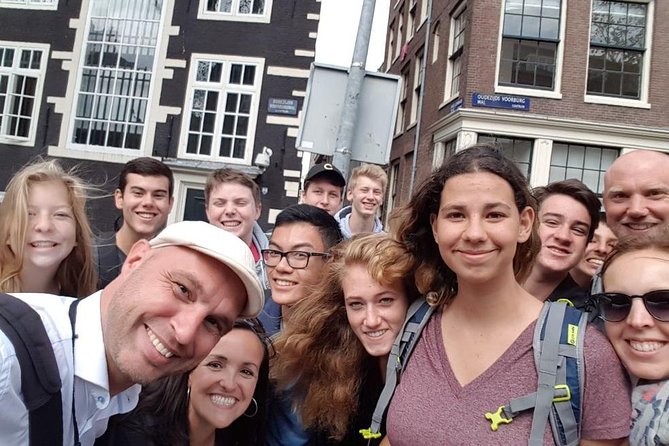
The tour then turns to the people behind the money. You learn who Amsterdam’s rich merchants were and how they earned their fortunes.
That question is more useful than a simple list of famous names. It encourages you to think about the business systems and trading activity that supported Amsterdam’s growth. It also helps explain why financial history is tied so closely to the city’s heritage.
The supplied details do not name specific merchants or give a full list of industries, so you should not book this expecting a detailed biography of every major business family. The clear promise is the larger question of wealth: who had it, how they gained it, and what their money helped shape.
I like this part because it gives the city’s grand buildings a human source. Merchant wealth was not an invisible force. It affected the way Amsterdam developed, the institutions it built, and the culture that visitors now come to see.
For the best experience, ask questions that connect private wealth to public life. You might ask how merchant fortunes changed the city’s buildings or why certain areas became financial centers. The private format gives you room to steer the conversation in that direction.
Tulip Mania at the floating flower market
The final major theme is the first economic bubble, explained through Dutch Tulip Mania at Amsterdam’s floating flower market. This is a lively way to end the financial story because it moves from institutions and merchants to speculation and public excitement.
Tulip Mania is often reduced to a quick anecdote about expensive flowers. Here, it is used to explain how an economic bubble was created. The setting matters: a flower market makes the subject easy to picture and connects the financial lesson to a recognizable Amsterdam tradition.
The tour information does not promise a purchase, a flower demonstration, or a long market visit. Expect an explanation of Tulip Mania at the floating flower market, along with time for photos in this well-known part of the city.
This stop should appeal to anyone interested in how markets behave when enthusiasm outruns judgment. It also makes the tour accessible to companions who may not normally choose a finance-themed walk. You can understand the appeal of the story without being an economics specialist.
The market provides a change of mood after the bank and exchange buildings. You finish with a colorful, public example of speculation rather than ending in a purely institutional setting.
A private tour for up to 10 people
The price is $390.50 per group, with up to 10 people included. If your party fills all 10 places, the cost works out to about $39.05 per person. For a couple or a small group, the per-person price is higher, so the value depends heavily on how many people share the booking.
Still, a private tour offers something a standard group walk cannot guarantee. Only your party takes part, so you can ask more questions, adjust the conversation, and avoid spending time on subjects that do not interest you.
The private setup is particularly useful for mixed groups. One person may care about architecture, another about merchants, and another about Tulip Mania. A flexible guide can connect those interests more easily than a large public group can.
The tradeoff is simple: you pay for privacy rather than the lowest possible entry price. If you are looking for a budget introduction to Amsterdam, this is not the cheapest approach. If you want a focused subject and personal attention, the cost can make sense, especially for a full group.
The tour is offered in English and uses a mobile ticket. Confirmation arrives when you book, which makes the planning straightforward.
Timing, walking, and where you finish
The experience lasts about two hours and 30 minutes. The listed stops at Beurs van Berlage and Stadsarchief each take about 10 minutes, while the rest of the time is used for walking, explanations, and the stops connecting the financial story.
You should arrive prepared for a city walk rather than a series of long indoor visits. The tour begins at Beursplein 1 and ends at Rokin 24HS, on the other side of Dam, about 500 meters from the starting point.
The end point is practical if you plan to continue sightseeing in central Amsterdam. It is also worth noting for your schedule. You do not return to the exact meeting point, so arrange your next activity from the Rokin area rather than from Beursplein.
A moderate level of physical fitness is recommended. The information does not specify stairs, seating, or the precise walking distance, so ask the provider if you have mobility concerns. The central location and nearby public transportation make the tour easy to reach, but the experience itself is still a walking tour.
Who will enjoy this tour most
I would choose this tour for someone who wants Amsterdam’s familiar sights to make more sense. It suits first-time visitors who enjoy context, as well as repeat visitors looking for a fresh subject.
It is a good match for:
- Adults interested in banking, trade, markets, or economic history
- Families or friends who want a private activity rather than a large group
- Architecture fans curious about exchange buildings and a former bank treasury
- Visitors who enjoy unusual city stories more than a standard highlights walk
- Groups of up to 10 who can share the private price
It may be less suitable if you want a museum-heavy experience, a long visit inside each site, or a tour centered mainly on art and architecture. The financial theme guides the entire walk.
The experience has a five-star rating from 16 reviews, with 100 percent recommending it. The strongest praise centers on the tour’s financial perspective and Tijs de Boer’s insights and local suggestions. That matches the tour’s main appeal: it gives you a specialized subject without losing contact with the city outside.
Booking advice and cancellation terms
The tour is often booked about 28 days ahead, which suggests you should reserve early if you have fixed Amsterdam dates or need a particular time. Confirmation is provided at booking, and the activity is available in English.
Free cancellation is available if you cancel at least 24 hours before the start time. Cancellations made less than 24 hours ahead are not refunded, and changes inside that window are not accepted. The cut-off follows local Amsterdam time.
Should you book the Financial History Tour?
Book it if you like the idea of seeing Amsterdam through commerce, banking, and speculation, rather than only through canals and famous viewpoints. The former bank treasury, Beurs van Berlage, and Tulip Mania create a clear story with several unusual settings.
I would especially consider it for a full group of friends or family members. The $390.50 price becomes more reasonable when shared among 10 people, and the private format lets you shape the conversation.
Skip it if your main goal is a broad introductory tour with many major attractions or lots of time inside museums. The route is focused, the indoor stops are short, and moderate walking is part of the deal. For the right audience, though, this is a smart way to understand why Amsterdam became a financial center and how that past still appears in the city around you.
FAQ
Where does the Financial History Tour start?
It starts at Bistro Berlage, Beursplein 1, 1012 JW Amsterdam, Netherlands.
Where does the tour end?
The tour ends at Rokin 24HS, 1012 KS Amsterdam, on the other side of Dam and about 500 meters from the starting point.
How long does the tour last?
The tour lasts approximately two hours and 30 minutes.
How much does the private tour cost?
The price is $390.50 per group for up to 10 people.
Is this a private tour?
Yes. Only your group participates in the activity.
What language is the tour offered in?
The tour is offered in English.
What places are included?
The tour includes Beurs van Berlage and Stadsarchief Amsterdam, along with explanations about Amsterdam’s financial heart, wealthy merchants, and Tulip Mania at the floating flower market.
Is admission included?
Admission is listed as free at Beurs van Berlage and included at Stadsarchief Amsterdam.
Is cancellation free?
Yes, you can cancel for a full refund up to 24 hours before the experience start time. Cancellations made less than 24 hours ahead are not refunded.
Newest Amsterdam write-ups
- Zaanse Schans: Half-Day Private Guided Tour★ 5.0 · 4 reviews
- Zaanse Schans: Private Cruise + Live Guide, Optional Drinks★ 4.7 · 26 reviews
- Zaanse Schans: Wooden Shoe Painting Workshop★ 4.9 · 23 reviews
- Amsterdam: Private Zaanse Schans Windmills and Volendam Trip★ 4.9 · 31 reviews
- Zaanse Schans: Pancake Restaurant Visit★ 4.5 · 26 reviews
- Amsterdam: Zaanse Schans E-Bike Tour with Windmills & Cheese★ 4.5 · 12 reviews
- Zaandam: Paint a Perfect Portrait workshop★ 5.0 · 5 reviews
- Volendam: Volendams Museum Entry Ticket★ 4.4 · 14 reviews
Amsterdam History Walking Tours, compared.
Life of Anne Frank and World War II Walking Tour
Read our review →
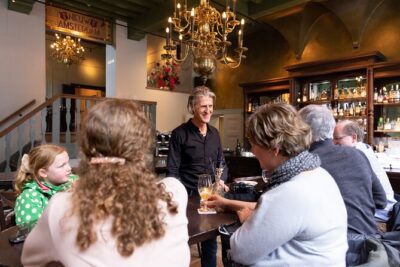
Amsterdam High-End Dutch Food & History Tour – Up to 8 guests
Read our review →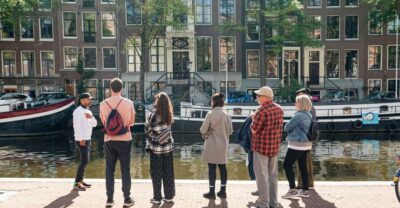
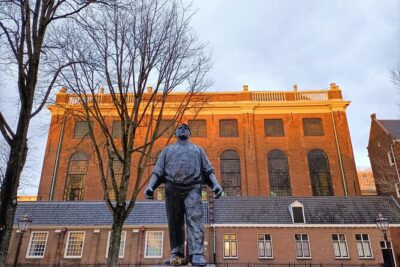
Anne Frank and Amsterdam Jewish History Walking Tour
Read our review →
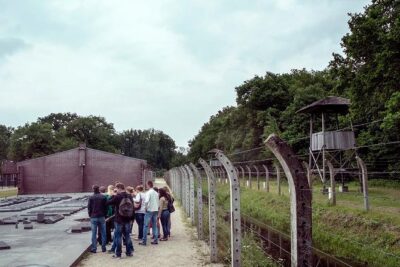
Small Group Tour to Nazi WWII concentration camp from Amsterdam
Read our review →
Anna Frank and World War II History Walking Tour
Read our review →Browse the lists this tour appears in