Reviewed · TICKETS
Body Worlds Amsterdam Admission Ticket
Body Worlds Amsterdam puts real human anatomy in front of you, not behind a textbook drawing. Donated specimens show muscles, organs, bones, and body systems in carefully arranged displays, while The Happiness Project links physical health with the way we think and feel.
I like the clear explanations, which are presented in English and Dutch, and I like the way the exhibition turns anatomy into something personal. It is also a useful rainy-day stop near public transportation, with enough here for curious children, biology students, health workers, and adults who simply want to understand themselves better.
The main caution is simple: this is not for everyone. The displays are real, and some visitors finish in under an hour because the exhibition is smaller than expected. If you are squeamish, or prefer a large museum with many rooms, check your expectations before booking.
Key points to know
- Real donated human specimens: See the body in full forms, cross-sections, and detailed anatomical displays.
- The Happiness Project: Learn how happiness and mental life connect with the health of the body.
- Plan for 1.5 to 2 hours: Some people move through in about 30 minutes, while careful readers can spend two hours.
- Good for curious families: Children over six are recommended, but younger children may enter if prepared in advance.
- English and Dutch information: Labels help you follow the exhibition without a guide.
- Flexible booking value: Admission costs about $27.21 per person, with free cancellation up to 24 hours before the start.
Seeing the human body at Body Worlds Amsterdam
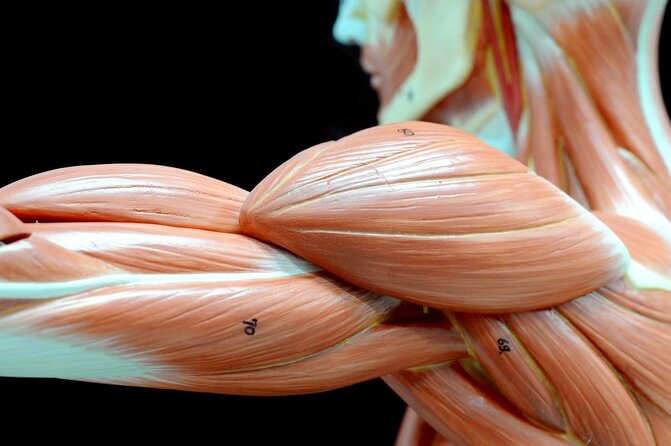
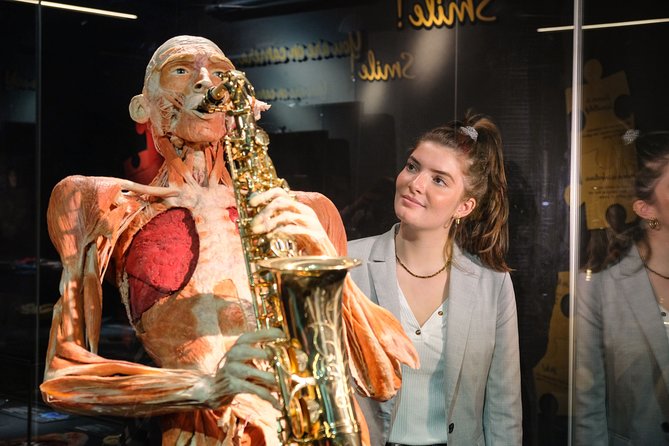
Body Worlds is different from a standard museum of medical diagrams. You are looking at actual human specimens donated to science, prepared through a process called plastination. The result is a series of bodies and body parts that show anatomy in a direct, visual way.
Full-body forms are the main draw. They help you see how muscles, bones, organs, and connective structures fit together, rather than viewing each part as an isolated item. Cross-sections add another layer, showing what normally stays hidden beneath skin and tissue.
I find this useful because it changes the scale of anatomy. A textbook can show the heart, lungs, or joints in a neat illustration, but a real prepared specimen gives you a better sense of proportion and arrangement. You may also see examples that connect anatomy with ordinary life, such as joint replacements and the way the body is affected by health choices.
The exhibition was described as the first of its kind, and its purpose remains educational. It is not built around a theatrical story or a guided performance. You move through the displays at your own pace, reading explanations and stopping at the parts that catch your attention.
A few more Amsterdam tours and tickets worth comparing
- Amsterdam: Heineken Experience Ticket
★ 4.6 · 30,055 reviews - Amsterdam: Rijksmuseum Entry Ticket
★ 4.7 · 25,535 reviews - Amsterdam: Icebar Entry Ticket with 3 Drinks
★ 4.2 · 14,562 reviews
What you see during the 1.5 to 2-hour visit
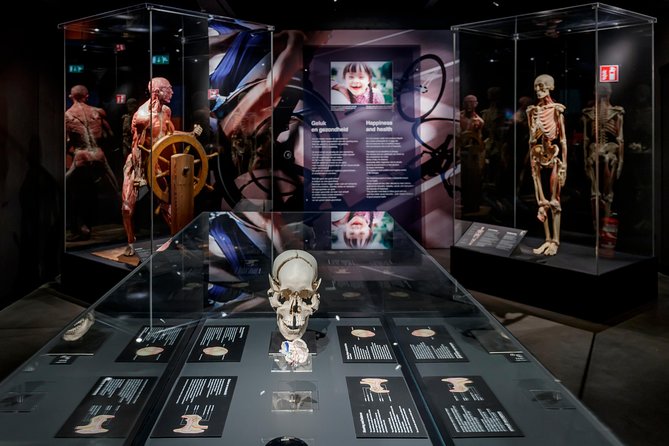
The visit takes place at Body Worlds Amsterdam, with admission included in the ticket. The suggested visit length is about 1.5 to 2 hours, though your pace will make a big difference.
If you read every panel and pause at each display, two hours is reasonable. If you mainly want to see the full-body forms, you could be finished in just over an hour. One especially quick visit took less than 30 minutes, which shows why this experience works best when you are genuinely interested in anatomy rather than simply collecting another Amsterdam attraction.
The layout is intended to lead you through the human body and its functions. You will see entire bodies arranged in poses, individual organs, and body sections that make internal structures easier to understand. The presentation is orderly, with written material attached to the exhibits.
The information is available in English and Dutch. That matters if you want to read at your own pace without relying on a guide. Still, this is a quiet, self-guided experience. If you prefer a person explaining each display, you may find the lack of a guide limiting.
The Happiness Project adds a human angle
The permanent Happiness Project is the feature that gives Body Worlds more than a straight anatomy lesson. It asks how happiness influences the health of the body and explores the relationship between mental life and physical well-being.
That subject helps connect the specimens to your own habits. Instead of seeing the body as a machine made of separate parts, you are encouraged to think about how emotions, choices, and health interact. For a biology student, it adds a psychological angle to the science. For other visitors, it can make the displays feel more relevant to daily life.
The exhibit is not only about disease or medical problems. It also considers the body as a functioning whole, which helps explain why many people leave with a stronger appreciation for how much is happening beneath the surface.
I would give The Happiness Project enough time rather than treating it as an extra room to pass through. It is one of the more distinctive parts of the visit, and it helps prevent the experience from becoming only a collection of anatomical displays.
Why the displays work for students and curious adults
This is especially useful if you are studying biology, anatomy, medicine, or health care. One young visitor studying A-level biology treated the experience almost like a revision session, and that makes sense: the exhibition can show relationships between body systems in a way diagrams cannot.
Health care workers may also find it worthwhile. The displays offer a physical view of structures that are often learned through models, illustrations, or scans. Seeing the arrangement in three dimensions can change your perspective, even if you already know the subject.
You do not need a medical background, though. The explanations make the exhibition accessible to general visitors, and the full-body displays provide an immediate starting point. You can focus on the visual experience and read only the sections that interest you.
I would not call this a light entertainment stop. It is educational, sometimes surreal, and occasionally confronting. That mix is exactly why it can stay in your mind after you leave.
Same city, a completely different afternoon:
- Amsterdam Classic Saloon Boat Cruise with Drinks and Cheese
★ 5.0 · 31,825 reviews - Amsterdam Luxury Canal Cruise + Unlimited Drinks & Bites option
★ 5.0 · 30,518 reviews - Amsterdam: Classic Boat Cruise with Optional Cheese & Wine
★ 4.6 · 22,925 reviews - Amsterdam: Evening Cruise with Optional Wine and Snacks
★ 4.4 · 19,696 reviews
A realistic choice for families with children

Children over six are recommended, and younger children are also welcome. The important point is preparation. Tell your child before the visit that the displays use real human specimens donated to science, so the first room does not come as a shock.
A ten-year-old enjoyed the exhibition, although children may not read as much of the written material as adults. The experience can still work well for families if you treat it as a chance to talk about the body, health, and science rather than expecting a conventional children’s attraction.
Some children will be fascinated by the full-body forms and cross-sections. Others may find the displays unsettling. You know your child best, but honest preparation is useful for everyone under the age of six as well as older children who are sensitive to medical imagery.
For a family visit, I would allow time to move slowly and give children permission to skip anything that feels too intense. The attraction is educational, but it is not designed as a playful, hands-on children’s museum.
Is $27.21 good value?

At about $27.21 per person, this is not the cheapest short museum visit in Amsterdam. Its value depends on what you want from the stop.
If you are interested in anatomy, biology, psychology, medicine, or the way the body works, the price is easier to justify. You are seeing real donated specimens, not just photographs or plastic models, and The Happiness Project adds a second subject to the visit.
The value is less convincing if you expect a huge attraction with many galleries. Body Worlds Amsterdam is described as smaller than some other Body Worlds sites, and the number of displays may feel limited if you move quickly. A visitor who has already seen similar exhibitions may find less novelty here.
I would compare the cost with the time you plan to spend. For a careful 90-minute to two-hour visit in central Amsterdam, it can be a sensible choice, especially in poor weather. If you only have 30 minutes and are not especially interested in anatomy, the admission may feel high.
The high overall rating, 4.7 from 860 reviews, reflects strong approval, but it should not hide the central trade-off: the experience is memorable because it is unusual, not because it is large.
Timing, entry, and getting there
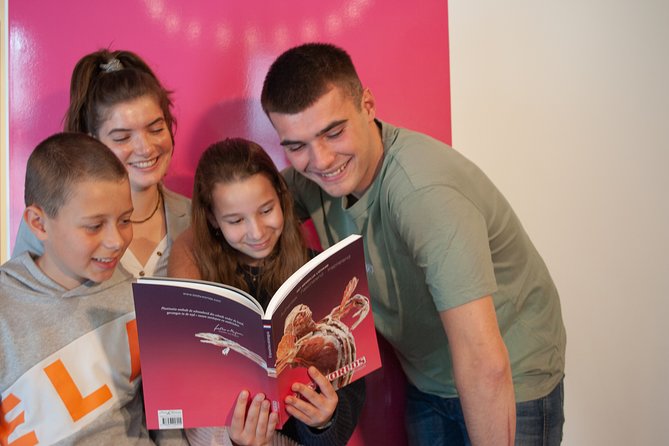
You check in at your reserved time, and the attraction is near public transportation. Transportation to and from the museum is not included, so you will need to make your own way there.
Pay attention to the last entry rule. The final admission is one hour before closing, so arriving late in the day can leave you with less time than planned. Since the visit can take up to two hours, I would avoid booking a slot close to closing unless you already know you want a short visit.
The ticket is mobile, which makes it easy to keep with your other Amsterdam bookings. Confirmation is provided at the time of booking. The experience itself has a maximum of 15 participants, though the exhibition is still a self-guided visit rather than a small guided tour.
Crowding can affect the experience. One account noted that it could feel crowded, while another found the layout easy to follow. To make the most of your visit, arrive at your booked time and expect that certain displays may draw more people than others.
What the visit does especially well
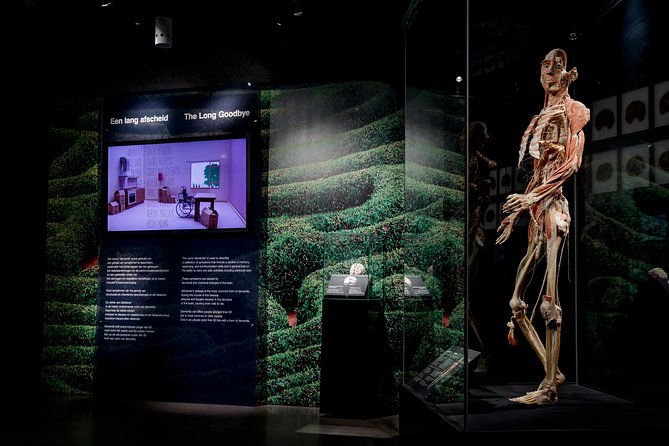
The strongest part is the directness of the material. Real bodies show scale and structure in a way that makes anatomy easier to grasp. Even visitors who have studied the subject can find the displays change their sense of how complex the body is.
The explanations are another strength. They provide enough information to make the displays meaningful, and the English and Dutch text is helpful for international visitors. You can choose your own pace instead of waiting for a group or following a guide.
I also like the mix of science and reflection. The Happiness Project gives you a reason to think about more than muscles and organs. It links the body to mental health and everyday choices, which makes the visit feel less like a display of specimens and more like a lesson about human life.
The staff can add to the experience. Arjen and Kostis were specifically praised for being inviting and interested in what visitors took away from the exhibition. Staff service may vary, however, and one account found the reception team less helpful. The exhibition itself remains the main reason to go.
Where expectations need adjusting
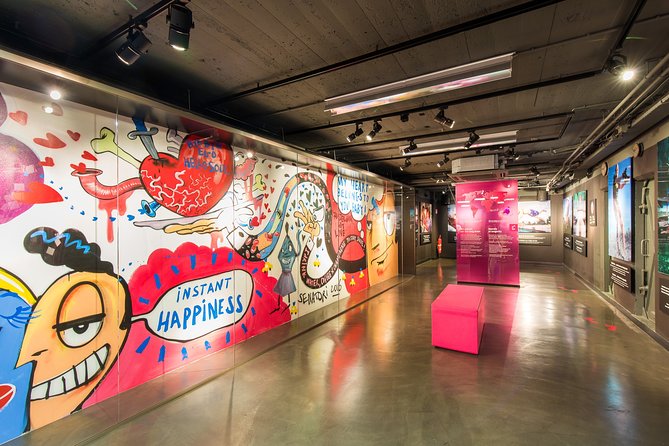
Body Worlds Amsterdam is not enormous. If you have seen similar exhibitions elsewhere, you may recognize the format and finish sooner than expected. A few visitors felt the number of displays was limited and that the material could have occupied a smaller space.
The visit also depends on your reading habits. One child enjoyed seeing the displays but did not read much, while other visitors spent close to two hours with the information. You should not book this expecting a guided explanation at every stop.
Some equipment may not always work perfectly. A body scan was reported as nonfunctional during one visit, so do not base your decision on every interactive feature operating without trouble.
Finally, the subject matter can be intense. Even people who enjoy science may feel squeamish when confronted with actual human bodies. If that is likely to bother you, an art museum or general science museum may be a better fit.
Who should book this Amsterdam experience?
I would choose Body Worlds if you are curious about anatomy, studying biology, working in health care, or looking for an unusual indoor activity. It also suits families with older children who can handle an honest explanation of what they will see.
It is a particularly good match for people who like to read, ask how things work, and connect science with real life. The exhibition can also give you a new reason to think about health habits and the relationship between happiness and the body.
I would skip it if you want a large-scale attraction, a lively guide, or a short visual stop with no challenging material. The smaller size and real specimens are not minor details. They define the experience.
Free cancellation is available if you cancel at least 24 hours before the start time. Within 24 hours, the payment is not refunded, and changes are not accepted. Children up to and including age five enter free of charge.
Should you book Body Worlds Amsterdam?
Book it if the idea of seeing real human anatomy interests you. The full-body displays, cross-sections, clear explanations, and Happiness Project offer more than a quick novelty visit, especially if you allow 1.5 to 2 hours.
Do not book it simply because it is different from Amsterdam’s usual museums. The exhibition is smaller than some people expect, can feel crowded, and may be confronting. For the right audience, though, it is a thoughtful and memorable way to understand the body you carry around every day.
FAQ
How long does a visit to Body Worlds Amsterdam take?
A visit usually takes about 1.5 to 2 hours, though some people finish in just over an hour or less. Your timing depends on how much of the written information you read.
What is included in the ticket?
The ticket includes entrance to Body Worlds Amsterdam and access to the permanent The Happiness Project exhibition. A guide, transportation, food, and drinks are not included.
Are children allowed at Body Worlds Amsterdam?
Yes. The exhibition is recommended for children over six, but younger children are also welcome. Prepare children before the visit so they understand that they will see real human specimens.
Are the human specimens real?
Yes. The exhibition presents real human specimens donated to science, including full-body forms, organs, and cross-sections.
Is the information available in English?
Yes. The exhibition information is provided in English and Dutch.
Can I cancel for a refund?
Yes, you can cancel for a full refund up to 24 hours before the experience start time. Cancellations or changes made within 24 hours are not accepted, and the payment is not refunded.
Newest Amsterdam write-ups
- Zaanse Schans: Half-Day Private Guided Tour★ 5.0 · 4 reviews
- Zaanse Schans: Private Cruise + Live Guide, Optional Drinks★ 4.7 · 26 reviews
- Zaanse Schans: Wooden Shoe Painting Workshop★ 4.9 · 23 reviews
- Amsterdam: Private Zaanse Schans Windmills and Volendam Trip★ 4.9 · 31 reviews
- Zaanse Schans: Pancake Restaurant Visit★ 4.5 · 26 reviews
- Amsterdam: Zaanse Schans E-Bike Tour with Windmills & Cheese★ 4.5 · 12 reviews
- Zaandam: Paint a Perfect Portrait workshop★ 5.0 · 5 reviews
- Amsterdam Central Walking Tour★ 4.9 · 11 reviews
Tickets, compared.




Keukenhof Ticket and Roundtrip Shuttle Transfer
Read our review →