
Reviewed · MUSEUMS
Amsterdam: The Kattenkabinet Cat Museum Entry Ticket
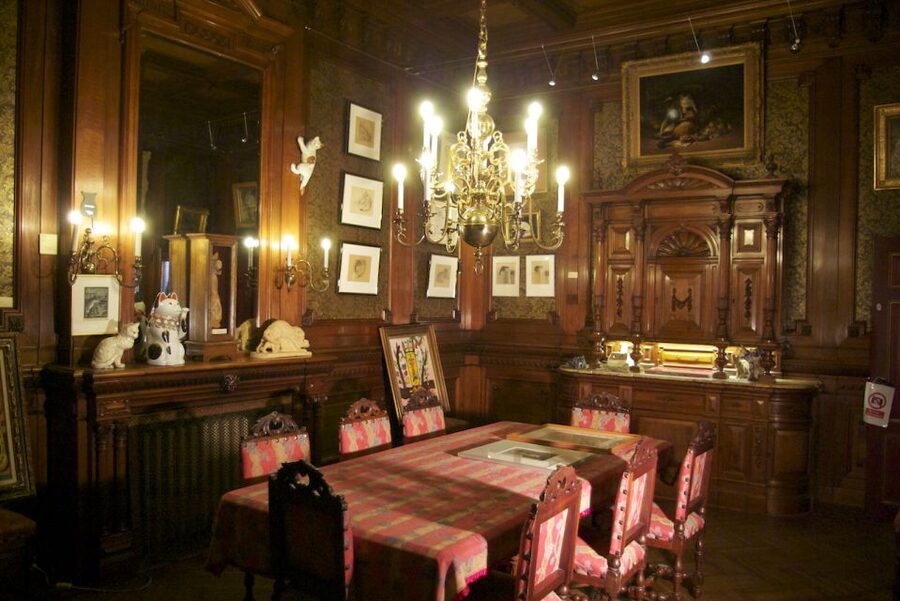
The Kattenkabinet is Amsterdam’s answer to a very specific question: what if an elegant canal house became a museum devoted entirely to cats? Inside, you’ll find paintings, prints, sculptures, photographs, posters, and the occasional live cat padding through the rooms. The collection ranges from Picasso and Rembrandt to playful works by lesser-known artists.
I like the museum’s personal origin story, built by cat lover Bob Meijer in memory of the cat that inspired him. I also like the beautiful Herengracht setting, where an unexpected 17th-century ceiling painting shares space with feline art. The main drawback is simple: this is a small museum, and many people finish in 20 minutes to an hour.
Key points to know before you go
- Real cats may wander through the museum: Resident cats sometimes greet visitors, pose for photographs, or accept a gentle stroke, but their appearances are not guaranteed.
- The collection is broader than paintings: Expect sculptures, lithographs, photography, posters, ceramics, and other cat-related objects.
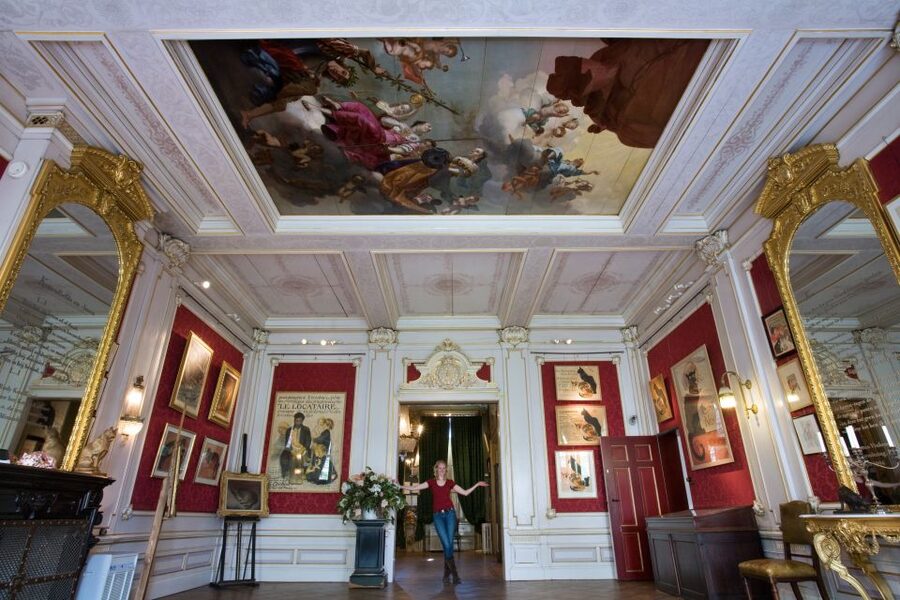
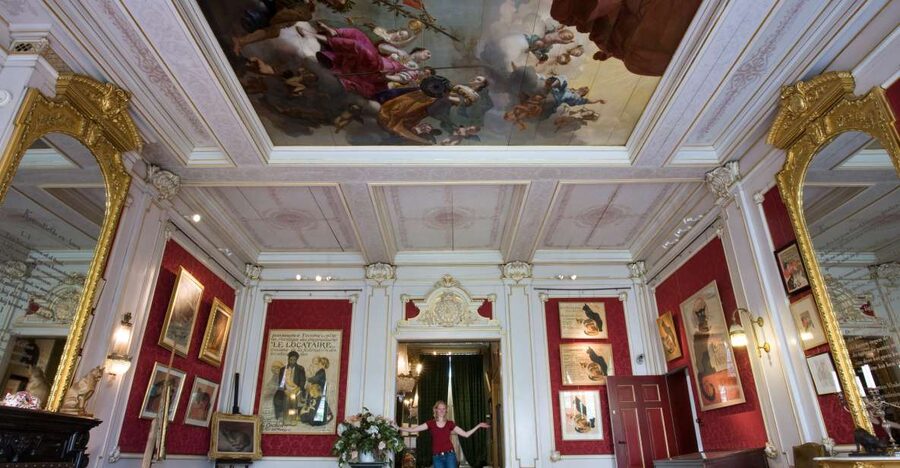
- The museum occupies a historic canal house: One room contains a 17th-century ceiling painting from the school of De Lairesse.
- The story begins with Bob Meijer’s cat: The collection grew from a personal tribute rather than a formal art institution.
- Plan for a short visit: The museum is compact, though careful art lovers and families may stay longer.
- The ticket costs about $15: That is reasonable for cat lovers who value the setting and live animals, but less appealing if you expect a full-sized museum.
Entering Amsterdam’s feline canal house
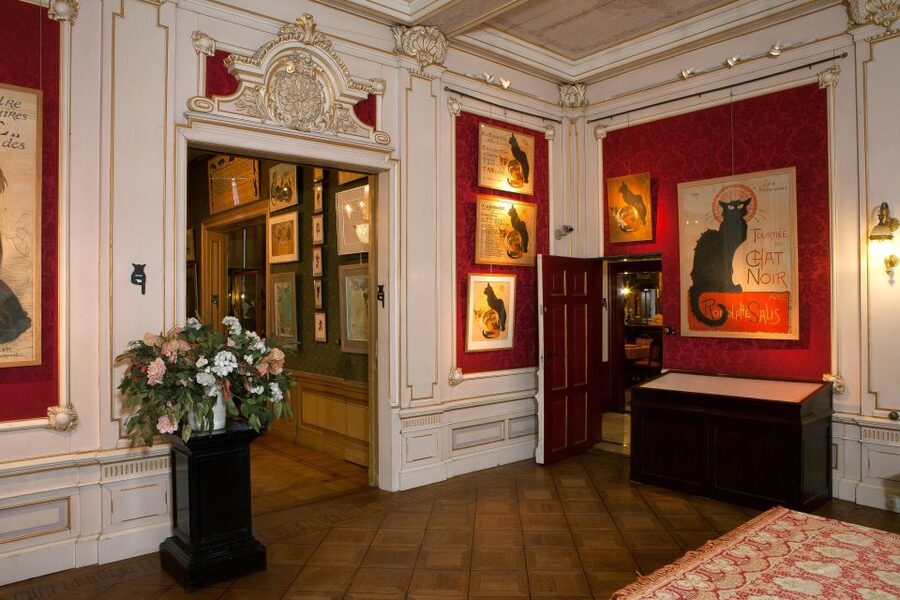
The Kattenkabinet sits on the Herengracht, one of Amsterdam’s most attractive canals. You enter not a modern gallery but a traditional canal house, which immediately gives the visit a different feel from the city’s major museums. The rooms are intimate, the building has character, and the art is displayed in a setting that feels part home, part private collection.
The museum began with Bob Meijer, a cat lover who created the collection after losing the cat that inspired it. That detail matters. The Kattenkabinet is not simply a room full of cat pictures assembled for a joke. It is a personal memorial that grew into a public museum.
You can learn about that story near the start of your visit, then move through the collection at your own pace. There is no guide named in the available information, and the ticket covers entry only. Staff members are described as friendly, but this is primarily a self-guided experience.
The building itself deserves attention. In one room, renovation work in the 1980s revealed a 17th-century ceiling painting from the school of De Lairesse. It depicts the Amsterdam City Virgin, an unexpected subject in a museum focused on cats. Take a moment to look up. This architectural detail helps explain why the setting is part of the attraction, not just a container for the art.
More museums and galleries in Amsterdam:
- Amsterdam: The Upside Down Museum Entrance Ticket
★ 4.4 · 9,506 reviews - Amsterdam: Red Light Secrets Museum Entry Ticket
★ 4.2 · 5,722 reviews - Amsterdam’s Weirdest Museum: Believe It or Not!
★ 4.5 · 4,086 reviews
A collection that ranges from Rembrandt to playful curiosities
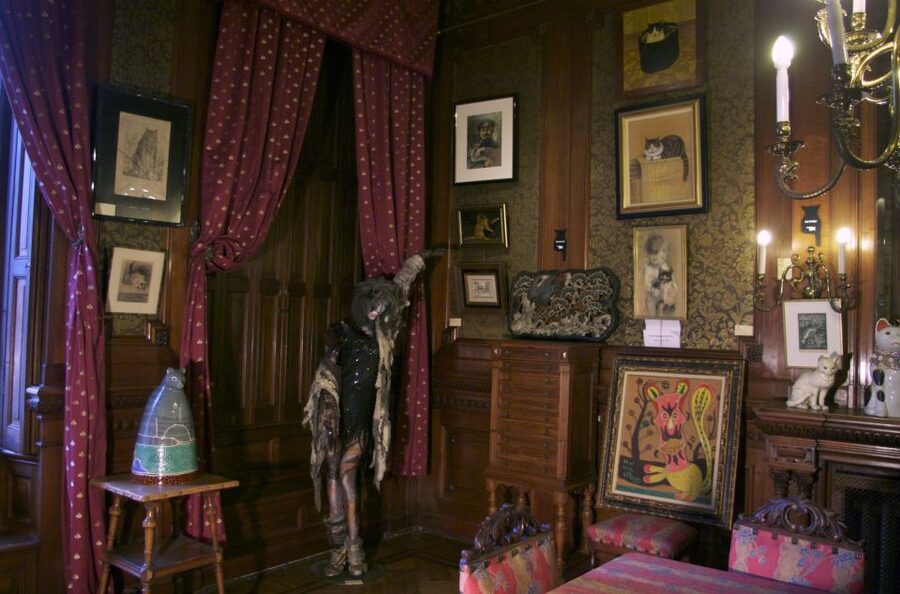
The art collection covers several centuries and a surprising number of forms. You will see paintings, drawings, lithographs, photographs, sculptures, posters, and other objects connected to cats. Some pieces are serious works of art. Others are whimsical, decorative, or simply odd.
That mix is one of the museum’s strengths. You are not walking through a single-theme gallery filled with nearly identical cat portraits. The subject remains constant, but the styles change from room to room. One work may treat the cat as a formal artistic subject, while another uses humor, pattern, or celebrity culture.
The collection includes works associated with Pablo Picasso, Rembrandt, and Henri de Toulouse-Lautrec, along with pieces by Corneille and Jože Ciuha. Those names give the museum more artistic weight than its playful theme might suggest. You should not expect a major national collection or a room packed with masterpieces. You can expect familiar names placed alongside works by artists you may not know.
The contrast is part of the fun. A famous artist’s cat image may sit near a colorful poster or a light-hearted piece by an unknown creator. The museum asks you to look at how artists across different periods have represented cats, rather than presenting a strict art-history lesson.
Some objects are especially unusual. One past visitor noted a mummified cat said to date from around 200 BC. The supplied information does not establish how it is displayed or explain its full story, so treat it as a possible curiosity rather than the main reason to visit. The museum’s appeal comes from the full mix of art and objects, not one single display.
The live cats are part of the experience, but not the whole experience
The resident cats are the museum’s most unpredictable feature. They may be stretched out in a room, wandering near the art, sitting on a staircase, or approaching visitors who look ready to offer attention. Some are friendly and happy to be stroked. Others may stay out of sight.
That unpredictability is worth keeping in mind before you book. The museum has resident cats, but it is not a cat café, and you should not expect a scheduled animal encounter. One person may meet several cats, while another sees only one or none. The animals live there on their own terms.
When the cats do appear, they add something special. You may find yourself studying a sculpture while a real cat strolls past, or pausing from the paintings to watch one settle on a chair. This makes the museum feel lived in rather than staged.
There are also small personal touches connected with visitors’ own cats. A shrine or memorial area allows people to leave photos, notes, or drawings of their cats. You can bring a photo if you want to contribute, although that is optional. This space connects the museum’s central idea with the ordinary affection people have for their own animals.
The cats may be the main attraction for children, but they are not a guaranteed distraction. If your child needs a full program of hands-on activities, the museum may feel too quiet and compact. If your children like spotting animals, looking at unusual objects, and moving through a historic house, it can hold their attention well. One family found it kept children aged 9 and 13 occupied for about two hours, though that is longer than many adults will need.
How long should you allow?
The museum is small. That point comes through clearly in the available descriptions, with estimates ranging from about 20 minutes to an hour for a quick visit. A careful visit can take longer, especially if you read the background material, study the different art forms, wait for a cat to appear, or spend time in the garden.
I would allow 45 minutes to 1 hour for most people. That gives you enough time to see the rooms without rushing. Cat lovers who want to examine every piece, browse the gift shop, leave a note about a pet, or sit in the garden may stay closer to two hours.
The compact size can be a benefit in a busy Amsterdam schedule. You can fit the Kattenkabinet between canal walks, shopping, or visits to larger museums without giving up half a day. It also works well when you need a lighter attraction after a long museum morning.
The trade-off is value. At about $15 per person, the ticket is not expensive by Amsterdam museum standards, but it can feel high if you spend only 20 minutes inside. You are paying for a niche collection, a historic canal house, and the chance of meeting resident cats. You are not paying for hours of exhibits.
A few more Amsterdam tours and tickets worth comparing
- Amsterdam: Heineken Experience Ticket
★ 4.6 · 30,055 reviews - Amsterdam: Rijksmuseum Entry Ticket
★ 4.7 · 25,535 reviews - Amsterdam: Icebar Entry Ticket with 3 Drinks
★ 4.2 · 14,562 reviews - Amsterdam: Keukenhof Ticket and Roundtrip Shuttle Transfer
★ 4.7 · 11,799 reviews
The garden and the historic setting
The museum includes a garden area, which adds breathing room to the indoor rooms. Several people particularly enjoyed sitting there, though the amount of available seating can be limited. The garden may also be closed at certain times of year or during particular visits, so do not build your entire plan around it.
When open, the garden helps balance the compact exhibition. You can pause among the canal-house surroundings instead of moving straight from one small room to another. It is also a pleasant place to wait and see if a resident cat decides to make an appearance.
The architecture deserves your attention even if you are not a serious art enthusiast. Amsterdam’s canal houses were designed for domestic life, and the Kattenkabinet retains that atmosphere. The rooms, stairs, ceiling, and garden give the art a more personal setting than a large white-walled gallery would.
This is also why the experience may appeal to someone who likes historic buildings as much as cats. The ceiling painting from the De Lairesse school is a reminder that the house has an artistic story of its own. You get two themes in one visit: a private collection of feline art and a glimpse inside an old Amsterdam canal property.
A visit that works for families and mixed interests
The Kattenkabinet is easy to understand. You do not need a background in art, and you do not need to know the names of the artists before entering. The theme is clear from the first room, which helps children and casual museum visitors get their bearings fast.
I would especially recommend it for families with children who like animals. The real cats provide an element of surprise, while the sculptures and unusual objects give children things to spot. Just explain beforehand that the cats may not appear and that any interaction depends on the animals.
It can also work well for a group with mixed interests. A committed cat lover can examine the collection closely, while a companion who prefers architecture can focus on the canal house and ceiling painting. Someone who does not care much about art may still enjoy the oddness of the idea and the chance to see a real cat moving through a museum.
People with allergies should think carefully before buying. The supplied information confirms that resident cats may be present, but it does not provide details about allergy controls or ventilation. If cats cause serious symptoms, you should ask the museum directly before visiting.
The museum is not presented as an accessible, large-scale attraction, and the available information does not provide details about step-free access or facilities. If access arrangements matter to you, check with the museum before booking rather than assuming the old canal-house setting will meet your needs.
The gift shop and small extras
The gift shop adds a useful final stop. It offers cat-themed items, including posters and tote bags, and can be more interesting than the usual museum counter. Several repeat visitors bought posters or other souvenirs, which makes sense if you want something more lasting than a photograph.
The shop also helps explain the museum’s appeal as a small, personal institution. You are not only passing through a major public collection. You are visiting a place with a strong identity, where the subject continues into the merchandise, memorial area, and resident animals.
Food and drinks are not allowed inside. Smoking is also not allowed in the garden. These rules are easy to follow, but they matter if you are planning the visit as part of a long day. Have your snack before entering or after leaving, rather than expecting to picnic on site.
Booking, flexibility, and practical value
The ticket is valid for one day, with starting times subject to availability. You can cancel up to 24 hours in advance for a full refund, and the reserve-now, pay-later option lets you keep your plans flexible. Those terms are useful in Amsterdam, where weather, canal walks, and museum schedules can easily change.
The ticket includes museum entry only. It does not include food, drinks, or any separate activity. You should also remember that the cats are an incidental part of the visit, not a paid animal show.
At $15, I see the value this way:
- Good value for cat lovers: You get a focused collection, an attractive historic building, a garden, a gift shop, and a chance to meet resident cats.
- Fair value for art fans: The range of artists and formats makes the museum more serious than its novelty suggests, but the exhibition is small.
- Less convincing for casual sightseers: If you are not interested in cats or niche museums, the short visit may not justify the ticket price.
The strongest reason to go is the combination. Plenty of places show cat art. Fewer place that art inside a canal house, connect it to a personal memorial, and let real cats wander through the rooms.
Should you book the Kattenkabinet?
Book it if you love cats, enjoy quirky museums, or want a short stop with a real sense of place. The building, the variety of cat-related art, the Bob Meijer story, and the resident animals give the visit more substance than a novelty attraction.
Go with measured expectations. This is not a large museum, and you may finish quickly. The garden may be closed, and the cats may be hiding. For a guaranteed long art experience, choose one of Amsterdam’s major museums instead.
For the right visitor, the Kattenkabinet is worth the $15 because it offers something specific and memorable. Bring patience, keep your expectations flexible, and give yourself enough time to look beyond the cute cats. The art and the canal house are the real foundation of the visit, while the resident animals are the delightful bonus.
FAQ
How much does entry to the Kattenkabinet cost?
The listed price is about $15 per person.
How long is the Kattenkabinet ticket valid?
The ticket is valid for one day. Starting times depend on availability.
How long does a visit usually take?
The museum is compact. A quick visit may take about 20 minutes to an hour, while families and visitors who study the art closely may stay longer.
Will I see real cats inside the museum?
Resident cats live at the museum and may wander through the rooms, but seeing or petting them is not guaranteed.
What kind of art is displayed?
The collection includes paintings, drawings, photographs, lithographs, posters, sculptures, ceramics, and other cat-related objects. Works associated with Picasso, Rembrandt, Toulouse-Lautrec, Corneille, and Jože Ciuha are included.
Can I bring food or drinks into the museum?
No. Food and drinks are not allowed inside the museum. Smoking is also not allowed in the garden.
Can I cancel my booking?
You can cancel up to 24 hours in advance for a full refund. The reserve-now, pay-later option is also available.
Newest Amsterdam write-ups
- Zaanse Schans: Half-Day Private Guided Tour★ 5.0 · 4 reviews
- Zaanse Schans: Private Cruise + Live Guide, Optional Drinks★ 4.7 · 26 reviews
- Zaanse Schans: Wooden Shoe Painting Workshop★ 4.9 · 23 reviews
- Amsterdam: Private Zaanse Schans Windmills and Volendam Trip★ 4.9 · 31 reviews
- Zaanse Schans: Pancake Restaurant Visit★ 4.5 · 26 reviews
- Amsterdam: Zaanse Schans E-Bike Tour with Windmills & Cheese★ 4.5 · 12 reviews
- Zaandam: Paint a Perfect Portrait workshop★ 5.0 · 5 reviews
- Volendam: Stroopwafel Experience with Tasting★ 3.6 · 93 reviews
Museums, compared.



Amsterdam’s Weirdest Museum: Believe It or Not!
Read our review →

Van Gogh Museum Amsterdam Exclusive Tour w/ Reserved Entry
Read our review →
Moco Museum Amsterdam Admission Ticket with Banksy and more
Read our review →
Van Gogh Museum Tour Reserved Entry Semi Private
Read our review →Browse the lists this tour appears in