
Reviewed · AMSTERDAM JEWISH HERITAGE TOURS
Amsterdam Jewish Quarter Private Tour
Amsterdam’s Jewish Quarter is best understood on foot, where a synagogue, memorial, wartime building, and philosopher’s monument sit within a compact part of the city. This private tour links those places with the stories of Jewish arrival, deportation, resistance, and Spinoza’s life.
I like the private format, since your group of up to 10 can stop for questions rather than follow a fixed crowd. I also like the route’s range, from the Portuguese Synagogue and museum gardens to the Auschwitz Monument and Spinoza Monument. The main drawback is the short treatment of each named stop, usually about seven minutes, so this is an introduction rather than a museum visit or a long historical walk.
Key points at a glance
- A compact Jewish Quarter route: See major sites between Mr. Visserplein and the Amstel in about two hours.
- A private group of up to 10: Ask your own questions and keep the pace suited to your party.
- Five named historical stops: Visit the Portuguese Synagogue, Auschwitz Monument, Verzetsmuseum area, Hollandsche Schouwburg, and Spinoza Monument.
- A serious wartime focus: The tour addresses deportation, camps, and resistance rather than presenting only Amsterdam’s older Jewish story.
- English or Spanish guiding: Professional guides are offered in either language, with Talia among the guides praised for a personable approach.
- Good value for a small group: At $228.56 per group, the price works out better when shared by several people.
Amsterdam’s Jewish Quarter in a small, personal setting
This walk gives you a focused look at a part of Amsterdam that can be easy to pass through without understanding. The route moves from the arrival of the Jewish community to the destruction and persecution of the Second World War, then finishes with Spinoza, one of the area’s most important intellectual figures.
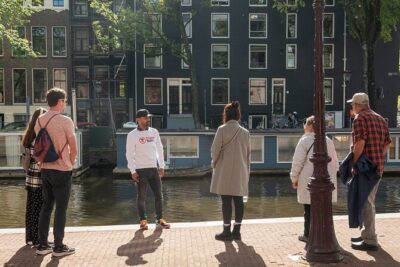
The private setup matters here. You are not simply being led from one plaque to another. You can ask why a place matters, request more detail about a particular subject, or slow down when a story catches your attention. The guide decides how best to shape the walk for your group, so the exact order or amount of time at each place may vary.
Two hours is enough for a useful orientation. It is not enough for extended visits inside every museum or synagogue. Think of this as a guided neighborhood walk with historical stops, not a full museum tour.
More Jewish Quarter and museum tours:
- Anne Frank Walking Tour Amsterdam Including Jewish Cultural Quarter
★ 5.0 · 1,879 reviews - Anne Frank and Jewish Quarter Amsterdam Private Walking Tour
★ 5.0 · 684 reviews - Amsterdam: Anne Frank and Jewish Quarter Tour
★ 4.7 · 434 reviews
Starting at Mr. Visserplein at 3 p.m.
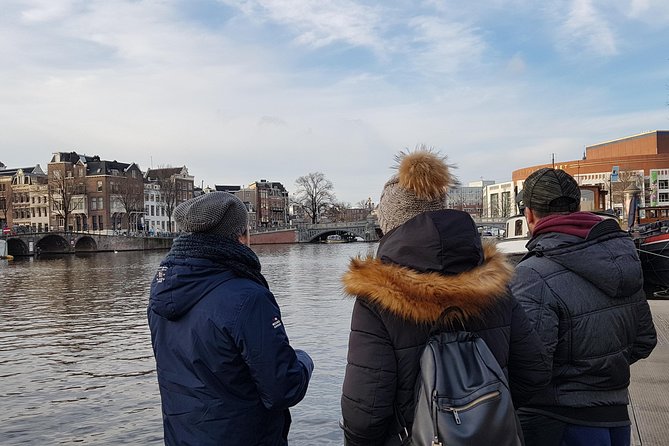
The meeting point is Mr. Visserplein 3, near the start of the route. The tour begins at 3 p.m. and finishes at Amstel 1, close to the Spinoza statue.
This is a practical arrangement because the walk has a clear beginning and end rather than returning you to the starting point. You finish near the Amstel and the Spinoza Monument, with public transportation nearby. The route also takes you through one of Amsterdam’s attractive areas, including gardens connected with the museum portion of the walk.
You should allow a little flexibility. The stated duration is approximate, and independent guides may adjust the route or timing based on what suits your group. Wear comfortable shoes, since the experience is a walking tour and the schedule includes several outdoor stops.
The Portuguese Synagogue and the story of arrival
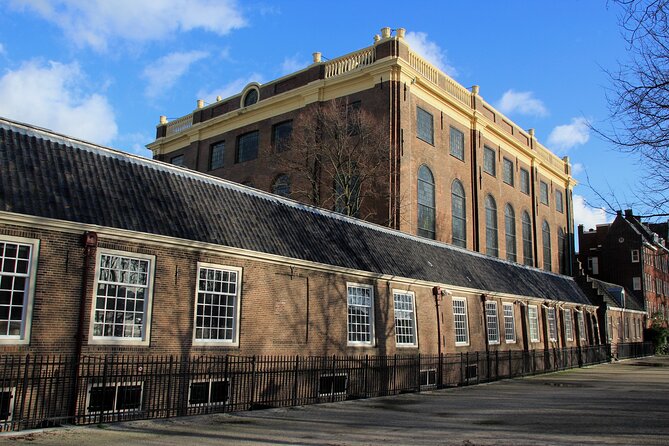
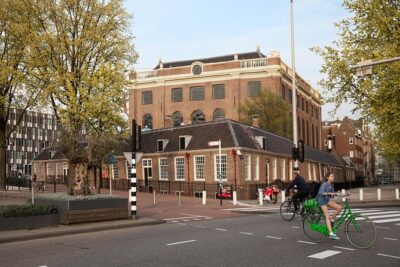
The first named stop is the Portuguese Synagogue, where the guide explains how the Jewish community came to Amsterdam. This gives the walk its starting point and helps you see the neighborhood as more than a collection of wartime memorials.
The synagogue is also a reminder that Amsterdam’s Jewish story began long before the twentieth century. You will hear about the arrival of Jewish people in the city and the formation of a community that helped shape this part of Amsterdam.
The admission ticket is not included. The tour information does not promise a full interior visit, so you should treat this stop primarily as a guided explanation unless your guide confirms otherwise. The planned stop is listed as about seven minutes, which is enough for context but not for a detailed architectural tour.
I like this opening because it places later events in a longer timeline. You first learn about community and settlement, then the walk turns toward persecution and loss.
The Auschwitz Monument and the weight of deportation
At the Auschwitz Monument, the guide discusses Jewish deportation. The monument is a free stop, and the short visit gives you a place to consider the scale of what happened to Amsterdam’s Jewish population during the war.
This is one of the more solemn sections of the route. You should expect the tone to change from community history to memory and mourning. The guide’s role is especially useful here because a memorial can be easy to see without understanding the events it represents.
The listed stop lasts about seven minutes. That is brief, so you may want to ask your guide questions while you are there. Since this is a private tour, you have more room to ask for clarification than you would on a large group walk.
The monument is not presented as a stand-alone attraction. It works as part of the route, linking the Jewish Quarter’s earlier story with the wartime sites that follow.
A few more Amsterdam tours and tickets worth comparing
- Rijksmuseum Amsterdam Small-Group Tour with Private Upgrade
★ 4.5 · 1,547 reviews - Van Gogh Museum Tour Reserved Entry Semi Private
★ 5.0 · 1,437 reviews - Private Amsterdam Red Light District and Coffee Shop Tour
★ 5.0 · 763 reviews - Amsterdam Airport & Non-Airport Private Transfer to City Center
★ 4.5 · 521 reviews
Resistance and the Verzetsmuseum area
The route then turns to the Verzetsmuseum Amsterdam, the Museum of WWII Resistance. The subject here is resistance, adding another part of the wartime story beyond deportation alone.
Admission to the museum is not included. The schedule lists about seven minutes at this stop, so you should not expect time for a full museum visit. Instead, the guide uses the location to explain the role of resistance and place Amsterdam’s wartime events in context.
This is an important distinction when planning your day. If you want to explore the museum’s exhibits, you will need a separate visit and additional time. The private walk can help you understand why the museum matters before or after that visit, but it does not replace it.
I appreciate the inclusion of resistance because it keeps the tour from becoming a simple sequence of memorials. The route addresses the choices and actions of people during the war, not only the suffering that followed.
Hollandsche Schouwburg and the path to deportation camps
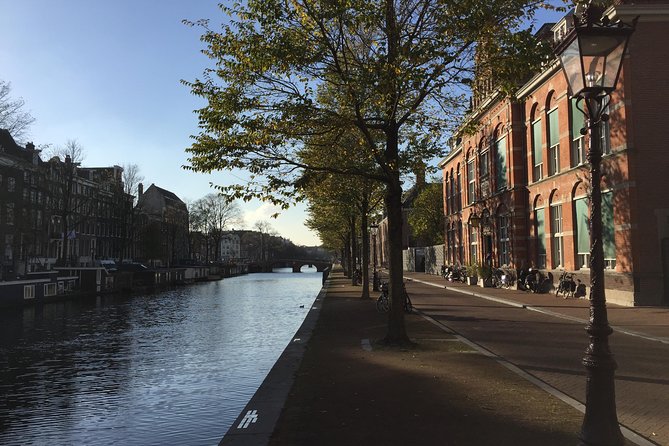
The Hollandsche Schouwburg is the next major stop. The guide discusses deportation camps, and admission is included according to the tour details.
The building is treated as part of the story of how Amsterdam’s Jewish residents were gathered and sent away. This is likely to be one of the most emotionally difficult stops, so give yourself time to listen and consider the information rather than rushing ahead for photographs.
The listed visit lasts about seven minutes, but the stop may carry more weight than its duration suggests. Because the tour is private, you can ask your guide to explain terms or events that are unfamiliar to you. You can also tell the guide if you need a moment before continuing.
The route’s wartime section works best when taken at a thoughtful pace. The tour does not pretend that these places are cheerful sightseeing stops. It gives you a framework for understanding what you are seeing.
Gardens, canals, and a pause between difficult stories
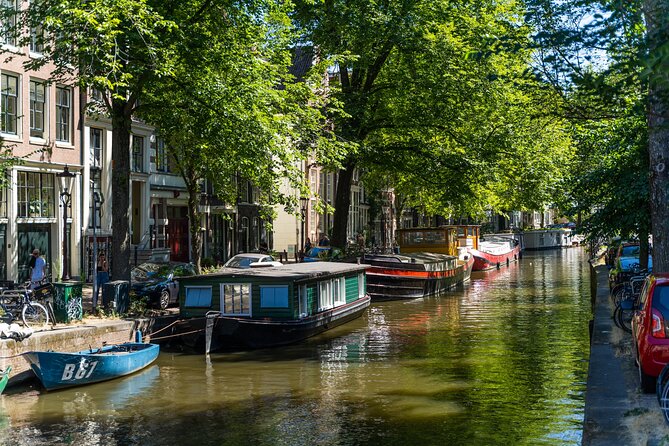
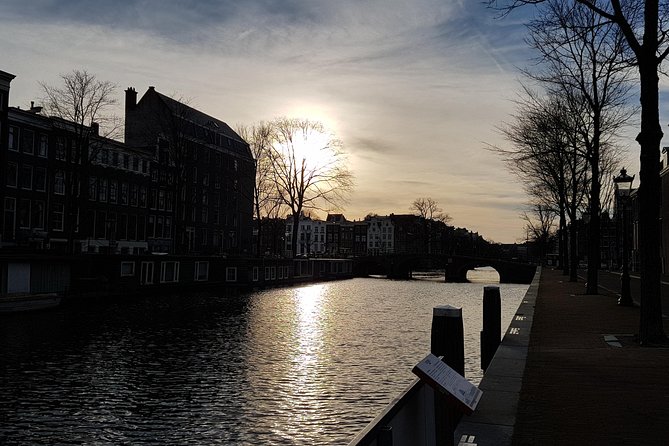
Between the historical sites, the walk takes you through one of the city’s attractive areas and includes a visit to museum gardens. These pauses matter. They break up the heavier material and let you experience the setting as a living part of Amsterdam rather than as a series of memorial locations.
The information does not specify which gardens or how long you spend there, so keep your expectations flexible. Your guide may adjust this part according to the group, weather, or the amount of time needed at earlier stops.
I like this balance. The tour remains serious, but it does not force two hours of uninterrupted wartime material. You get some sense of the neighborhood’s streets and public spaces along the way.
Spinoza’s life at the Amstel
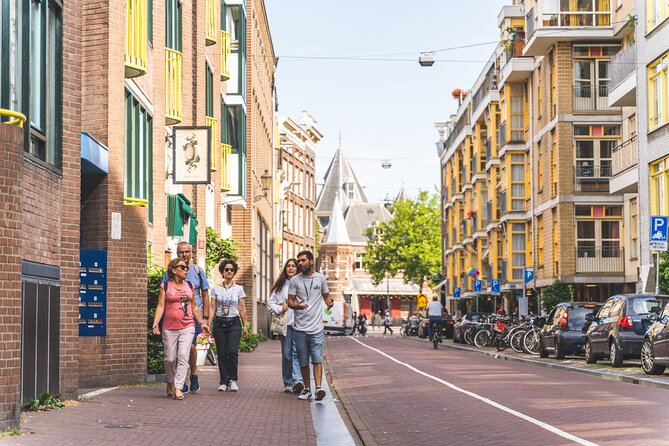
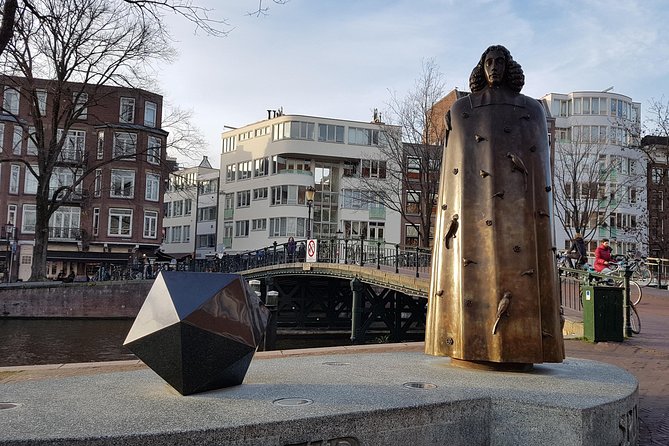
The final named stop is the Spinoza Monument, near the end point at Amstel 1. Here, the guide talks about Spinoza’s life.
Spinoza adds an intellectual and personal dimension to the route. His story belongs to the Jewish history of Amsterdam, but it also reaches into philosophy, religious thought, and the city’s wider cultural life. The monument makes a fitting end point because it shifts the focus from collective wartime memory to the life and ideas of a single major figure.
This stop is free, and the listed visit is about seven minutes. If Spinoza interests you, ask the guide for more detail during the walk. The private format makes that possible without holding up a larger group.
The walk finishes close to the statue, so the final stop is also a useful orientation point. You end near the Amstel rather than at the original meeting place, which can make it easier to continue exploring another part of central Amsterdam.
What $228.56 means for your group
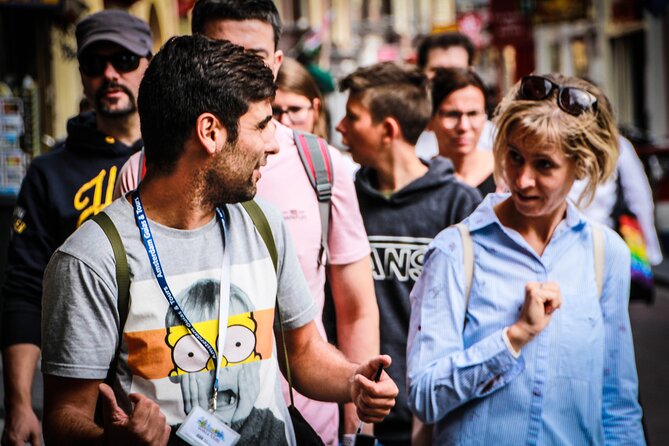
The price is $228.56 per group of up to 10 people, not per person. That makes the value depend heavily on the size of your party.
For two people, it is a fairly expensive two-hour walk. For a family or group of six to 10, the per-person cost becomes much more reasonable, especially since you receive a private guide rather than joining a general group. At the full group size, the cost is about $22.86 per person.
The guide is included, but food and drinks are not. No refreshments are promised, so plan to eat before the 3 p.m. start or afterward. The route includes outdoor walking and several serious sites, making a meal or coffee break before the tour a sensible choice.
The strongest value comes from the chance to shape the conversation. If your group has a particular interest in Jewish arrival, wartime Amsterdam, resistance, or Spinoza, tell the guide early. A private tour earns its price when you use that flexibility.
Guide style and language choice
The tour is offered in English or Spanish with a professional guide. Talia is one guide specifically praised for being personable and well informed, and the experience is designed to leave room for questions.
That personal contact is one of the clearest reasons to choose this tour over a self-guided walk. You receive explanations at the actual places connected with the story, rather than trying to match names and dates from a guidebook.
The exact guide is not guaranteed in the details provided, so you should not book expecting Talia specifically unless the operator confirms her availability. Still, her approach gives you a useful idea of the tone to expect: clear, friendly, and inclusive.
The small group format also helps if members of your party have different levels of background knowledge. You can ask for a basic explanation, request more detail, or move on when a subject has been covered sufficiently.
Who will get the most from this walk?
I would choose this experience if you want a focused introduction to Amsterdam’s Jewish Quarter and prefer conversation to a large scheduled group. It suits families, couples, and groups of friends who want one guide for the whole party.
It is also a good fit if you have limited time in Amsterdam. In two hours, you cover several important locations without spending a full day inside museums. The route gives you enough context to decide which places deserve a longer return visit.
You may want something else if you are looking for extensive museum time, detailed synagogue architecture, or a slow academic treatment of every site. The short stops mean the guide must keep moving, and admission is not included at the Portuguese Synagogue or the Verzetsmuseum.
The subject matter also requires a respectful mood. This is not a light sightseeing walk. It includes deportation, camps, resistance, and memorials to those who were killed.
Practical details before you book
Confirmation is provided at booking. The tour is available by mobile ticket, and the route is near public transportation. Service animals are allowed, and most people can participate.
The tour is private, with only your group taking part. The average tour length is about two hours, but the guide may alter the route or timing based on what seems best for the group.
The cancellation rule is strict: the experience is non-refundable and cannot be changed for any reason. Check your plans carefully before paying.
The tour is generally offered in English or Spanish. The start time is 3 p.m., and the meeting point is Mr. Visserplein 3. The finish is Amstel 1, close to the Spinoza statue.
Should you book the Amsterdam Jewish Quarter tour?
Book it if you want a private, conversation-based walk that connects Amsterdam’s Jewish community, wartime persecution, resistance, and Spinoza in one compact route. It is especially good value for a larger group and useful for anyone who wants a guide’s explanation at each site.
Skip it if you need long visits inside museums or a fully detailed architectural tour of the Portuguese Synagogue. The route offers strong historical coverage, but each named stop is short.
For the right group, this is a thoughtful way to see an important part of Amsterdam without getting lost in dates or isolated memorials. Bring questions, wear comfortable shoes, and allow the guide some freedom to shape the walk.
FAQ
How long does the Amsterdam Jewish Quarter Private Tour last?
The tour lasts approximately two hours. The exact length and route may vary based on what the guide thinks is best for your group.
What time does the tour start?
The tour starts at 3 p.m.
Where does the tour begin?
The meeting point is Mr. Visserplein 3, 1011 RD Amsterdam, Netherlands.
Where does the tour finish?
The tour ends at Amstel 1, 1011 PN Amsterdam, close to the Spinoza statue.
How many people can join the private tour?
The price covers one private group of up to 10 people.
Is the tour offered in English?
Yes. Professional guides are offered in English or Spanish.
Are admission tickets included?
Admission is not included for the Portuguese Synagogue or the Verzetsmuseum Amsterdam. The Auschwitz Monument and Spinoza Monument are free stops. Admission is listed as included at the Hollandsche Schouwburg.
Is food or drink included?
No. Food and drinks are not included.
Can I cancel or change the booking?
No. The experience is non-refundable and cannot be changed for any reason.
Newest Amsterdam write-ups
- Zaanse Schans: Half-Day Private Guided Tour★ 5.0 · 4 reviews
- Zaanse Schans: Private Cruise + Live Guide, Optional Drinks★ 4.7 · 26 reviews
- Zaanse Schans: Wooden Shoe Painting Workshop★ 4.9 · 23 reviews
- Amsterdam: Private Zaanse Schans Windmills and Volendam Trip★ 4.9 · 31 reviews
- Zaanse Schans: Pancake Restaurant Visit★ 4.5 · 26 reviews
- Amsterdam: Zaanse Schans E-Bike Tour with Windmills & Cheese★ 4.5 · 12 reviews
- Zaandam: Paint a Perfect Portrait workshop★ 5.0 · 5 reviews
- Volendam: Volendams Museum Entry Ticket★ 4.4 · 14 reviews
Amsterdam Jewish Heritage Tours, compared.
Anne Frank Walking Tour Amsterdam Including Jewish Cultural Quarter
Read our review →
Anne Frank and Jewish Quarter Amsterdam Private Walking Tour
Read our review →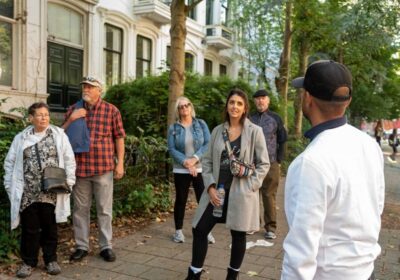
Anne Frank and Jewish Quarter Walking Tour (TOP RATED)
Read our review →

Anne Frank and the Jewish History of Amsterdam Private Tour
Read our review →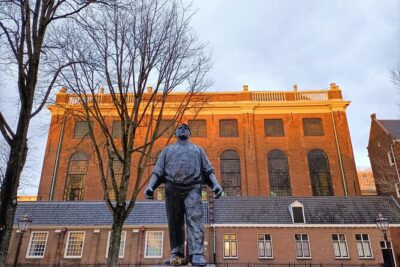
Anne Frank and Amsterdam Jewish History Walking Tour
Read our review →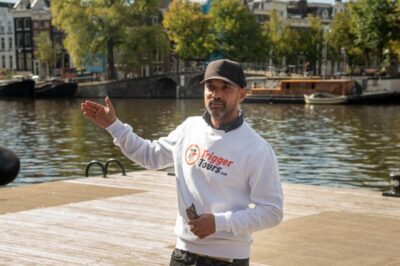
Browse the lists this tour appears in