

Reviewed · AMSTERDAM GHOST TOURS
Amsterdam: Haunted History and Ghost Walking Tour
Amsterdam’s spooky past comes alive in the city center, where royal ceremonies, prison sorrow, religious guilt, street violence, and old medical practices all share the same few blocks. This is not a theatrical haunted-house show. It is a two-hour history walk that uses ghost stories to make Amsterdam’s past easier to remember.
I like the way the route combines famous sights with overlooked corners, especially Begijnhof and Blood Street. I also like the guides’ personal style. Sunil, Duncan, Jan, and others are praised for humor, strong storytelling, and useful answers about the city. The main consideration is simple: you may get more history than haunting. Some guides treat the supernatural with a raised eyebrow, so come for dark local stories rather than guaranteed scares.
Key points to know before you book
- Nieuwe Kerk sets the tone: Royal ceremonies and burial vaults provide the first link between Amsterdam’s public grandeur and its ghostly past.
- Spinhuis adds real human sadness: The former women’s prison gives the tour a more serious edge than a standard ghost walk.
- Begijnhof is quiet but unsettling: A peaceful courtyard becomes the setting for a tale about a nun condemned to wander.
- Blood Street is the darkest stop: The name points to centuries of violence, murder, and public fear.
- The Waag brings science into the story: Its connection with dissection and the Age of Enlightenment adds a macabre final chapter.
- The guide matters: Sunil, Duncan, Jan, and other guides bring different personalities, but the strongest common thread is lively storytelling and a firm grasp of Amsterdam’s past.
Why Amsterdam’s ghost stories work so well
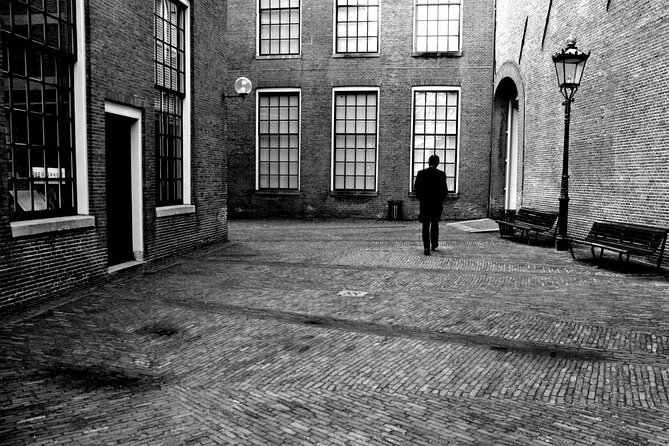
Amsterdam is a good city for a walking tour with a dark angle. The historic center is compact, and major landmarks sit close to narrow lanes, old courtyards, churches, prisons, and former civic buildings. You are not spending the evening on a coach or waiting for special effects. You move through the same streets where the stories are set.
The route begins at Dam Square, in front of Hotel Krasnapolsky, behind the monument. This is a busy meeting point, so allow a few minutes to identify your guide. The guide will be waiting there, and some guides have contacted participants with directions or details about how to recognize them.
The starting point also gives you instant context. Dam Square is one of Amsterdam’s main public spaces, surrounded by buildings tied to the city’s political, royal, religious, and commercial life. The tour uses that setting to show how everyday places can carry several layers of memory.
I would book this early in your stay. The walk gives you a useful mental map of central Amsterdam, and the guides often offer suggestions for other places to visit, eat, or explore afterward. That extra advice can be especially useful if this is your first visit.
More ghost walks after dark:
- Amsterdam: Ghost Walking Tour and Dark History
★ 4.8 · 118 reviews - Amsterdam Haunted History and Ghost Walking Tour
★ 5.0 · 47 reviews - Amsterdam’s Ghostly Experiences Group Tour
★ 5.0 · 28 reviews
Nieuwe Kerk and the solemn side of royal Amsterdam
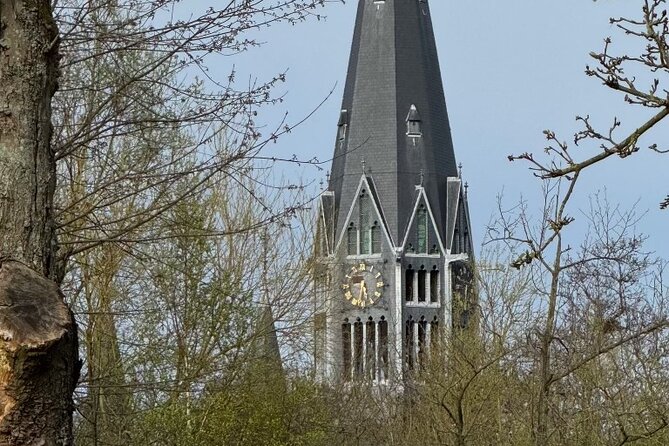
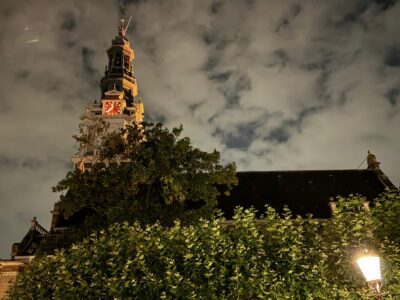
The first major stop is Nieuwe Kerk, close to Dam Square. The church is associated with royal ceremonies and important public events, but the tour turns your attention toward the crypts and vaults beneath the grandeur.
This contrast works well. Above ground, you have ceremony, architecture, and national identity. Below or behind that public image is the older concern shared by every age: death, burial, and the hope that the dead will rest peacefully.
The guide explains how notable figures are connected with the church and uses the building to introduce the idea of restless spirits. You should expect stories and historical context rather than access to private interiors or crypts. The precise experience depends on what is open and where the group can pause, but the church remains an effective opening scene.
This stop is also a good test of the tour’s style. If you want actors, costumes, loud shocks, and staged scares, it may feel restrained. If you enjoy hearing how a city’s institutions developed and then seeing those institutions through a darker lens, it gets the evening moving in the right direction.
Spinhuis, where the stories become more human
The former Spinhuis women’s prison is one of the route’s strongest stops. Its story is not frightening simply because it involves ghosts. It is disturbing because it points to confinement, sorrow, punishment, and the limited choices available to women in earlier Amsterdam.
The tour centers on an inmate whose story has become part of the city’s haunted memory. The guide describes the anguish associated with the building and the idea that tormented souls remain tied to its walls.
This is where the walk gains emotional weight. A ghost story can be easy to forget when it is only a name and a spooky sound. A story linked to imprisonment and despair gives you something more substantial to consider. You begin to see the old city not just as pretty canals and merchant houses, but as a place shaped by strict laws, social control, and hard lives.
The Spinhuis section also shows why the guide’s delivery matters. Sunil is often praised for keeping the tone lively with humor, while Duncan is noted for building a wider picture of how Amsterdam developed. Jan has used photographs, paintings, and newspaper material on an iPad to support his stories. Those touches help anchor the tales in real places rather than leaving them floating as pure folklore.
Begijnhof, a quiet courtyard with an uneasy tale
Begijnhof changes the mood. It is a calm courtyard in the center of the city, the sort of place you might pass through without expecting anything grim. The tour uses that peaceful setting for the story of a nun condemned to wander after breaking her vows.
The contrast is the point. You stand in a quiet place while listening for the imagined footsteps of someone who, according to the tale, never found release. The story brings up faith, rules, guilt, and punishment without needing the heavy atmosphere of a ruined castle or dark forest.
Please keep your voice low and follow the guide’s instructions here. The courtyard is a place of reflection and residence, not a stage set. The tour’s value comes from hearing the story in the actual setting, while still treating the location respectfully.
Begijnhof is also one of the better reasons to choose this walk over exploring Amsterdam alone. You could find the courtyard on a map, but you might not connect it with the nun’s tale or understand how the story fits the city’s religious past. The guide supplies that missing link.
More walking tours in Amsterdam:
- Anne Frank’s Story – Guided Walking Tour through Amsterdam
★ 5.0 · 11,619 reviews - Amsterdam: Life of Anne Frank and World War II Walking Tour
★ 4.8 · 10,467 reviews - Absolutely Amsterdam – the Essential Introductory Walking Tour
★ 5.0 · 3,629 reviews - Amsterdam: Anne Frank Guided Small Group Walking Tour
★ 4.8 · 2,722 reviews
Blood Street and Amsterdam’s violent memory
The route then takes a darker turn at Blood Street. The name itself prepares you for stories of murder, violence, and disorder. Here, the cobblestones are presented as witnesses to centuries of trouble.
This is likely to be the most conventionally spooky part of the route. The narrow setting and grim subject matter give the guide room to build suspense, but the experience remains a walking history lesson. You are not promised a supernatural encounter, and there is no claim that something will appear at a particular moment.
That restraint is useful. You can listen to the stories while also noticing how street names preserve old fears and events. Amsterdam often looks polished and cheerful in daylight, yet its historic center was shaped by conflict, harsh justice, crowded living conditions, and sudden violence. Blood Street makes that contrast plain.
The guide’s humor helps prevent the tone from becoming oppressive. Almost every account of this tour highlights an entertaining, friendly guide, and that balance matters. Two hours of murder stories would be heavy without some lightness. The better guides keep the group engaged without making suffering into a joke.
The Waag and the uneasy science of dissection
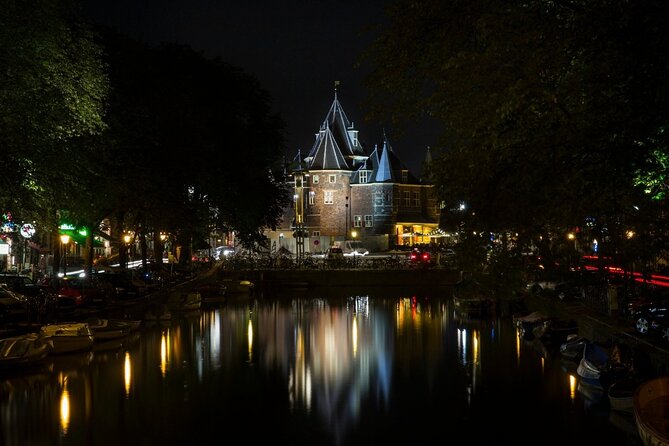
The final stop is the Waag, described here as the Purgatory of the Waag. This section connects the building with scientific curiosity, dissection, and the restless spirits of people whose bodies were used for study.
It is a fitting ending because the story moves from religious ideas about punishment to the Age of Enlightenment and the desire to understand the human body. Scientific progress often sounds clean in a textbook. The reality could be grim, especially when the people being dissected had little power or choice.
The Waag therefore gives the tour a different kind of darkness. It is not only about ghosts. It is about the uneasy boundary between knowledge and human suffering. You may find this stop more thought-provoking than frightening.
The location also helps tie together the tour’s larger theme. Amsterdam’s haunted stories are linked to institutions: churches, prisons, streets, and civic buildings. The city’s ghosts are not random decorations. They reflect old ideas about sin, justice, death, illness, and the treatment of outsiders.
What the guides add to the experience
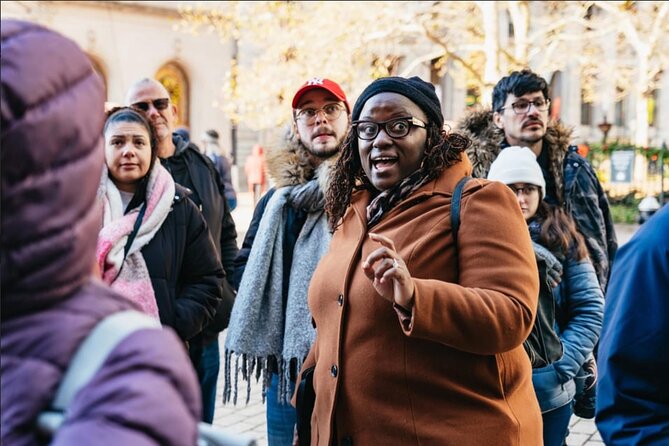
The guides are the main reason this tour receives such strong marks. Sunil is repeatedly described as warm, funny, and full of facts about Amsterdam. Duncan brings a broad interest in the city’s development, Dutch culture, architecture, environment, innovation, and heritage. Jan is praised for clear storytelling and for showing supporting images on an iPad. Other guides, including Julia, Lola, Martina, and others, have also led the walk.
That variety means the tone can differ from one departure to another. One guide may focus more on supernatural tales. Another may spend extra time on urban history or local customs. If you are hoping for a very scary night, the later 8 p.m. departure may create a darker atmosphere than the 5 p.m. option, especially in the colder months. The earlier time can be more comfortable if you prefer better visibility and less chill.
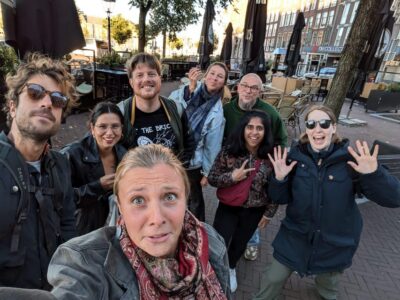
Group size may vary as well. Some departures have been small enough to feel almost private, including walks with only two participants. A small group gives you more time to ask questions and may allow the guide to add extra stories. You should not assume every departure will be that intimate, but the format can work well for conversation.
The strongest guides answer questions beyond the planned route. You can ask about landmarks, street names, how Amsterdam evolved, or what to do next. That makes the walk useful even if you are not fully convinced by ghosts.
Is two hours and $30 a fair value?
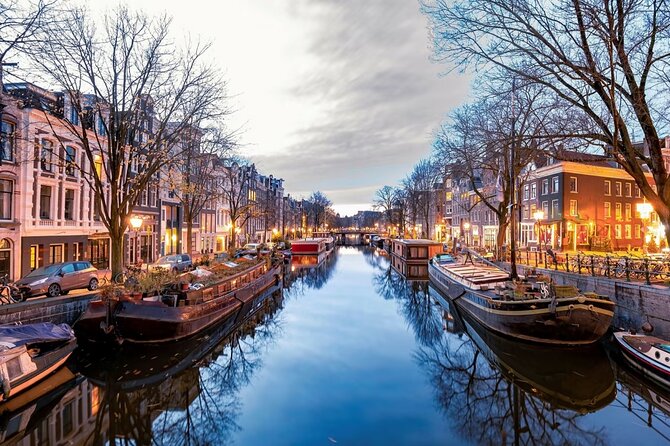
At $30 per person, the tour sits in a reasonable range for a guided two-hour city walk. You are paying for a live English-speaking guide, a planned route, and stories tied to specific locations. Food and drinks are not included, but that is not much of a drawback for a walking tour in central Amsterdam, where you can easily eat before or after.
The value depends on what you want from a ghost tour. If you want a polished scare attraction with actors and special effects, this probably will not satisfy you. If you want a well-told introduction to Amsterdam’s darker past, the price is easier to justify.
I especially like that the walk does not stay only on the most obvious tourist path. It includes famous places such as Dam Square and Nieuwe Kerk, then points out courtyards, streets, and details you might miss while walking alone. That combination gives you both orientation and discovery.
The two-hour length is also sensible. It is long enough to cover several distinct stories, but short enough to fit into an evening of sightseeing. The route involves walking and standing, so wear comfortable shoes and dress for Amsterdam’s weather. Rain and cold have not stopped the guides from telling the stories, but poor weather can affect your comfort and the mood of the experience.
Who should book this walk
I would recommend it to first-time visitors who want an unusual introduction to Amsterdam. The walk provides basic city history while adding stories about prisons, religious punishment, violence, and old medical practice. It can help you understand the center before you explore more museums and neighborhoods.
It also suits repeat visitors. You may have seen Dam Square and walked through central streets before, but the guide can point out details you missed and connect familiar buildings with less familiar stories.
Families with older children and teenagers may enjoy it, though the subjects include murder, imprisonment, dissection, and death. The tone is entertaining, but the material is not aimed at very young children.
You should think twice if you want a pure ghost experience. The tour is best described as haunted history. Several guides approach the subject with skepticism or balance supernatural tales with documented history. That is a strength for some people and a weakness for others.
Should you book Amsterdam’s Haunted History and Ghost Walking Tour?
Book it if you want local history with a dark twist, a compact route through central Amsterdam, and a guide who can explain more than the headline ghost stories. The best parts are the human stories at Spinhuis, the unexpected mood of Begijnhof, and the way the Waag links science with mortality.
Skip it if you need constant scares, theatrical effects, or proof of paranormal activity. For everyone else, $30 buys an entertaining two-hour walk that may change how you see familiar Amsterdam streets. Choose a later departure for a gloomier mood, or an earlier one for easier walking and more daylight.
FAQ
How long is the Amsterdam Haunted History and Ghost Walking Tour?
The tour lasts two hours.
How much does the tour cost?
The listed price is $30 per person.
Where does the tour meet?
Meet in front of Hotel Krasnopolsky, behind the monument at Dam Square. Your guide will be waiting there.
What language is the tour conducted in?
The live tour guide speaks English.
What places are included on the route?
The route includes Dam Square, Nieuwe Kerk, Spinhuis, Begijnhof, Blood Street, and the Waag.
Are food and drinks included?
No. Food and drinks are not included in the tour price.
Is the tour wheelchair accessible?
Yes, the activity is listed as wheelchair accessible.
More History Walks in Amsterdam
- Amsterdam Food and Cultural Tour with Tastings
★ 5.0 · 2,442 reviews - Amsterdam High-End Dutch Food & History Tour – Up to 8 guests
★ 5.0 · 482 reviews - Amsterdam: Historic City Sightseeing Canal Cruise
★ 4.5 · 444 reviews - Anne Frank and the Jewish History of Amsterdam Private Tour
★ 5.0 · 307 reviews
Newest Amsterdam write-ups
- Zaanse Schans: Half-Day Private Guided Tour★ 5.0 · 4 reviews
- Zaanse Schans: Private Cruise + Live Guide, Optional Drinks★ 4.7 · 26 reviews
- Zaanse Schans: Wooden Shoe Painting Workshop★ 4.9 · 23 reviews
- Amsterdam: Private Zaanse Schans Windmills and Volendam Trip★ 4.9 · 31 reviews
- Zaanse Schans: Pancake Restaurant Visit★ 4.5 · 26 reviews
- Amsterdam: Zaanse Schans E-Bike Tour with Windmills & Cheese★ 4.5 · 12 reviews
- Zaandam: Paint a Perfect Portrait workshop★ 5.0 · 5 reviews
- Volendam: Volendams Museum Entry Ticket★ 4.4 · 14 reviews
Amsterdam Ghost Tours, compared.

Amsterdam Haunted History and Ghost Walking Tour
Read our review →
Ghastly Grachten: ghost stories&dark history tour
Read our review →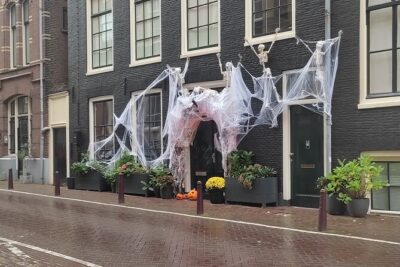
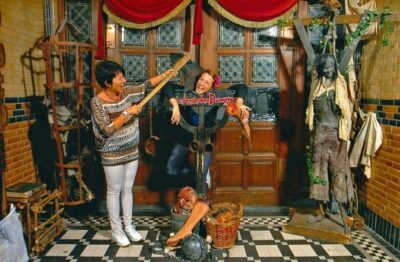
Amsterdam Ghost Hunt: Self-Guided Mystery Adventure
Read our review →Browse the lists this tour appears in