
Reviewed · MUSEUMS
Amsterdam: National Holocaust Museum Entry Ticket
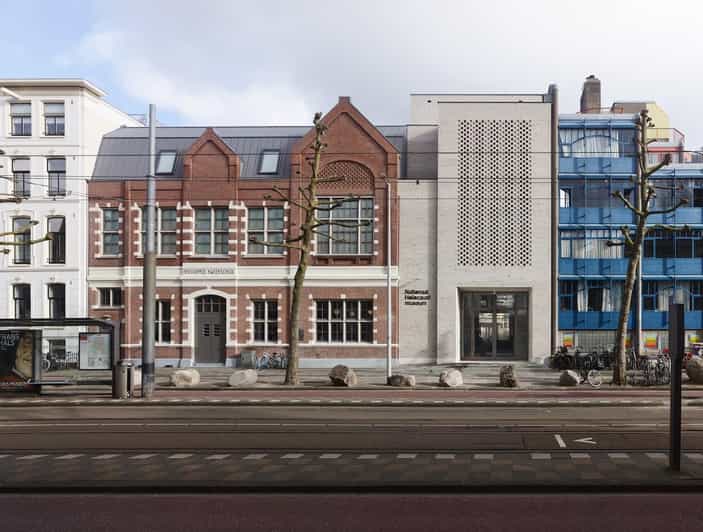
The most powerful part of this visit is the building itself. The National Holocaust Museum occupies the former Hervormde Kweekschool, linked to the wartime rescue of Jewish children from the nearby daycare and deportation point. I especially like the personal accounts and recognizable faces, which keep this history grounded in real lives, and the combined entry to the Hollandsche Schouwburg, which gives you a second important site nearby. The main drawback is simple: there is a great deal to read, hear, and absorb, so a short visit can feel rushed.
Give yourself several hours, not a quick museum stop. The presentation is clear, restrained, and emotional, with strong audio material and interactive holograms. Some visitors have found the route hard to follow, and reflective glass can make a few objects difficult to see, but the museum remains one of Amsterdam’s most serious and worthwhile historical visits.
Key points to know before you go
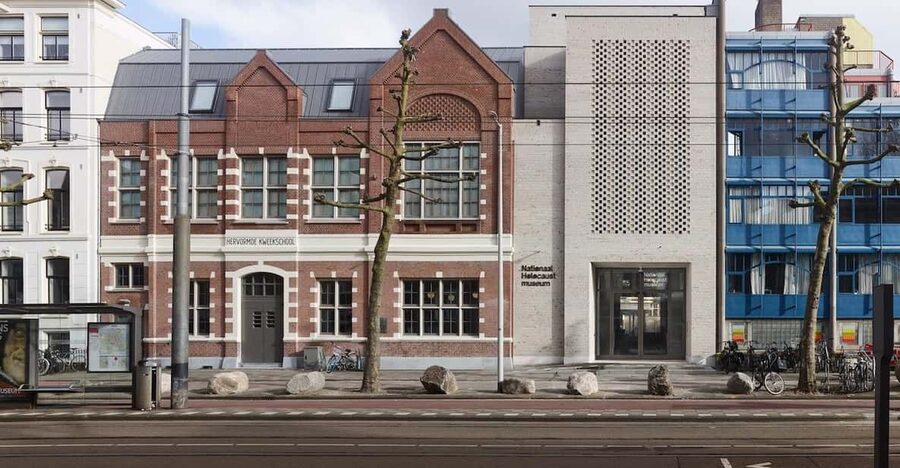
- The former Hervormde Kweekschool was part of a wartime rescue effort for Jewish children.
- The nearby Hollandsche Schouwburg is included, adding a second memorial site to your visit.
- Dutch Jewish life before the war receives attention, not just the years of persecution.
- Interactive holograms and audio material add personal voices and explanation to the displays.
- Three-quarters of Dutch Jews were killed during the Holocaust, a fact the museum presents directly.
- Allow half a day if you want time for the objects, written displays, recordings, and personal stories.
Entering the former Hervormde Kweekschool
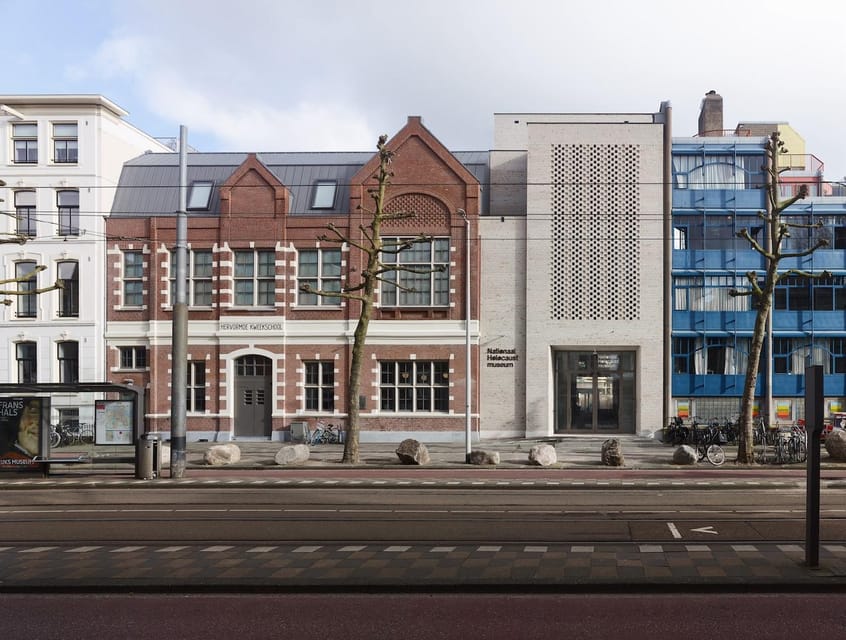
The National Holocaust Museum does not begin with an abstract history lesson. It begins in a building that played a direct role in the wartime story.
The former Hervormde Kweekschool was used as part of a rescue effort for Jewish children. During the Nazi occupation, a daycare next door became a gathering and deportation point. Henriëtte Pimentel, the daycare director, helped hundreds of children escape, including through the school.
That setting gives the museum unusual force. You are not simply looking at objects in a neutral gallery. You are learning about a place where decisions had immediate consequences for children and families.
I find this useful because it shows two sides of the same story. The building was connected to persecution, but it was also part of an organized attempt to save lives. The museum does not reduce the period to a simple story of victims and villains. It shows the pressure, the systems, the choices, and the human courage within them.
More museums and galleries in Amsterdam:
- Amsterdam: The Upside Down Museum Entrance Ticket
★ 4.4 · 9,506 reviews - Amsterdam: Red Light Secrets Museum Entry Ticket
★ 4.2 · 5,722 reviews - Amsterdam’s Weirdest Museum: Believe It or Not!
★ 4.5 · 4,086 reviews
Before the war: Jewish life in the Netherlands
The museum first helps you understand what was lost. Before the Second World War, Jewish and non-Jewish people in the Netherlands lived alongside each other with the same rights.
That part matters. Without it, the Holocaust can seem like a sudden event that happened to an isolated group. The displays instead show Jewish life as part of ordinary Dutch society, with families, work, schools, neighborhoods, and daily routines.
The museum’s approach gives victims a recognizable identity before they appear as names in a death toll. You are encouraged to think about people as individuals with homes, relationships, plans, and ordinary concerns.
This makes the later sections harder, but also clearer. The story is not only about what the Nazis did. It is about how a functioning society was gradually stripped away from people who had been part of it.
How persecution became a system
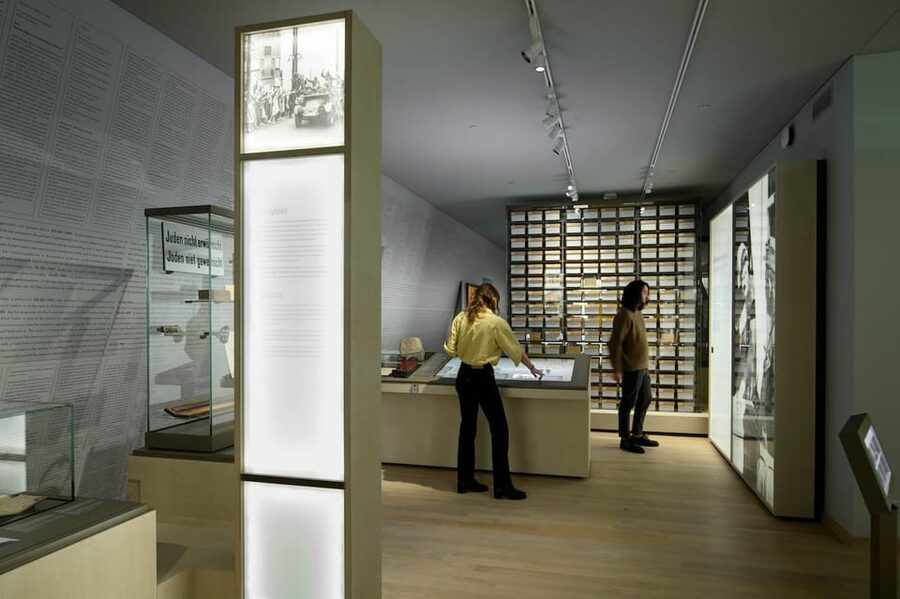
The museum explains the gradual process by which Nazi persecution took hold. The useful lesson is that mass murder did not appear without warning. It followed discrimination, restrictions, registration, exclusion, removal of rights, and deportation.
The displays show how systems can be used to target a population. Rules and official procedures may look dry on paper, but here they become steps in a process that ended in murder.
You will encounter photographs, written explanations, objects, and personal records. The material is serious and sometimes difficult to take in. The presentation remains controlled rather than sensational, which I appreciate. It gives the facts room to speak instead of trying to force an emotional response at every turn.
The scale is made clear. Nazi Germany and its collaborators murdered approximately six million Jews in Europe. In the Netherlands, about three-quarters of the Jewish population was killed.
Those numbers are essential, but the museum works to keep them from becoming just numbers. Individual stories and faces interrupt the statistics. That is one of the strongest parts of the visit.
Personal stories, artifacts, and interactive displays
The museum uses several ways to tell its story. You might read a personal account, study an object, listen to an audio section, and then encounter a digital presentation that places the material in context.
The interactive holograms are a notable feature. They allow you to ask questions and receive answers from recorded figures. This gives the material a more direct quality than a standard text panel, though it can also add to the amount of information you are trying to process.
The audio guide is another strong tool. It gives extra explanation as you move through the rooms and helps connect objects to the wider story. English material is available, but one visitor noted that some audio sections switched into Dutch. It is worth checking the language setting as you go.
The objects include items such as suitcases, portraits, and other personal materials. Some displays are behind glass, and strong reflections can make certain objects hard to see. This is a practical irritation in a museum where small details matter.
Some viewing areas are narrow enough for only two people at a time. If the museum is busy, you may need to wait or move on and return later. The ticket does not guarantee an empty gallery, and the time slot does not always prevent crowding.
A few more Amsterdam tours and tickets worth comparing
- Amsterdam: Heineken Experience Ticket
★ 4.6 · 30,055 reviews - Amsterdam: Rijksmuseum Entry Ticket
★ 4.7 · 25,535 reviews - Amsterdam: Icebar Entry Ticket with 3 Drinks
★ 4.2 · 14,562 reviews - Amsterdam: Keukenhof Ticket and Roundtrip Shuttle Transfer
★ 4.7 · 11,799 reviews
The Hollandsche Schouwburg memorial
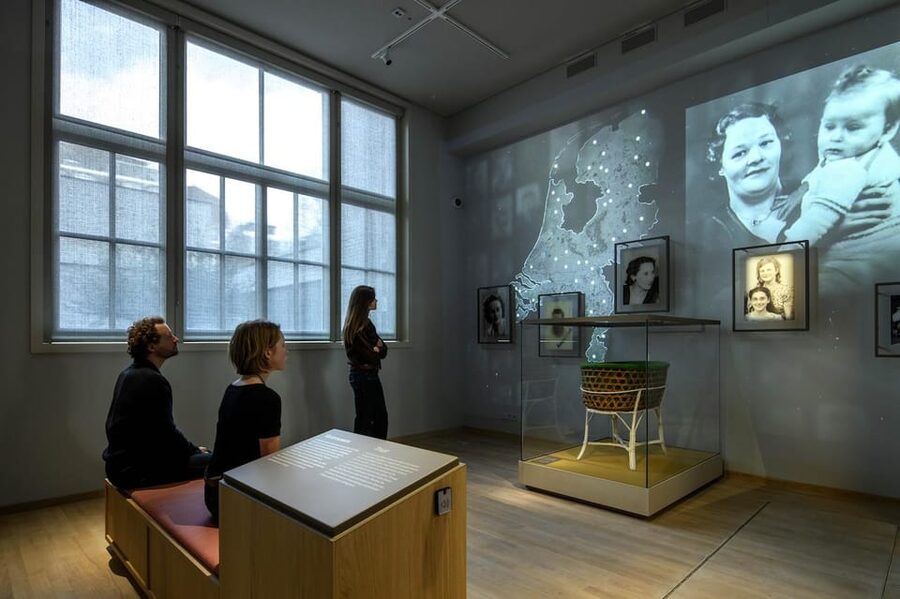
Your ticket also includes the Hollandsche Schouwburg National Holocaust Memorial. This former theater was used by the Nazis as a gathering point for Jewish people before deportation.
The two locations work well together. At the National Holocaust Museum, you learn about Jewish life, persecution, rescue, and national memory. At the Hollandsche Schouwburg, the subject becomes more concentrated around deportation and remembrance.
Plan the order according to your energy and schedule, but do not treat the second site as an optional extra. It is part of what makes the $24 ticket more useful than admission to only one museum.
The combined visit also helps you understand Amsterdam’s geography during the occupation. These are not distant historical sites. They are buildings in the city, connected to the streets and neighborhoods around them.
How Amsterdam remembers the Holocaust
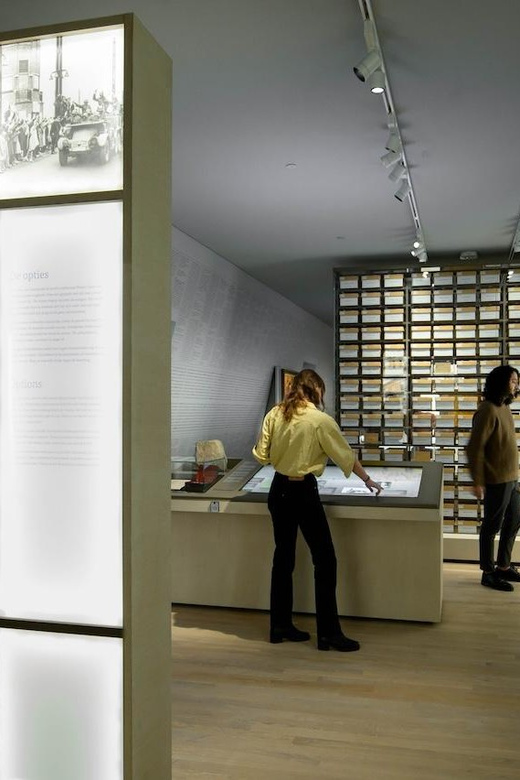
The museum also asks how the Netherlands handled the Holocaust after liberation. That makes the visit more than a record of wartime crimes.
National memory is never automatic. Countries decide which stories to tell, which buildings to preserve, which names to record, and how openly to discuss guilt, loss, resistance, and responsibility.
The exhibition examines how the Holocaust entered Dutch memory culture. This gives you a better sense of why a museum like this exists in a former school and why the connected memorial spaces matter.
I value this section because it moves beyond the question of what happened. It asks how later generations live with that knowledge. The subject is still painful, but the museum treats it as something that must be faced rather than softened.
How long should you plan?
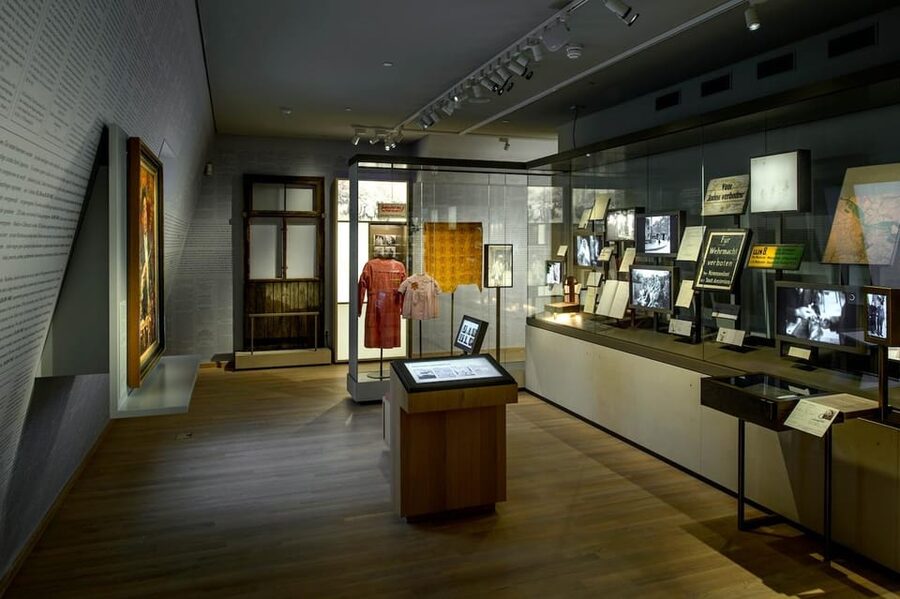
The ticket is valid for seven days from first activation. That does not mean the museum visit lasts seven days. It gives you flexibility to use the included admission over a longer period, which can be useful if you are visiting several Jewish Cultural Quarter sites in Amsterdam.
For the museum itself, I would set aside at least several hours. A half-day is sensible if you want to read the panels, listen to the audio material, use the interactive sections, and visit the Hollandsche Schouwburg without rushing.
The amount of material is the main reason. You can move through the building quickly, but you will lose much of the context. One particularly useful approach is to take a short break after the first major section, then continue with a clearer head.
The museum closes at a set time, and staff may ask you to leave promptly. Do not arrive near closing and expect to finish everything. One visitor had to leave before seeing all the material, while another found the amount of content almost overwhelming.
Is $24 good value?
At $24 per person, this is not the cheapest museum ticket in Amsterdam. The value depends on how much time you give it.
If you spend only an hour inside, the price may feel high because the museum is built for slower attention. If you use the ticket for both the National Holocaust Museum and the Hollandsche Schouwburg, and you allow several hours, the cost is fair for the amount of material and the importance of the locations.
The ticket also removes the need to choose between two connected sites. You get a fuller account of Jewish life before the war, Nazi persecution, rescue efforts, deportation, and later remembrance.
This is not a light sightseeing stop. It is best viewed as a major cultural visit, similar in weight to other memorial museums. The value lies in the quality of the presentation and the access to places directly tied to the story, not in the number of rooms you can cover.
Practical advice for a more useful visit
Go when you have enough mental space. Placing this visit between cheerful shopping and a busy dinner can be jarring. You may prefer to schedule it during a quieter part of the day.
Read at your own pace. There is no need to absorb every panel. Choose the sections that speak to you, listen to the audio material, and return to anything you want to understand better.
Use the museum as a place for attention, not speed. The displays give you faces, names, and everyday details that can be missed if you simply follow the route.
Photography is allowed, but use care. This is a memorial setting, and some displays concern murder, deportation, and the suffering of children. Keep photography quiet and respectful.
If you have limited mobility, the museum is wheelchair accessible. If you need a fully detailed accessibility plan, check the current arrangements before booking, since the supplied information confirms access but does not describe every room or facility.
The museum cafe is another practical plus. A visitor found it excellent, and it gives you a place to pause after the exhibition. I would not plan the entire day around the cafe, but it can help you avoid rushing straight into another activity.
Who will get the most from this visit?
This museum suits anyone who wants a serious account of the Holocaust in the Netherlands, especially if you are interested in how the story affected Dutch society and memory.
It is a strong choice for adults, older children, students, and anyone who prefers museums that explain events through personal records. The interactive displays may help younger visitors engage with the material, though parents should judge whether the subject is suitable for their children.
You will get the most from it if you enjoy reading and listening. The museum is not built around a single dramatic object or a short guided route. Its strength comes from the connections between many small pieces of evidence.
It may not suit you if you have only a brief window in Amsterdam or if you want a cheerful, low-effort attraction. The subject is painful, and the amount of material can be tiring. That is not a flaw in the history, but it is something to plan for.
Should you book the National Holocaust Museum ticket?
I recommend booking if you want to understand the Holocaust through the Dutch experience rather than through a broad European overview alone. The former Hervormde Kweekschool, the child rescue story connected to Henriëtte Pimentel, and the included Hollandsche Schouwburg give the visit a strong sense of place.
Book it when you can spare several hours and are ready for a quiet, serious museum visit. The personal stories, audio material, holograms, and careful presentation make the $24 price reasonable, especially when you use both included sites.
If your schedule is tight, choose another day rather than squeezing this into a rushed hour. The museum rewards patience, and the subject deserves it.
FAQ
Where is the National Holocaust Museum?
The meeting point is the National Holocaust Museum in Amsterdam, in North Holland, Netherlands.
What does the ticket include?
The ticket includes entry to the National Holocaust Museum and the Hollandsche Schouwburg National Holocaust Memorial.
How much does admission cost?
The listed price is $24 per person.
How long is the visit?
The ticket is valid for seven days from first activation, but the visit itself has no stated fixed duration. Plan several hours, and allow up to half a day if you want time for the displays and the second memorial site.
Is the museum wheelchair accessible?
Yes. The activity information states that the museum is wheelchair accessible.
Is photography allowed?
Yes, photography is allowed. You should take photographs respectfully because the museum is a memorial and contains sensitive material.
Does the museum use an audio guide?
Audio material is available, and it provides extra explanation throughout the museum. Check the language setting as you go, since some English sections have reportedly switched to Dutch.
Can I cancel the ticket?
Yes. You can cancel up to 24 hours in advance for a full refund. You can also reserve now and pay later, according to the booking conditions.
Newest Amsterdam write-ups
- Zaanse Schans: Half-Day Private Guided Tour★ 5.0 · 4 reviews
- Zaanse Schans: Private Cruise + Live Guide, Optional Drinks★ 4.7 · 26 reviews
- Zaanse Schans: Wooden Shoe Painting Workshop★ 4.9 · 23 reviews
- Amsterdam: Private Zaanse Schans Windmills and Volendam Trip★ 4.9 · 31 reviews
- Zaanse Schans: Pancake Restaurant Visit★ 4.5 · 26 reviews
- Amsterdam: Zaanse Schans E-Bike Tour with Windmills & Cheese★ 4.5 · 12 reviews
- Zaandam: Paint a Perfect Portrait workshop★ 5.0 · 5 reviews
- Volendam: Volendams Museum Entry Ticket★ 4.4 · 14 reviews
Museums, compared.

Amsterdam’s Weirdest Museum: Believe It or Not!
Read our review →
Van Gogh Museum Amsterdam Exclusive Tour w/ Reserved Entry
Read our review →
Moco Museum Amsterdam Admission Ticket with Banksy and more
Read our review →
Van Gogh Museum Tour Reserved Entry Semi Private
Read our review →Browse the lists this tour appears in