
Reviewed · ARTIS ZOO TICKETS
Amsterdam: ARTIS-Micropia Microbe Museum Entry Ticket
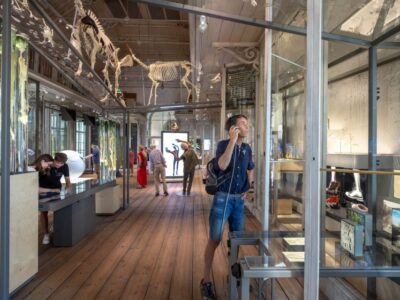
A museum devoted to organisms too small to see sounds like a short stop, but ARTIS-Micropia makes the invisible feel surprisingly real. In central Amsterdam, you can examine living microbes, watch lab work, scan your own body, and learn how bacteria and fungi affect food, health, animals, plants, and the wider natural world.
I like the museum’s hands-on design and its ability to interest both children and adults. The stamp-collecting activity gives younger visitors a reason to keep moving, while microscopes, mould cultures, animations, and large microbe sculptures offer enough substance for adults with an interest in biology. The main drawback is value: at about $21 per person, some visitors may find the museum small for the price, especially if they finish in 45 minutes.
Quick reasons to put Micropia on your Amsterdam plan
- See living microbes through microscopes and lab displays, rather than only reading about them.
- Scan yourself to discover microbes on and inside your body, an entertaining way to make biology personal.
- Collect microbe stamps throughout the museum, a simple feature that works especially well for children.
- Hear daily lab talks in front of the Laboratorium, adding a human and scientific touch.
- Visit beside ARTIS Zoo and the ARTIS-Groote Museum, with combination options for a larger day out.
- Plan 45 minutes to 2 hours, depending on how carefully you read and use each station.
Finding Micropia beside ARTIS Zoo
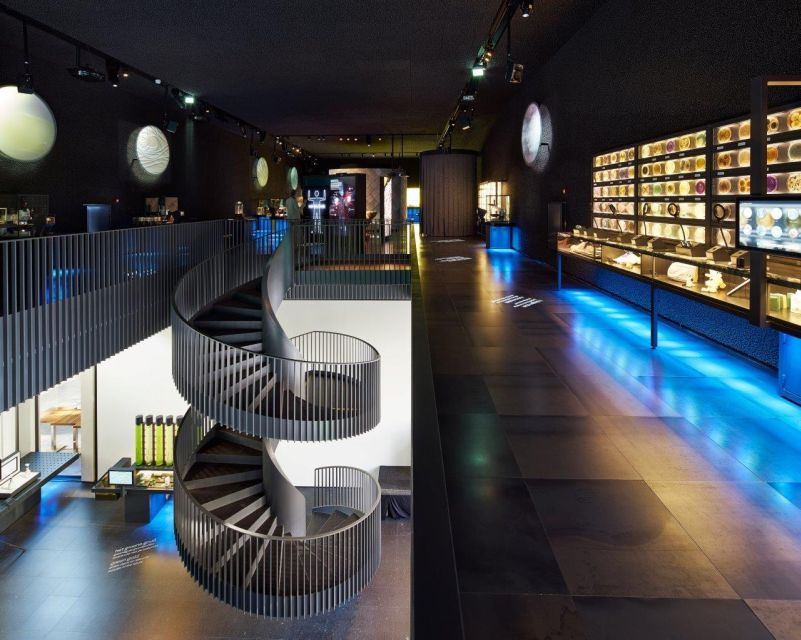
ARTIS-Micropia is at Plantage Kerklaan 38-40, about a 10-minute walk from Amsterdam’s city center. It sits in the ARTIS area, close to the Royal Zoo and the ARTIS-Groote Museum, so it works well as part of a museum-and-park day rather than as an isolated trip across town.
The location gives you useful flexibility. You can visit Micropia on its own, combine it with the ARTIS-Groote Museum, or add ARTIS Zoo if you want a full day with more space and outdoor time. One practical tip is to allow time around your booking, since the surrounding ARTIS neighborhood has cafés and a park where you can wait.
Admission to Micropia does not include ARTIS Amsterdam Royal Zoo or the ARTIS-Groote Museum. You need to arrange those separately, although combination tickets may be available. If you are comparing costs, look at the full price of your planned day rather than assuming the Micropia ticket covers the whole ARTIS site.
The museum is wheelchair accessible. Dutch and English are available, and the activity is suitable for independent visits rather than a long guided tour. The listed host or greeter languages are Dutch and English.
More Artis Royal Zoo tickets:
- Amsterdam: ARTIS Royal Zoo Entry Ticket
★ 4.7 · 4,696 reviews - Amsterdam: Artis Royal Zoo & ARTIS-Micropia Combo Ticket
★ 4.8 · 221 reviews - Amsterdam: ARTIS Royal Zoo and ARTIS Groote Museum Ticket
★ 4.7 · 33 reviews
What happens inside the museum
Micropia begins with a basic idea that becomes more interesting as you move through the displays: microbes are everywhere. They live in the air, on your skin, and in your gut. They help digest food, make certain foods taste good, support health, and keep natural systems in balance.
That broad focus matters because the museum does not treat microbes as only dangerous germs. You get a fuller picture. Some microbes can cause illness, but many are useful or necessary. The museum connects them to ordinary life, so the subject feels less like a school lesson and more like an explanation of the world you already inhabit.
The museum uses several ways to present the material:
- Living microbes and visible cultures
- Microscopes and magnified views
- Interactive screens and digital animations
- Microbe sculptures
- Stories from laboratory staff
- Displays that connect microbes with humans, plants, animals, and food
You can spend less than an hour moving quickly through the main exhibits, or stay close to two hours if you read the information and try each interactive station. The difference comes down to your curiosity and the crowd around the most popular displays.
The body scan is the museum’s most personal exhibit
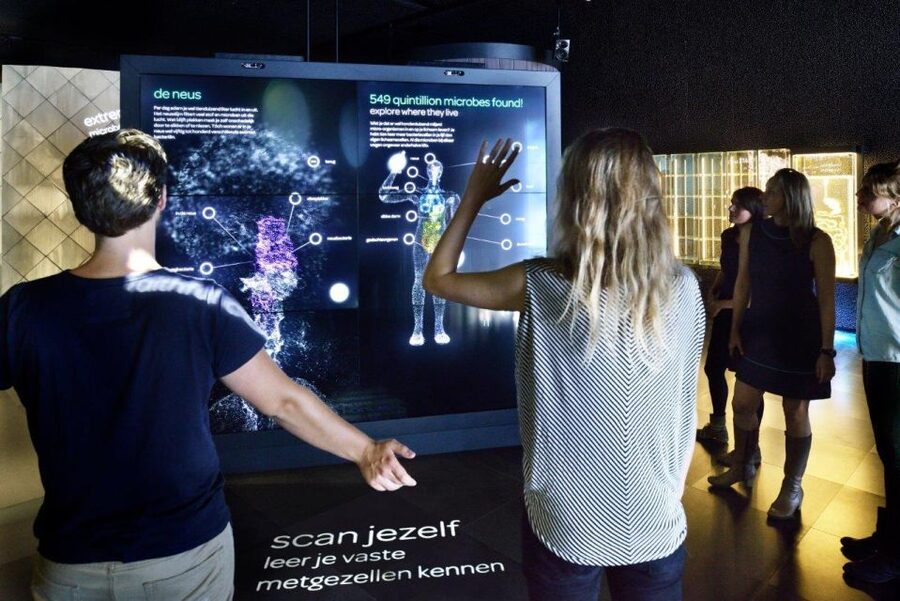
One of Micropia’s best-known activities lets you scan yourself and discover the microbes living on and inside your body. It is a clever way to shift the subject from something distant and microscopic to something immediate.
You should expect the results to be a little alarming at first. The point is not that your body is dirty or unhealthy. It is that a human body is home to many tiny organisms, and that this is normal. The display makes the relationship easier to understand than a paragraph about the human microbiome would.
This is also a good stop for families because children can take part instead of standing in front of a panel. Adults who already know a little biology may find the body scan familiar, but it still gives the museum a memorable centrepiece.
Microscopes, mould, and the visible side of tiny life
The microscopes are central to the experience. They let you look at organisms that would otherwise remain hidden, making the science more direct than a standard natural-history display.
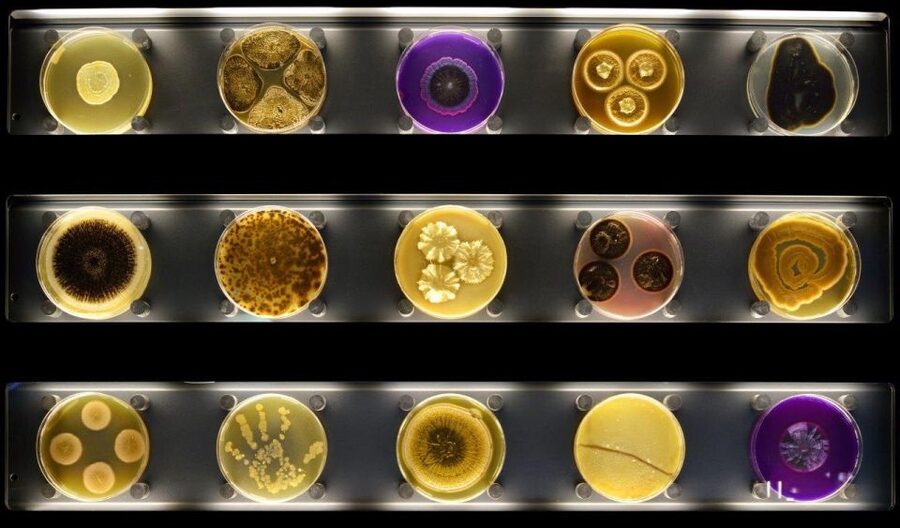
You might also see plates with growing mould. These displays can be thrilling and slightly unsettling, especially when you remember that the organisms are alive and changing. They show the museum’s approach well: the subject is scientific, but it is also visual, tactile, and sometimes a little strange.
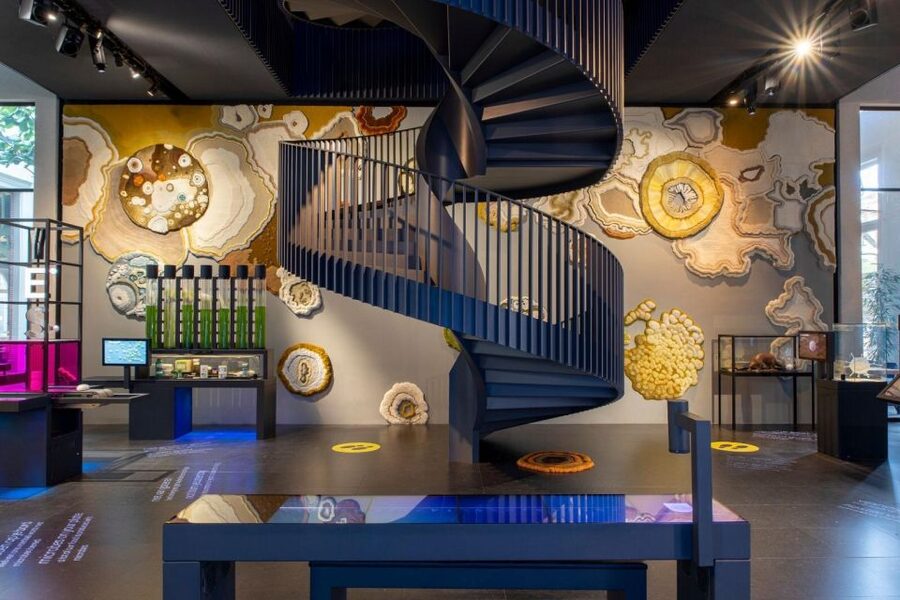
Large sculptures of bacteria and viruses help with scale. Since many microbes are too small for ordinary vision, a physical model gives you a mental picture of their shape and structure. The animations and visual effects add another layer for children and for anyone who finds dense scientific text tiring.
The museum’s lab area is visible as you walk around. Daily lab talks take place in front of the Laboratorium, so check the schedule when you arrive if you want to hear more from the people working with the science. No individual guide names are provided for this activity, and it is better to think of the talks as short museum presentations than as a full guided tour.
More museums and galleries in Amsterdam:
- Amsterdam: The Upside Down Museum Entrance Ticket
★ 4.4 · 9,506 reviews - Amsterdam: Red Light Secrets Museum Entry Ticket
★ 4.2 · 5,722 reviews - Amsterdam’s Weirdest Museum: Believe It or Not!
★ 4.5 · 4,086 reviews - Amsterdam: Van Gogh Museum Ticket and City Canal Cruise
★ 4.6 · 3,899 reviews
Stamp collecting keeps children moving
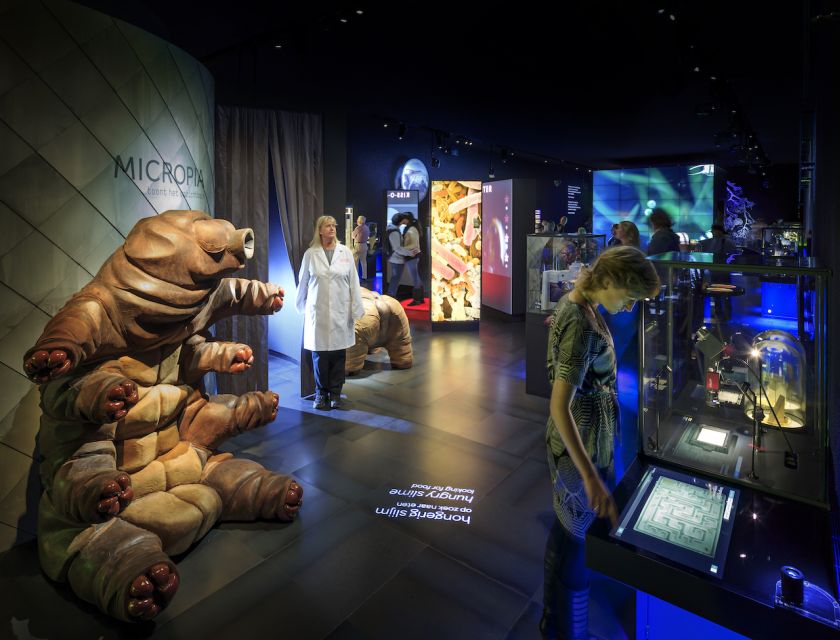
Micropia gives children a microbe stamp card to complete as they explore. The goal is simple: find the stations and collect all the stamps.
This small feature has real value. A museum about bacteria, fungi, and microorganisms can feel abstract to an eight-year-old, but a stamp hunt turns the visit into a mission. It also helps families move through the displays without forcing children to read every panel.
The recommended age is 8 and older. That seems sensible, since younger children may enjoy the images and machines but may not follow the scientific explanations. Children from 0 to 12 can enter free, which improves the value for families, especially when adults are also combining the visit with other ARTIS attractions.
During spring break, the museum offers a free Micro Mission and creative workshop. The Micro Mission explores how plants, animals, and microbes work together in nature. It is available every day during spring break from 10 a.m. to 5 p.m. and can be collected at the ticket desk.
If you are visiting outside spring break, do not assume those extras will be available. The regular stamp activity and permanent displays remain the main reason to visit.
Why adults without children can enjoy it
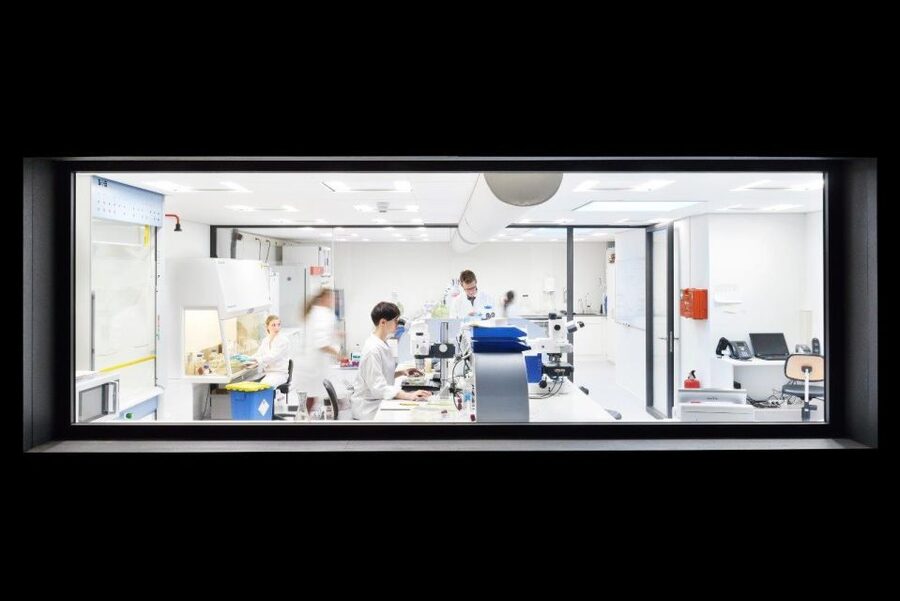
Micropia is clearly family-friendly, but it is not only a children’s museum. Adults with an interest in biology, medicine, food, or environmental science have plenty to examine.
The museum explains how bacteria and fungi affect the environment, how gut microbes help with digestion, and how organisms depend on one another. It also uses detailed illustrations and factual displays rather than reducing everything to a novelty.
I would especially recommend it to anyone who has already visited a science museum and wants something more focused. The subject is narrow, but the museum keeps changing the angle: body, food, nature, laboratory work, and the close relationship between large organisms and tiny ones.
That said, your interest level matters. If microbiology leaves you cold, you may finish quickly. Some displays require reading, and the subject does not offer the broad variety found in a general science museum. The museum works best when you are willing to stop and ask why these organisms matter.
How long should you allow?
The activity is valid for one day, but that does not mean you need a full day inside Micropia. A quick visit can take around 45 minutes. If you read the information, use the interactive stations, watch the displays, and attend a lab talk, allow closer to two hours.
That range is useful when planning your Amsterdam schedule:
- 45 to 60 minutes: A quick look at the main exhibits and body scan
- Around 90 minutes: Time for most interactive stations and some reading
- Up to 2 hours: A careful visit with lab content, displays, and activities
You can combine Micropia with the zoo or ARTIS-Groote Museum if you want more value from the journey to Plantage Kerklaan. A coffee or sandwich near the ARTIS grounds also gives you a simple break between indoor and outdoor attractions.
The museum is open daily from 10 a.m. to 5 p.m. Holiday hours differ slightly: it opens from 9 a.m. to 5 p.m. on December 24, 25, and 26, from 9 a.m. to 4 p.m. on December 31, and from 10 a.m. to 5 p.m. on January 1.
Is the $21 ticket good value?
At $21 per person, Micropia is not a bargain if you measure value only by floor space or visit length. It is a relatively focused museum, and you may complete it in under an hour if you move quickly.
The price makes more sense if you use the interactive features, attend a lab talk, and spend time with the microscope and body scan. It also becomes easier to justify when children aged 12 and under enter free. A family with two adults and children can get more from the visit than the adult ticket price first suggests.
The museum is also unusual. It is described as the world’s only museum dedicated to microbes, so you are not paying for another general collection of paintings, animals, or old objects. You are paying for a specialised experience that is difficult to duplicate elsewhere.
Still, I would compare it with your other Amsterdam plans. If you want a long museum visit, Micropia may feel brief. If you enjoy science and prefer interactive exhibits over traditional galleries, the focused subject is part of its appeal.
Small practical points worth knowing
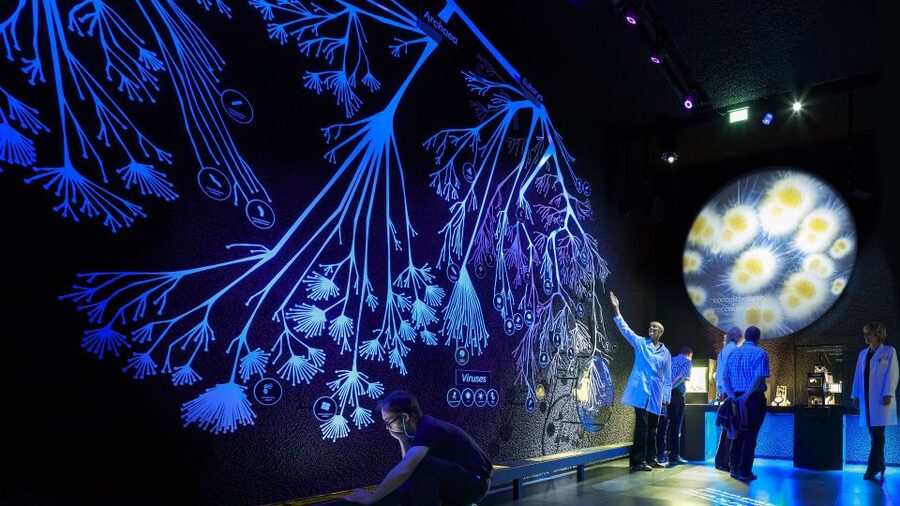
The museum is open daily, and the stated visit is valid for one day. You can cancel up to 24 hours before the visit for a full refund, and the reserve-now, pay-later option can help if your Amsterdam schedule is still changing.
Children up to age 12 enter free, and age 8 or older is the recommended range. The museum is wheelchair accessible, and Dutch and English are available.
There is one unglamorous detail worth noting: cleanliness in the toilets has been criticised. That does not change the exhibits, but it is a fair reason to manage expectations. The gift shop is another small stop, with reasonably priced items available if you want a souvenir connected to the subject.
Who should book ARTIS-Micropia?
I would book it for families with school-age children, science-minded adults, biology students, and anyone who enjoys museums where you can operate something rather than only look at objects. The stamp hunt gives children a clear task, while the lab displays and body scan keep the visit interesting for adults.
It also suits a rainy Amsterdam day, since the museum gives you a compact indoor activity close to the city center. Pair it with the ARTIS-Groote Museum if you want to think about the links between humans, animals, plants, and microbes. Add the zoo if you want a longer day.
I would skip it if your schedule is very tight, you dislike science displays, or you expect a large museum with hours of galleries. At $21, the cost requires some interest in the subject. For the right visitor, though, Micropia offers something rare: a clear, playful look at the organisms that quietly shape everyday life.
FAQ
Where is ARTIS-Micropia located?
ARTIS-Micropia is at Plantage Kerklaan 38-40 in Amsterdam, about a 10-minute walk from the city center.
What does the ticket include?
The ticket includes admission to ARTIS-Micropia.
Does the ticket include ARTIS Zoo?
No. Admission to ARTIS Amsterdam Royal Zoo is not included.
Does the ticket include the ARTIS-Groote Museum?
No. Admission to the ARTIS-Groote Museum is not included, although combination tickets may be available.
How long is the visit?
The ticket is valid for one day. Most visits can take roughly 45 minutes to 2 hours, depending on how much time you spend reading and using the interactive displays.
Is Micropia suitable for children?
Yes. The recommended age is 8 and older, and children aged 0 to 12 can enter free. The stamp-collecting activity is designed to keep younger visitors engaged.
What are the opening hours?
Micropia is open daily from 10 a.m. to 5 p.m. Special holiday hours apply on December 24, 25, 26, 31, and January 1.
Is the museum wheelchair accessible?
Yes. ARTIS-Micropia is wheelchair accessible.
Can I cancel my booking?
Yes. You can cancel up to 24 hours in advance for a full refund. A reserve-now, pay-later option is also available.
Newest Amsterdam write-ups
- Zaanse Schans: Half-Day Private Guided Tour★ 5.0 · 4 reviews
- Zaanse Schans: Private Cruise + Live Guide, Optional Drinks★ 4.7 · 26 reviews
- Zaanse Schans: Wooden Shoe Painting Workshop★ 4.9 · 23 reviews
- Amsterdam: Private Zaanse Schans Windmills and Volendam Trip★ 4.9 · 31 reviews
- Zaanse Schans: Pancake Restaurant Visit★ 4.5 · 26 reviews
- Amsterdam: Zaanse Schans E-Bike Tour with Windmills & Cheese★ 4.5 · 12 reviews
- Zaandam: Paint a Perfect Portrait workshop★ 5.0 · 5 reviews
- Volendam: Volendams Museum Entry Ticket★ 4.4 · 14 reviews
Artis Zoo Tickets, compared.


Browse the lists this tour appears in