
Reviewed · MUSEUMS
Amsterdam: Houseboat Museum Entry Ticket
The most interesting part of this visit is the boat itself: the Hendrika Maria began as a 1914 cargo ship, then became a home for a family of four in 1967. Inside, the original 1970s interior still has its orange, yellow, and brown color scheme, making this feel more like a preserved home than a standard museum gallery. I like the practical details, especially the sailing mast and leeboard, and I like how clearly the museum shows the change from working freight barge to family residence.
The main drawback is size. This is a real houseboat, not a roomy museum, and you can see the whole roughly 80-square-meter interior quickly. Allow about 15 to 20 minutes with the audio guide, though a fast visit could take only five minutes. Steep stairs and tight spaces may also be uncomfortable for some people.
Key points to know before boarding
- A 1914 cargo ship became a family home in 1967, giving the museum two distinct stories to tell.
- The 1970s fittings remain in place, including the memorable orange, yellow, and brown decor.
- The original sailing mast and leeboard are still visible, linking the boat to its freight-carrying past.
- The visit is short and focused, usually around 15 to 20 minutes with the audio guide.
- The museum is interactive, with information about the boat and the people who lived aboard it.
- The $12 ticket is best for curious visitors, not for anyone expecting a large museum or a half-day attraction.
A cargo barge with a very different second life
Amsterdam’s canals are lined with houseboats, but the Houseboat Museum lets you see one from the inside. The boat is the Hendrika Maria, built in 1914 as a cargo ship and converted into a home in 1967.
That change is the heart of the experience. You are not just looking at a boat with a few household items inside. You are seeing how a working vessel was adapted for ordinary domestic life. The result is part transport history, part social history, and part time capsule.
The ship once carried freight to Scandinavian countries. Its sailing equipment was useful for that work, and the original mast and leeboard remain important clues to how the boat moved before it became a permanent home.
I like this setup because the history is easy to understand. The museum does not need a long lecture to explain the boat’s purpose. You can see the hull, the fittings, and the compact rooms, then picture the same space serving two very different roles.
More museums and galleries in Amsterdam:
- Amsterdam: The Upside Down Museum Entrance Ticket
★ 4.4 · 9,506 reviews - Amsterdam: Red Light Secrets Museum Entry Ticket
★ 4.2 · 5,722 reviews - Amsterdam’s Weirdest Museum: Believe It or Not!
★ 4.5 · 4,086 reviews
Inside the Hendrika Maria
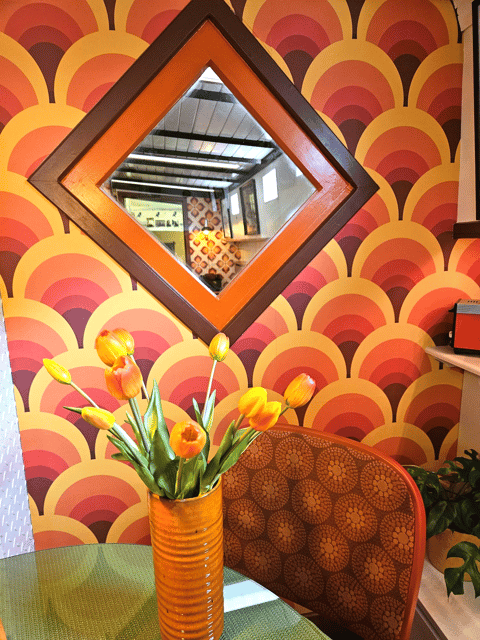
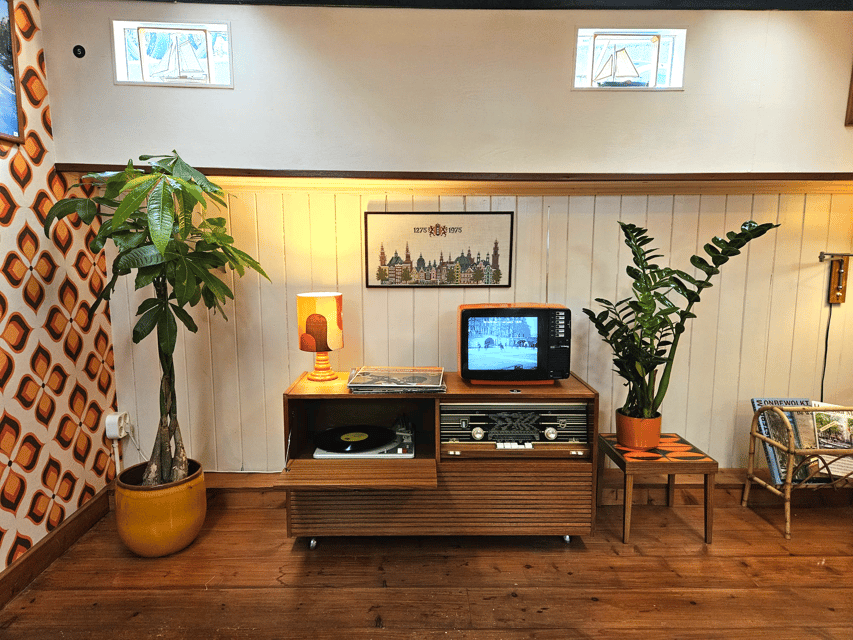
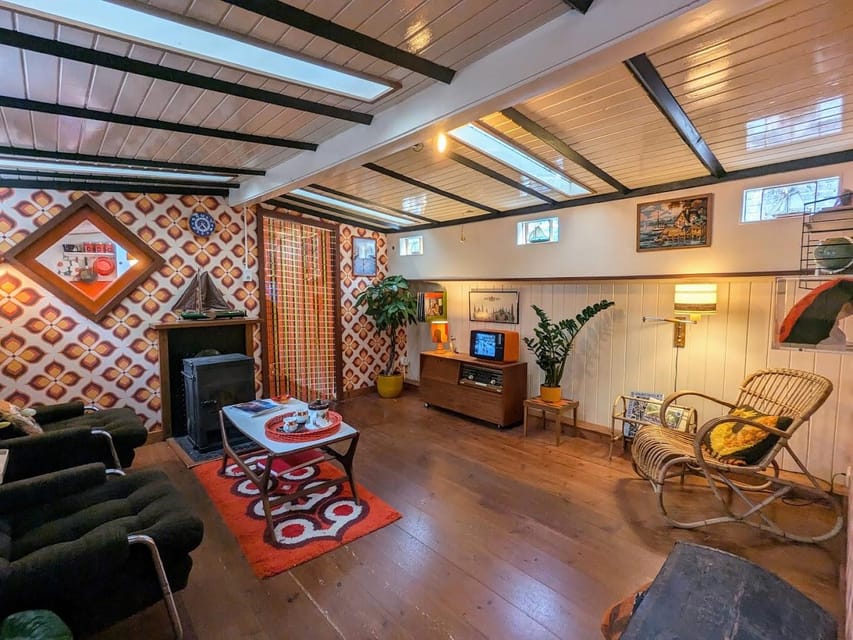
The interior is preserved from the 1970s, when the boat began to function as a regular house. Expect strong period colors, with plenty of orange, yellow, and brown. If you prefer sleek modern design, this may look dated. That is exactly why it works.
The decor gives the visit a clear sense of time. You are not walking through a freshly remodeled houseboat designed to look old. You are seeing the interior as it was used during the boat’s early years as a home.
The space is compact, so each part of the interior matters. A family of four lived aboard the ship, and the small rooms make that fact easier to grasp. You can begin to understand the daily compromises involved in living on a boat: limited room, steep stairs, and a layout shaped by the vessel’s older working life.
There is no need to rush, but you should not expect a long series of rooms. The museum is small enough to see in one short visit. An audio-guided walk usually takes around 15 to 20 minutes, while a quick look can be over in five minutes.
That difference matters when you judge the price. At $12 per person, the ticket is reasonable if you value a focused historical stop and enjoy unusual interiors. It is less convincing if you want a large museum with several hours of exhibits.
Seeing the boat’s working past
The mast and leeboard are among the most useful details on board. They show that the Hendrika Maria was once a sailing freight vessel, not simply a houseboat built for canal living.
The boat traveled toward Scandinavian countries for freight transport, so these features had a practical purpose. The mast helped with sailing, while the leeboard helped the vessel move through the water. You do not need a technical background to appreciate them. Their presence connects the household you see inside with the ship’s earlier work.
This is where the museum adds value beyond a quick look at a floating home. The boat has a working history, then a domestic history. You can follow that story from commercial transport to residential use without leaving the vessel.
The museum also explains the people who lived aboard. The family of four is not treated as an abstract example. Their use of the space helps you read the rooms and imagine how the boat operated as a home.
A short, hands-on museum visit
The museum uses interactive material and an audio guide to explain the boat and its residents. The information is available in English, French, Traditional Chinese, German, Spanish, Portuguese, Italian, and Dutch, so you can choose the language that suits you.
This is a self-contained visit rather than a long guided tour. You move through the boat at your own pace, stopping to look at the preserved interior and the historical details. The format suits people who prefer to explore independently.
I would plan it as one stop in a canal-side walking day. It can fit before or after another Amsterdam sight because the visit is short. You do not need to set aside an entire morning or afternoon.
Still, do not treat the short duration as a flaw by itself. Some small museums are worthwhile because they explain one subject clearly. The Houseboat Museum offers that kind of compact experience. Its value comes from the preserved boat, not from the number of rooms or exhibits.
The interactive material also helps prevent the visit from becoming a simple photo stop. You can learn how the vessel was used, how it changed, and what daily life was like on board.
A few more Amsterdam tours and tickets worth comparing
- Amsterdam: Heineken Experience Ticket
★ 4.6 · 30,055 reviews - Amsterdam: Rijksmuseum Entry Ticket
★ 4.7 · 25,535 reviews - Amsterdam: Icebar Entry Ticket with 3 Drinks
★ 4.2 · 14,562 reviews - Amsterdam: Keukenhof Ticket and Roundtrip Shuttle Transfer
★ 4.7 · 11,799 reviews
Tight rooms and steep stairs
The limitations are plain. This is a genuine houseboat, so the interior is narrow and space may be limited. You will not have the open walkways or wide galleries found in a conventional museum.
The stairs are steep, too. That can make the visit unsuitable for some people, especially anyone who has difficulty with stairs or prefers plenty of room to move around. The supplied information does not promise step-free access, so you should consider the boat’s physical layout before booking.
Photography is allowed, but flash photography is not. That is a sensible rule inside a small preserved interior, where flash can disturb the atmosphere and other people’s visits. Bring a camera if you like, but keep the flash switched off.
The tight space also affects busy periods. No group-size information is provided, so I would not assume the boat will feel spacious if several people arrive at once. If you dislike confined interiors, the museum may be better appreciated as a quick, focused visit rather than a leisurely stop.
Is the $12 ticket good value?
The price is $12 per person. For Amsterdam, that is a modest admission fee, but value depends on what you want from the visit.
I think the ticket works well for three kinds of people. First, it suits anyone interested in houseboats and canal life. Second, it is a good choice for visitors who enjoy historic interiors from the recent past. Third, it works for anyone looking for a short attraction with a clear story.
The preserved 1970s decor is the main value. You are paying to enter an actual historic boat and see its residential conversion from close range. The mast, leeboard, and freight background add useful context, so the experience is not only about furniture.
The price feels less attractive if you measure value by time alone. A fast visitor can finish in five minutes, and even a slower audio-guided visit may take only 15 to 20 minutes. If you need several hours of entertainment from every ticket, spend your money elsewhere.
I would also avoid comparing this with a full canal cruise. The museum does not promise a ride, hotel pickup, drinks, or a broad tour of Amsterdam’s waterways. You are buying entry to one boat, not a moving sightseeing experience.
Who will enjoy this most?
I would recommend the museum to couples, solo visitors, families with older children, and anyone drawn to unusual local history. The compact setting makes the story easy to follow, and the historic interior gives children something concrete to look at rather than a row of objects behind glass.
It is also a good choice for design fans who enjoy period interiors. The orange, yellow, and brown color scheme is not subtle, but it makes the 1970s character memorable. You can see how the boat was adapted as a home without losing its original identity as a vessel.
People with an interest in working boats will get extra value from the mast, leeboard, and freight history. The museum explains how the ship traveled before its residential conversion, which gives the interior more meaning.
I would be more cautious if you have limited mobility, dislike steep stairs, or feel uncomfortable in confined spaces. I would also skip it if you want a major museum with a long route through many exhibits.
How to fit it into your Amsterdam day
The ticket is valid for a one-day visit, with starting times based on availability. The activity details do not provide a fixed visit time, so check the available options when booking.
Because the stop is short, you can place it between larger plans. Allow extra time for getting to the boat and for moving through the interior, but do not build your whole day around it. The museum works best as a compact addition to a canal-area itinerary.
The booking terms are flexible. You can cancel up to 24 hours before the visit for a full refund, and reserve now while paying later. Those options are useful if your Amsterdam schedule is still changing, though they do not alter the museum itself.
No food or drinks are included, and there is no hotel pickup or drop-off. Think of this as a simple admission ticket. You arrange your own way there and combine the visit with nearby plans.
My call: book it for the boat, not the length
I would book the Houseboat Museum if you like real working vessels, preserved interiors, or the everyday side of Amsterdam’s canal culture. The Hendrika Maria offers a clear and unusual story: freight ship, sailing vessel, then home for a family of four.
I would not book it expecting a major attraction or a long afternoon activity. The visit is small, and five minutes is possible if you move quickly. At $12, it is a fair short stop for the right person, but not a must-see for every Amsterdam itinerary.
The best reason to go is the chance to step inside a real historic houseboat and see its 1970s home interior intact. If that idea interests you, the short visit should feel focused rather than disappointing. If you mainly want duration, space, or a full tour of Amsterdam’s canals, choose another activity.
FAQ
What is the Houseboat Museum?
It is a museum inside the Hendrika Maria, a 1914 cargo ship converted into a residential houseboat in 1967.
How long does a visit take?
A visit can take about 15 to 20 minutes when following the audio guide. A very quick visit may take only five minutes.
What can I see inside the boat?
You can see the original 1970s residential interior, learn how a family of four lived aboard, and view the boat’s original sailing mast and leeboard.
Is the museum interactive?
Yes. The visit includes interactive information about the boat and the people who lived on it.
Is the boat suitable for people with limited mobility?
The boat has steep stairs and limited space, so it may not be suitable for everyone. The available information does not confirm step-free access.
Can I take photographs?
Yes, photography is allowed. Flash photography is not permitted inside the museum.
What languages are available?
Host or greeter support is listed in English, French, Traditional Chinese, German, Spanish, Portuguese, Italian, and Dutch.
Does the ticket include food, drinks, or hotel transport?
No. Food, drinks, hotel pickup, and hotel drop-off are not included.
Can I cancel the booking?
Yes. You can cancel up to 24 hours in advance for a full refund. You can also reserve now and pay later.
Newest Amsterdam write-ups
- Amsterdam: Jordaan District Tour with a German guide★ 5.0 · 62 reviews
- Amsterdam: Keukenhof Tulip Garden and Giethoorn Experience★ 4.8 · 131 reviews
- Jordaan, Anne Frank and Leidseplein tour in English★ 4.6 · 29 reviews
- Amsterdam Jewish Quarter walking tour★ 4.4 · 4 reviews
- Liberal Amsterdam: Small-Group Walking Tour & Anne Frank VR★ 5.0 · 13 reviews
- Amsterdam: House of Bols Entry Ticket and Nightlife Ticket★ 4.0 · 6 reviews
- Amsterdam: Introduction walking tour★ 4.7 · 6 reviews
- Amsterdam: High Wine at wine bar Paskamer, 3-rounds★ 4.6 · 10 reviews
Museums, compared.



Amsterdam’s Weirdest Museum: Believe It or Not!
Read our review →

Van Gogh Museum Amsterdam Exclusive Tour w/ Reserved Entry
Read our review →
Moco Museum Amsterdam Admission Ticket with Banksy and more
Read our review →
Van Gogh Museum Tour Reserved Entry Semi Private
Read our review →Browse the lists this tour appears in