
Reviewed · AMSTERDAM HIDDEN GEMS TOURS
Amsterdam: Guided Off-The-Beaten-Track Walking Tour
Amsterdam’s best stories often sit between the headline sights. This 2.5-hour walking tour moves from Dam Square through the canals, western islands, and Jordaan, pairing famous places with small details about canal houses, shipyards, houseboats, and daily life. I like the compact route and the chance to see Amsterdam beyond the usual postcard view.
I also like the very small group format, though the details give both a maximum of four and a maximum of six participants, so it is worth confirming the exact group size when booking. The German-only guiding is another key consideration: this is a good choice if you want the tour in German, but not if you need English.
Key points
- Dam Square opening: See the Royal Palace, National Monument, and Nieuwe Kerk before heading into quieter streets.
- Golden Age architecture: Learn to read Amsterdam’s narrow canal houses and their small decorative details.
- Western islands route: Walk past former shipyards, houseboats, and the newly designed Westerdoks.
- Jordaan finish: Visit the Noordermaarkt, Anne Frank House area, Westerkerk, and Homomonument.
- Useful local advice: Get suggestions for apple pie, drinks, dinner, ice cream, herring, shops, and the 9 Straatjes.
- German-speaking guide: Recent guide names include Anna, Natascha, and Fred.
Starting at Beursplein, close to Central Station
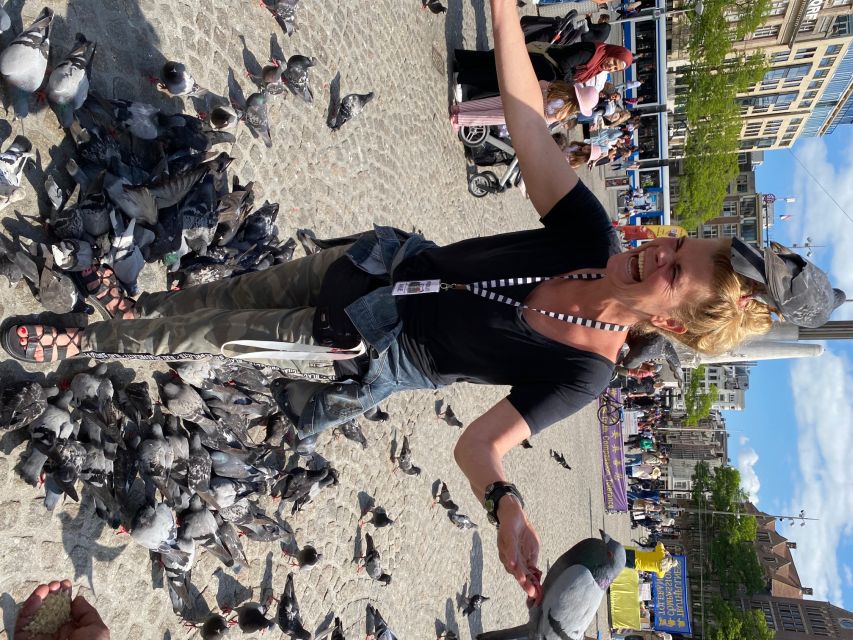
The meeting point is Beursplein on the Damrak, about 350 meters from Amsterdam Central Station. Look for a guide wearing a black and white striped band around the neck. This is a useful starting point because you can reach it easily after arriving by train, and the walk begins right in the historic core.
The route lasts 2.5 hours, so wear shoes that can handle Amsterdam’s sometimes uneven streets. Bring water, sunscreen, and comfortable clothing. The tour runs rain or shine, which makes a rain jacket a sensible addition even though it is not listed among the required items.
The experience is offered in German. That matters more than it might first appear. Amsterdam’s story includes a good deal of architectural and historical explanation, and you will get much more from the tour if you are comfortable following detailed commentary in German.
The group is described as small, with one set of information listing up to four people and another listing up to six. Either way, the format should feel more personal than a large city walk. It also allows some flexibility, including the possibility of accompanying you back to Beursplein or letting you finish in the Jordaan.
More off-the-beaten-track tours:
- Amsterdam: Hidden Gems & Highlights Guided Bike Tour
★ 4.8 · 1,404 reviews - Amsterdam: Off the Beaten Path Bike Tour in French
★ 4.9 · 1,193 reviews - Amsterdam City Highlights and Hidden Gems – Private & Custom Tour
★ 5.0 · 231 reviews
Dam Square and the making of Amsterdam
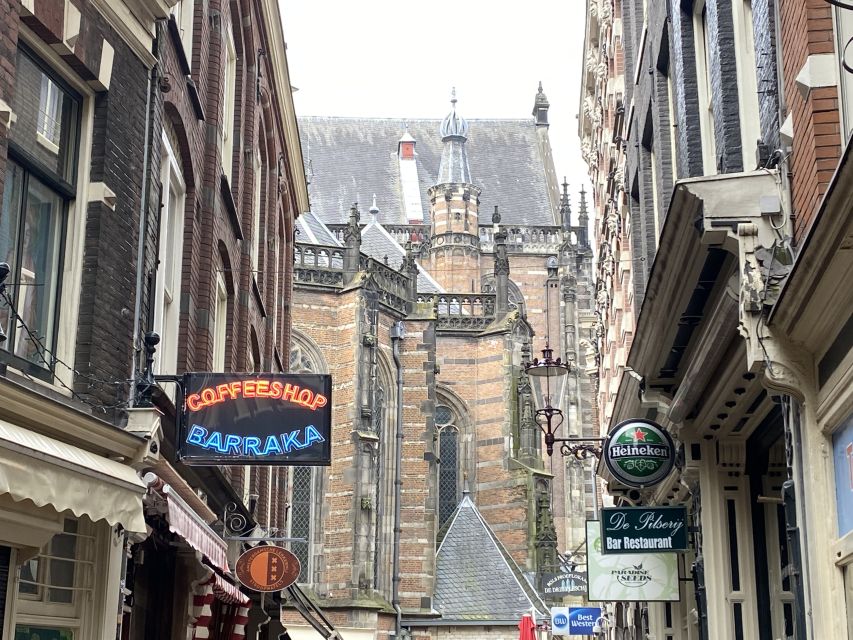
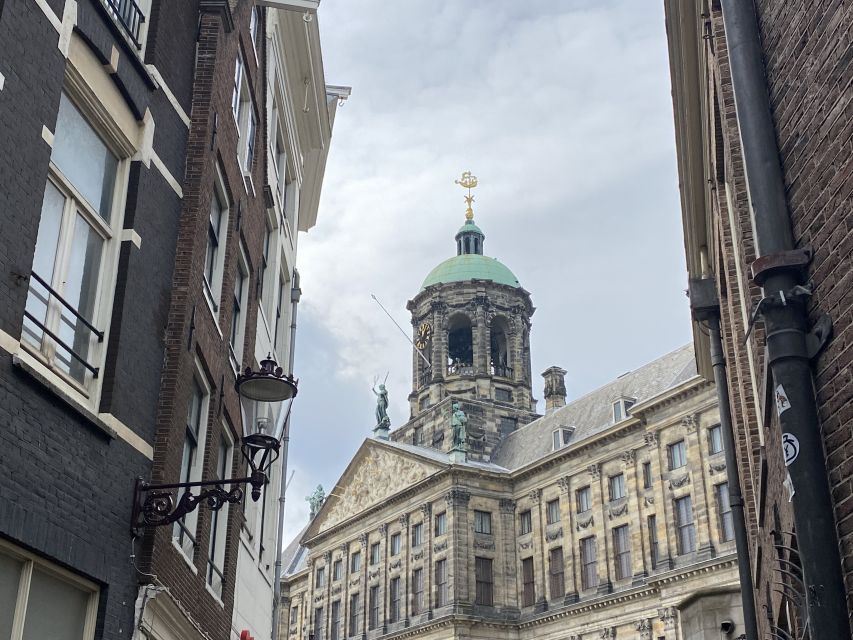
The first stop is Dam Square, where the guide introduces three of the city’s main landmarks: the Royal Palace, the National Monument, and the Nieuwe Kerk.
The Royal Palace helps explain Amsterdam’s change from a trading city to a center of Dutch monarchy. The National Monument gives the square a very different tone, with its remembrance of the Second World War. The Nieuwe Kerk adds centuries of religious and civic history, and, when it is open, you may be able to look inside.
I like this opening because it gives you a framework for the rest of the walk. Instead of treating Amsterdam as a collection of pretty canals, the guide connects the city’s wealth, government, trade, and royal past. The limitation is that an interior visit depends on opening conditions, so you should not book this walk solely for guaranteed access inside the palace or church.
After Dam Square, the route passes the Magna Plaza building and enters the Torensluis. This former bridge is tied to the older canal system and creates a natural point for discussing how Amsterdam expanded.
Canal houses and the Golden Age streets
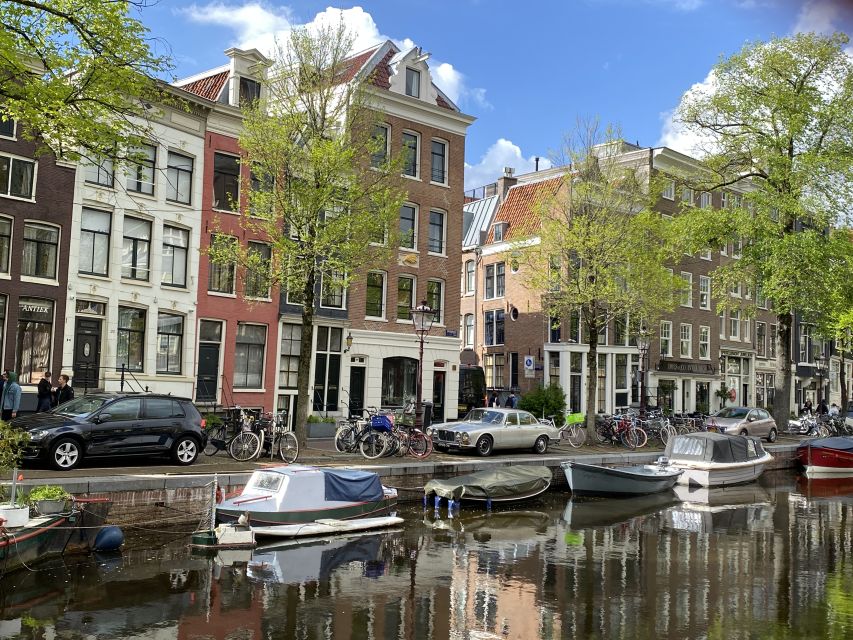
Amsterdam’s canals are more than scenery. Their layout reflects a city that planned outward as trade and population grew. Along Herengracht and Prinsengracht, you will see the long rows of seventeenth-century canal houses that made the city famous.
The guide draws attention to the details that are easy to miss when you are walking alone. Look up at the gables, window arrangements, brickwork, doorways, and decorative features. Many houses have a narrow frontage because property taxes and limited plots encouraged vertical building. The result is an architectural style that rewards slow looking.
This is one of the tour’s strongest features for a first visit. A guide can point out why the buildings look similar at a glance but differ in small, personal ways. You also learn how the money of Amsterdam’s Golden Age shaped the streets, not only through grand buildings but through warehouses, merchant homes, and practical canal planning.
The canals are also where timing and weather matter most. In rain, the route is still possible, but reflections, narrow sidewalks, and bicycle traffic call for care. Comfortable shoes and a willingness to keep moving are more useful here than dressed-up sightseeing clothes.
Torensluis, Herengracht, and Prinsengracht
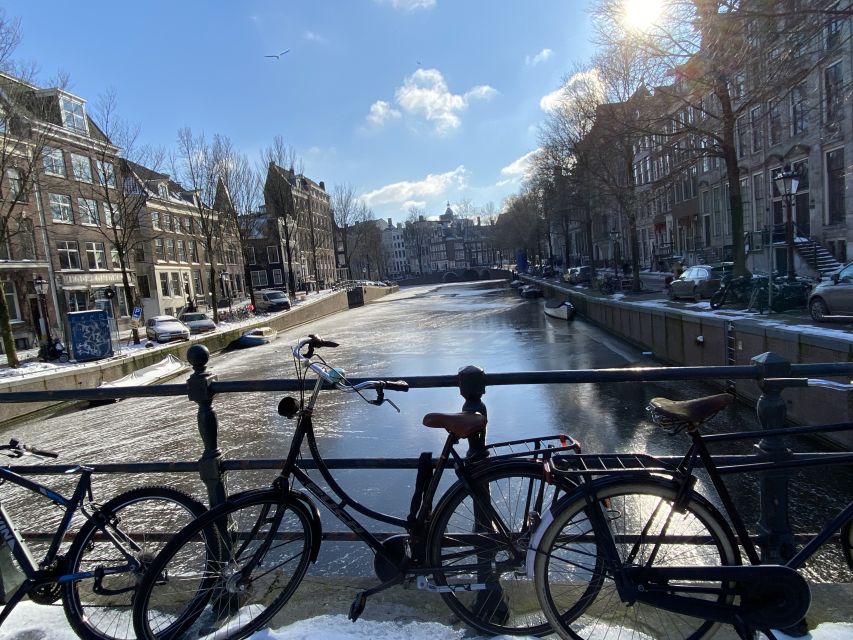
The walk follows some of Amsterdam’s best-known waterways, including Herengracht and Prinsengracht. These names can blur together when you first arrive, so having a guide explain the canal belt as you walk gives the area more order.
Torensluis is especially helpful as a transition point. It connects the modern city around Dam Square with the older canal network and offers a chance to hear how Amsterdam’s waterways were created and developed.
Prinsengracht leads toward the Jordaan and the Anne Frank House area. You will not be promised entry to the Anne Frank House, and this tour should not be treated as a museum ticket. Instead, you see the exterior and understand its place along the canal, alongside the Westerkerk and its tower.
The Westerkerk adds another layer to the route. Its tower and long history make it one of the most recognizable landmarks in this part of Amsterdam. The nearby smaller canals are less grand than the central canal belt, but they often feel more connected to neighborhood life.
More walking tours in Amsterdam:
- Anne Frank’s Story – Guided Walking Tour through Amsterdam
★ 5.0 · 11,619 reviews - Amsterdam: Life of Anne Frank and World War II Walking Tour
★ 4.8 · 10,467 reviews - Absolutely Amsterdam – the Essential Introductory Walking Tour
★ 5.0 · 3,629 reviews - Amsterdam: Anne Frank Guided Small Group Walking Tour
★ 4.8 · 2,722 reviews
The western islands and the new Westerdoks
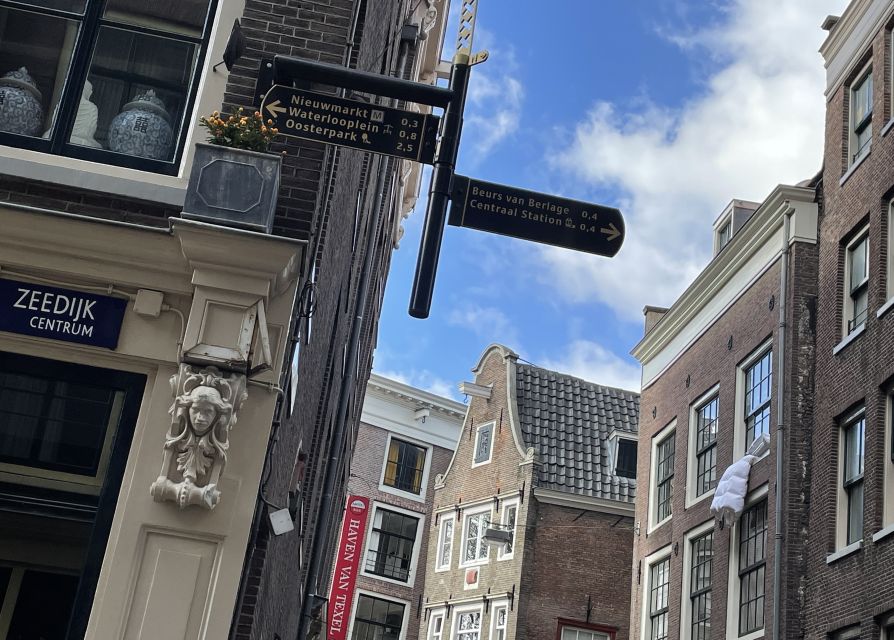
One of the more unusual parts of this walk is the turn toward the western islands. Here, the route moves away from the classic canal-house view and shows a side of Amsterdam shaped by small shipyards, working waterfronts, and residential life.
This section is valuable because it changes your sense of the city. Amsterdam is not only historic facades and crowded central streets. The western islands show how water, industry, housing, and recreation continue to share space.
You pass former small shipyards and houseboats, then curve back toward the newly designed Westerdoks. The modern development provides a clear contrast with the older canals. You can see how the city keeps adding housing and public spaces while preserving its relationship with the water.
There is even a playful mention that you can swim if you want. Treat that as a bit of local color, not as a promise of a supervised swimming stop or a formal part of the tour. The important point is the setting: the western islands give you a less predictable view of Amsterdam and a break from the standard center-city loop.
Noordermaarkt and the Jordaan
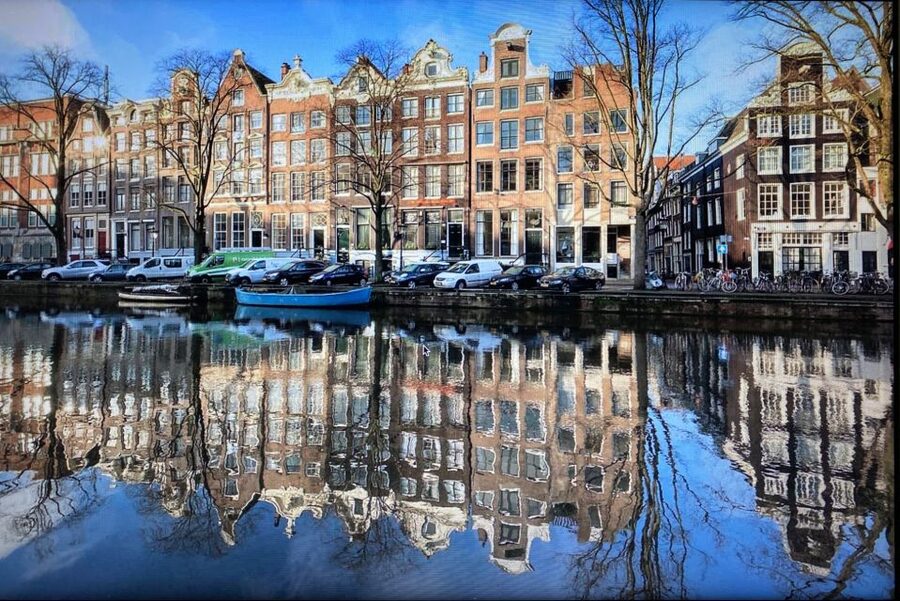
The route then reaches Brouwersgracht, where converted warehouses and older canal buildings lead toward Prinsengracht and the Jordaan. The Jordaan is often described as Amsterdam’s most charming neighborhood, but its appeal is easier to understand once you walk its smaller canals and side streets.
The Noordermaarkt is included when it is a market day. You may stroll among food and other market stalls, and the guide can point you toward local tastes such as herring, ice cream, and apple pie. Because the market depends on the day, it should be seen as a possible bonus rather than a guaranteed feature on every departure.
This is also a practical moment to ask for suggestions. The guide can recommend places for dinner, drinks, and what is described as Amsterdam’s best apple pie. Those tips may be especially useful if you take the walk on your first day, when you are still trying to sort good options from places aimed mainly at passing crowds.
The Jordaan is a good place to continue on your own after the tour. You can browse the 9 Straatjes, explore independent shops, eat nearby, or walk toward more polished shopping areas. The tour’s flexible finish gives you that choice instead of forcing everyone back to the original meeting point.
Anne Frank House, Westerkerk, and the Homomonument
Near Prinsengracht, the walk passes the Anne Frank House and Westerkerk. These are among Amsterdam’s most important sights, but the experience here is external and interpretive. If you want to enter the Anne Frank House, you need a separate arrangement and should not expect this walking tour to provide admission.
The nearby Homomonument is another meaningful stop. Seeing it after the central landmarks and canals broadens the story of Amsterdam beyond trade, monarchy, and architecture. It connects the route with the city’s public memory and LGBTQ history.
I appreciate that the tour does not simply race between famous facades. It links major sights with the ordinary streets around them. That makes the city easier to understand and gives you a better sense of where to return later.
What the guide adds
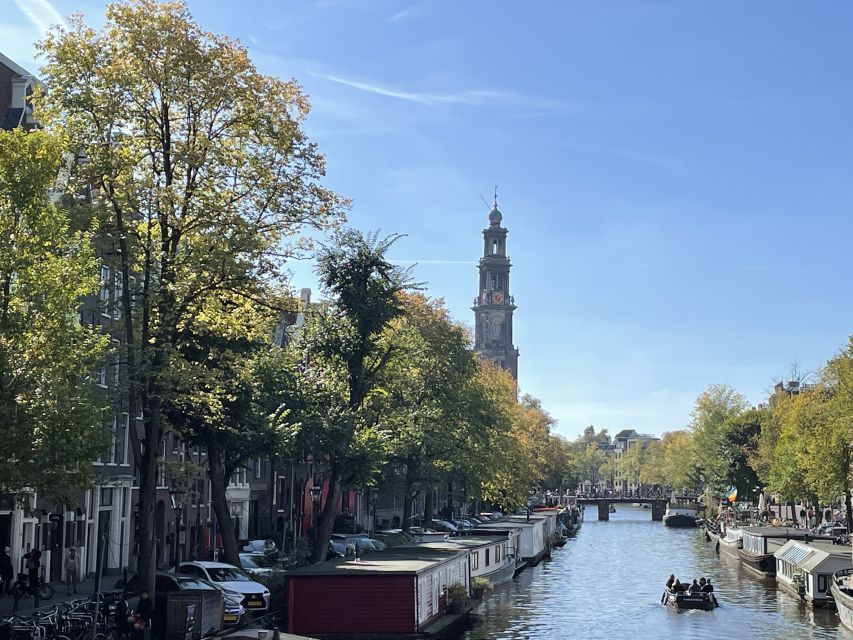
The guide is the main reason to choose this experience over walking the same route with a map. Recent guide names include Anna, Natascha, and Fred. Anna is described as friendly and focused on information beyond the standard facts. Natascha helped one participant get oriented during the first day in Amsterdam, while Fred was praised for his command of Amsterdam’s history and architecture.
Those details point to the tour’s strongest quality: explanation. You are not only shown the Royal Palace, canals, Jordaan, and Westerkerk. You are given links between them, from the city’s trading wealth to the form of its houses and the way the waterfront has changed.
The guiding style also appears personal rather than scripted. The small group supports questions and makes it easier to ask for restaurant or neighborhood advice. Still, the tour’s value will depend on your German ability and on how much you enjoy walking while listening. Anyone seeking a fast list of photo stops may find the historical commentary slower than expected.
Price, group size, and practical value
At $46 per person, this is not the cheapest way to see Amsterdam’s center. You can walk much of the route independently for free. The price makes more sense if you want context, a route that combines major sights with less familiar districts, and personal advice from a German-speaking guide.
The itinerary covers a lot in 2.5 hours: Dam Square, Torensluis, the main canal belt, western islands, Westerdoks, Brouwersgracht, Jordaan, Noordermaarkt, Anne Frank House, Westerkerk, and the Homomonument. That range is good value for a first orientation, but it also means you will not linger for a long time at every stop.
The tour is wheelchair accessible according to the activity information. Amsterdam’s streets and canals can still present practical challenges, so you may want to ask ahead about the exact route and current street conditions. The tour is also rain or shine, and intoxication, alcohol, and drugs are not allowed.
Free cancellation is available up to 24 hours before the start, and you can reserve now while paying later. Those policies make it easier to place the walk early in your schedule without locking yourself into a fixed plan too far ahead.
Who should book this Amsterdam walk?
I would choose this tour if you speak German and want a first-day introduction that combines the famous center with the western islands and Jordaan. It is particularly useful if you care about architecture, city history, local food suggestions, and the small details that turn a canal walk into something more than a photo outing.
It also suits people who prefer small groups. The route is social without being designed for a crowd, and the guide can offer suggestions for the rest of your stay. Families and couples should note that it is a continuous walking tour, so shoes and weather protection matter.
I would look elsewhere if you need English guiding, guaranteed entry to the Royal Palace, Nieuwe Kerk, or Anne Frank House, or a slow museum-focused experience. The tour passes important buildings and may enter sites only if open, but its main purpose is outdoor orientation and storytelling.
Should you book it?
Book this walk if you want to understand Amsterdam’s shape, not just photograph it. The combination of Dam Square, canal architecture, western waterfront, Jordaan streets, market possibilities, and practical food tips gives you a useful first look at the city.
The best time is early in your stay, when the route can help you get your bearings and show you where to return later. Confirm the group-size detail and German-language format before booking. If those fit your needs, $46 buys a well-planned introduction with more range and personal attention than a basic central-city stroll.
FAQ
Where does the Amsterdam walking tour meet?
Meet your guide at Beursplein on the Damrak, about 350 meters from Amsterdam Central Station. The guide wears a black and white striped band around the neck.
How long does the tour last?
The walking tour lasts 2.5 hours.
What language is the tour conducted in?
The live tour guide speaks German. German is the listed tour language.
How many people are in the group?
The activity is described as a small group. The information gives both a maximum of four participants and a maximum of six participants, so confirm the exact limit when booking.
Is the tour wheelchair accessible?
Yes. The activity information states that the tour is wheelchair accessible.
Does the tour enter the Anne Frank House?
The route passes the Anne Frank House, but entry is not included in the stated inclusions. You should not expect an Anne Frank House admission ticket with this walking tour.
Will I enter the Royal Palace or Nieuwe Kerk?
The guide may look inside if a site is open to the public, but interior access is not guaranteed.
Does the tour visit the Noordermaarkt?
The route includes a short visit to the Noordermaarkt when it is a market day. Market stalls are therefore dependent on the day of your tour.
Can I cancel the booking?
Yes. You can cancel up to 24 hours in advance for a full refund. The activity also offers reserve now and pay later booking.
Newest Amsterdam write-ups
- Amsterdam: Jordaan District Tour with a German guide★ 5.0 · 62 reviews
- Amsterdam: Keukenhof Tulip Garden and Giethoorn Experience★ 4.8 · 131 reviews
- Amsterdam Jewish Quarter walking tour★ 4.4 · 4 reviews
- Jordaan, Anne Frank and Leidseplein tour in English★ 4.6 · 29 reviews
- Amsterdam: Houseboat Museum Entry Ticket★ 4.5 · 33 reviews
- Liberal Amsterdam: Small-Group Walking Tour & Anne Frank VR★ 5.0 · 13 reviews
- Amsterdam: House of Bols Entry Ticket and Nightlife Ticket★ 4.0 · 6 reviews
- Amsterdam: Introduction walking tour★ 4.7 · 6 reviews
Amsterdam Hidden Gems Tours, compared.
Amsterdam City Highlights and Hidden Gems – Private & Custom Tour
Read our review →
Amsterdam Private Tour: Highlights & Hidden Gems by Bike or Foot
Read our review →
Browse the lists this tour appears in