
Reviewed · WORKSHOPS
Private Workshop for Wooden Shoe Making in Simonehoeve
The most unusual part of this Amsterdam-area outing is simple: you get a block of wood and try to turn it into a Dutch clog. A clog maker demonstrates both hand tools and machinery, then explains the little tricks that make the work look easier than it is. You leave with a handmade wooden shoe or a painted beer opener, depending on how far your muscles and the clock allow you to go.
I like the private format, since your group gets the instructor’s attention instead of being folded into a large demonstration. I also like the cheese-farm visit and tastings, which give the workshop a second local flavor. The main drawback is the physical work: one hour and a half of carving and engraving can be tiring, and finishing a full shoe within the session is not guaranteed.
Key points to know
- You work from a real block of wood: The practical session is not just a demonstration. Each participant gets the chance to shape a shoe.
- The workshop lasts about 1.5 hours: The full experience runs about two hours, including the cheese-farm tour and tastings.
- You have a useful fallback project: If carving becomes too tiring, you can paint a blank clog-shaped beer opener.
- The activity is private: Only your own group takes part, with several start times available.
- A cheese stop is built in: You’ll taste Dutch cheeses, biscuits, and fruit wine after the workshop.
- You need moderate fitness: Sharp equipment, manual work, and a minimum age of 16 make this better for older teens and adults.
Turning a Block of Wood Into a Dutch Clog
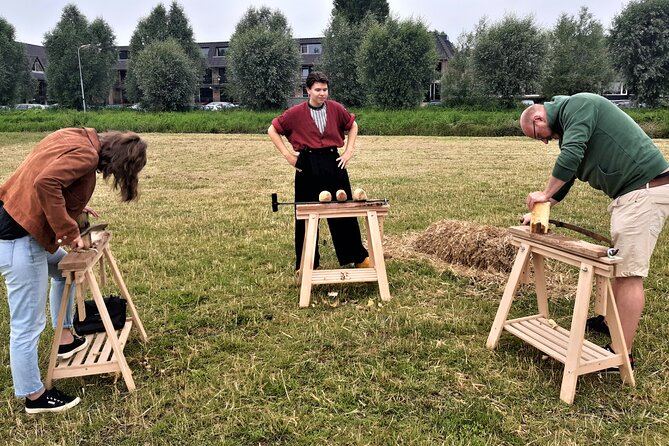
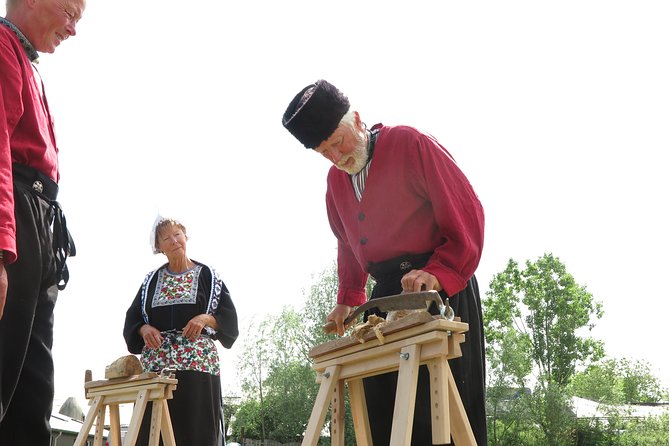
At Simonehoeve, the experience begins with a joint explanation of how wooden shoes are made. You’ll see the old-fashioned manual approach as well as the machine-assisted method, which helps explain the gap between a craftsperson’s finished shoe and a first-time attempt.
The demonstration matters because clog-making is not just a matter of hollowing out wood. The guide explains the tools, the order of the work, and the small techniques used to shape the shoe. You get a clear look at what the machinery does, but the hands-on portion keeps the visit from feeling like a museum stop.
From four participants, each person gets a block of wood to work on. The supplied information does not promise a fully finished pair, or even a finished single shoe, within the allotted time. You are making one wooden shoe, not setting up a working clog business.
That distinction is worth keeping in mind before you book. The workshop is best viewed as a craft lesson with a take-home result, not as a quick souvenir factory. Your shoe may remain semi-finished, but that unfinished quality also shows the real amount of work involved.
More workshops and classes in Amsterdam:
- Amsterdam: Traditional Dutch Syrup Waffle Making Workshop
★ 4.8 · 4,093 reviews - Amsterdam Traditional Dutch Syrup Waffle Making Workshop
★ 5.0 · 960 reviews - Amsterdam: Bols Cocktail Experience and Cocktail Workshop
★ 4.8 · 666 reviews
Why the Private Format Helps
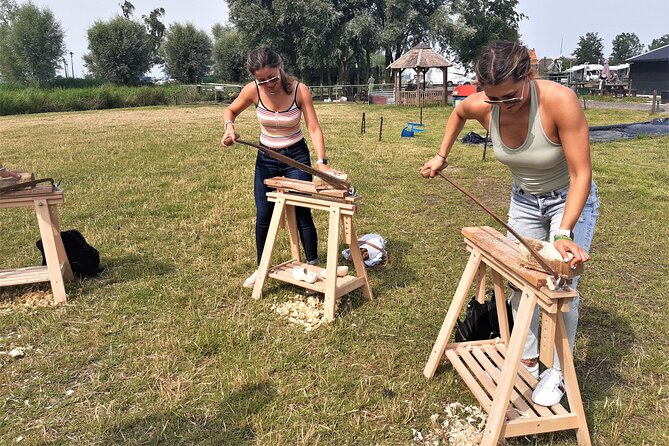
A private activity can make a big difference here. Clog-making involves sharp equipment, unfamiliar movements, and a fair amount of individual instruction. With only your own group present, you can ask questions, slow down for a tricky section, or move on when your arms need a break.
You also avoid the awkwardness of comparing your rough first cuts with a room full of strangers. The guide can focus on your group’s pace and explain how to handle the tools. The available information does not name the clog maker, so do not expect to book a particular instructor by name.
The private setup is especially useful for families with older teenagers, couples, or a small group of friends who want an activity that feels more personal than a standard factory tour. It is less useful if you want a quick, polished demonstration with no physical effort.
The Work Is More Demanding Than It Looks
The workshop has a clear physical side. You will handle equipment, shape wood, and spend much of the first 90 minutes making and engraving the clog. A moderate fitness level is required, and the minimum age is 16 because of the sharp tools.
Do not plan this as a restful indoor break between sightseeing stops. The work can tire your hands and arms, particularly if you are determined to finish the shoe. One practical report from the experience found that the time needed was greater than expected and that completing the clog during the session was not possible.
That is not necessarily a flaw. Traditional craft takes time, and the workshop gives you a better sense of that fact than a quick photo beside a finished clog would. Still, you should arrive with realistic expectations. You may leave with a semi-finished shoe rather than a ready-to-wear piece.
The Painted Beer Opener Is a Smart Backup
Simonehoeve includes a blank wooden beer opener that you can paint. This is not merely a consolation prize. It gives you a manageable souvenir if the clog work becomes too tiring or if you want to switch tasks halfway through.
The beer opener is also useful for groups with mixed interests and abilities. One person may want to keep carving, while another may prefer a shorter, more decorative project. The option means the workshop can remain enjoyable even when the full shoe proves too ambitious.
If you are booking mainly for a finished item, ask yourself which souvenir matters more. A partly completed shoe carries more of the workshop’s hands-on character. A painted opener is easier to finish and easier to take home, but it offers less of the actual clog-making challenge.
A few more Amsterdam tours and tickets worth comparing
- Rijksmuseum Amsterdam Small-Group Tour with Private Upgrade
★ 4.5 · 1,547 reviews - Van Gogh Museum Tour Reserved Entry Semi Private
★ 5.0 · 1,437 reviews - Private Amsterdam Red Light District and Coffee Shop Tour
★ 5.0 · 763 reviews - Anne Frank and Jewish Quarter Amsterdam Private Walking Tour
★ 5.0 · 684 reviews
The Cheese Farm Adds a Second Dutch Tradition
After the workshop, you tour the cheese farm. This shifts the mood from physical work to tasting and browsing, and it gives the two-hour visit a broader connection to Dutch rural traditions.
The tasting includes different types of cheese, Dutch biscuits, and fruit wine. That combination is more than a snack break. It lets you compare a handmade craft with another familiar Dutch product, one that is made for eating rather than wearing.
The exact cheese varieties are not specified, so you should not book expecting a particular style or producer. You can also buy food and drinks at the restaurant, which gives you the option of extending the visit with something more substantial.
The farm tour is a good reason to choose this experience over a stand-alone clog demonstration. If your main goal is serious woodworking, the cheese portion may feel secondary. If you want a compact taste of Dutch craft and food culture, it balances the harder first half nicely.
A Two-Hour Outing Near Amsterdam
The activity takes place at Simonehoeve, Wagenweg 2, 1145 PW Katwoude. It begins and ends at the same meeting point, so you do not need to arrange a separate return transfer after the tour.
Transport to the farm is not included. The location is near public transportation, but the supplied details do not specify a route, station, or travel time. You should plan that part separately and leave enough time to reach the meeting point before your chosen start time.
Several start times are available. That helps if you are fitting the workshop around a morning canal cruise, a museum visit, or an evening reservation in Amsterdam. The total duration is approximately two hours, with roughly 90 minutes devoted to carving and engraving.
The short duration is one of the activity’s strongest practical points. You get a real hands-on session without giving up a full day. At the same time, the schedule is tight enough that you should not assume there will be time to complete a carefully finished clog.
Who Will Get the Most From the $84.58 Price
At $84.58 per person, this is not the cheapest way to see a Dutch clog. You are paying for a private group activity, equipment, instruction, a semi-finished handmade shoe, a painted beer opener, the farm tour, and tastings.
The value depends on what you want from the outing. If you only want a photograph with a giant clog, the price is hard to justify. If you want to make something yourself, receive personal instruction, and add cheese and local drinks to the visit, the package makes more sense.
A private group can also improve the value. The cost buys exclusivity rather than a seat in a large public class, and group discounts may be available. Since the experience is booked an average of 22 days ahead, it is sensible to reserve early if your dates are fixed, particularly if you need a certain start time.
I would recommend it most for people who enjoy making things, small groups looking for a shared activity, and visitors who want more than a standard souvenir stop. It is less suited to anyone with limited hand strength, a dislike of manual work, or a firm expectation of taking home a finished clog.
What to Bring and How to Set Your Expectations
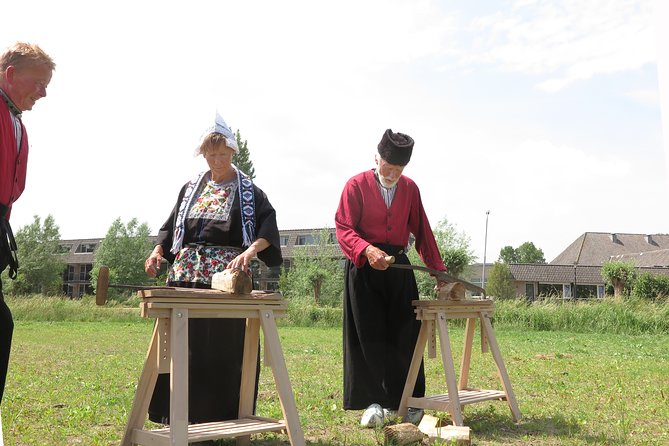
The most important thing to bring is patience. The craft looks straightforward during the demonstration, but shaping a shoe from raw wood takes time. You should also be ready for a practical session rather than a passive tour.
Wear something suitable for hands-on work, although the available details do not give a specific dress code. Since equipment is provided, you do not need to bring tools. Service animals are allowed.
Keep the age rule in mind. The minimum age is 16 because of the sharp equipment, so this is not a suitable activity for younger children. Anyone taking part should also be comfortable with moderate physical effort.
The best mindset is to treat the wooden shoe as a work in progress. If you finish it, you have a very personal souvenir. If you do not, the semi-finished shoe still shows what you learned, and the painted beer opener gives you something complete to take home.
A Good Choice for a Short Dutch Culture Stop
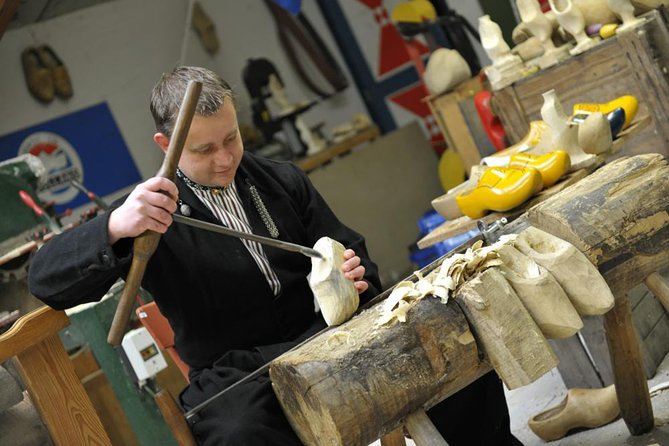
This experience works because it combines three things in a compact visit: a craft demonstration, hands-on work, and food tasting. You do not simply watch someone else make clogs. You handle the wood, learn why the tools matter, and then sit down to sample Dutch products.
The strongest feature is the chance to try a traditional craft with private instruction. The most important caution is the pace. Ninety minutes sounds generous until you begin shaping a shoe, and the work may prove tiring before the result looks finished.
Free cancellation is available if you cancel at least 24 hours before the local start time. Changes or cancellations inside that window are not accepted for a refund, so check your plans before the cutoff.
Should You Book the Simonehoeve Workshop?
Book this if you want a short, private activity with real participation, a local food tasting, and a souvenir that shows your own effort. It is a particularly good fit for adults and older teens who enjoy crafts and do not mind getting tired.
Skip it if you want a quick factory tour, a fully finished clog, or an activity with no physical demands. For the right group, the imperfect semi-finished shoe is part of the fun. You will understand Dutch clogs better after trying to make one, even if your arms decide that a painted beer opener is the wiser choice.
FAQ
How long does the wooden shoe workshop last?
The full experience lasts approximately two hours. About one and a half hours are spent making and engraving clogs, followed by a tour of the cheese farm and tastings.
Where does the activity begin and end?
It begins at Simonehoeve, Wagenweg 2, 1145 PW Katwoude, Netherlands, and ends back at the same meeting point.
Is transport to Simonehoeve included?
No. Transport to the farm is not included. The location is near public transportation.
Is this a private activity?
Yes. Only your group participates in the activity.
What is included in the price?
The experience includes equipment, a cheese and clog farm tour, a semi-finished handmade wooden shoe, and a blank wooden beer opener that can be painted.
What food and drinks are included?
The cheese-farm visit includes tastings of different cheeses, Dutch biscuits, and fruit wine. Food and drinks can also be purchased at the restaurant.
Can I finish a complete wooden shoe?
The workshop gives each participant the opportunity to make a shoe from a block of wood, from four people. The work can be demanding, and finishing a complete shoe within the scheduled time is not guaranteed.
What is the minimum age?
The minimum age is 16 because the workshop involves sharp equipment. Participants should also have a moderate level of physical fitness.
Newest Amsterdam write-ups
- Zaanse Schans: Half-Day Private Guided Tour★ 5.0 · 4 reviews
- Zaanse Schans: Private Cruise + Live Guide, Optional Drinks★ 4.7 · 26 reviews
- Zaanse Schans: Wooden Shoe Painting Workshop★ 4.9 · 23 reviews
- Amsterdam: Private Zaanse Schans Windmills and Volendam Trip★ 4.9 · 31 reviews
- Amsterdam: Zaanse Schans E-Bike Tour with Windmills & Cheese★ 4.5 · 12 reviews
- Zaandam: Paint a Perfect Portrait workshop★ 5.0 · 5 reviews
- Zaanse Schans: Pancake Restaurant Visit★ 4.5 · 26 reviews
- Volendam: Volendams Museum Entry Ticket★ 4.4 · 14 reviews
Workshops, compared.
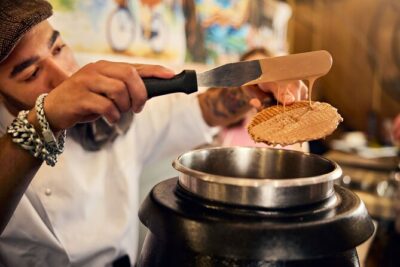
Traditional Dutch Syrup Waffle Making Workshop
Read our review →Amsterdam Traditional Dutch Syrup Waffle Making Workshop
Read our review →

3-Course Meal in Historic 1st Class Waiting Rooms
Read our review →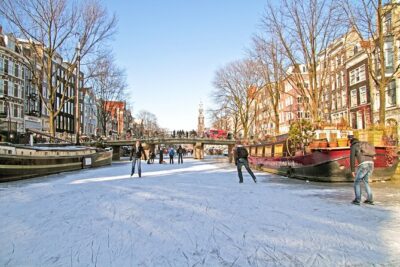
Amsterdam Light Festival Winter Walk with Stroopwafel Workshop
Read our review →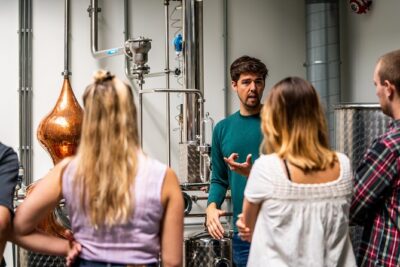
Distilling Class @ Spirited Union Rum Co. (Amsterdam)
Read our review →
Cocktail workshop @ Spirited Union Rum Co. (Amsterdam)
Read our review →
Browse the lists this tour appears in