
Reviewed · VAN GOGH MUSEUM TOURS
Van Gogh Museum Guided Tour •10 people• Face to Face with Vincent
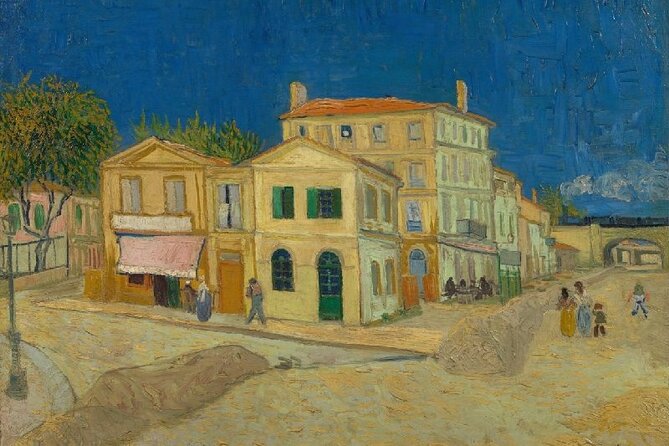
Van Gogh’s paintings are easy to recognize, but not always easy to understand. This small-group tour gets past the famous sunflowers and swirling skies, showing you how his brushwork, color, influences, and illness changed over time. I especially like the maximum group size of 10, which gives the guide room to explain rather than simply point. I also like the use of Paris imagery and screens to connect paintings with the places and ideas behind them.
The main consideration is time. The museum visit itself is listed as about two hours, while the full experience is advertised at roughly two and a half hours. That is enough for a focused introduction, but not enough to linger over every major work in a large museum. The $52.06 price is fair if you want interpretation, but less appealing if you prefer to wander alone.
Key points
- Small group: The tour is capped at 10 people, a useful size for questions and close listening.
- A clear artistic story: You follow Van Gogh’s changing technique, from early work through Paris and his final period.
- More than famous paintings: The guide discusses Japanese influence, illness, emotional strain, and the role of Jo van Gogh.
- Paris brought into the museum: ScreenTours uses visual material to connect the paintings with the places that shaped them.
- A named guide with strong praise: Guide Ana is described as warm, funny, approachable, and able to discuss Van Gogh and the Netherlands broadly.
- Flexible booking terms: Cancellation is free up to 24 hours before the 10:00 a.m. start.
Meeting at Paulus Potterstraat at 10:00 a.m.
The tour begins at Paulus Potterstraat 7, 1071 CX Amsterdam, near public transportation. You meet at 10:00 a.m., then visit the Van Gogh Museum as a group. The activity ends back at the meeting point.
That start time is useful for an art day in Amsterdam. You can make the museum your first major stop, then continue to other sights around Museumplein afterward. The exact meeting procedure beyond the stated address is not provided, so read your confirmation carefully and allow time to find the location. A mobile ticket is included, which means you should have your booking information ready on your phone.
The group limit matters here. Ten people is small enough for a guide to hear questions and adjust the pace. It also avoids the feel of a large flag-following crowd, where the person at the back gets a lecture in miniature. Still, a small group does not guarantee that every painting will receive equal attention. The tour has a planned theme, and the guide will direct the time toward the main story.
More ways to see the Van Gogh Museum:
- Amsterdam: Van Gogh Museum Ticket and City Canal Cruise
★ 4.6 · 3,899 reviews - Amsterdam: Van Gogh Museum Ticket & Canal Cruise
★ 4.5 · 3,304 reviews - Van Gogh Museum Amsterdam Exclusive Tour w/ Reserved Entry
★ 5.0 · 1,760 reviews
The Van Gogh Museum as one focused 2-hour visit
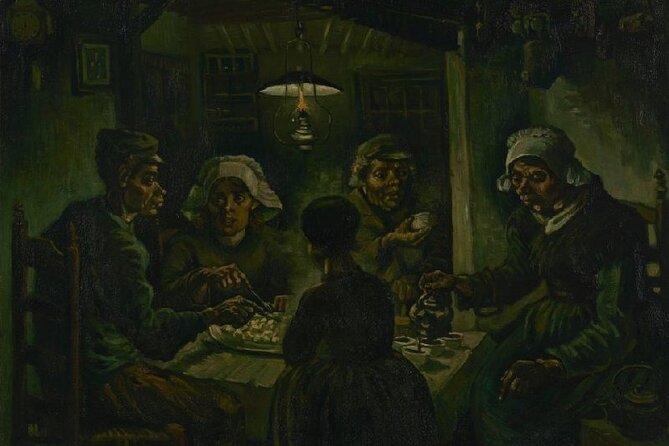
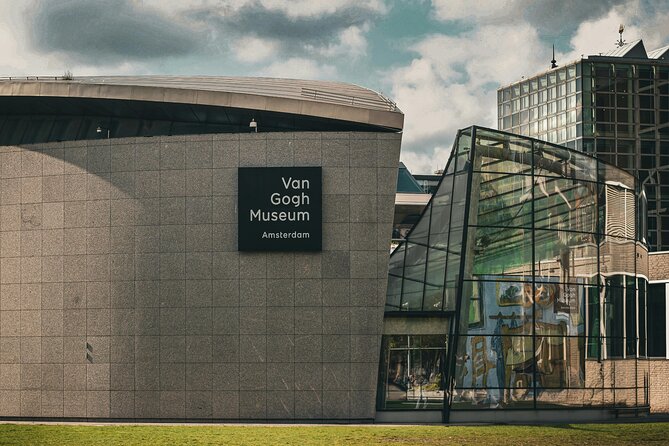
The central stop is the Van Gogh Museum, with admission included. The museum holds the complete setting for the discussion: paintings, drawings, and the changing stages of Vincent’s career gathered in one place.
The tour is designed to help you read the work as a progression rather than as a pile of famous images. You begin with the question of how Van Gogh developed, then look at the marks, colors, and ideas that changed as his life moved from one period to another.
That approach suits you if you want context. A painting can look bright and energetic from across the room, yet the guide may draw your attention to the pressure of the brush, the choice of color, or the way a darker area alters the mood. These details give you something practical to look for when you continue through the museum on your own.
The tour is less suitable if you want a quiet, self-directed visit with no interpretation. A guide-led route places the emphasis on explanation, and the experience is built around a particular reading of Van Gogh’s work. You can still enjoy the museum, but you will have less control over what receives the most time.
Following Van Gogh’s changing brushwork
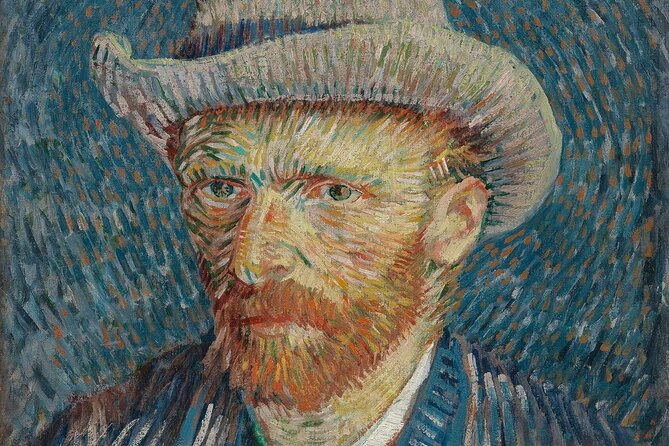
One of the strongest ideas in the tour is the link between technique and biography. You are not simply told that Van Gogh painted in different styles. You are shown how his brushstrokes and use of color developed, and how his illness and emotional state form part of the story.
That subject needs careful handling. It is easy to reduce Van Gogh to a tragic figure and treat every brushstroke as a symptom. A good guide should help you see the paintings as works of art first, while also explaining the pressures surrounding them. The description of this tour suggests that the illness is discussed alongside technique, not used as a cheap answer to every question.
I like that balance in principle. His life is gripping, but the paintings deserve more than biographical drama. You should come away with a better sense of what your eyes are seeing, not just a sad story about a troubled artist.
Guide Ana receives particularly strong praise for making the subject personal without making it heavy. She is described as close, familiar, funny, quick-witted, and able to answer questions about Van Gogh and the Netherlands. If Ana leads your visit, her style may appeal to you if you prefer a conversational guide rather than a formal lecture.
Japanese art and the shadows inside the color
The tour also examines Van Gogh’s interest in Japanese art. This is a valuable part of the visit because it shows that his work did not develop in isolation. His choices about line, composition, and color were shaped by what he saw and studied.
The guide uses this influence to widen the story. You are encouraged to notice how ideas from Japan helped Van Gogh look at the world differently, while his own work took those ideas in a new direction. The point is not simply to identify an influence and move on. It is to see how an artist absorbs outside ideas and turns them into a personal language.
The tour description also points to the contrast between shadows and a period of light. That wording suggests a close look at mood and color, rather than a simple division between dark early paintings and bright later ones. You might find this especially helpful if you have seen Van Gogh’s best-known works many times but have not thought much about how their color systems work.
More museums and galleries in Amsterdam:
- Amsterdam: The Upside Down Museum Entrance Ticket
★ 4.4 · 9,506 reviews - Amsterdam: Red Light Secrets Museum Entry Ticket
★ 4.2 · 5,722 reviews - Amsterdam’s Weirdest Museum: Believe It or Not!
★ 4.5 · 4,086 reviews - Amsterdam: NEMO Science Museum Ticket
★ 4.4 · 2,979 reviews
Paris, color, and the city behind the paintings
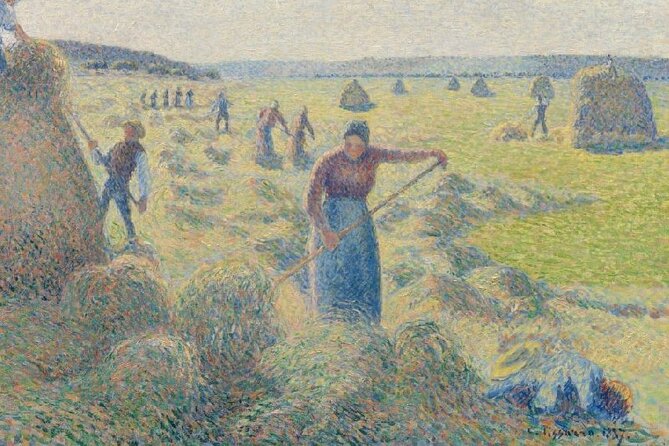
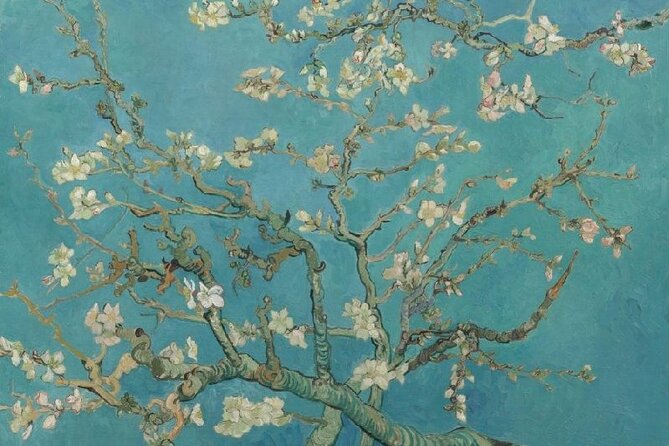
Paris receives its own place in the tour. The city inspired Van Gogh’s color, and ScreenTours uses screen material to connect the works with the places where they were conceived.
This is one of the more distinctive features. Paintings in a museum can feel detached from the streets, rooms, and cities that shaped them. Images of Paris give the guide a way to put some of that setting back around the artwork. You are not just looking at a painted surface. You are considering the city that helped change the way Van Gogh saw and painted.
The screen material also helps visual learners. If you understand an idea better when you can see a place or comparison, this part may add real value. The exact content and size of the screens are not specified, so you should not expect a full multimedia production. Think of the visuals as support for the guide’s explanation.
This section should work well as a bridge between biography and art. Paris was not just another stop in Van Gogh’s life. It was a period of new color and new contact with artistic ideas. The tour uses that change to help you track his growth.
The intense final 70 days
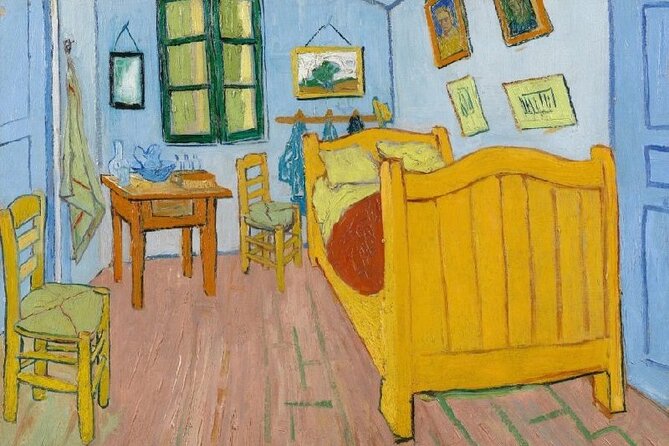
The final part of Van Gogh’s career receives special attention. In a period of only 70 days, he painted more than 80 works. The tour connects this remarkable output with the rejection and emotional strain he felt.
The numbers are striking, but they can also distract from the paintings if presented only as a dramatic fact. The better reason to discuss this period is that the pace gives you a way to think about urgency, pressure, and artistic drive. The guide’s task is to connect the quantity of work with what you can actually see in the images.
This section may be the emotional high point of the visit. You learn about the tragic end of Van Gogh’s life, but the tour does not stop there. It continues to the work of Jo van Gogh, who helped bring his art to worldwide recognition.
That final step is important. Van Gogh’s reputation was not created by the paintings alone. Preservation, family commitment, exhibitions, and public attention all played a part. Learning about Jo gives the story a wider frame and helps explain how an artist who was not fully understood in his own time became one of the most recognized painters in the world.
What the $52.06 price buys you
At $52.06 per person, this is not the cheapest way to enter the museum. The price makes more sense if you want a guide to organize the visit and give you a clear path through Van Gogh’s life and work.
Admission is included, so you are paying for the museum entry plus the guided service. The small group is the main value point. A group of up to 10 allows more personal attention than a large coach-style tour, and the guide’s explanations can save you from drifting through the galleries without a plan.
I would compare the price with your own museum habits. If you regularly read wall labels, follow an artist’s career on your own, and prefer to set your own pace, you may find the extra cost hard to justify. If you want help making sense of technique, context, illness, Paris, Japanese influence, and Jo van Gogh in one sitting, the fee is easier to defend.
The tour also has a strong value for a first visit. You get a framework that can make the rest of the museum more rewarding. You may want to stay after the formal portion, but the supplied details do not promise extra independent time, so plan your expectations around the stated tour duration.
Who should book this museum experience?
I would choose this tour for a first-time visitor who wants more than a quick look at sunflowers and Starry Night. It suits you if you enjoy art explained through both visual details and personal context.
It also fits visitors who like asking questions. The group size gives you a better chance to engage with the guide, and Ana’s described style sounds particularly good for people who want a friendly, open conversation rather than a stiff presentation.
Families and mixed-interest groups may also find the format useful, since the guide can connect the paintings to broader subjects such as Dutch culture, Paris, Japanese art, illness, and the art market. The activity information says most people can participate, though no specific child policy or mobility details are provided.
I would be more cautious if your priority is solitude. This is a guided experience with a fixed meeting time, fixed themes, and a group pace. You are buying interpretation, not complete freedom.
The booking pattern is another practical clue. The tour is booked an average of 68 days ahead, so I would reserve early if your Amsterdam dates are fixed. You can cancel for a full refund up to 24 hours before the start time, but changes or cancellations inside that window are not accepted.
Should you book the Face to Face tour?
Book it if you want Van Gogh’s work explained as a connected story, and if a small group matters to you. The strongest reasons are the 10-person limit, included admission, visual links to Paris, attention to Japanese influence and technique, and the chance to hear a guide such as Ana bring warmth and humor to the subject.
Skip it if you already know the museum well or prefer to spend hours following your own interests. At $52.06, the tour earns its price through interpretation, not through extra time or exclusive access.
For most first-time visitors who want an informed two-hour introduction, I would consider it a good choice. Just arrive ready to listen, ask questions, and continue looking closely after the guide has finished.
FAQ
Where does the tour begin?
It begins at Paulus Potterstraat 7, 1071 CX Amsterdam, Netherlands.
What time does the tour start?
The start time is 10:00 a.m.
How long does the experience last?
The overall experience is approximately 2 hours and 30 minutes. The Van Gogh Museum portion is listed as about 2 hours.
Is museum admission included?
Yes. Admission to the Van Gogh Museum is included.
How many people can join the tour?
The group has a maximum of 10 participants.
Is the tour available with a mobile ticket?
Yes. A mobile ticket is provided.
Can I cancel for a full refund?
Yes. You can cancel at least 24 hours before the local start time for a full refund. Cancellations or changes made less than 24 hours before the start are not accepted and are not refunded.
Newest Amsterdam write-ups
- Zaanse Schans: Half-Day Private Guided Tour★ 5.0 · 4 reviews
- Zaanse Schans: Private Cruise + Live Guide, Optional Drinks★ 4.7 · 26 reviews
- Zaanse Schans: Wooden Shoe Painting Workshop★ 4.9 · 23 reviews
- Amsterdam: Private Zaanse Schans Windmills and Volendam Trip★ 4.9 · 31 reviews
- Zaanse Schans: Pancake Restaurant Visit★ 4.5 · 26 reviews
- Amsterdam: Zaanse Schans E-Bike Tour with Windmills & Cheese★ 4.5 · 12 reviews
- Zaandam: Paint a Perfect Portrait workshop★ 5.0 · 5 reviews
- Volendam: Volendams Museum Entry Ticket★ 4.4 · 14 reviews
Van Gogh Museum Tours, compared.
Van Gogh Museum Amsterdam Exclusive Tour w/ Reserved Entry
Read our review →
Van Gogh Museum Tour Reserved Entry Semi Private
Read our review →
Combo Ticket: Van Gogh Museum Ticket and 1-Hour Canal Cruise
Read our review →

Van Gogh Museum Guided Tour & Entry Ticket (Max 6 ppl)
Read our review →
Van Gogh & Rijksmuseum w/ Reserved Entry Semi-Private 8ppl Max
Read our review →Browse the lists this tour appears in