
Reviewed · AMSTERDAM
Explore hidden streets with friends
Amsterdam’s best stories often sit just off the main road. This 2.5-hour walk starts near Beursplein, moves through the Canal Ring and Nine Streets, then slips into Jordaan lanes and courtyards that are easy to miss on your own. Along the way, you’ll hear about Amsterdam’s first stock market, social housing for widows, merchant wealth, and the city’s long shift from medieval settlement to trading power.
I like two things here. First, the route gives you both major landmarks and small local details, so you get your bearings without spending the whole time in the busiest streets. Second, the group limit of 10 people should make it easier to hear guides Michael or Christian and ask questions. The main consideration is simple: you’ll walk about 4 kilometers over uneven city streets, with no indoor admission included.
Key things to know before you book
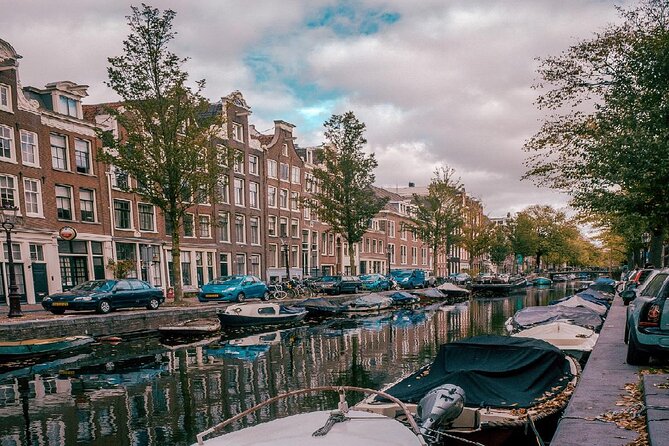
- Follow Amsterdam’s story from Beursplein to Jordaan: The route links the city’s commercial origins, central square, Canal Ring, Nine Streets, and western neighborhoods.
- Look for courtyards behind ordinary doors: Karthuizerhof offers a close look at early social housing built for widows in 1650.
- Expect a conversational guide: Michael and Christian are praised for answering side questions and adjusting the pace to the group.
- See familiar sights from a quieter angle: You pass Anne Frank House and Westerkerk while spending much of the walk on side streets.
- Plan for a real walking commitment: The tour lasts about 2 hours 30 minutes and covers roughly 2.5 miles, or 4 kilometers.
- Small groups add value: With no more than 10 people, the experience should feel more personal than a large city walk.
Starting at Beursplein, where Amsterdam became a trading town
Meet at Beursplein 1-3, a central spot near the beginning of Amsterdam’s commercial core. The introduction focuses on the city’s origins and the world’s first stock market, giving you useful context before the walk turns toward older streets and waterways.
I like starting with economics rather than jumping straight to famous buildings. Amsterdam’s canals, warehouses, merchant houses, and public squares make more sense once you understand how trade shaped the city. The guide can connect broad changes to the buildings around you, rather than treating each stop as an isolated sight.
The first section also helps you get your bearings. If Amsterdam is new to you, the center can feel like a maze of canals and narrow streets. Beginning in a central square gives you a clear reference point before the route heads west.
The exact length of each opening stop is not set out, so the pace may depend on the group and the guide. That is useful if you enjoy questions, but less ideal if you want a tightly timed march from one landmark to the next.
Other Amsterdam outings people book alongside this one:
- Amsterdam Classic Saloon Boat Cruise with Drinks and Cheese
★ 5.0 · 31,825 reviews - Amsterdam Luxury Canal Cruise + Unlimited Drinks & Bites option
★ 5.0 · 30,518 reviews - Amsterdam: Heineken Experience Ticket
★ 4.6 · 30,055 reviews
Dam Square and the former town hall
The walk continues toward the central square, where you’ll hear about its importance in Amsterdam’s development. The guide also explains the large building that originally served as the town hall.
This is a good place to think about how a city presents power. Amsterdam’s public buildings were not just practical offices. They expressed the confidence of a wealthy trading city and the authority of its civic leaders. The stop gives you a way to read the architecture and square as part of the city’s political story.
You are not simply being pointed toward a famous façade for a quick photograph. The useful part is the explanation of what the building did and why the square mattered. Guides Michael and Christian are especially well suited to this kind of stop, based on the way they are described: calm, conversational, and willing to explain small details as well as major events.
Still, this section is in the central part of Amsterdam, so it will not feel secluded. The quieter streets arrive later. Think of Dam Square as the setup, not the main event.
Crossing the Canal Ring and reading the city’s expansion
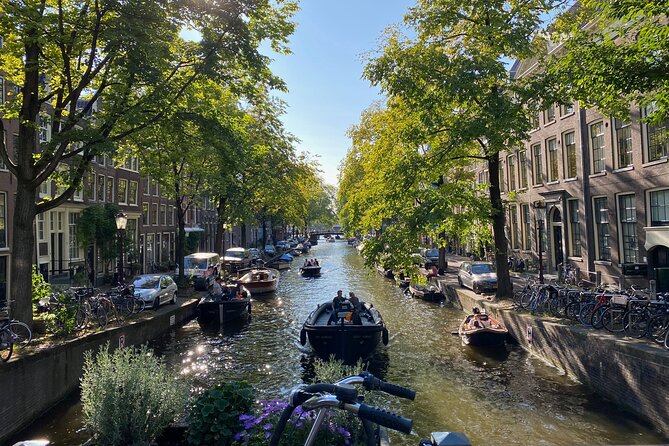
The first major walking section crosses Amsterdam’s Canal Ring and explains how the city expanded during the medieval period. This is where the route shifts from a standard center walk to a lesson in how Amsterdam grew.
Canals can look purely scenic when you first arrive. A good explanation shows you that they were also part of the city’s structure, trade, transport, and expansion. You’ll get more from the water, bridges, and narrow houses when you understand why the city developed in layers.
This portion lasts about an hour, according to the planned timing. That is a substantial part of the experience, so you should expect steady walking rather than a short orientation. There is no admission fee for the stops, which keeps the focus on streets, public spaces, buildings, and the guide’s storytelling.
I like this format for a first or second day in Amsterdam. You are not locked inside a museum for the afternoon, and you receive a working map of the city as you move through it. You can then return to the areas that interest you most.
The Nine Streets, a calmer shopping quarter
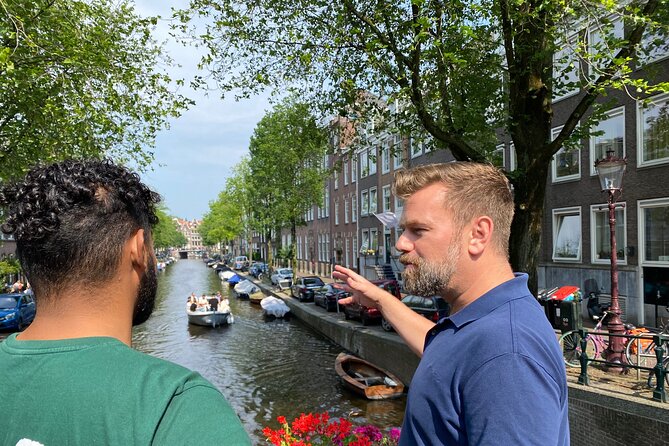
The route reaches the Nine Streets, a compact area known for small shops and cafés away from the heaviest tourist flow. This is one of the most practical parts of the walk because it shows you an area you may want to revisit later.
The Nine Streets are not a secret in the literal sense, but they feel more intimate than the main shopping routes. Their appeal comes from the scale of the streets and the mix of independent businesses. The guide’s role here is not only to point out shops. It is to show how the area fits into the Canal Ring and how a short cluster of streets can feel distinct from the wider center.
If you like time for browsing, make a note of the area and return after the tour. The walking schedule does not promise a dedicated shopping break, so you should not expect time to enter every shop. You will see the setting and receive local suggestions, but the main activity remains the walk itself.
This is also a useful contrast with the later Jordaan section. The Nine Streets offer a polished, easygoing urban experience, while Jordaan brings more attention to courtyards, community life, and older residential lanes.
Same city, a completely different afternoon:
- Amsterdam: Rijksmuseum Entry Ticket
★ 4.7 · 25,535 reviews - Amsterdam: Classic Boat Cruise with Optional Cheese & Wine
★ 4.6 · 22,925 reviews - Amsterdam: Evening Cruise with Optional Wine and Snacks
★ 4.4 · 19,696 reviews - Amsterdam: 75 Minute City Canal Cruise with Audio Guide
★ 4.4 · 17,501 reviews
Jordaan side streets where the route earns its name
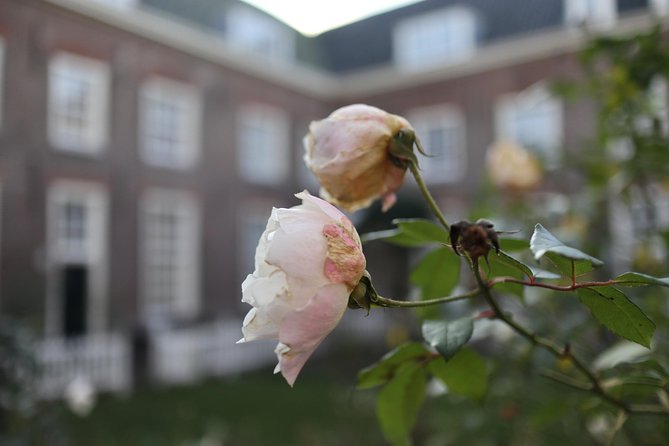
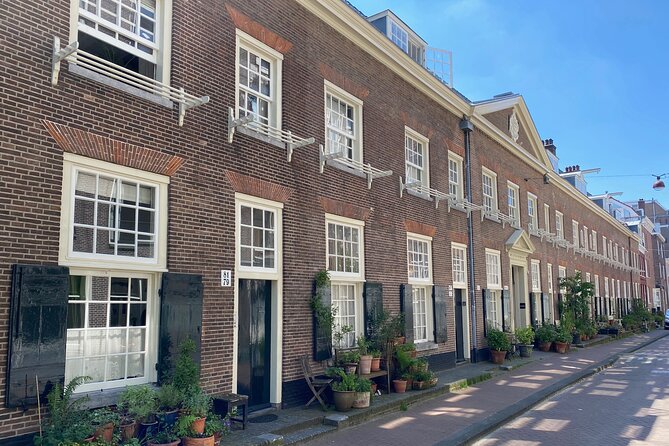
The Jordaan section is the heart of the experience. It lasts about 1 hour 20 minutes and focuses on hidden streets, small squares, and what remains of an authentic Amsterdam neighborhood.
This is where I see the strongest value. You could walk through the Jordaan on your own, but you would probably miss some of the narrow passages and less obvious courtyards. The route is built around details that do not announce themselves from a main street.
Michael and Christian are described as guides who share information in a natural, conversational way. That matters in a residential area. You want enough context to understand what you are seeing, but not a speech at every corner. The available feedback describes them as open to questions, including questions that wander away from the planned subject. For you, that can make the walk feel more like a conversation than a lecture.
The guides also seem to avoid rushing. That is helpful in the Jordaan, where the pleasure comes from looking closely at doorways, small squares, old buildings, and changes in the street plan. A rushed walk would defeat the point.
The tradeoff is that a route built around lesser-known passages can feel less predictable. You may not know exactly what you will see at every turn, and the quality of the experience will depend partly on the guide’s choices that day. The small group limit helps here because the guide can respond to the people in front of them.
Karthuizerhof and Amsterdam’s early social housing
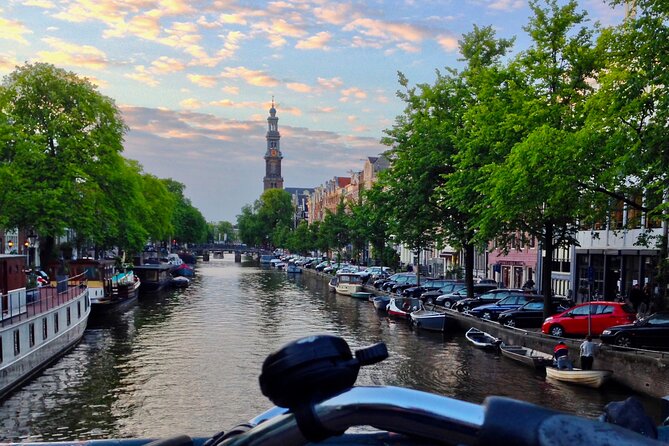
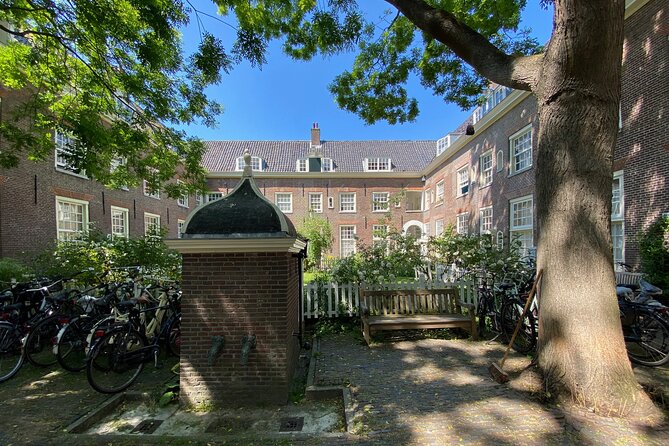
One of the most distinctive stops is Karthuizerhof, a courtyard built in 1650 for widows. It is presented as one of the earliest social housing projects in the world.
This stop gives the tour a human scale. Amsterdam’s story is often told through merchants, canals, churches, and grand civic buildings. Karthuizerhof shifts attention to ordinary people and the ways a city cared for some residents, even centuries ago.
A courtyard can be easy to overlook because it may sit behind a plain entrance. Once inside, the layout helps you picture a quieter form of urban life, organized around shared space rather than a broad public square. The planned stop is short, about 10 minutes, but it should leave a strong impression because it adds social context to the architecture.
You should keep in mind that courtyards are not theatrical attractions. Their value comes from scale, quiet, and explanation. If you want big interiors or extensive displays, this is not that kind of stop. If you enjoy seeing how historic cities housed people, it is one of the most useful parts of the route.
Anne Frank House and Westerkerk from the outside
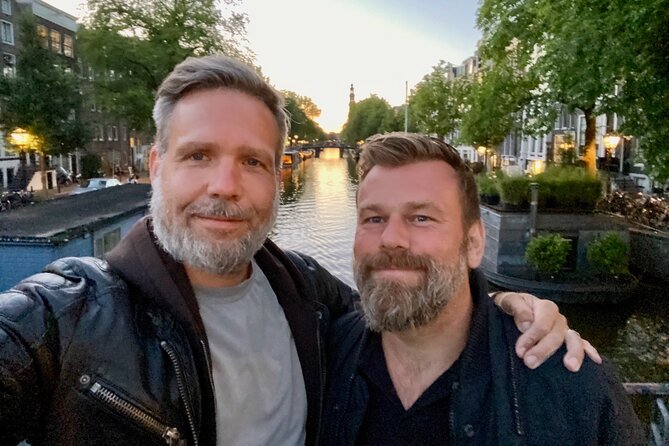
The walk passes the Anne Frank House while moving through Jordaan. You should not expect entry to the museum or a reserved visit. The value here is location and context, not admission.
Seeing the building during a neighborhood walk can help place Anne Frank’s story within the wider city. You are looking at a real street in a living district, not treating the site as an isolated stop. If you want to visit inside, arrange that separately because this walking experience does not include an interior ticket.
The route also reaches Westerkerk, a church built by wealthy Amsterdam merchants. You’ll hear that Rembrandt was buried there. The church adds another layer to the city’s story: commerce funded public architecture, religious buildings shaped the skyline, and major artists remain tied to the places where they lived and worked.
These stops are valuable because they connect famous names to the walk without allowing them to take over the entire tour. Amsterdam has plenty of headline sights, but the experience keeps returning to lanes, courtyards, and neighborhood details.
What the $52.81 price buys you
At $52.81 per person, this is not the cheapest way to walk around Amsterdam. You can explore the Canal Ring, Nine Streets, and Jordaan without paying for entry. The price is paying for the route, the guide’s local knowledge, and the time saved by being led to places you might not locate alone.
The value improves if you are new to Amsterdam or want more than a general orientation. A guide can explain why the canals sit where they do, how the city expanded, and what to look for in a courtyard or old façade. You also get suggestions for places to revisit after the walk.
The small group matters. With a maximum of 10 people, you are more likely to hear the guide and ask about a building, street, or local custom. That is a better fit for this route than a large group, since the most interesting parts depend on noticing small details.
For a repeat visitor, the price is easier to justify if you want a different view of familiar areas. If you only want famous landmarks or a quick introduction, a cheaper large-group walk may cover your needs. This experience is aimed at people who value access to quieter corners and a flexible, personal pace.
Timing, walking comfort, and practical planning
The tour lasts about 2 hours 30 minutes and covers roughly 2.5 miles, or 4 kilometers. You need to be comfortable walking continuously through city streets for that length of time.
Wear comfortable shoes. The route includes canals, side streets, squares, and courtyards, and you may be standing while the guide explains each location. Since the activity stays outdoors apart from any access available at individual locations, dress for Amsterdam’s changeable weather.
The start is at Beursplein 1-3. The end is at Elandsgracht, so you finish in a different part of the city rather than returning to the start. That is useful if you plan to continue exploring Jordaan, but you should account for the point-to-point format when arranging your next activity.
The tour is offered in English. Service animals are allowed, and the activity is near public transportation. Most people can participate, but the stated walking distance is worth taking seriously if you have mobility limits.
You receive confirmation when booking. Free cancellation is available up to 24 hours before the start time. If the minimum number is not reached and the activity is canceled, you are offered another date or experience, or a full refund.
Who will get the most from this walk
I would choose this tour for a first visit when you want a clear introduction without spending the entire day in the busiest center. It also suits a return visit when you have already seen the main sights and want more neighborhood detail.
It is a good match for:
- Couples who want a relaxed walk with time for questions
- Solo visitors who prefer company without a large group
- Friends looking for a shared activity with local context
- History and architecture fans who enjoy ordinary buildings as much as famous ones
- Shoppers who want to locate the Nine Streets for a later visit
It may not suit you if you dislike walking, need frequent scheduled breaks, or want extensive interior visits. It also is not the right choice if your priority is entering the Anne Frank House or another major attraction during the tour.
Should you book Explore Hidden Streets with Friends?
Book it if you want Amsterdam explained through its streets rather than reduced to a checklist of famous sights. The strongest parts are the Jordaan lanes, Karthuizerhof courtyard, Canal Ring context, and the chance to ask Michael or Christian questions in a group of no more than 10.
The price is fair for a guided route that combines major landmarks with places you might miss alone, though it is less appealing if you only need basic directions or free sightseeing. Come ready to walk, keep your schedule flexible after the finish at Elandsgracht, and consider returning to the Nine Streets or Jordaan for more time on your own.
FAQ
Where does the walking tour start?
The tour starts at Beursplein 1-3, 1012 JW Amsterdam, Netherlands.
Where does the tour end?
The walk ends at Elandsgracht in Amsterdam.
How long is the experience?
The tour lasts approximately 2 hours 30 minutes.
How far do you walk?
You should be able to walk about 2.5 miles, or 4 kilometers, during the experience.
How many people can join the group?
The group has a maximum of 10 people.
Is the tour offered in English?
Yes. The tour is offered in English, and mobile tickets are available.
Newest Amsterdam write-ups
- Zaanse Schans: Half-Day Private Guided Tour★ 5.0 · 4 reviews
- Zaanse Schans: Private Cruise + Live Guide, Optional Drinks★ 4.7 · 26 reviews
- Zaanse Schans: Wooden Shoe Painting Workshop★ 4.9 · 23 reviews
- Amsterdam: Private Zaanse Schans Windmills and Volendam Trip★ 4.9 · 31 reviews
- Zaanse Schans: Pancake Restaurant Visit★ 4.5 · 26 reviews
- Amsterdam: Zaanse Schans E-Bike Tour with Windmills & Cheese★ 4.5 · 12 reviews
- Zaandam: Paint a Perfect Portrait workshop★ 5.0 · 5 reviews
- Amsterdam Central Walking Tour★ 4.9 · 11 reviews