
Reviewed · MUSEUMS
STRAAT Museum – Museum for Street Art Amsterdam Admission Ticket
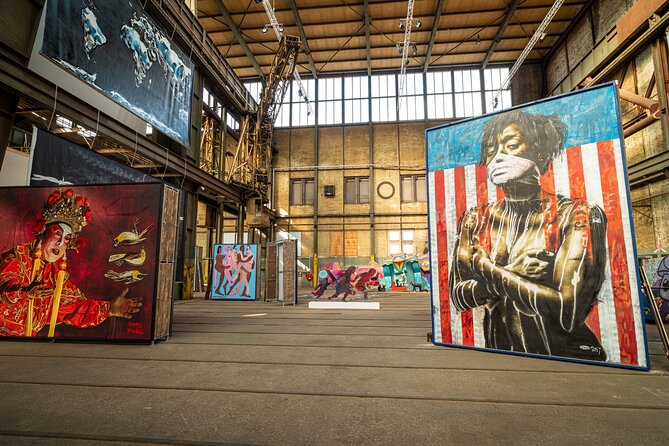
The first thing you notice at STRAAT Museum is scale. These are not small pictures tucked into white gallery rooms. About 150 works fill a former industrial warehouse, with giant paintings rising around old machinery and broad stretches of wall. Street art feels at home here.
I like the worldwide range of artists and the way the building becomes part of the visit. I also like the short, free ferry ride from Amsterdam Central Station to NDSM Wharf, which turns a museum stop into a small outing across the water.
The main drawback is the location. NDSM Wharf sits across the IJ, so you need to allow time for the ferry and the walk to the museum. At about $26.01 per person, the ticket is fair if you spend two hours inside, but it may feel expensive if you rush through in 45 minutes.
Key points to know before you go
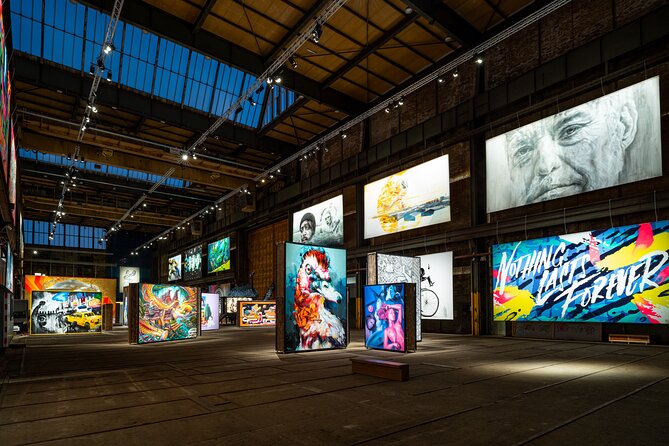
- About 150 works fill a former shipyard warehouse, giving large-scale street art plenty of room to breathe.
- The collection includes 140 artists from 32 nationalities, with styles and subjects that change from wall to wall.
- The free ferry from Amsterdam Central Station runs about every 15 minutes, making the journey part of the experience.
- Plan for 1 to 2 hours, although a quick visit can take roughly 45 minutes.
- A creative spray-paint area outside lets you make your own mark, with artwork there changing over time.
- The ticket is mobile and time-specific, so check your chosen date and time carefully before confirming.
Why STRAAT feels different from a regular art museum
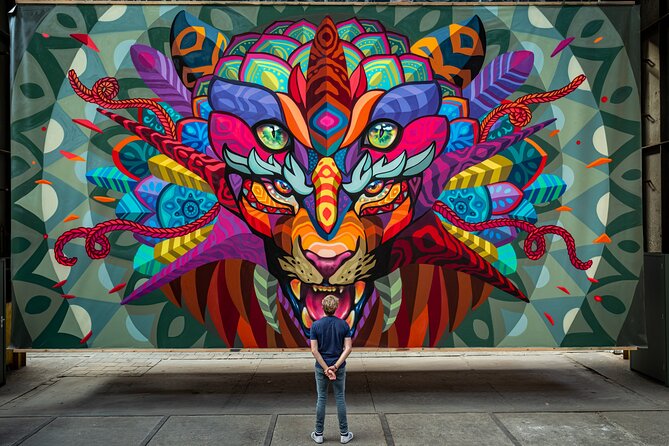
Amsterdam has no shortage of famous museums, but STRAAT offers a very different kind of art visit. You are not walking through rooms built for delicate canvases or formal portraits. You are standing in a huge warehouse where street art can keep its original sense of size and force.
The museum presents work from artists around the world, not just from Amsterdam. The collection represents 140 artists from 32 nationalities, so you get a broad look at the many ways street art can work. Some pieces use bold lettering or graffiti roots. Others focus on portraits, social ideas, abstract shapes, humor, or scenes that ask you to stop and think.
That variety is one of the museum’s strongest points. You may admire one wall for its color, another for its technical skill, and a third because its subject stays with you. The change from one artist to the next keeps the visit moving.
The setting matters just as much as the list of artists. The old industrial building provides rough surfaces, open space, and original machinery. Instead of hiding the warehouse, STRAAT uses it as part of the display. The result feels less formal than a conventional gallery and more connected to the roots of street art.
You can take photographs in the broad spaces without feeling pressed into a narrow route. A café inside gives you a place to pause, and an upper-level café area offers a different view of the works. Those details help if you want to stay closer to two hours rather than making a quick circuit.
More street art walks in Amsterdam:
- Amsterdam’s Hidden Gems and Street Art Bike Tour
★ 5.0 · 65 reviews - Alternative Tour Amsterdam | Drugs Story, Street Art & More
★ 4.5 · 11 reviews
Crossing the IJ to NDSM Wharf
The journey begins at Amsterdam Central Station, where you catch the free ferry across the IJ to NDSM Wharf. The ride is short and scenic, and it gives you a quick look at Amsterdam from the water without buying a separate cruise ticket.
The ferry runs about every 15 minutes, according to the practical information available for this visit. Still, leave a little slack in your schedule. A missed boat, a busy departure, or a few minutes finding the correct route can affect a timed museum entry.
NDSM Wharf is one of Amsterdam’s newer artistic and cultural areas. Its former shipyard setting fits the museum well. You are not simply traveling to another indoor attraction in the city center. You are heading to a converted industrial district where the rough surroundings help explain why this kind of art belongs here.
The route is easy to add to a day in Amsterdam, but it is not as immediate as walking from Central Station to the Rijksmuseum or another central attraction. That extra effort is part of the charm for some people and a nuisance for others. If your schedule is tight, check the ferry timing before you book a close-together activity.
Entering the warehouse and finding your pace
Your mobile ticket reserves a day and time, so you can plan STRAAT around the rest of your day. Confirmation is provided at booking, and the ticket is designed for use on your phone.
Once inside, resist the urge to race from wall to wall. The museum can be seen in about 45 minutes if you walk quickly, but that approach misses much of what makes the place worthwhile. The huge pieces are best viewed from several steps back, then up close, where you can inspect paint, texture, line work, and small details.
I would allow at least 90 minutes for a first visit. Two hours makes more sense if you enjoy contemporary art, want to read about the artists, or are visiting with teenagers who like to compare styles and take photographs.
The building gives you room to set your own rhythm. You can stop in front of a single work, move on quickly when something does not speak to you, and return to a favorite later. That freedom is useful because street art is personal. One visitor may be drawn to a giant portrait, while another prefers a piece built around lettering or political themes.
The museum also explains the stories behind the art and the artists who helped bring street art into the mainstream. This context adds value. Without it, a giant mural can become only a colorful backdrop for a photograph. With some background, you can look for the artist’s choices, references, and place within the wider street-art movement.
A worldwide collection with no single house style
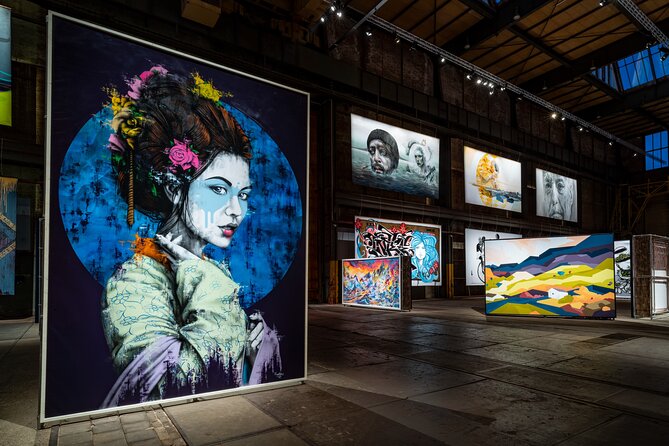
The number of artists is impressive, but the mix matters more than the statistic. With artists from 32 nationalities, STRAAT does not present street art as one fixed look.
You might find techniques that echo traditional graffiti, alongside work that feels closer to large-scale painting, illustration, graphic design, or social commentary. Some pieces are direct and instantly readable. Others need more time. That unevenness is normal in a collection this broad, and it gives the visit energy.
I especially like that the art is not reduced to a single Amsterdam style. Amsterdam has a strong graffiti and street-art identity, but this museum places local culture beside work from many other parts of the world. You get a wider view of how artists use public-facing art to tell stories, challenge ideas, decorate neglected spaces, or claim attention.
The huge scale can also change your response to a piece. A mural that might feel ordinary on a city wall can become physically powerful when it rises several meters inside the warehouse. You can see brushwork and spray techniques from a distance, then notice small visual details as you move closer.
The museum is a strong choice for someone who thinks contemporary art museums are too quiet, too formal, or too difficult to approach. It is also useful for visitors who already know street art and want to compare artists from different countries in one place.
More museums and galleries in Amsterdam:
- Amsterdam: The Upside Down Museum Entrance Ticket
★ 4.4 · 9,506 reviews - Amsterdam: Red Light Secrets Museum Entry Ticket
★ 4.2 · 5,722 reviews - Amsterdam’s Weirdest Museum: Believe It or Not!
★ 4.5 · 4,086 reviews - Amsterdam: Van Gogh Museum Ticket and City Canal Cruise
★ 4.6 · 3,899 reviews
What makes the industrial setting work
The old warehouse is not a neutral container. Its machinery and industrial details give the art a rough, practical backdrop. That contrast helps the work retain some of its public-space character.
The setting also explains why the museum feels different from a conventional gallery. You are not looking at a series of small works under careful spotlights. You are surrounded by walls of color and large compositions, with the building’s open structure visible around them.
This can be especially appealing for photographers. The scale creates strong angles, and the surrounding machinery adds visual interest without taking attention completely away from the art. You may want to take a few wide shots first, then return to details that caught your eye.
There is a trade-off. A warehouse is not as hushed or polished as a classical museum. If you prefer small rooms, quiet portraits, or a tightly focused collection, STRAAT may feel too big and visually loud. If you want art with physical presence, the building is a major advantage.
The café adds another useful pause. It is described as good, and its position lets you continue looking at the art from a different angle. I would treat it as a pleasant part of the visit rather than the main reason to come, but it helps turn a short stop into a relaxed outing.
The outdoor spray-paint area
Near the end of the visit, you can find an area outside where visitors may practice or create with spray paint for free. This is a small feature, but it connects the museum to the active nature of street art.
The artwork there changes over time, so it gives the outside space a temporary quality. You are not only looking at finished pieces protected inside the museum. You can also see a place where people try ideas, make mistakes, and replace older work with something new.
This feature is particularly useful for families and creative teenagers. It gives younger visitors something hands-on after they have spent time looking at large works. It also reinforces an important point: street art is not only a finished product hanging on a wall. It is a practice shaped by surface, speed, technique, and public space.
Do not expect a full workshop or a guided lesson. The information provided describes a place to create with spray paint, not a scheduled class. Think of it as an informal creative add-on.
How long should you stay?
The advertised visit takes about one to two hours, and that range is realistic. A fast walk can take around 45 minutes. A slower visit, with time for artist information, photographs, the café, and the outdoor spray-paint area, can fill two hours.
I would use this guide:
- 45 minutes: You want a quick look and a few photographs.
- 90 minutes: You want to see the main works without rushing.
- 2 hours: You enjoy contemporary art, want to read about the artists, or are visiting with creative teenagers.
The museum has enough visual variety to reward a longer visit, but you do not need half a day. That makes it easy to fit between other Amsterdam plans. Remember to add ferry time on both sides, especially if you have a restaurant booking or another timed attraction afterward.
The opening-hours information supplied for this experience lists Monday from 12:00 AM to 5:00 PM for the stated operating period. Because the displayed schedule is unusually formatted, check the exact date and entry time shown when booking.
Is the $26.01 ticket good value?

At $26.01 per person, STRAAT is not a bargain basement attraction. The value depends on how you use it.
If you spend 45 minutes walking through, take a few pictures, and leave, the price may seem high. A four-star assessment specifically points to cost as the main reason for holding back the top rating. That is a fair concern, especially for families buying several tickets.
If you spend 90 minutes to two hours with the art, use the café, and combine the museum with the free ferry and NDSM Wharf, the price becomes easier to justify. You are paying for a large, international collection in a building that has been adapted for work of unusual scale. You also avoid the cost of a separate ferry excursion.
The strongest value is for people who actively like street art, contemporary work, photography, or industrial spaces. If your priorities are Old Masters, Dutch Golden Age painting, or traditional museum displays, spend your museum budget elsewhere.
The ticket includes admission to STRAAT Museum, with a mobile format and a selected date and time. It does not describe a separate guided tour, named guide, or transport package beyond the practical access by ferry. You are buying entry to the museum, not a personal art lesson.
Who will enjoy STRAAT most?
I would put this museum high on the list for:
- Teenagers and young adults who enjoy art, design, graffiti, or photography.
- Adults who want a break from Amsterdam’s more formal museums.
- Visitors looking for a destination beyond the historic center.
- Families who appreciate a large visual display and an outdoor creative activity.
- Anyone curious about how street art moved from public walls into major cultural institutions.
It may be less suitable if you have limited mobility and want a very simple, central stop, since the visit requires a ferry crossing and a trip to NDSM Wharf. Service animals are allowed, and the experience is near public transportation. Most people can participate, but the available information does not provide detailed route or facility specifications, so contact the museum if you need a specific accessibility answer.
I would also be cautious about booking a very late or very tight time slot. A booking problem involving an incorrect date caused a serious complaint, and the museum visit is tied to the selected date and time. Check the day, date, and time before payment, then keep the confirmation on your phone.
Free cancellation is available up to 24 hours before the start time for a full refund. Changes or cancellations inside that 24-hour window are not accepted for a refund, so do not book until your Amsterdam schedule is reasonably settled.
Should you book STRAAT Museum?
Book it if you want art that is big, direct, colorful, and connected to public space. The combination of a short ferry ride, an old shipyard setting, 150 works, and artists from 32 nationalities gives you a museum visit unlike Amsterdam’s better-known classical institutions.
I would plan two hours if you have the time, and I would treat NDSM Wharf as part of the outing rather than an obstacle. The museum works best when you slow down, step back from the huge pieces, and give yourself time to notice how different each artist approaches the wall.
Skip it if your Amsterdam plans are already packed, you dislike contemporary art, or $26.01 feels too steep for a possible 45-minute visit. For everyone else, especially creative young people and visitors who want something outside the central museum quarter, STRAAT is a sound choice. Just confirm your time carefully and allow room for the ferry.
FAQ
Where is STRAAT Museum located?
STRAAT Museum is at NDSM Wharf in Amsterdam, in a former industrial warehouse at the NDSM shipyard.
How do I reach STRAAT Museum from Amsterdam Central Station?
You can take a short, free ferry ride from Amsterdam Central Station to NDSM Wharf. The ferry runs about every 15 minutes.
How long does a visit to STRAAT Museum take?
The expected visit lasts about one to two hours. If you move quickly, you can see the museum in roughly 45 minutes.
How many artworks are on display?
The museum has about 150 artworks by 140 artists representing 32 nationalities.
Is the ticket available on a mobile phone?
Yes. The experience includes a mobile ticket, and confirmation is provided when you book.
Is STRAAT Museum suitable for most people?
Most people can participate. The museum is near public transportation, and service animals are allowed.
Can I cancel for a refund?
Yes. You can cancel at least 24 hours before the experience start time for a full refund. Cancellations or changes made less than 24 hours before the start time are not accepted for a refund.
Newest Amsterdam write-ups
- Amsterdam Private & Personalized Full-Day Tour with a Local Guide★ 5.0 · 10 reviews
- Excursion to the mills of Zaanse Schans★ 5.0 · 97 reviews
- Full-Day Executive Chauffeur Service in Amsterdam★ 5.0 · 5 reviews
- Explore Amsterdam by Bike in the Company of a French Local Guide★ 4.5 · 31 reviews
- Exclusive small-group Amsterdam Red Light District tour★ 5.0 · 4 reviews
- Private Tour to Windmills Zaanse Schans +Keukenhof – 7 Hours★ 5.0 · 3 reviews
- Amsterdam to Bruges – Private luxury Full-Day Tour Cristmasmarket★ 5.0 · 7 reviews
- Amsterdam’s Hidden Gems and Street Art Bike Tour★ 5.0 · 65 reviews
Museums, compared.



Amsterdam’s Weirdest Museum: Believe It or Not!
Read our review →


Van Gogh Museum Amsterdam Exclusive Tour w/ Reserved Entry
Read our review →
Moco Museum Amsterdam Admission Ticket with Banksy and more
Read our review →
Van Gogh Museum Tour Reserved Entry Semi Private
Read our review →Browse the lists this tour appears in