
Reviewed · AMSTERDAM
Your Own Amsterdam: The Art Underground
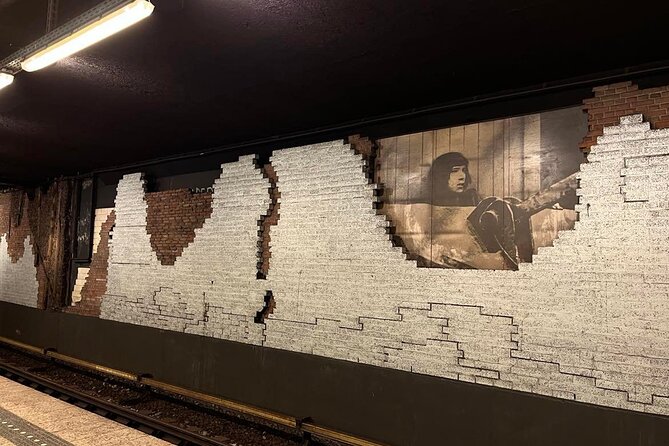
Amsterdam’s metro is more than a way to get across town. It is an underground gallery, an archaeological record, a music lesson, and a reminder of how strongly locals have shaped the city. This private tour connects those pieces across six stations, from Centraal Station to Amsterdam-Noord.
I like the small private format, since your group can ask questions without competing with a crowd. I also like the range of subjects: tulip mania, colonialism, archaeology, Dutch music, architecture, and local ecology all appear within two hours.
The main drawback is the price: $236.59 per person is a serious outlay for a short tour, and you must add €9 per person for metro tickets. This makes the experience best suited to people who care deeply about public art, city history, or unusual ways of seeing Amsterdam.
Key points to know before booking
- Six stations, six different subjects: The route moves from public art and Dutch history to archaeology, music, architecture, and ecology.
- A genuinely private tour: Only your own group takes part, which gives you room to ask questions and set the pace within the planned route.
- Maria has earned special praise: She is described as patient, well informed, and attentive to details beyond the artwork, including the de Pijp market.
- The route covers more than art: You will also hear about the city’s climate, the Dutch East India period, colonialism, local politics, and the Amsterdam School.
- Budget for the metro: Underground tickets cost €9 per person and are not included in the tour price.
- The finish is in Amsterdam-Noord: You do not return to Centraal Station, so plan your next stop from the north side of the IJ.
Why Amsterdam’s metro makes an unusual art tour
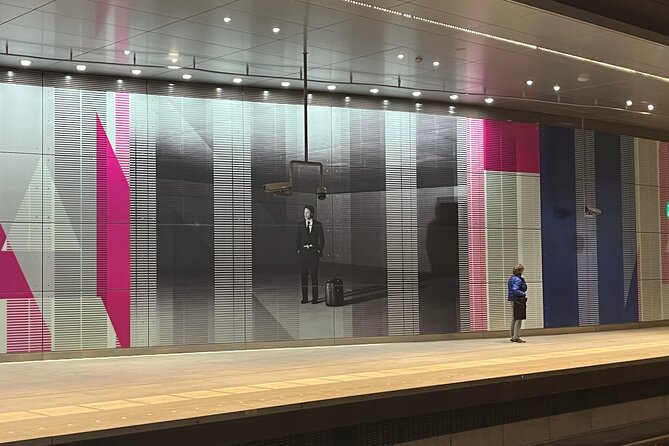
Amsterdam’s underground system gives you a different view of the city. Instead of walking past canal houses and museum fronts, you see how the city presents itself in places built for daily travel. More than ten million people pass through the artworks around Centraal Station each year, so these are not isolated gallery pieces. They are part of ordinary urban life.
The tour also gives public art a civic angle. At several stations, the guide explains how art was chosen and how people in Amsterdam have argued about the city they want. That matters because the works are not simply decoration added after construction. They reflect debates about history, identity, memory, and public space.
I would not book this as a standard sightseeing tour. It is better for you if you enjoy interpretation and local context. The artwork may be the starting point, but the guide uses it to explain how Amsterdam developed and how its residents respond to change.
Other Amsterdam outings people book alongside this one:
- Amsterdam Classic Saloon Boat Cruise with Drinks and Cheese
★ 5.0 · 31,825 reviews - Amsterdam Luxury Canal Cruise + Unlimited Drinks & Bites option
★ 5.0 · 30,518 reviews - Amsterdam: Heineken Experience Ticket
★ 4.6 · 30,055 reviews
Centraal Station: art beside the main arrival point
The tour begins at Stationsplein 13a, near Centraal Station. This is a practical meeting place for anyone already in central Amsterdam, but it is also an effective first stop. The station is one of the city’s main gateways, and its art sits where large numbers of people pass every day.
During roughly 15 minutes here, you look at several works and use them to discuss local climate, Amsterdam’s past, tulip mania, the Dutch East India period, and colonialism. That is a lot for a short stop, so the guide’s skill matters. A strong explanation should help you see how a visual work can point toward trade, wealth, environmental concerns, and difficult parts of Dutch history.
This section is especially useful if you want more than a pretty picture. Amsterdam’s public art can make historical subjects easier to approach because you are discussing them in the places where people live and move, not only in a formal museum setting.
The stop is brief, however. If one subject catches your attention, you may need to choose between asking a question and seeing every work discussed. The tour’s value comes from the connections across the whole route, rather than from a long examination of one piece.
Rokin: archaeology below the modern city
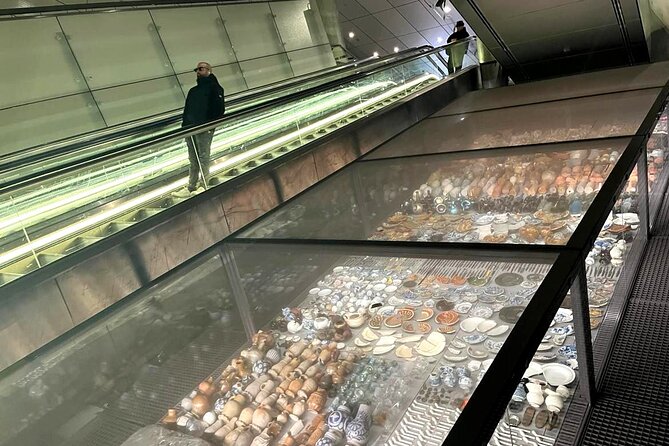
At Rokin Station, the focus shifts from art to archaeology. Excavations connected with the metro uncovered objects that can be more than 2,000 years old. These finds offer clues about Amsterdam and the people who lived in the area long before the modern underground system was built.
That contrast is one of the best reasons to take the tour. You are not only looking at a finished station. You are considering what construction brought to light and how the city’s present transport network sits on top of much older layers of human activity.
The guide can help you connect the physical location with the stories told by the archaeological material. The stop lasts about 15 minutes, so expect an introduction rather than a full archaeological lecture. Still, it adds time depth to the tour and keeps the experience from becoming a simple survey of modern design.
Admission is listed as not included at this stop. Since the supplied information does not specify a separate entrance fee, I would check the booking details if this point affects your budget. The €9 underground ticket is the clearly stated extra cost for the tour.
Vijzelgracht: Dutch music in a metro setting
Vijzelgracht brings a lighter but still distinctly local subject: popular Dutch music from the 20th century. This stop shows how a metro station can carry cultural memory in forms other than paintings, sculpture, or architectural detail.
If you know little about Dutch music, this part may give you useful background that you would not get from a conventional city walk. If you already enjoy music history, you can ask the guide to explain how the station’s presentation connects with popular culture.
The planned visit lasts 15 minutes, and there is no additional admission charge listed. Like the other stops, it works best as one piece of a larger story. The tour is not presenting a full concert history. Instead, it uses the station to show how public places can preserve and share everyday culture.
Same city, a completely different afternoon:
- Amsterdam: Rijksmuseum Entry Ticket
★ 4.7 · 25,535 reviews - Amsterdam: Classic Boat Cruise with Optional Cheese & Wine
★ 4.6 · 22,925 reviews - Amsterdam: Evening Cruise with Optional Wine and Snacks
★ 4.4 · 19,696 reviews - Amsterdam: 75 Minute City Canal Cruise with Audio Guide
★ 4.4 · 17,501 reviews
Nieuwemarkt: when metro construction met public resistance
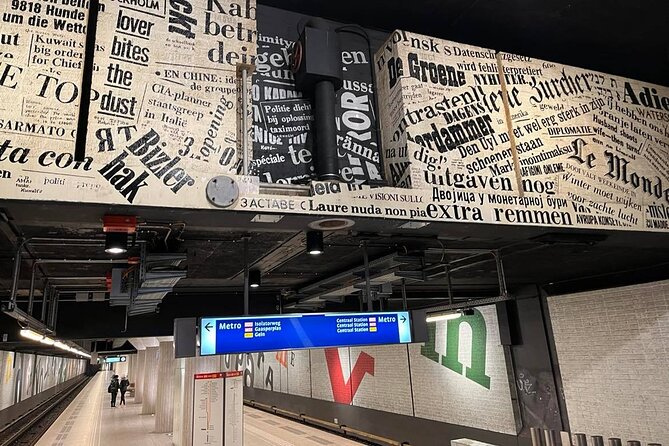
At Nieuwemarkt, the subject turns political. The old metro station helps explain why construction of Amsterdam’s first metro lines in the 1980s caused such strong resistance from local residents. The guide also connects those disputes with life in the city today.
This is an important stop because it gives you a practical sense of how transport projects can affect neighborhoods. Metro construction may promise faster travel, but it can also bring disruption, demolition, and arguments about who gets to decide what happens to a community.
The 15-minute visit cannot cover every detail of that conflict, but it gives you a lens for understanding Amsterdam’s civic culture. The city’s transport system was not built without opposition, and the argument still matters in how people think about development and public decisions.
There is no admission charge listed for this stop. You should expect a public station setting rather than a conventional museum display.
Noorderpark: the Amsterdam School and modern design
At Noorderpark, the tour explores the Amsterdam School, one of the Netherlands’ major architectural styles. The guide explains its influence on modern architecture and society, linking visual design with wider ideas about how people should live in a city.
This is a good section for you if architecture usually feels too technical. The Amsterdam School gives the guide a clear subject to work with, and the station provides a place to consider how design affects public experience. You will be looking at more than surface style. The discussion also concerns social ideas and the role of architecture in daily life.
The stop lasts about 15 minutes. The itinerary lists admission as not included, though no separate fee is stated. As with Rokin, confirm this detail when booking if you want an exact cost picture.
Amsterdam-Noord: ecology and public art at the finish
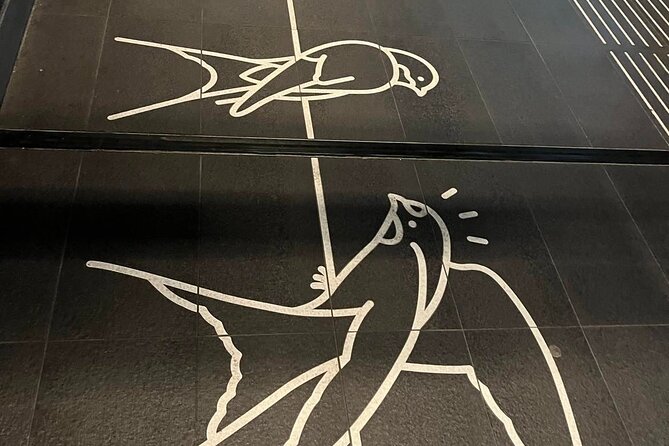
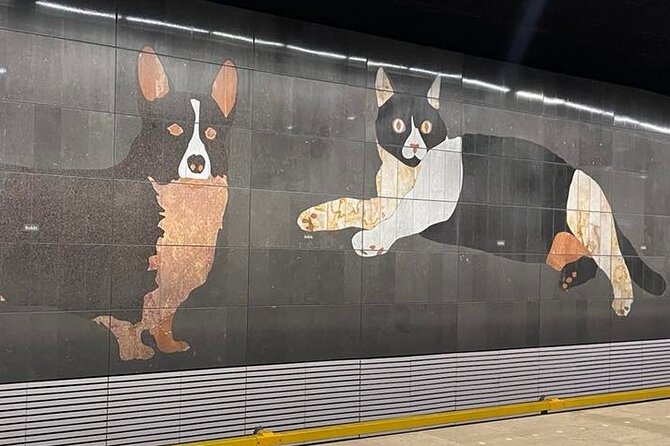
The final stop is Amsterdam-Noord, where the conversation turns to the local ecosystem, flora, and fauna. The guide connects these subjects with public art, showing how natural life can appear in the city’s visual culture.
This gives the tour a useful change of direction. You begin with major historical subjects and end by thinking about the environment around modern Amsterdam. The focus is not only on what the city built, but also on the natural setting it shares with plants and animals.
The tour ends here, not back at Centraal Station. That matters when planning your day. Amsterdam-Noord is a separate part of the city, so you should leave time to continue from the endpoint rather than assuming you will finish where you started.
There is no admission charge listed for this stop. The route’s final 15-minute section is also a reminder that this experience is a moving tour through the metro system, not a single-site visit.
What the private format adds
A private tour can be worth more than a standard group outing when the material invites questions. Here, the subjects range from colonialism to local protests, and from archaeological finds to the democratic process of choosing art for stations. You can ask for clarification when a subject needs more time, rather than waiting for a large group to move on.
Maria is the guide specifically identified in the available feedback. She is described as patient and well informed, and her approach includes pointing out nearby places of interest, such as the de Pijp market, rather than limiting the tour to the station artwork. That wider attention is useful because it helps you connect the underground route with the city above it.
The private setup does not mean the route is fully custom-made. The listed plan still follows six stops of about 15 minutes each. Think of it as a private explanation of a set route, with more personal attention than a large group tour.
Is $236.59 per person a fair value?
At $236.59 per person, this is not a casual add-on to a day in Amsterdam. The price makes sense only if you place real value on a specialist guide and a private group experience.
You are paying for a two-hour guided route through several parts of the city, not for entry to a major museum or a long sightseeing program. The tour includes the guide, but metro tickets cost another €9 per person. The supplied information also marks some stops as having admission not included, although it does not provide extra admission prices.
I would compare this with what you want from your Amsterdam visit. If you mainly want famous buildings and broad city views, the cost may feel high. If you have already seen the main sights and want a focused look at public art, civic debate, archaeology, and architecture, the private format gives the price a clearer purpose.
Group discounts are available, which may improve the value if you are booking for several people. Since only your group participates, the cost can also be easier to justify when divided among friends or family, depending on the discount offered.
Timing, tickets, and practical planning
The experience lasts about two hours and is offered in English. The six listed stops are each planned for around 15 minutes, leaving the remaining time for travel between stations and explanations along the way.
You need to budget for €9 metro tickets per person. The guide is included, but those underground fares are not. Wear something comfortable for moving between stations and allow enough time to reach the starting point at Stationsplein 13a, 1012 AB Amsterdam.
The ending point is Amsterdam-Noord. That is helpful if you want to continue exploring that part of the city, but less convenient if you have a timed booking near Centraal Station immediately afterward. I would avoid scheduling a tight connection after the tour.
Confirmation arrives at booking. The activity is near public transportation, and most people can participate. The cancellation rule is straightforward: cancel at least 24 hours before the local start time for a full refund. Cancellations or changes inside that window are not accepted for a refund.
Who will get the most from this tour?
I would recommend it to art lovers who want to see works outside the usual museum circuit. It also suits people interested in Amsterdam’s political past, public planning, architecture, and archaeology.
The tour should work well for a private family group or a small party of friends because the format allows questions and keeps the discussion focused on your interests. It may also suit repeat visitors who have already seen the main canal district and want a less familiar way to understand the city.
I would be more cautious if you have only one day in Amsterdam. With six stops, the experience covers a lot, but it does not focus on the city’s most famous sights. It is also not the best choice if you dislike using public transportation or prefer a slow walk with long stops.
Should you book Your Own Amsterdam: The Art Underground?
Book it if you want Amsterdam explained through its metro stations, with art serving as the path into history, politics, music, architecture, and ecology. The private format and Maria’s patient, attentive guiding style are the strongest reasons to choose it.
Skip it if $236.59 per person feels too high for two hours, or if you want a traditional tour of canals, museums, and historic streets. For the right audience, though, this is a thoughtful way to see how Amsterdam’s culture appears in places most people pass without a second glance. Add the €9 metro fare, plan for the finish in Amsterdam-Noord, and treat it as a specialist experience rather than a general introduction to the city.
FAQ
How long does the Art Underground tour last?
The tour lasts approximately two hours.
Is the tour private?
Yes. Only your own group takes part in the activity.
What language is the tour offered in?
The tour is offered in English.
Are metro tickets included in the price?
No. Underground metro tickets cost €9 per person and are not included.
Where does the tour start and end?
The tour starts at Stationsplein 13a, 1012 AB Amsterdam, and ends in Amsterdam-Noord.
Can I cancel for a full refund?
Yes. You can cancel at least 24 hours before the experience start time for a full refund. Changes or cancellations made less than 24 hours before the start time are not accepted for a refund.
Newest Amsterdam write-ups
- IJmuiden to Amsterdam Private Transfer★ 5.0 · 6 reviews
- Guided Bike Tour along the Dutch Tulip Fields in Noord Holland★ 5.0 · 9 reviews
- Zaanse Schans and Giethoorn Unique Day Trip with Boat Cruise★ 4.5 · 17 reviews
- Half-Day Private Guided Sightseeing Tour of Zaanse Schans★ 5.0 · 14 reviews
- Amsterdam to Schiphol Airport Transfer Comfort & service.★ 5.0 · 6 reviews
- Zaanse Schans Private Tour Windmills★ 5.0 · 18 reviews
- Bike tour in Amsterdam with an Italian guide★ 5.0 · 15 reviews
- Private Tour Zaanse Schans Windmills and Volendam in Jaguar★ 5.0 · 10 reviews