
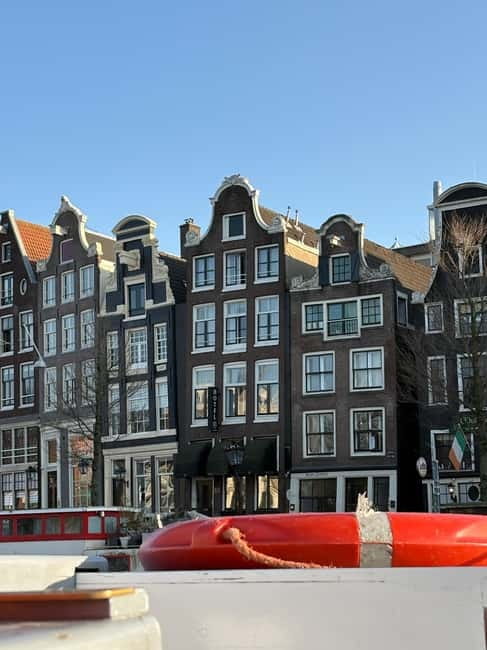
Reviewed · AMSTERDAM
Amsterdam: Kultour, Kulturelle Stadtführung mit Herz & Seele
Amsterdam’s story begins beneath your feet at the Beurspassage, where the Netherlands’ largest mosaic artwork works like a giant picture book. From there, this German-language walking tour links Amsterdam’s architecture, religion, colonial past, monarchy, and everyday life in one compact route.
I like the small group, limited to 10 people, and the way the tour looks beyond the postcard canals. I also like the cheerful mix of history and local detail, praised in one review as both interesting and entertaining, with historical facts and fun facts. The main consideration is simple: two hours on foot, rain or shine, requires good shoes and suitable clothing.
Key points to know before booking
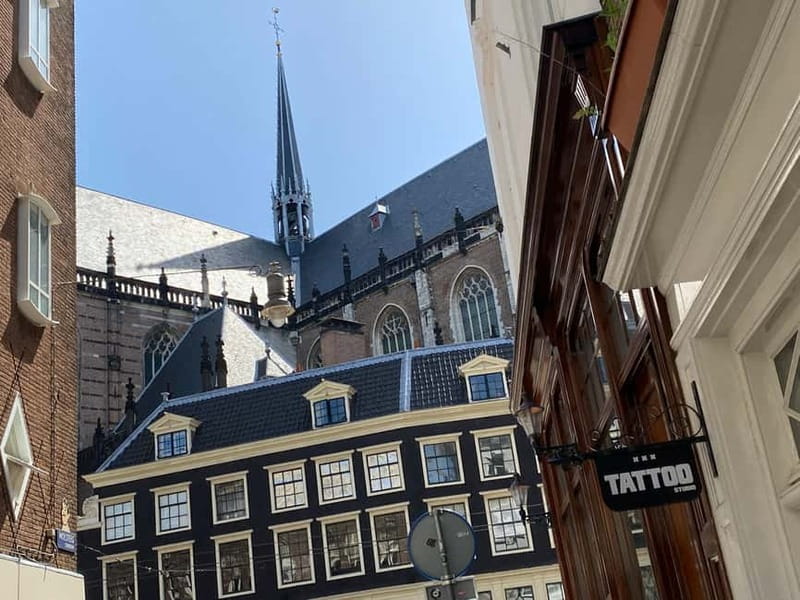
- The Beurspassage sets the tone: Amsterdam’s history is introduced through a large mosaic artwork rather than a dry list of dates.
- German is the tour language: A live local guide leads the walk in German.
- The route mixes famous and less expected subjects: Architecture, street art, religion, colonial history, the monarchy, and modern city life all enter the discussion.
- The group is kept small: With no more than 10 participants, you can stay close to the guide and ask questions without shouting across a crowd.
- The walk ends back at Beursplein: You begin near Damrak, opposite Primark, and return to the same meeting point.
- The price is $30 per person: For two hours with a professional local guide, that is fair value if German is your preferred tour language.
Starting with Amsterdam’s mosaic picture book

Meet your guide at Beursplein on Damrak, opposite Primark. Look for the black and white striped band worn by the guide. This is a useful meeting point in the center, but it can be busy, so give yourself enough time to find the right person before the scheduled start.
The first major stop is the Beurspassage. Its large mosaic artwork gives the guide a visual way to explain Amsterdam and the Netherlands. Instead of beginning with a long speech about dates and rulers, the tour uses details in the artwork as prompts for the city’s past.
That approach matters. Amsterdam can seem easy to understand at first glance: canals, narrow houses, bicycles, and busy streets. The mosaic helps connect those familiar images with larger themes. You can expect the guide to use it while discussing the city’s development and the forces that shaped life here.
The artwork also gives the group a sheltered and visually interesting opening, though much of the rest of the walk takes place outdoors. If the weather is poor, the tour still runs, so bring a waterproof layer rather than counting on a dry forecast.
Other Amsterdam outings people book alongside this one:
- Amsterdam Classic Saloon Boat Cruise with Drinks and Cheese
★ 5.0 · 31,825 reviews - Amsterdam Luxury Canal Cruise + Unlimited Drinks & Bites option
★ 5.0 · 30,518 reviews - Amsterdam: Heineken Experience Ticket
★ 4.6 · 30,055 reviews
Reading the city through buildings and street art
From the Beurspassage, the tour turns Amsterdam itself into the classroom. Historic buildings are not treated as isolated photo stops. Their building style and architectural features help explain how the city looked, grew, and functioned over time.
I like this kind of walking tour because architecture gives you something to watch while you listen. Look up at façades, notice the proportions of older buildings, and pay attention to how modern street art appears alongside older structures. The guide’s job is to connect those details with the people and institutions that shaped Amsterdam.
The route also includes street art, which keeps the walk from feeling like a march through a museum without walls. You get a sense of how the city’s past and present sit close together. One moment may concern an old building style; the next may point to a newer expression of city life.
Do not expect entry into museums or landmark interiors. Entry fees are not included, and the experience is a guided walk through public city spaces. That keeps the price down and allows the guide to cover more ground, but anyone wanting long indoor visits will need a separate plan.
Religion, colonial history, and the monarchy
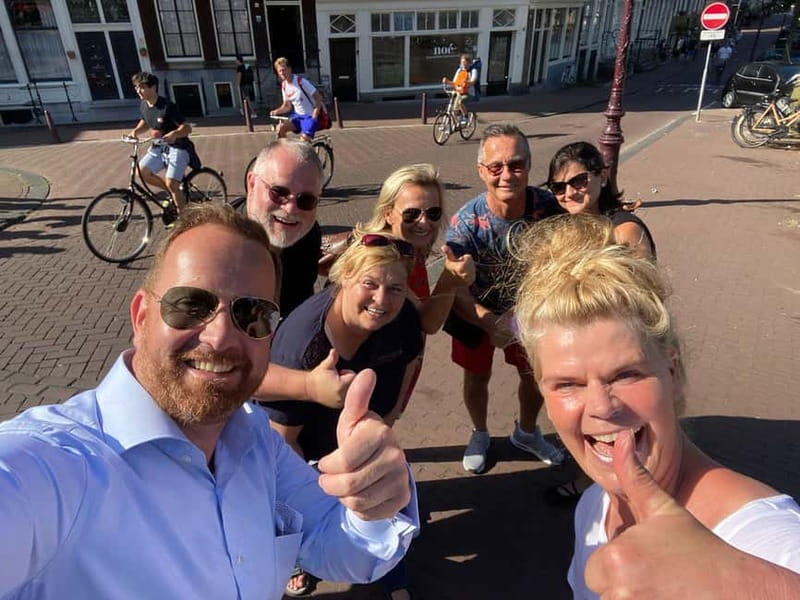
The tour takes on subjects that are important to understanding Amsterdam but are easy to miss when you simply follow the canals. Religion, the colonial past, and the monarchy are all part of the discussion.
These topics give the city a wider frame. Amsterdam’s buildings and public spaces are not just attractive scenery. They reflect changing beliefs, political power, trade, wealth, and national identity. A good guide can make those connections without turning the walk into a university lecture, and the advertised tone here is informative, cheerful, and entertaining.
The colonial past is especially worth including in a city tour. It adds context to Amsterdam’s prosperity and helps you look at familiar streets with more care. The tour does not promise a separate museum-style treatment, so expect an overview within the larger story rather than a long, specialized session.
The monarchy adds another layer. It helps place Amsterdam within the wider story of the Netherlands, while the focus remains on the city and its buildings. If you prefer history presented through places you can see, this format should suit you better than a talk held indoors.
Walking through the Grachtengordel
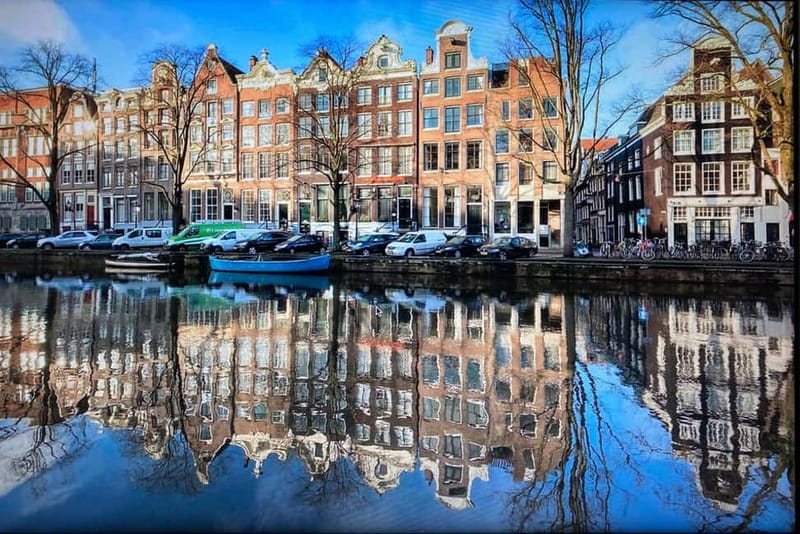
The route continues into the Grachtengordel, Amsterdam’s canal district. This is where the tour shifts from broad historical themes to local life and culture.
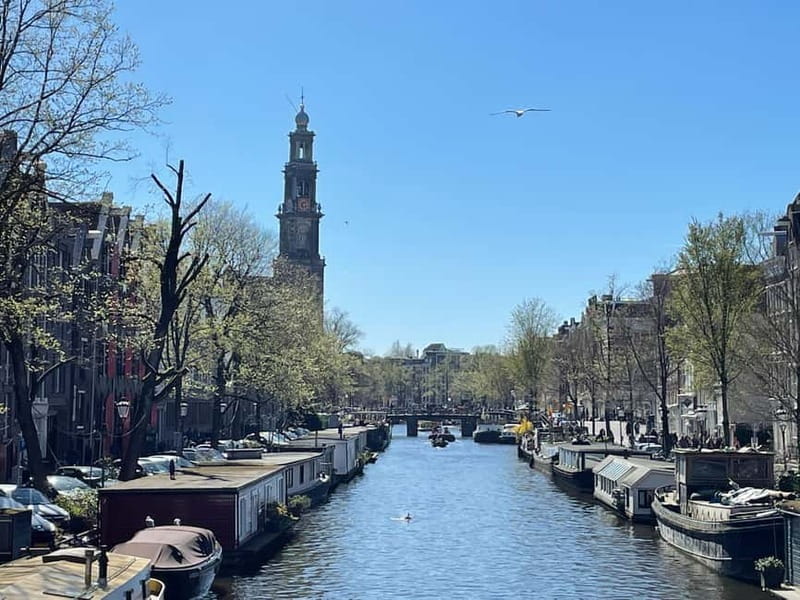
The canal belt is often photographed as a perfect scene of water, façades, and bridges. On this walk, you are encouraged to notice people using the area as a home, not just a backdrop. You may watch residents go about their day while the guide explains how the city feels from a local point of view.
That focus is one of the tour’s best features. A short visit to Amsterdam can easily become a checklist of major sights. The Grachtengordel section gives you time to think about the city as a lived-in place, with routines and neighborhoods beyond the main photo stops.
The route is not described as a strenuous hike, but it is still a two-hour outdoor walk. Comfortable shoes are essential. Bring water, wear comfortable clothes, and dress for the weather. Since the activity runs in all conditions, a light rain jacket or other outdoor layer is sensible.
Same city, a completely different afternoon:
- Amsterdam: Rijksmuseum Entry Ticket
★ 4.7 · 25,535 reviews - Amsterdam: Classic Boat Cruise with Optional Cheese & Wine
★ 4.6 · 22,925 reviews - Amsterdam: Evening Cruise with Optional Wine and Snacks
★ 4.4 · 19,696 reviews - Amsterdam: 75 Minute City Canal Cruise with Audio Guide
★ 4.4 · 17,501 reviews
What the small group changes
The group is limited to 10 participants. That matters more on a city walk than many people expect.
A guide speaking to a large crowd has to keep repeating information and may have trouble answering individual questions. In a group of 10, you can stay near the guide, hear the explanations more clearly, and ask about details that catch your attention. The setting should feel more like walking with a local guide than following a flag through the center.
The small size also suits a tour built around observation. You have a better chance of seeing the architectural details being discussed and of keeping the group together in busy streets.
There is one practical point to remember: the group size does not remove the normal challenges of a central Amsterdam walk. Streets may be crowded, and you will be outdoors for the full route apart from any brief sheltered moments. Keep your belongings compact. Large bags and luggage are not allowed.
How the $30 price measures up
At $30 per person, this is a reasonably priced introduction to Amsterdam, particularly for visitors who want a German-speaking guide. You receive two hours of guiding from a professional local guide, with a maximum of 10 participants.
The value comes from the explanation, not from included attractions. There is no food, drink, or admission ticket in the price. You are paying for the route, the guide’s interpretation, and the chance to understand what you are seeing.
I would consider the price fair if you are new to Amsterdam or want a cultural orientation early in your stay. The tour can help you notice architectural and historical details during later walks. It is less useful if you only want a quick transfer between famous sights or if you already know the city well.
The German language is a major part of the value. If you understand German comfortably, the guide can explain complicated subjects, local customs, and historical context in a way that may feel easier than following a tour in another language. The available rating of 4.8 from 21 reviews, along with praise for the entertaining blend of history and fun facts, supports the idea that the presentation is a strong part of the experience.
Who will enjoy this walk most
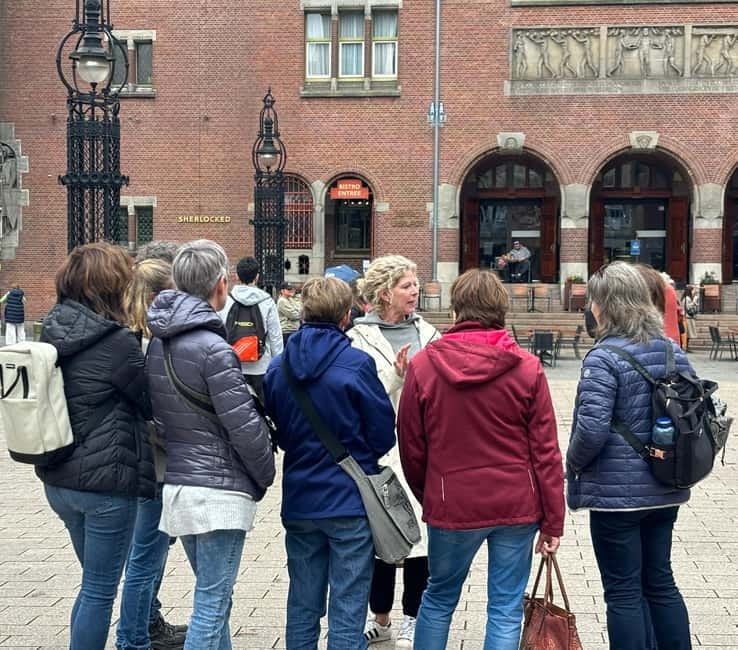
I would recommend this tour to first-time visitors who want a clear introduction without giving up half a day. Two hours is long enough to cover several themes and short enough to fit around a museum visit, lunch, or an independent afternoon.
It also suits German-speaking visitors who want more than a standard list of sights. The route covers local culture, building styles, religion, colonial history, the monarchy, and everyday life. That range makes it a useful first look at how Amsterdam works as a city.
Couples, solo visitors, and small parties should find the 10-person limit appealing. Families may also like the shorter format, though children who dislike walking or listening to historical explanations may need extra patience from adults.
This is not the best choice for someone looking for food tastings, museum entry, a private tour, or a deep focus on one subject. It is also a poor match if you want to avoid walking outdoors in bad weather.
The accessibility information needs careful attention. The activity is marked wheelchair accessible, but it is also described as not suitable for people with mobility impairments. Those statements do not fully agree, so contact the provider before booking if you use a wheelchair or have limited mobility. Do not assume the entire route will meet your needs without confirmation.
Practical advice for the meeting point and route
Plan to meet at Beursplein on Damrak, opposite Primark. The guide wears a black and white striped band, which should make identification easier in a busy central area.
Keep your bag small. Luggage and large bags are not allowed, and there is no reason to carry them on a two-hour city walk. Bring water and wear shoes that can handle hard city surfaces.
Dress for the forecast, but also prepare for a change. The tour takes place rain or shine. Comfortable clothing and outdoor layers will make the difference between enjoying the guide’s stories and spending the walk thinking about the weather.
The tour returns to the meeting point. That makes planning simple: you will not need to arrange transport from an unfamiliar neighborhood at the end. It also lets you continue independently from a central part of Amsterdam once the walk is over.
My verdict on the German Amsterdam walk
I like this tour because it treats Amsterdam as more than a collection of attractive canals. The Beurspassage mosaic gives the walk a memorable opening, while the later route through the Grachtengordel brings the discussion back to daily life.
The strongest features are the small group, the German-speaking guide, and the broad range of subjects covered in two hours. The tone is designed to be cheerful and entertaining, and the high 4.8 rating from 21 reviews fits the tour’s emphasis on clear history and fun facts.
Book it if you want a compact introduction to Amsterdam’s history and culture, especially in German. Skip it if you need indoor attractions, included refreshments, or a route designed for limited mobility without further confirmation. At $30, it offers solid value for a guided orientation, as long as you are ready to walk outdoors and bring your own weather protection.
FAQ
How long is the Amsterdam Kultour walking tour?
The tour lasts two hours.
What language is the tour conducted in?
The live tour guide speaks German.
Where does the tour start?
It starts at Beursplein on Damrak, opposite Primark.
How can I identify the guide?
Look for a guide wearing a black and white striped band.
Where does the tour finish?
The tour ends back at the meeting point.
How many people can join the group?
The group is limited to 10 participants.
What is included in the price?
The price includes the guided walking tour and a professional local guide.
Are food, drinks, or entry fees included?
No. Food, drinks, and entry fees are not included.
What should I bring?
Bring comfortable shoes, water, comfortable clothing, and outdoor clothing suitable for the weather.
Does the tour run in bad weather?
Yes. The tour takes place rain or shine, so dress appropriately and wear comfortable walking shoes.
Newest Amsterdam write-ups
- Amsterdam: Dutch Wine Tasting with Sommelier★ 4.8 · 46 reviews
- Amsterdam: Dutch Craft Beer Tasting with cheese and snacks★ 4.5 · 4 reviews
- Amsterdam: Amsterdam Dungeon and Canal Cruise Entry Ticket★ 4.5 · 43 reviews
- Amsterdam: Dutch Bitterballen and Croquette Tasting★ 3.9 · 193 reviews
- Amsterdam: Day Trip to Flower Parade & Keukenhof on April 18★ 3.8 · 37 reviews
- Amsterdam: De Nieuwe Kerk Entry Ticket★ 4.4 · 5 reviews
- Amsterdam: Day City tour with local Guide in German★ 5.0 · 24 reviews
- Amsterdam: Countryside Bike Tour and Zaanse Schans Windmills★ 4.9 · 152 reviews