Reviewed · TICKETS
Amsterdam: Fabrique des Lumières Dutch Masters Ticket
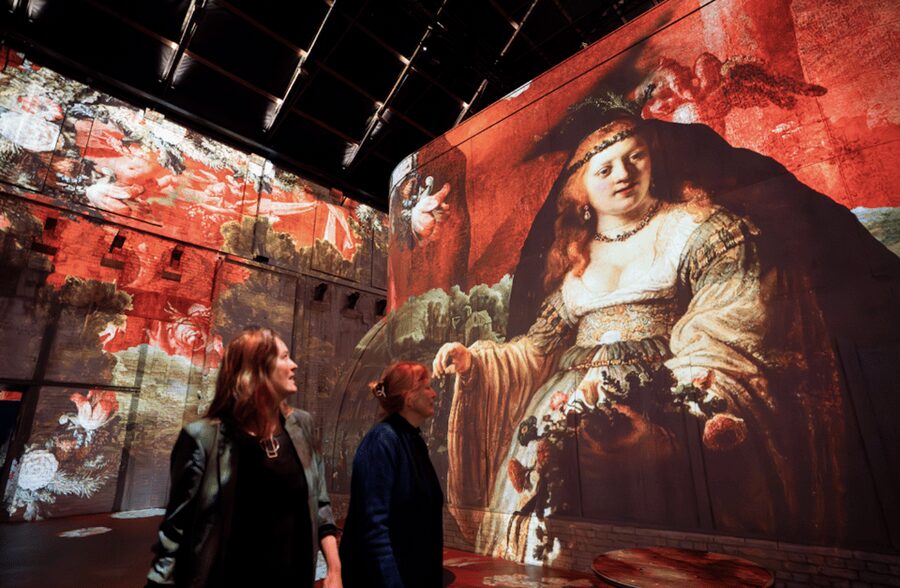
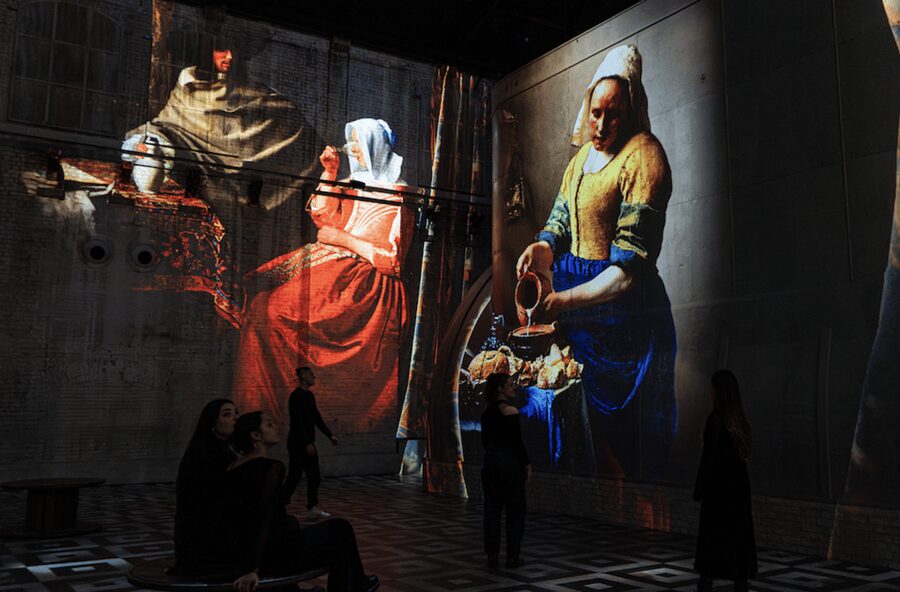
Amsterdam’s Fabrique des Lumières turns Dutch painting into a full-room show. Vermeer, Rembrandt, van Gogh, and Mondriaan appear on walls up to 17 meters high, with light, motion, and music carrying you through a former industrial space.
I like the scale of it, and I like the way the music gives the paintings an emotional pulse. At about $21, it is also a fair pick for a short cultural stop, especially if museum admission is sold out or you want something less formal than a gallery.
The main caution is timing. The Dutch Masters program is available only in the first and last time slot, starts exactly on schedule, and is shown once. Arrive late and you may miss part of the show. The hall can also feel cold, and much of the viewing happens from the floor.
Key points to know before you go
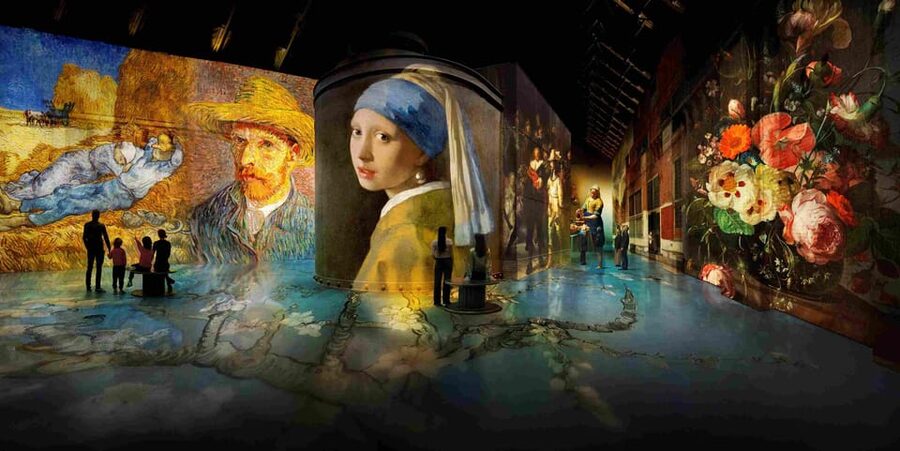
- Dutch art on 3,800 square meters: Projected paintings fill the walls, floor, and large industrial rooms rather than sitting inside frames.
- Vermeer, Rembrandt, van Gogh, and Mondriaan: The program moves from Dutch masterpieces to a shorter presentation on Mondriaan’s changing style.
- About an hour of viewing: The timed program is long enough to feel worthwhile without taking half a day from Amsterdam.
- First or last slot only: The Dutch Masters exhibition is not offered throughout the day, so check the schedule before arranging your plans.
- Bring a warm layer: The building may feel cold, and you cannot return to the lockers once you enter.
- A sensory show, not a museum lesson: You get atmosphere and scale more than detailed labels or close study of original brushwork.
Entering Fabrique des Lumières at Westergas park
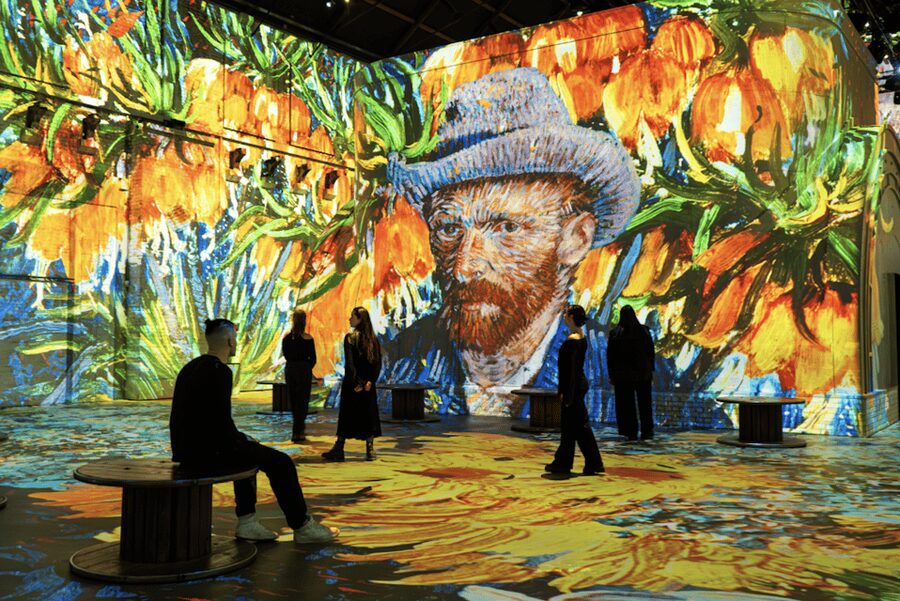
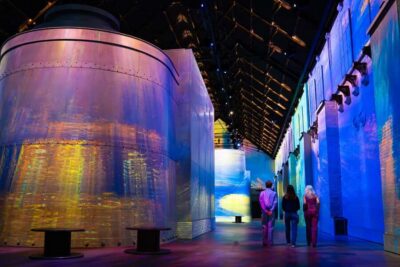
Fabrique des Lumières is in Westergas park, a former industrial area turned cultural district in Amsterdam. You arrive directly at the venue, not at a separate tour meeting point, and the setting gives the visit a different feel from the city’s traditional museums.
The building is large and spare, with high walls and plenty of open space. That matters because the show needs room to work. A small projection room would not give Vermeer’s interiors or van Gogh’s swirling skies enough space to surround you.
The venue is also easy to combine with a walk through the park and a stop at the coffee place nearby. I would allow extra time to find the entrance, especially if you are relying on traffic or unfamiliar city streets. One visitor missed the first 10 minutes after struggling with traffic and finding the building, and the fixed show meant there was no way to catch up.
Doors open 15 minutes before the booked time. Use that window to arrive, find the lockers, and get settled. Large bags, luggage, pets, and baby strollers are not allowed inside. Locker use is included, which is useful if you are carrying a day bag, but take out anything you may need before the doors close.
A few more Amsterdam tours and tickets worth comparing
- Amsterdam: Heineken Experience Ticket
★ 4.6 · 30,055 reviews - Amsterdam: Rijksmuseum Entry Ticket
★ 4.7 · 25,535 reviews - Amsterdam: Icebar Entry Ticket with 3 Drinks
★ 4.2 · 14,562 reviews
A timed show that does not wait for late arrivals
This is not a come-and-go gallery. The exhibition starts exactly at your chosen time, and the Dutch Masters program is shown only once. Fabrique des Lumières closes after the performance, so punctuality is more important here than at a normal museum.
That single-show format helps the presentation feel like a planned visual sequence. The room changes from one scene to the next, and the music and projections are arranged as a continuous program. You are not simply wandering past separate screens.
The trade-off is less freedom. You cannot arrive halfway through and decide to stay longer for the part you missed. You also cannot leave for the lockers and return during the show. Build in a generous travel margin, especially if you are coming from central Amsterdam during busy traffic.
The advertised ticket is valid for one day, but that refers to the date and entry arrangement, not unlimited re-entry. Treat your selected time as firm.
Dutch Masters spread across giant walls
The main program presents Dutch art in a way that changes your sense of scale. A painting that normally fits inside a museum frame may cover a wall several stories high. Details can appear, move, fade, and return while music guides the mood.
Vermeer’s quiet domestic scenes benefit from the contrast between intimate subject matter and a huge room. You may notice familiar elements such as light, rooms, and figures in a new way because the projection lets them appear around you instead of in front of you.
Rembrandt brings a stronger sense of faces, shadow, and human expression. The large format can make a portrait feel less like a fixed object and more like a moment unfolding. This is not the same as seeing an original painting, but it gives you time to notice how light shapes the image.
Van Gogh supplies the most obvious visual motion. Brushstrokes, skies, fields, and colors can spread across the walls in a way that makes the paintings feel active. If you usually find museums quiet or intimidating, this format offers a more direct entry into the artist’s work.
The program also connects art with ordinary life. Dutch painters often found drama in rooms, streets, workers, faces, and daily routines. Here, those scenes become a moving sequence rather than a list of famous titles.
Music, light, and the emotional side of art
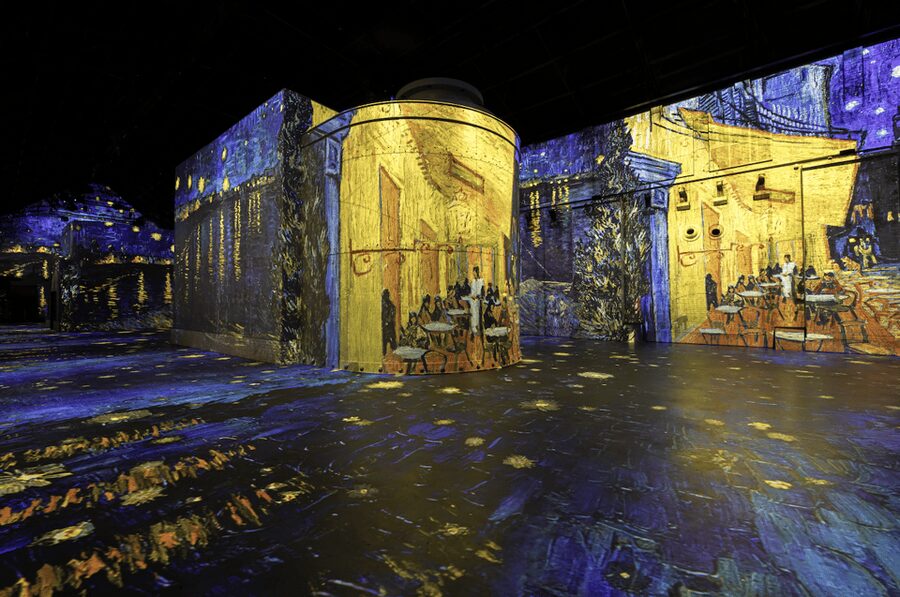
The strongest part of the experience is the match between soundtrack and image. Music is not just background noise. It helps set the speed and feeling of each section, from calm passages to more dramatic color changes.
That combination explains why some people find the show surprisingly emotional. You are not standing alone in front of one painting with a wall label. You are surrounded by a sequence of images, sound, and changing light. The effect can feel closer to a concert or film than to a standard art exhibition.
The same feature can also be the show’s weakness. If you want dates, materials, artistic influences, or detailed explanations of each painting, you may want more information than the presentation provides. Some sections offer context, but this is mainly a sensory introduction rather than a full art lesson.
I would use it as a companion to Amsterdam’s museums, not a replacement for them. See the digital presentation first, then visit a museum if you have time. After watching paintings expand across the walls, you may look more closely at the real works and understand how much detail and restraint can fit inside a small frame.
Same city, a completely different afternoon:
- Amsterdam Classic Saloon Boat Cruise with Drinks and Cheese
★ 5.0 · 31,825 reviews - Amsterdam Luxury Canal Cruise + Unlimited Drinks & Bites option
★ 5.0 · 30,518 reviews - Amsterdam: Classic Boat Cruise with Optional Cheese & Wine
★ 4.6 · 22,925 reviews - Amsterdam: Evening Cruise with Optional Wine and Snacks
★ 4.4 · 19,696 reviews
The short Mondriaan program after the main show
After the Dutch Masters presentation, you get a shorter program about Piet Mondriaan. It follows his move away from traditional painting toward the geometric style associated with neoplasticism.
This section gives the evening a useful change of pace. Instead of staying with familiar Dutch interiors and portraits, you watch an artist simplify and reorganize the picture plane. Lines, blocks, and color relationships become the subject.
For some people, Mondriaan is easier to understand in motion than in a static image. The projection can show how a style changes over time and how the artist moved toward a more visionary approach. It also gives the program a link between classical Dutch painting and modern art.
Do not expect a long separate lecture. The Mondriaan section is a short program following the main exhibition. If you are most interested in one artist, check the current schedule and program details when booking, since the presentation format may change.
Where you can sit, and why a warm layer helps
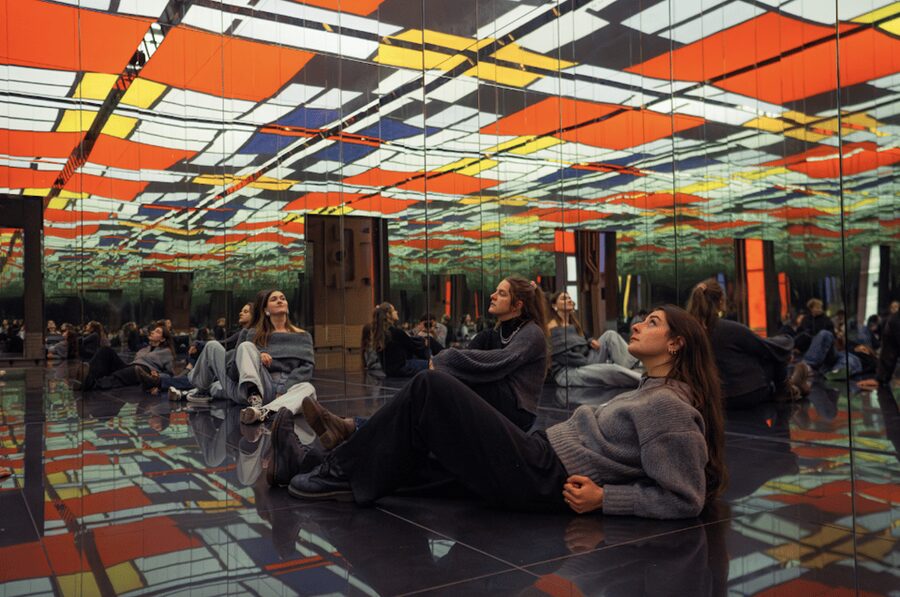
There is room to move around, and you do not have to stand in one fixed place. The open floor lets you choose your view and change position as the images move across different walls.
Seating is informal. Much of the show is watched from the floor, with some places to sit and relax. A few visitors wanted more proper seating and found the floor cold. I would wear comfortable clothes and bring a warm layer, especially in cooler weather.
Your position changes the experience. Standing close to a wall gives you a stronger sense of scale, but it can make the image harder to read as a whole. Sitting farther back lets you take in the room and see how the projections connect.
Try not to settle immediately at the entrance. Move a little, look for a clear view, and then choose a place that suits you. The show does not depend on one perfect seat, but the angle affects how much of the room you can see.
The practical limits of a large digital exhibition
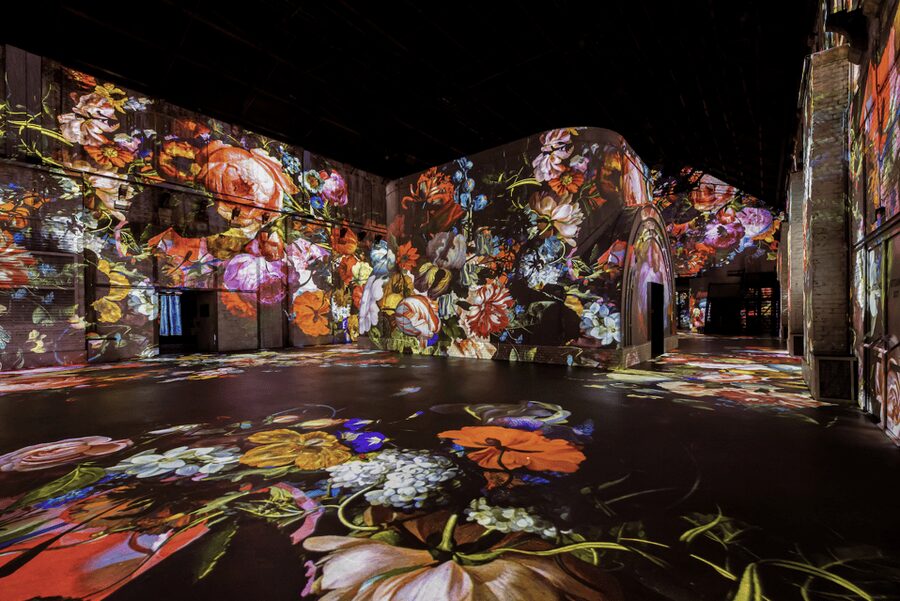
This is a family-friendly idea in theory, but the atmosphere depends on the crowd. Children running or talking loudly can interrupt the quieter parts. Because the room is dark and the images are designed to hold your attention, even a little noise can be noticeable.
There are no guides leading the program. You follow the timed presentation yourself, with the art, sound, and any on-site information doing the work. That keeps the visit simple, but it also means you should not expect a personal explanation or the chance to ask questions.
The building is wheelchair accessible, which makes the large open rooms easier to use for many visitors. At the same time, baby strollers are not allowed, and there is no return to the locker area once you enter. People with epilepsy should not attend because of the projected lights.
English access can depend on where you sit when spoken information appears. If that matters to you, choose a position where you can clearly hear the audio. The visual program remains understandable without catching every word, but detailed context is easier with good sound.
Is $21 a fair price?
At $21 per person, this is not a cheap add-on like a quick photo stop. It is a ticketed cultural attraction with a timed performance, a large venue, locker use, and roughly an hour of main-show entertainment plus the Mondriaan segment.
I think the value is good if you enjoy visual art, music, design, or unusual venues. It is especially practical when you cannot get a ticket to the Van Gogh Museum, or when you want to give a museum-shy companion an easier first contact with Dutch art.
The value is less convincing if your main goal is to study original paintings. You will not see brush texture, canvas size in its true proportions, or the quiet details that make a museum visit special. You are paying for scale, movement, sound, and the feeling of being inside a sequence of images.
The duration helps the calculation. An hour is long enough to feel like a proper outing, but short enough to fit into a day that already includes canals, museums, and neighborhoods. One visitor found the experience a little expensive because there was not much else to do inside. That is fair. This is one carefully produced show, not a full museum complex.
Who will enjoy this most?
I would choose Fabrique des Lumières for you if you want a low-pressure cultural activity with a strong visual effect. It suits first-time art visitors, couples, families who can keep children settled, and anyone who likes music-led shows or digital design.
It also works well before or after a visit to Amsterdam’s traditional museums. The digital version can help you recognize artists and themes before you stand in front of original works. If you have already seen Dutch paintings in museums, the projections may give familiar pieces a fresh angle.
You may want to skip it if you dislike loud sound, flashing light, floor seating, cold rooms, or fixed schedules. It is also not suitable for people with epilepsy. Someone seeking a quiet, scholarly presentation will likely get more from a museum with labels, galleries, and time to study one painting.
My booking advice
Book this experience if you want Dutch art to feel large, musical, and immediate. The most memorable parts are the wall-sized projections, the carefully matched soundtrack, and the shift from Dutch Masters to Mondriaan’s cleaner modern style.
Choose the first or last available time slot, arrive at least 15 minutes early, and leave extra time for the trip to Westergas park. Wear something warm, use the lockers before entering, and do not count on making up missed minutes.
At $21, it is a sensible choice for a one-hour cultural break, but not a substitute for Amsterdam’s original paintings. For the best result, pair the show with a real museum visit or a walk through Westergas park. You get spectacle here, while the museums give you the quiet and detail.
FAQ
Where is Fabrique des Lumières located?
Fabrique des Lumières is located in Westergas park in Amsterdam, in North Holland. You should arrive directly at the venue.
How long does the experience last?
The Dutch Masters program is about one hour based on the stated show duration in the activity information and visitor experience. A shorter Mondriaan program follows the main exhibition.
What artists are included?
The main presentation features Dutch Masters including Vermeer, van Gogh, and Rembrandt. A separate short program focuses on Mondriaan and his artistic development.
Is the ticket timed?
Yes. You receive a timed entry ticket, and the exhibition begins exactly at the booked time slot.
Can I arrive late and watch the show from the beginning?
No. The exhibition is shown only once and starts at the booked time. If you arrive late, you may miss part of the presentation.
When is the Dutch Masters exhibition available?
The Dutch Masters exhibition is available only during the first and last time slot of the day. Check the available start times before booking.
Are lockers included?
Yes. Locker use is included with the ticket. You cannot return to the lockers after entering, so take anything you need with you before the show starts.
Is Fabrique des Lumières wheelchair accessible?
Yes, the activity is wheelchair accessible. Baby strollers, luggage, and large bags are not allowed inside.
Is the experience suitable for people with epilepsy?
No. The experience is not suitable for people with epilepsy because of the projected lights.
Newest Amsterdam write-ups
- Zaanse Schans: Half-Day Private Guided Tour★ 5.0 · 4 reviews
- Zaanse Schans: Private Cruise + Live Guide, Optional Drinks★ 4.7 · 26 reviews
- Zaanse Schans: Wooden Shoe Painting Workshop★ 4.9 · 23 reviews
- Amsterdam: Private Zaanse Schans Windmills and Volendam Trip★ 4.9 · 31 reviews
- Zaanse Schans: Pancake Restaurant Visit★ 4.5 · 26 reviews
- Amsterdam: Zaanse Schans E-Bike Tour with Windmills & Cheese★ 4.5 · 12 reviews
- Zaandam: Paint a Perfect Portrait workshop★ 5.0 · 5 reviews
- Volendam: Volendams Museum Entry Ticket★ 4.4 · 14 reviews
Tickets, compared.

Keukenhof Ticket and Roundtrip Shuttle Transfer
Read our review →