

Reviewed · TICKETS
Amsterdam: Allard Pierson Heritage Collections Entry Ticket
The most unusual part of the Allard Pierson is its range. In one visit, you can move from Egyptian hieroglyphs and mummy portraits to Roman glass, medieval books, 17th-century atlases, and an attic filled with plaster copies of Greek and Roman statues. It feels less like a single-subject museum and more like a tour through the ways people have recorded, pictured, and studied the world.
I like the chance to focus on Amsterdam’s book history, and I especially like the large map and atlas collection. The main drawback is that the museum may feel broad rather than deeply focused, so it suits curious first-time visitors better than someone seeking a specialist study of one period.
Key points to know before you go
- Ancient objects meet modern Amsterdam: Follow the story from early writing and Assyrian merchants to book production and theatre makers in Amsterdam.
- The atlas collection is a major draw: You can see why maps and books were once powerful tools for travel, trade, scholarship, and status.
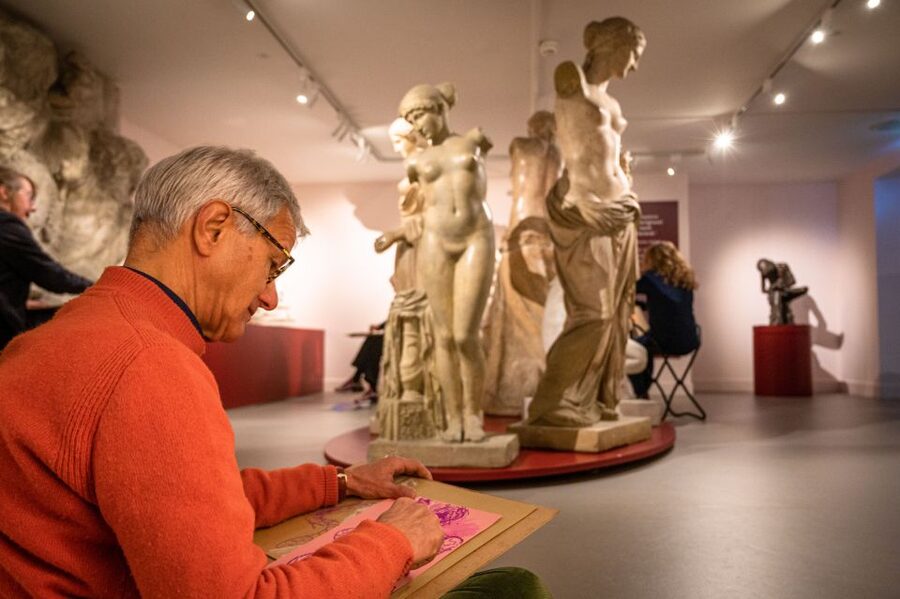
- The attic plaster casts are different from the usual museum display: The Greek and Roman collection includes copies of famous classical statues, with an audioguide provided.
- The Egyptian and Sudanese galleries add an older time scale: Hieroglyphs, mummy-related objects, and ancient material help set the later collections in context.
- Face to Face focuses on real individuals: The temporary exhibition brings together about 38 Roman-period Egyptian mummy portraits.
- Your $18 ticket covers a full day: It includes both permanent and temporary exhibitions, making the price reasonable if you allow enough time to explore.
Why the Allard Pierson feels different from a standard museum
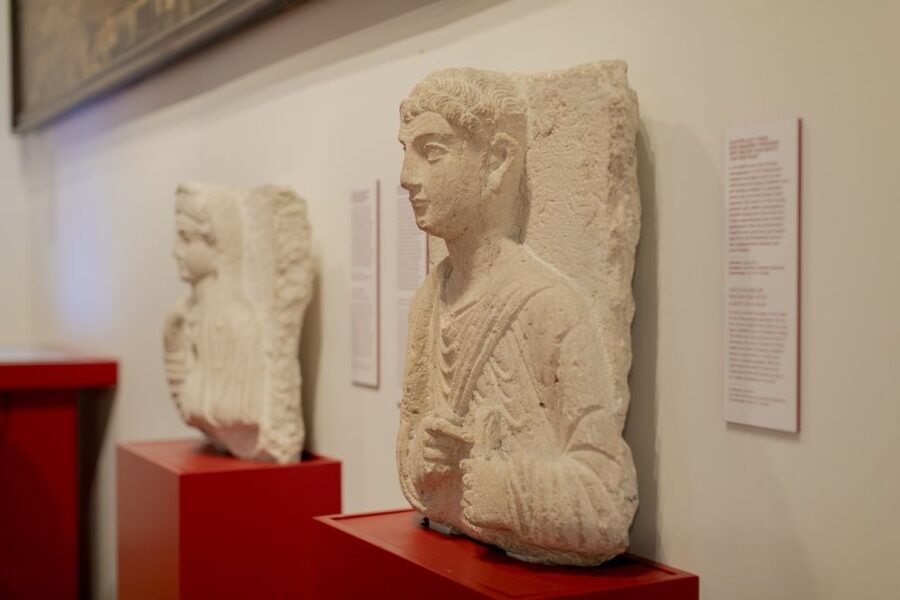
The Allard Pierson is built around collections rather than one famous monument or one narrow era. Its displays connect archaeology, cartography, books, church history, zoology, and related fields. That mix can be its greatest strength, but it also shapes how you should plan your visit.
You are not simply moving from one gallery of objects to the next. The museum asks how people have gathered information and passed it along. Writing, drawing, printing, collecting, copying, and preserving all form part of the story.
I find that approach useful because it links objects that might otherwise seem unrelated. A clay or stone inscription, a manuscript, a printed cookbook, and a detailed atlas all show a human desire to organize experience. You can look at the objects for their beauty, then consider what they reveal about the people who made and used them.
The museum is particularly well suited to you if your interests are spread across art, archaeology, books, travel, or the history of ideas. If you prefer a tightly edited collection devoted to one famous artist or one archaeological site, the wide scope may feel less satisfying.
More history walks in Amsterdam:
- Amsterdam Food and Cultural Tour with Tastings
★ 5.0 · 2,442 reviews - Amsterdam: Haunted History and Ghost Walking Tour
★ 4.5 · 488 reviews - Amsterdam High-End Dutch Food & History Tour – Up to 8 guests
★ 5.0 · 482 reviews
Start with the story of writing and curiosity
The permanent presentation begins with a large question: how have people tried to understand and preserve the world around them? That story reaches back to the origins of writing and continues through early industrial book production.
This gives the visit a useful backbone. Instead of treating every object as an isolated treasure, you can see writing as a tool for administration, religion, trade, storytelling, and memory. The displays include Egyptian hieroglyphs, and they help establish how much human communication depends on systems that can survive long after the original speaker is gone.
You may also encounter references to Assyrian merchants and theatre makers in Amsterdam. Those subjects help widen the story beyond kings and monuments. Trade requires records, theatre depends on scripts and performance, and cities create new forms of exchange between people, ideas, and objects.
I recommend taking your time with the explanatory material here. The museum’s value is not only in the individual pieces. It is in the links between them, particularly the shift from early writing to printed material and mass book production.
Egyptian and Sudanese collections
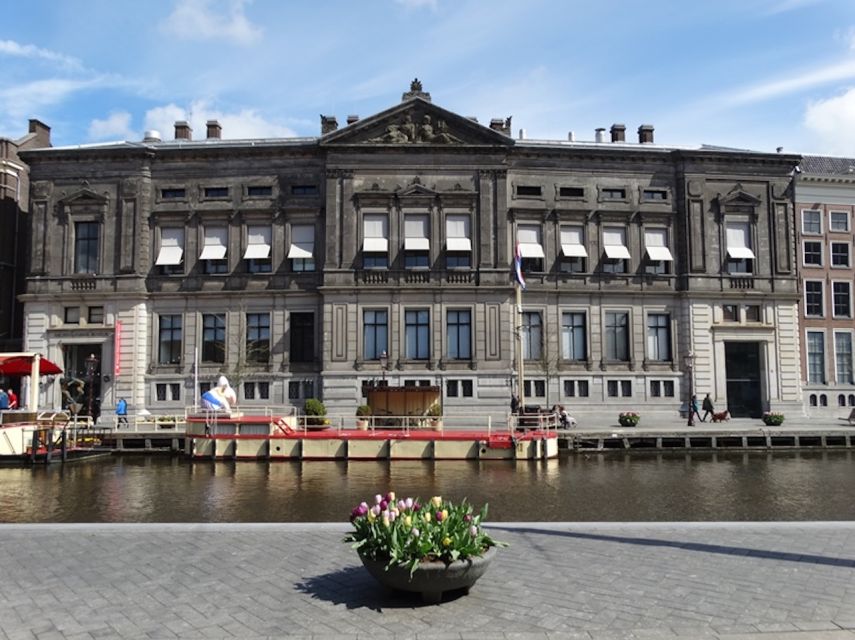
The Ancient Egyptian and Sudanese collections provide some of the oldest material in the museum. Hieroglyphs, objects connected with ancient life, and other archaeological pieces give you a direct look at societies that used writing, images, and ritual to make sense of the world.
The Egyptian material also prepares you for the temporary exhibition on mummy portraits. Seeing the broader collection first can help you understand that these portraits are not simply paintings from a distant past. They belong to a period when Egyptian traditions and Roman influence met.
The Sudanese material adds an important geographical range. The presentation is not limited to the most familiar image of ancient Egypt. It encourages you to think about the wider Nile region and the cultures connected to it.
Because the museum covers several subjects, some displays may be more appealing to you than others. Give the Egyptian and Sudanese galleries extra time if ancient history is your main reason for visiting. If you are with family or friends who prefer books and maps, the museum’s variety makes it easier to split your attention without running out of material.
Face to Face and the people behind mummy portraits
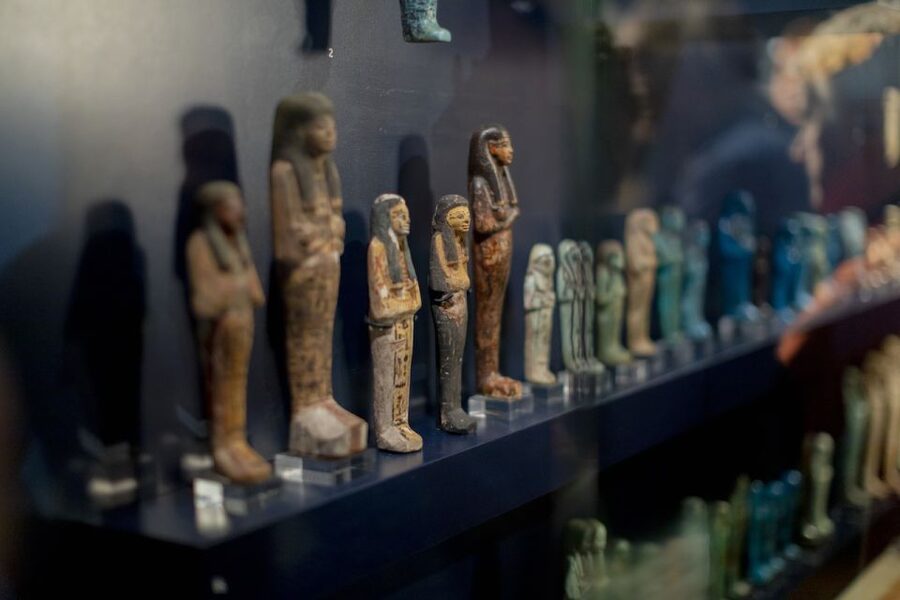
The temporary exhibition, Face to Face: The People Behind Mummy Portraits, is scheduled from October 6 through February 25. It is described as the first exhibition about ancient Egyptian mummy portraits in the Netherlands, and it brings together about 38 portraits from collections around the world.
These works were painted on wooden panels during the Roman period in Egypt, from the first to the fourth century AD. They were placed over the faces of mummified people and are often called Fayum portraits, after the region where many were found.
The appeal is immediate. These are not only ancient images of idealized rulers or anonymous figures. They show individuals who wanted to be remembered, and the paintings give you a rare sense of personal presence from nearly 2,000 years ago.
The exhibition also looks beyond the painted faces. You can learn about the artists, descendants, later collectors, archaeologists, and researchers connected with the portraits. That wider view matters because the objects have had several lives: they were made for burial, excavated much later, collected, studied, and now displayed for a modern audience.
Loans from the Louvre, the J. Paul Getty Museum, and other international collections add range to the show. Since the exhibition is temporary, check the dates carefully when planning your visit. If your trip falls outside the listed period, the permanent collections remain the main reason to go.
A few more Amsterdam tours and tickets worth comparing
- Amsterdam: Heineken Experience Ticket
★ 4.6 · 30,055 reviews - Amsterdam: Rijksmuseum Entry Ticket
★ 4.7 · 25,535 reviews - Amsterdam: Icebar Entry Ticket with 3 Drinks
★ 4.2 · 14,562 reviews - Amsterdam: Keukenhof Ticket and Roundtrip Shuttle Transfer
★ 4.7 · 11,799 reviews
Greek pottery, Roman glass, and classical casts
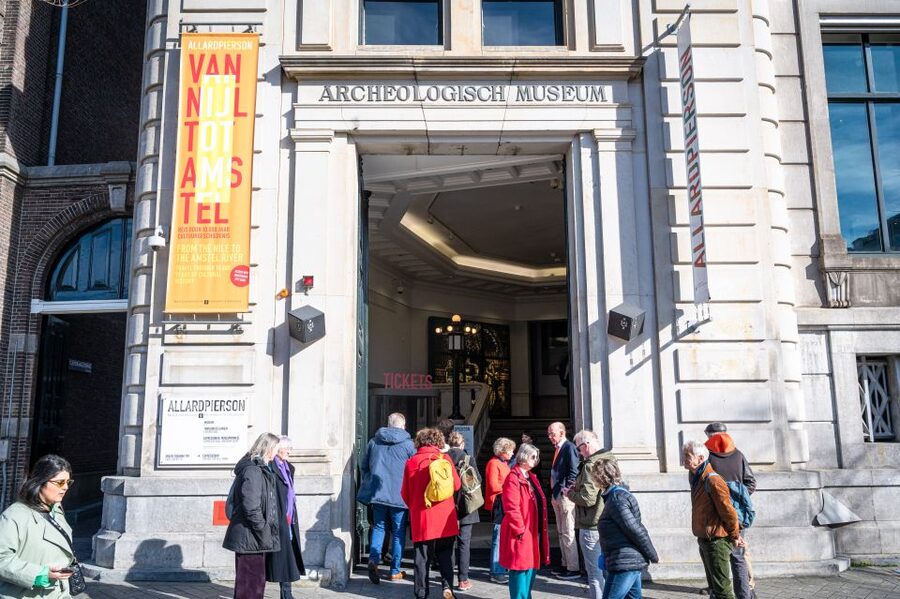
The museum’s Greek and Roman material gives you another way to approach the ancient world. Greek pottery can show how practical vessels also carried images and stories, while Roman glass offers a glimpse of craft, trade, and everyday use.
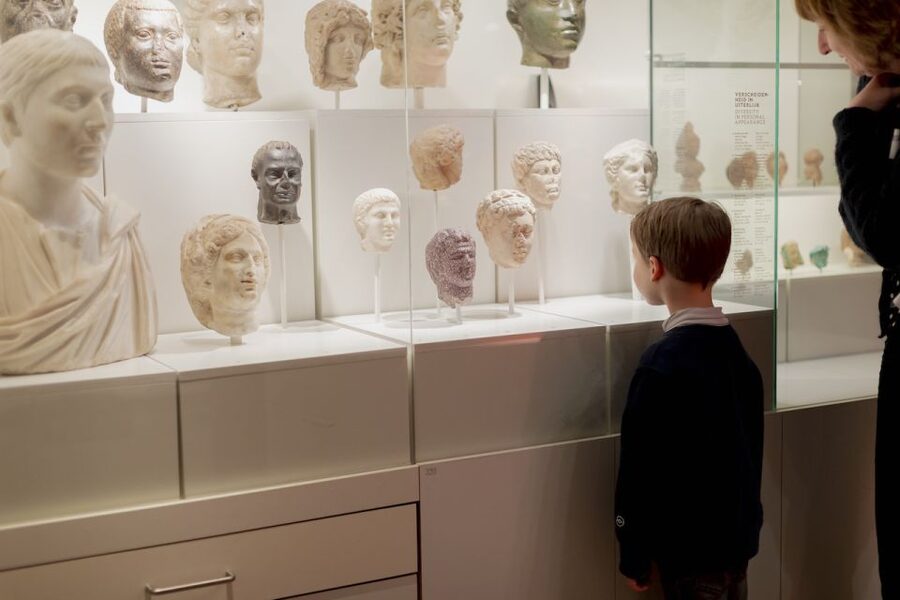
The plastercast collection is one of the museum’s more distinctive features. It is housed in an attic and includes casts of famous classical statues. These are copies, not original sculptures, so you should not expect the same experience as seeing an ancient marble in an archaeological museum.
Still, the casts have real value. They show how classical art was reproduced, studied, taught, and shared. A copy can tell you something about the long afterlife of an artwork, especially when the original is far away or too fragile to handle and display.
An audioguide is included for the plaster collections. This is worth using because the background can help explain why plaster casts were made and how the collection fits into the museum. The provided information does not name a specific guide, but English is available.
The attic setting also gives this section a different character from a standard gallery. I would make it a planned stop rather than something you rush through at the end. If classical sculpture is your main interest, allow enough time to listen to the audioguide and compare the different casts.
Amsterdam’s books, maps, and atlases
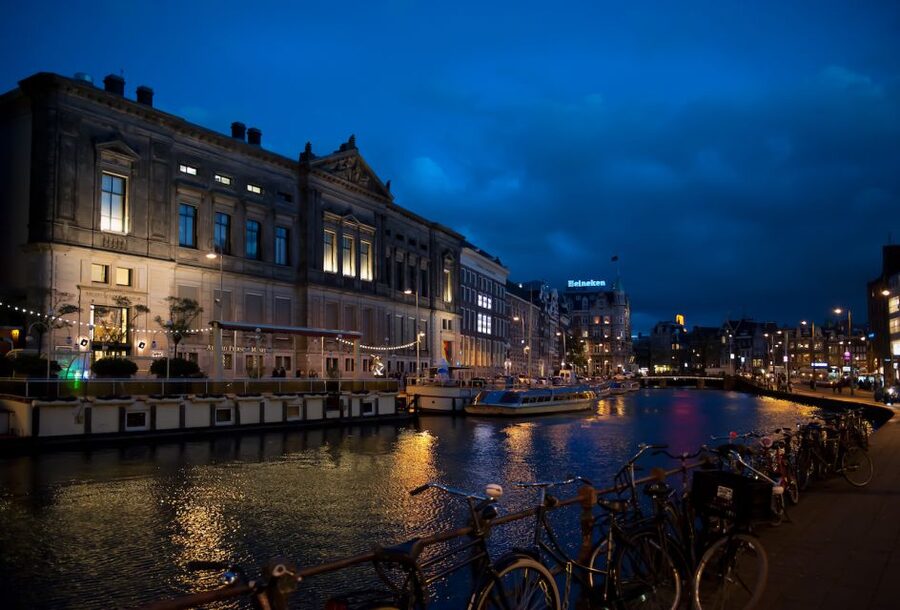
The museum’s book history section brings the story forward into the medieval and early modern periods. Medieval manuscripts show how books were produced and valued before industrial printing. Later books and cookbooks reveal how printed material entered daily life.
I particularly like that cookbooks appear alongside more formal books. They point to the practical side of reading and writing. Books were not only for theology, law, or scholarship. They also recorded instructions, habits, and ordinary concerns.
The 17th-century maps and atlases are another major reason to visit. The collection is described as one of the largest in the world, and it gives you a chance to see maps as more than navigation tools. They could record ownership, support trade, display technical skill, and shape how people imagined distant places.
Spend time looking closely at the design and detail. You may find that the maps reward slow viewing more than a quick walk past glass cases. Their importance is not only geographic accuracy. They also show what information mattered to the people who commissioned, printed, sold, or used them.
The Amsterdam book history material gives the museum a local anchor. The collections reach across ancient Egypt, Greece, Rome, and the wider world, but this section brings the focus back to the city. It helps explain how Amsterdam became a place where books, maps, ideas, and commerce met.
How long should you allow?
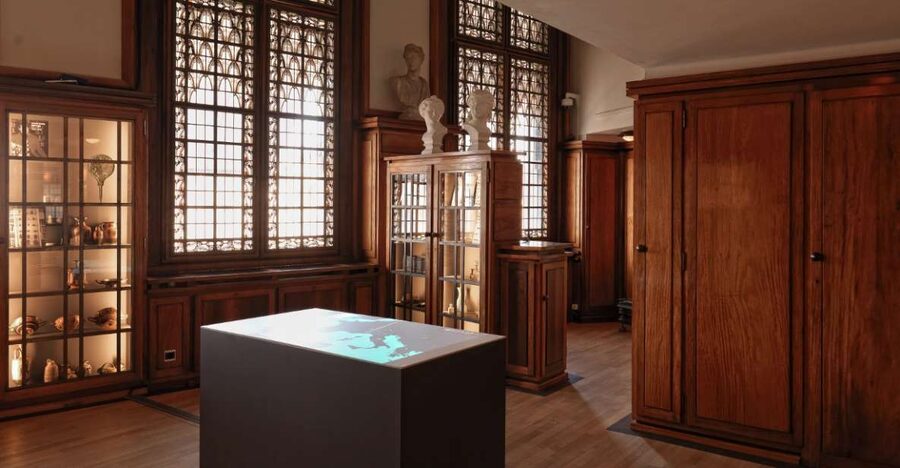
The ticket is valid for one day, so you are not pushed into a short timed experience. The data provided does not give a fixed visit length or a detailed sequence, but the number of collection areas makes a rushed visit a poor choice.
For a quick overview, you could focus on the Egyptian and Sudanese collections, the mummy portrait exhibition if it is running, the maps and atlases, and the plaster casts. To read the displays carefully and use the plaster collection audioguide, you will want more time.
I would treat the museum as a half-day stop rather than a quick hour. The full-day ticket is especially useful if you prefer to pause for coffee, return to a section, or combine the museum with other Amsterdam plans.
The café and museum shop are included as accessible facilities, though food and purchases are not part of the ticket price. Having those spaces on site makes it easier to pace yourself during a longer visit.
Is $18 a fair price?
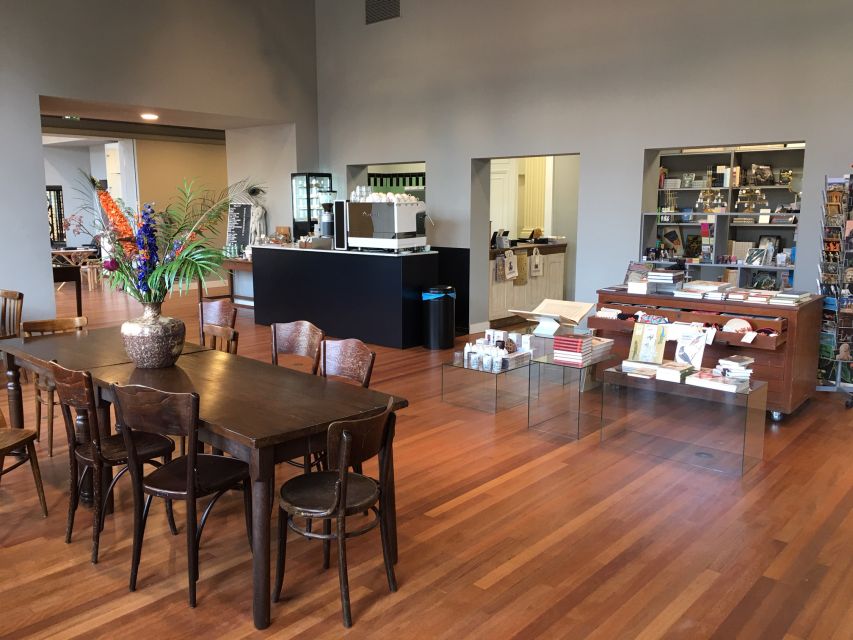
At $18 per person, the ticket is good value if you are interested in at least two or three of the museum’s main subjects. The admission covers the permanent exhibitions, the temporary exhibition, and access to the museum shop and café. It also includes the audioguide for the plaster collections.
The value is weaker if you only want to see one small display. This is not a single blockbuster attraction with one famous object carrying the whole visit. You are paying for breadth, changing exhibitions, and the chance to follow several connected stories under one roof.
The temporary exhibition can improve the value during its scheduled run because it adds loans from major international collections and about 38 mummy portraits. Outside that period, you should decide based on your interest in the permanent collections.
The reserve-now, pay-later option is helpful if your schedule is still shifting. You can book without paying immediately, and free cancellation is available up to 24 hours in advance for a full refund.
Who will enjoy this museum most?
I would recommend the Allard Pierson to you if you like museums that reward curiosity rather than a strict route. It suits readers, map lovers, archaeology fans, students of ancient cultures, and anyone interested in how objects move from private use into public collections.
It is also a practical choice for a mixed-interest group. One person can focus on Egyptian objects, another on manuscripts and atlases, and someone else on Greek and Roman casts. The broad subject range reduces the chance that everyone will be bored at once.
Families and younger visitors may appreciate the variety, though the information-heavy displays may require patience. The museum is wheelchair accessible, which makes it easier for visitors who need step-free access.
You should think twice if you want a guided walking tour with a named expert leading the entire visit. The listed host or greeter is English-speaking, but the experience is primarily a museum entry ticket, not a long guided tour through every collection.
Practical details that affect your visit
The ticket is valid for one day, with starting times shown when you check availability. Since no fixed visit duration is given, you can plan around your own pace rather than follow a strict itinerary.
English is listed as the available language. The plaster collection has its own audioguide, which is the one clearly identified audio feature. For the other displays, plan to use the written information provided in the galleries.
The museum is in North Holland, in Amsterdam. The supplied information does not specify a transport route, meeting point, or exact address, so check those details before setting out.
If your schedule is uncertain, reserve now and pay later. If your plans change, cancel at least 24 hours before the visit to qualify for a full refund.
My call: book it if you want breadth
Book the Allard Pierson if you like connecting ancient objects with books, maps, collecting, and Amsterdam’s intellectual life. The strongest reasons are the wide atlas collection, the attic plaster casts with audioguide, and the chance to see Egyptian, Sudanese, Greek, Roman, medieval, and early modern material in one visit.
The museum is less suited to you if you want one tightly focused subject or a fully guided tour. At $18, it earns its price when you allow time for several sections, especially the temporary mummy portrait exhibition if your dates fall between October 6 and February 25.
FAQ
How much does admission cost?
Admission costs $18 per person.
How long is the ticket valid?
The ticket is valid for one day. Starting times are shown when you check availability.
What does the ticket include?
It includes entry to the permanent and temporary exhibitions, access to the museum shop and café, and an audioguide for the plaster collections.
Is the mummy portrait exhibition included?
Yes. The ticket includes the temporary exhibition when it is running. Face to Face: The People Behind Mummy Portraits is scheduled from October 6 through February 25.
What can I see in the permanent exhibitions?
The permanent presentation includes Egyptian hieroglyphs, Greek pottery, Roman glass, medieval manuscripts, 17th-century atlases and books, cookbooks, maps, and plaster casts of famous classical statues.
Is an audioguide available?
Yes. An audioguide is included for the plaster collections.
Is the museum wheelchair accessible?
Yes, the activity is listed as wheelchair accessible.
Can I cancel the booking?
Yes. You can cancel up to 24 hours in advance for a full refund. A reserve-now, pay-later option is also available.
Newest Amsterdam write-ups
- Zaanse Schans: Half-Day Private Guided Tour★ 5.0 · 4 reviews
- Zaanse Schans: Wooden Shoe Painting Workshop★ 4.9 · 23 reviews
- Zaanse Schans: Private Cruise + Live Guide, Optional Drinks★ 4.7 · 26 reviews
- Amsterdam: Private Zaanse Schans Windmills and Volendam Trip★ 4.9 · 31 reviews
- Zaanse Schans: Pancake Restaurant Visit★ 4.5 · 26 reviews
- Amsterdam: Zaanse Schans E-Bike Tour with Windmills & Cheese★ 4.5 · 12 reviews
- Zaandam: Paint a Perfect Portrait workshop★ 5.0 · 5 reviews
- Volendam: Volendams Museum Entry Ticket★ 4.4 · 14 reviews
Tickets, compared.



Keukenhof Ticket and Roundtrip Shuttle Transfer
Read our review →

Browse the lists this tour appears in