Reviewed · TOURS
Alternative Tour Amsterdam | Drugs Story, Street Art & More
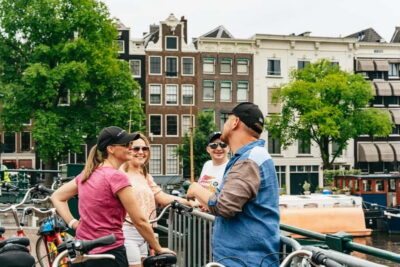
Amsterdam has a polished tourist face, but this small-group walk asks what sits behind it. Starting at Dam Square, you’ll connect the Royal Palace, Jordaan, the Gay Monument, street art, houseboats, and Amsterdam’s famously debated policies on soft drugs and prostitution. It is less about checking off sights than understanding how the city became so open-minded, and where that image has limits.
I like the small group of up to 10, which gives a guide room to explain sensitive subjects without turning the walk into a lecture for a crowd. I also like the honest route: it covers the Red Light District’s background even though tour groups can no longer enter it. The main drawback is that you walk for about two hours, and the mature topics may not suit young children.
Key points
- Amsterdam beyond the postcard: Connect the Royal Palace and Dam Square with social history, counterculture, and the city’s changing identity.
- A walk through the Jordaan: Spend about an hour among narrow streets, cafes, studios, boutiques, and stories of artists and working people.
- Frank discussion of sensitive subjects: Expect clear treatment of soft drugs, prostitution, LGBTQ persecution, graffiti, and Amsterdam’s liberal reputation.
- Small group format: The maximum of 10 people makes questions easier and keeps the walk personal.
- No Red Light District entry: Tour groups are restricted from entering, but the area’s background and policy are still covered.
- Low listed price: At $3.60 per person, the experience offers strong value if you want context rather than paid admissions.
Amsterdam’s polished center, seen from another angle
The walk begins at the National Monument on Dam Square, close to the place where Amsterdam was founded. This is a busy setting, but it works well as a meeting point because the square puts several layers of the city in front of you at once: national memory, royal power, commerce, and tourism.
From there, the guide sets the tone by discussing subjects many standard city walks avoid. You will hear about counterculture, the soft drugs policy, prostitution, LGBTQ persecution, graffiti, and the gap between Amsterdam’s relaxed public image and its more complicated past.
That approach is the main reason to book this experience. If you only want architecture and famous photographs, a conventional sightseeing walk may suit you better. If you want to understand why Amsterdam is often described as liberal, and why that label needs some qualification, this route gives you more to think about.
The experience is offered in English and lasts about two hours. It is not a museum tour, so you should expect to remain outdoors and move from one place to another. Bring water, wear comfortable shoes, and allow enough time to arrive before the 1:30 pm start.
Other Amsterdam outings people book alongside this one:
- Amsterdam Classic Saloon Boat Cruise with Drinks and Cheese
★ 5.0 · 31,825 reviews - Amsterdam Luxury Canal Cruise + Unlimited Drinks & Bites option
★ 5.0 · 30,518 reviews - Amsterdam: Heineken Experience Ticket
★ 4.6 · 30,055 reviews
Dam Square and the Royal Palace in five-minute snapshots
The National Monument is both the starting and ending point. The tour allows about five minutes at the square, enough to get your bearings and hear why this part of Amsterdam matters, but not enough for a long architectural study.
The Royal Palace is next. The building began as a town hall and later became a palace, giving it an unusual civic and royal role. You will see it from the outside during the walk, while a separate visit is recommended if you want to explore the interior. Entry is not part of this experience, and the palace visit must be arranged through the Royal Palace website.
I like this brief treatment because it keeps the walk focused. You get the setting and the political backdrop without using up the afternoon indoors. Still, if the palace is high on your list, plan a separate visit. Five minutes will not satisfy anyone who wants rooms, decoration, and a full explanation of the building.
The opening stops also help balance the tour. Amsterdam’s counterculture makes more sense when set beside its official buildings and public monuments. The route is not presenting one single version of the city. It moves between authority, neighborhood life, public memory, and social policy.
One hour in the Jordaan
The longest stop is the Jordaan, where you spend about an hour walking narrow streets lined with cafes, art studios, and independent boutiques. This is the part of the experience most likely to feel like ordinary Amsterdam rather than a list of major sights.
The guide uses the neighborhood to tell stories about rebellious artists, working-class people, and the hard conditions of an earlier era. That context gives the pretty streets more weight. A cafe-lined lane can look charming, but the area’s identity was also shaped by work, protest, and social change.
I like the amount of time given to this section. A short pass through the Jordaan would only show its surface. An hour lets you notice how the neighborhood changes from street to street and gives the guide room to connect its physical character with the people who lived there.
Do not expect a formal entry into shops, galleries, or cafes. The attraction is the walk itself and the stories attached to the streets. If you prefer a fast-moving tour with a new landmark every few minutes, this slower section may feel long. If you enjoy local neighborhoods and independent places, it is likely to be the most satisfying part.
The pace also makes the small group useful. With no more than 10 people, it should be easier to hear the guide in narrow streets and ask about points that catch your attention. The supplied information does not name the guide, so you should choose this for the subject matter and format rather than for a particular individual.
The Gay Monument and Amsterdam’s changing reputation
The stop at the Gay Monument lasts about 10 minutes. It honors LGBTQ people persecuted because of their gender or sexual preference, and it offers a needed counterpoint to the easy idea that Amsterdam has always been fully accepting.
This stop matters because the tour does not treat liberalism as a simple marketing slogan. The city is famous for tolerance, but that tolerance developed over time and has not erased earlier persecution. A public monument gives the discussion a clear place and human meaning.
You will not get a long museum-style presentation here. The stop is short, but it adds emotional and historical weight to the route. I find that useful because it keeps the discussion of policy connected to real people rather than leaving it at the level of nightlife, drugs, and red lights.
The subject can be serious. That is one reason the walk is recommended for adults or teenagers with a guardian. Parents should decide in advance if discussions of persecution, prostitution, and soft drugs are suitable for their child.
Same city, a completely different afternoon:
- Amsterdam: Rijksmuseum Entry Ticket
★ 4.7 · 25,535 reviews - Amsterdam: Classic Boat Cruise with Optional Cheese & Wine
★ 4.6 · 22,925 reviews - Amsterdam: Evening Cruise with Optional Wine and Snacks
★ 4.4 · 19,696 reviews - Amsterdam: 75 Minute City Canal Cruise with Audio Guide
★ 4.4 · 17,501 reviews
Street art, graffiti, and houseboats
The final portion moves through several Amsterdam locations that show street art, graffiti, and houseboats. These details help explain the city’s visual character and its long relationship with alternative culture.
Street art and graffiti are not treated simply as colorful decoration. In the context of this route, they form part of a larger discussion about who gets to use public space, how rules are enforced, and how a once-edgy idea can become part of a city’s public image.
The houseboats add another distinctly Amsterdam subject. You will see them as part of the city’s everyday streetscape while the guide connects them with the broader theme of unconventional urban life. The information provided does not promise interior visits or a detailed houseboat history, so think of this as an outdoor viewing stop rather than a boat experience.
This section is also where you should expect the most variety. The route does not stay at one monument or neighborhood. Instead, it uses different parts of central Amsterdam to show how the city’s identity appears in public art, housing, tourism, and nightlife.
What you actually learn about the Red Light District
Tour groups are not allowed inside the Red Light District under current restrictions, so this is not an escorted walk through the windows and lanes. That limitation should be clear before booking.
The subject is still covered through its background and connection to Amsterdam’s policies on prostitution and soft drugs. For many people, that is more useful than a quick pass through the district anyway. You can discuss why these policies exist, what the city’s reputation rests on, and why the reality is more complicated than a party image.
If entering the Red Light District is your main goal, choose another experience that is permitted under current rules, if available. This tour is better for context than access. It treats the district as one part of Amsterdam’s social and political story, not as the entire city.
The mature content is direct enough that I would not book this casually for young children. Teenagers may attend with supervision, but parents should be comfortable with frank discussion of prostitution and drug policy.
A $3.60 walk with strong value, but modest scope
At the listed price of $3.60 per person, this is unusually inexpensive for a two-hour guided city walk. You are paying for an English-speaking guide, storytelling, and a focused look at subjects often skipped by general sightseeing tours. There are no admission fees included because the route is outdoors and does not enter the Royal Palace or the Red Light District.
That low price makes the experience especially useful early in a visit. You can use it to get a social and cultural framework for Amsterdam before deciding which museums, neighborhoods, or historic buildings deserve more of your time.
The value depends on your expectations. You are not receiving transportation, food, drinks, or palace admission. You walk the entire route, so the price does not buy comfort or convenience. It buys access to a guide’s explanation and a small-group discussion.
Bring water. There is no food or beverage included, and two hours on foot can feel longer if you start thirsty or wear poor shoes. The tour ends back at the National Monument, so you do not need to arrange a return transfer.
Timing, group size, and practical concerns
The meeting point is the National Monument at Dam, 1012 JS Amsterdam. The start time is 1:30 pm, and the tour returns to the same location. Confirm the exact point before leaving, since Dam Square can be crowded and the surrounding streets are busy.
Arrive early. If you are late, you cannot catch up with the group and will need to book a new time slot. That is a strict rule, but it is understandable on a walking tour that moves through central streets.
The maximum group size is 10 people. That is small enough to keep questions possible and large enough to provide a social atmosphere. It also means a missed start is harder to solve, since the guide cannot reasonably stop the route for late arrivals.
The walk is near public transportation, and most people can participate. Service animals are allowed. The provided information does not specify the route’s full accessibility details, so if you use a wheelchair, walker, or have mobility concerns, ask the operator before booking. The Jordaan’s narrow streets may be a consideration, but the exact surface conditions are not stated.
Free cancellation is available if you cancel at least 24 hours before the start time. Cancellations or changes made inside that window are not refunded or accepted. The experience also requires a minimum number of people, so a cancellation by the operator can result in another date, another experience, or a full refund.
Who will get the most from this walk
I would choose this tour if you want Amsterdam explained through its social rules and contradictions. It suits adults who have already seen the main canals and squares, as well as first-time visitors who want more than a basic orientation.
It is a good match for you if:
- You enjoy frank discussions of social policy and public life.
- You want the Jordaan explained rather than simply photographed.
- You prefer a small group to a large city walk.
- You are interested in graffiti, houseboats, LGBTQ history, and counterculture.
- You want to understand the Red Light District without entering it.
- You are comfortable walking for about two hours.
I would skip it if you need a palace interior, museum entry, canal transportation, or a direct Red Light District visit. It is also not the right choice for a family seeking a light, all-ages introduction to Amsterdam.
The tone is educational and conversational, but the subjects are adult. A teenager with a guardian may find the discussion useful, especially if you want a starting point for talking about tolerance, regulation, and public space. Young children are unlikely to get much from it.
Should you book Alternative Tour Amsterdam?
Book it if you want the city’s less polished story, presented on foot in a group capped at 10. The strongest parts are the hour in the Jordaan, the discussion at the Gay Monument, and the clear explanation of why you cannot enter the Red Light District with this group.
At $3.60, the risk is low, provided you understand what is not included. You will not tour the Royal Palace inside, enter the Red Light District, or receive food and transportation. You will get a compact walk that connects famous places with Amsterdam’s counterculture and social history.
For adults and supervised older teenagers, it is a useful choice. Arrive early, bring water, wear comfortable shoes, and expect frank topics. If that sounds like the Amsterdam you want to understand, this inexpensive walk earns its place in your afternoon.
FAQ
Where does the tour start and finish?
It starts at the National Monument on Dam Square in Amsterdam and ends back at the same meeting point.
What time does the tour begin?
The tour starts at 1:30 pm.
How long does the experience last?
It lasts approximately two hours.
Is the tour offered in English?
Yes. An English-speaking guide leads the experience.
How large is the group?
The tour has a maximum of 10 travelers.
Does the tour enter the Red Light District?
No. Tour groups are not allowed to enter the Red Light District, but the tour covers its background and related topics.
Is the Royal Palace included?
No. The tour stops at the Royal Palace from the outside. Palace entry is not included and can be booked separately through the Royal Palace website.
Can I cancel for a full refund?
Yes, if you cancel at least 24 hours before the experience start time. Cancellations or changes made less than 24 hours before the start time are not refunded or accepted.
Newest Amsterdam write-ups
- 5dporn experience: adres Oudekerksplein 18 Amsterdam★ 3.0 · 13 reviews
- Amsterdam private city walking experience with a local★ 5.0 · 12 reviews
- 3-course Dinner in the Dark Amsterdam★ 4.5 · 40 reviews
- Laser Tag in Amsterdam– The Ultimate Action-Packed Experience!★ 5.0 · 7 reviews
- 2.5 hours Amsterdam Pedicab Tour★ 5.0 · 7 reviews
- 2 Hours Private Amsterdam Rickshaw Tour★ 5.0 · 16 reviews
- Free Roam VR in Amsterdam – Immerse Yourself in a Virtual World!★ 5.0 · 5 reviews
- Amsterdam Introductory Walking Tour with a Local★ 4.5 · 112 reviews
Tours, compared.
Zaanse Schans, Edam, Volendam & Marken Bus Tour
Read our review →
Anne Frank’s Story – Guided Walking Tour through Amsterdam
Read our review →
Life of Anne Frank and World War II Walking Tour
Read our review →
Red Light District Tour in German/English/Italian
Read our review →
Guided Zaanse Schans, Windmills & Cheese Tour
Read our review →
Windmill Tour from Amsterdam, Including Volendam & Marken
Read our review →