Reviewed · TOURS
Amsterdam: Spanish Tour Unmasking the Redlight District
Amsterdam’s Red Light District is more than neon windows. This two-hour Spanish-language walk traces the area from medieval port to Golden Age pleasure quarter and, later, a symbol of Amsterdam’s liberal outlook. You’ll see old canals, chapels, sailors’ streets, and the city’s oldest building.
I like the route’s strong historical arc and its practical starting point near Central Station. I also like the chance to see major sights such as Oude Kerk and De Waag while learning how trade, immigration, religion, and nightlife shaped this part of town.
The main consideration is that this is an outdoor walking tour with no food, drinks, or paid entries included. It is not suitable for children under 14 or wheelchair users, and photography is restricted in certain places.
Key points to know before you book
- A Spanish-language history walk: The guide explains Amsterdam’s port, Golden Age growth, prostitution, nightlife, and progressive traditions in Spanish.
- A central route: You begin near Central Station and walk through Zeedijk, Nieuwmarkt, Oudezijds Voorburgwal, Warmoesstraat, and the Red Light District.
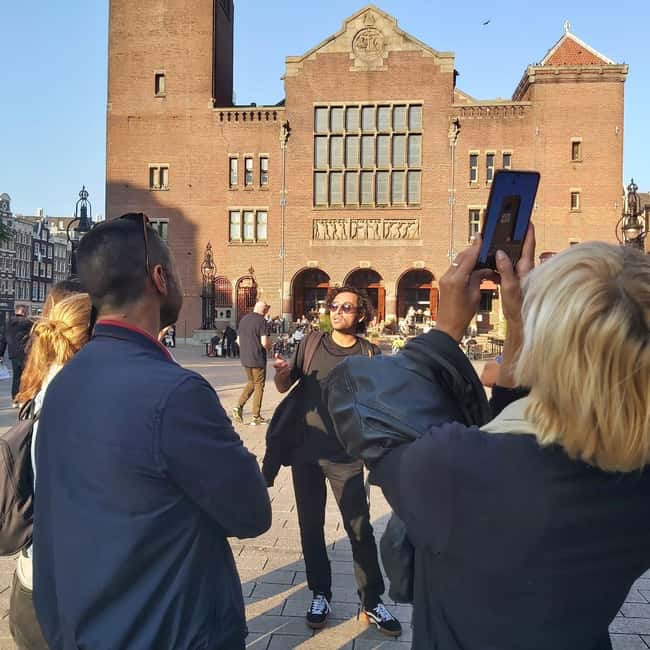
- Major landmarks included: You pass the St. Nicholas Basilica, He Hua Temple, De Waag, Oude Kerk, and finish around Beursplein or the stated meeting area.
- Stories matter as much as sights: The guide supplies anecdotes and local mysteries, giving meaning to narrow streets and old buildings.
- Two hours on foot: Wear comfortable shoes and dress for rain, wind, or cool weather.
- Best for adults and older teenagers: The activity is not suitable for children under 14, wheelchair users, or people over 95.
Why this walk is more than a look at red lights
Amsterdam’s Red Light District is easy to misunderstand. A quick stroll can leave you with a few photographs and a lot of noise, but not much sense of how the area came to be. This tour gives you a timeline. It links the medieval city, the port, the Dutch Golden Age, prostitution, religious change, and modern ideas about tolerance.
That approach is useful because the district is not an isolated entertainment zone. It grew beside the water, close to the city’s trade routes and port activity. Sailors arrived from many parts of the world, merchants made fortunes, and a growing population created demand for lodging, food, drink, sex, and amusement.
Your guide frames those changes in Spanish, with stories and short anecdotes along the way. The guide is described as Spanish-speaking, and one highly praised guide was a young Chilean man who was especially agile and clear when explaining the route. You should still check the guide assigned to your date, since a specific person is not guaranteed.
Other Amsterdam outings people book alongside this one:
- Amsterdam Classic Saloon Boat Cruise with Drinks and Cheese
★ 5.0 · 31,825 reviews - Amsterdam Luxury Canal Cruise + Unlimited Drinks & Bites option
★ 5.0 · 30,518 reviews - Amsterdam: Heineken Experience Ticket
★ 4.6 · 30,055 reviews
Starting beside Central Station and St. Nicholas Basilica
The walk begins outside the Barbizon Palace Hotel on Prins Hendrikkade, close to Amsterdam Central Station. This is a practical meeting place if you have just arrived by train, though the station area can be busy, so allow time to locate the hotel entrance.
The route introduces you to the St. Nicholas Basilica, directly opposite the station. The church provides an early reminder that Amsterdam’s identity was shaped by more than canals and commerce. From here, you hear about the city’s maritime beginnings and its growth as a port.
This opening is brief, but it sets up the rest of the walk. You are not simply moving from one nightlife street to another. You are following the expansion of a city whose wealth and population changed the character of its center.
Because the tour begins outdoors, rain protection is sensible even when the forecast looks harmless. Amsterdam weather can shift quickly, and there is no indoor transport or long seated section built into the experience.
Zeedijk and Amsterdam’s sailor past
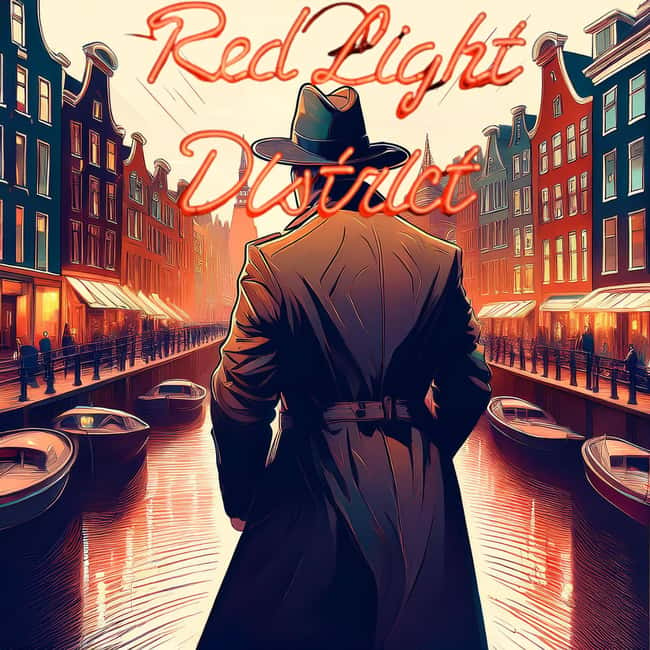
From the starting point, you walk for about 15 minutes toward Zeedijk. The street is one of the most useful stops for understanding Amsterdam as a port city. Its past is tied to sailors, taverns, migration, and contact with people from many countries.
Your guide points out the street’s multicultural character and its older bars, places once linked with seafaring life. This section helps explain why the Red Light District developed where it did. Sailors and port workers needed places to eat, drink, sleep, and find company, while merchants and residents built businesses around the trade.
The route is not a museum visit. You see the street as it is today while listening for the older stories beneath it. That makes the walk appealing if you prefer context over a list of dates.
The narrow streets also make comfortable footwear important. Amsterdam’s historic center is made for walking, but old paving can be uneven. You will want shoes that handle two hours of steady movement rather than fashionable footwear that becomes uncomfortable halfway through.
A secret stop and the He Hua Temple
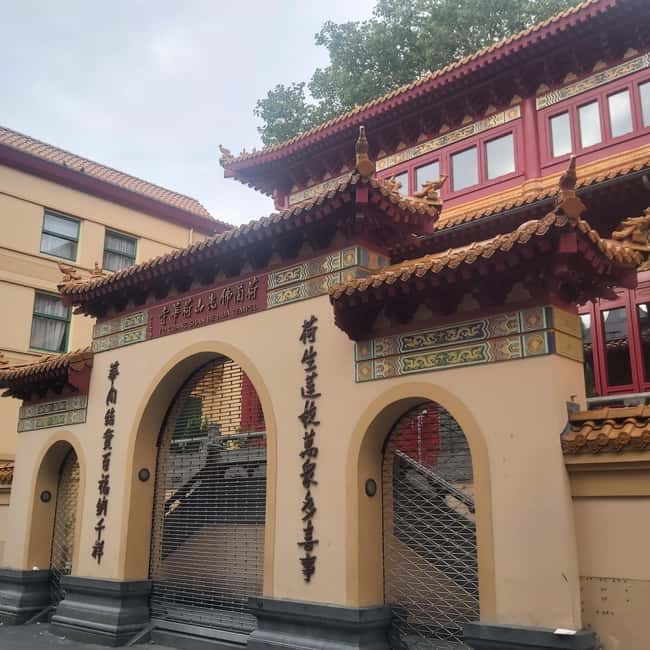
The itinerary includes a short photo stop at an undisclosed location, followed by a stop at the He Hua Temple. The secret stop is not described in detail, so you should treat it as a small surprise rather than a promised major attraction.
The He Hua Temple adds another layer to the area’s cultural story. Its presence near Zeedijk reflects the many communities that have shaped this part of Amsterdam. Your guide uses the stop to show that the district’s identity is not limited to prostitution and nightlife.
You have about 10 minutes at each of these stops. That is enough for a short explanation and a few photographs, but not enough for a long visit or a full tour of every site. Photography is allowed when your guide says it is appropriate. Photography inside is not allowed, so keep your camera ready but follow the guide’s instructions.
The tour allows non-alcoholic drinks, but alcohol and drugs are not permitted. Since there are no drinks included, bring water if you need it during the walk.
Same city, a completely different afternoon:
- Amsterdam: Rijksmuseum Entry Ticket
★ 4.7 · 25,535 reviews - Amsterdam: Classic Boat Cruise with Optional Cheese & Wine
★ 4.6 · 22,925 reviews - Amsterdam: Evening Cruise with Optional Wine and Snacks
★ 4.4 · 19,696 reviews - Amsterdam: 75 Minute City Canal Cruise with Audio Guide
★ 4.4 · 17,501 reviews
Nieuwmarkt, De Waag, and the city’s old defenses
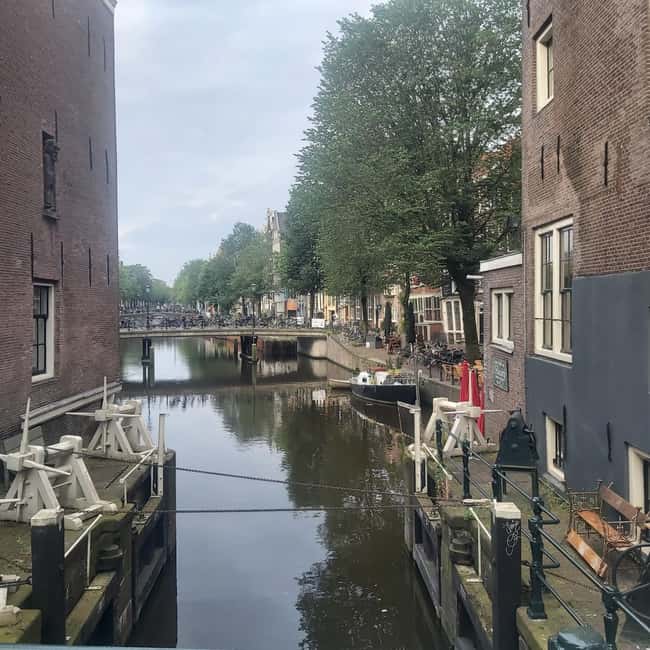
The walk continues to Nieuwmarkt Square, where you have another short photo stop. The square is dominated by De Waag, a former city gate that later became a weighing house. Its changing role mirrors Amsterdam’s own development from fortified settlement to commercial center.
De Waag gives the guide a useful object lesson. Buildings in this part of town often changed purpose as the city expanded and trade became more organized. A former defensive structure could become part of the machinery of commerce, helping connect the city’s walls, markets, and port economy.
This stop is especially useful for anyone who wants to understand the district without reducing it to modern nightlife. You see how civic power, trade, and urban growth created the setting in which entertainment businesses later flourished.
The scheduled photo stop lasts about 10 minutes. That keeps the tour moving, but you should not expect time to explore Nieuwmarkt independently or enter De Waag as part of the tour.
The canals and the making of the Red Light District
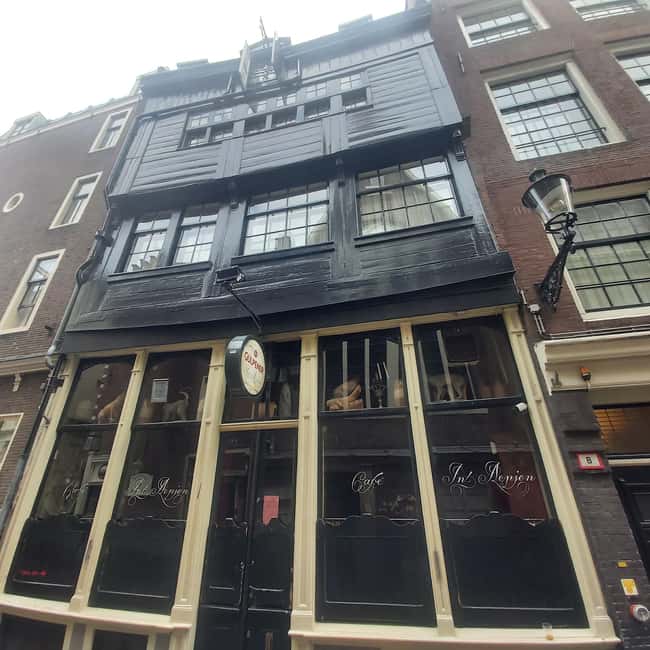
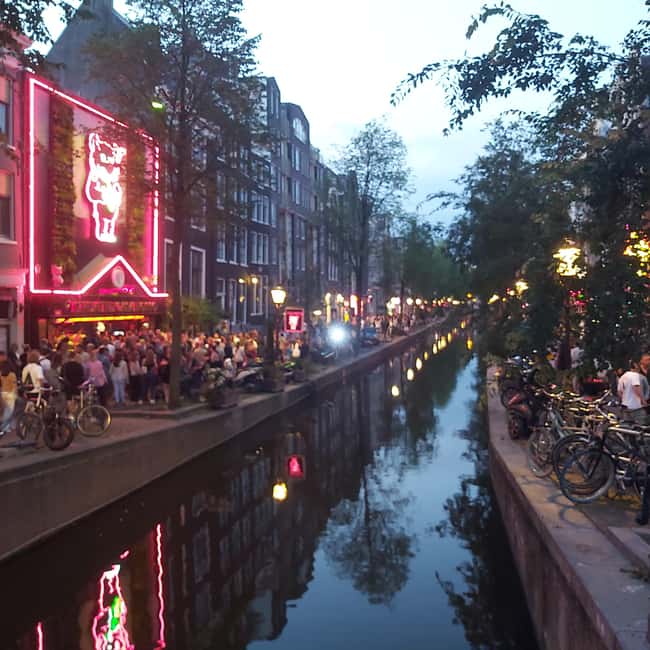
The central walking portion leads into the Red Light District and along Oudezijds Voorburgwal. This canal is one of the defining scenes of the neighborhood. Narrow buildings face the water, small lanes branch away, and the district’s famous windows sit among older religious and civic structures.
Here the guide explains how Amsterdam’s prosperity brought more residents, more trade, and greater demand for entertainment and vice. The point is not to present prostitution as a sudden modern invention. The district developed over centuries as the city grew richer and more connected.
You also hear how the port made Amsterdam a meeting place for different cultures and ideas. That setting helped produce the city’s later reputation for tolerance and progressive thinking, though the tour also shows that such attitudes developed alongside regulation, business interests, and social tension.
The walking section through the district lasts about 20 minutes. That is long enough to see the area’s character but short enough that the tour does not become a prolonged nightlife crawl. You should expect public streets, working businesses, and plenty of activity around you. This is not a staged historical attraction.
Oude Kerk, the oldest building in the city
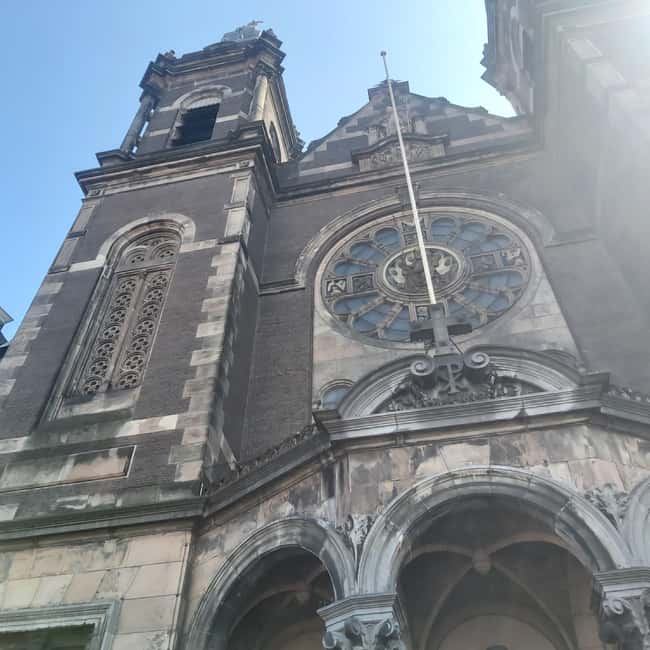
Oude Kerk is one of the strongest stops on the route. The church is identified as Amsterdam’s oldest building, and its position in the Red Light District creates a striking contrast between sacred architecture and commercial nightlife.
The tour includes a 15-minute visit. The guide uses the building to explain how religion, urban life, and the district developed side by side. Historic chapels and churches were not removed from the city as Amsterdam changed. Instead, they remained close to the streets where trade, lodging, and prostitution took place.
That contrast gives the tour much of its character. You can look at a medieval church, turn toward a canal lined with red-lit windows, and understand that these are not separate parts of the city. They have occupied the same compact center for centuries.
The visit is not described as a full guided interior tour, and no entry fees are included. Ask the guide about photography before taking pictures, since indoor photography is not permitted under the activity rules.
Warmoesstraat and the district’s working streets
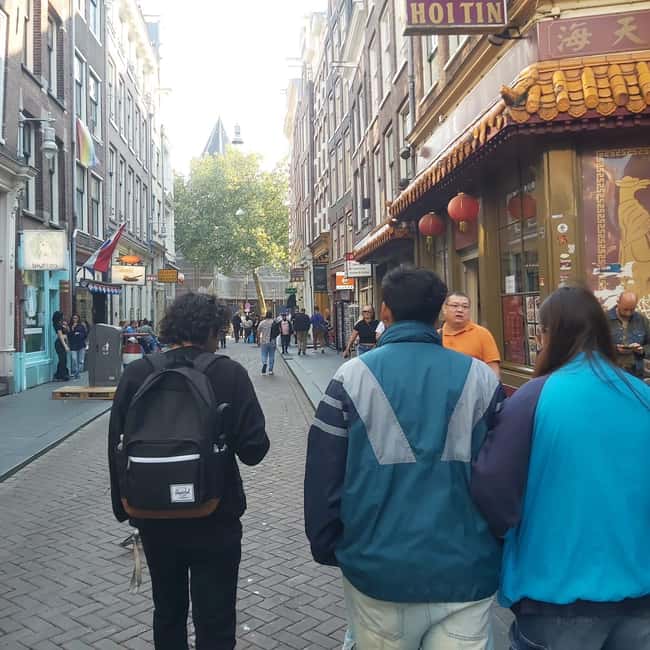
After Oude Kerk, the route moves along Warmoesstraat for about 10 minutes. This street helps connect the older city center with the modern Red Light District. It is another place where the guide can point out how commerce and nightlife grew from the port economy.
The route remains focused on explanation rather than shopping or dining. Food and drinks are not included, and there is no planned stop at a café or bar. That is useful if you want a concentrated history walk, but less useful if you hoped for a relaxed break during the two hours.
Warmoesstraat can also feel busy, so stay close enough to hear the guide. The activity information does not provide a group size, so you should not assume this will be a private or small-group tour.
A final lesser-known stop and the walk to Beursplein
The itinerary includes a 15-minute visit to another undisclosed stop before the walk finishes. Since its identity is not given, the best way to view it is as an additional point of interest rather than a reason to book on its own.
The advertised route finishes at Beursplein, while the meeting information also says the activity ends back at the meeting point. Those details do not match perfectly. Confirm the exact end location with the guide or provider on the day, especially if you have a train reservation, dinner booking, or another timed activity.
The connection to Dam Square and the Royal Palace is part of the closing story. You hear about the palace’s relationship with the Red Light District and how Amsterdam’s official center has long existed close to its less formal, more controversial streets.
That ending is a good choice in historical terms. It brings the story from port and working district to the seat of royal power, showing how the city’s respectable and disreputable sides have always been physically close.
Is $31 a fair price for two hours?
At $31 per person, this tour is reasonably priced if you want a guided explanation in Spanish rather than a self-guided walk. You are paying for a live guide, a planned route, and interpretation of several major landmarks. You are not paying for meals, transportation, or admission to venues.
The value is strongest if this is your first time in Amsterdam or your first visit to the Red Light District. Without context, the area can feel like a quick spectacle. With a guide, the same streets become evidence of maritime trade, immigration, religious change, city planning, and shifting social attitudes.
The value is weaker if you already know Amsterdam’s history well or mainly want free time for photographs. The schedule gives you short stops and keeps moving. It is a history walk, not a flexible private stroll.
Free cancellation up to 24 hours before the start and the option to reserve now and pay later make it easier to fit into a changing itinerary. Starting times vary, so you need to check availability for your date.
Who should choose this Spanish walking tour?
I would choose this experience if you want:
- A Spanish-speaking guide in central Amsterdam
- Historical background on the Red Light District
- A two-hour route with several recognizable landmarks
- A walking tour near Central Station
- Stories about ports, sailors, religion, trade, and nightlife
- An introduction before exploring the district on your own
It suits adults and older teenagers who are comfortable walking outdoors through an adult-oriented neighborhood. It is not suitable for children under 14, wheelchair users, or people over 95, according to the activity restrictions.
You should also be comfortable with the subject matter. The focus includes prostitution, nightlife, and the social history of the Red Light District. This is not a general city walk with a brief passing reference to the area.
Practical advice for a better experience
Wear comfortable shoes and weather-appropriate clothing. The full activity takes place outdoors except for the stated visit portions, and the route includes narrow historic streets and steady walking.
Bring a camera, but wait for permission before using it. Your guide will tell you when photography is acceptable, and photography inside is not allowed. Respecting those limits is especially important in a neighborhood where people live and work.
Do not count on food or drink during the tour. Non-alcoholic drinks are allowed, but alcohol and drugs are prohibited. Eat beforehand or plan a meal afterward rather than expecting a café stop.
If you are staying elsewhere in Amsterdam, note the convenient starting location near Central Station. If you need to leave immediately after the walk, confirm the final meeting point because the route description names Beursplein while the meeting details refer to returning to the starting point.
Should you book this Red Light District tour?
Book it if you want the area explained in Spanish and prefer a clear historical route over wandering alone. The combination of Zeedijk, Nieuwmarkt, De Waag, Oude Kerk, Warmoesstraat, and the canal streets gives you a useful first look at Amsterdam’s oldest center.
I especially recommend it for Spanish-speaking visitors who want more than nightlife anecdotes. The guide’s stories connect the district to the city’s port, its Golden Age prosperity, and its changing ideas about tolerance. The praised Chilean guide also suggests that a lively, clear presentation is possible, though the individual guide can vary.
Skip it if you want extensive interior visits, a food stop, a private group, or a tour designed for wheelchair access. For a focused two-hour introduction at $31, though, this is a sensible way to understand why Amsterdam’s most controversial neighborhood became part of the city’s public identity.
FAQ
Where does the tour begin?
Meet the guide outside the entrance to the Barbizon Palace Hotel on Prins Hendrikkade in Amsterdam, near Central Station.
Where does the tour end?
The route information names Beursplein as the finish, while the meeting details say the activity ends back at the meeting point. Confirm the exact end location with the guide.
How long does the walking tour last?
The tour lasts two hours.
What language is the tour in?
The live guide speaks Spanish.
What landmarks does the route include?
The route includes the St. Nicholas Basilica, Zeedijk, He Hua Temple, Nieuwmarkt Square, De Waag, the Red Light District, Oude Kerk, Warmoesstraat, and the area around Beursplein and Dam Square.
Is food or drink included?
No. Food and drinks are not included. Non-alcoholic drinks are allowed, but alcohol and drugs are not permitted.
Can I take photographs?
You may bring a camera, but the guide will advise you when photography is allowed. Photography inside is not permitted.
What should I wear?
Wear comfortable shoes, comfortable clothes, and clothing suitable for the weather because the tour is outdoors.
Is the tour suitable for children?
No. The activity is not suitable for children under 14.
Can wheelchair users join?
No. The activity is listed as not suitable for wheelchair users.
Newest Amsterdam write-ups
- Amsterdam Walking Tour with Cheese Tasting★ 4.6 · 12 reviews
- Amsterdam: City Highlights Walking Tour★ 4.8 · 10 reviews
- Amsterdam full day: Walking, Biking & Cruising with Lunch★ 4.8 · 17 reviews
- Small-Group Walking Tour with Amsterdam Canal Cruise★ 4.6 · 52 reviews
- Amsterdam: Racing Experience at A’DAM VR Game Park (no VR)★ 4.2 · 22 reviews
- Amsterdam: VR Starter Pack with 6 Tokens★ 4.7 · 7 reviews
- Amsterdam: Massage Session★ 4.8 · 109 reviews
- Amsterdam bike tour with a French-speaking guide local!★ 4.7 · 79 reviews
Tours, compared.
Zaanse Schans, Edam, Volendam & Marken Bus Tour
Read our review →
Anne Frank’s Story – Guided Walking Tour through Amsterdam
Read our review →
Life of Anne Frank and World War II Walking Tour
Read our review →
Red Light District Tour in German/English/Italian
Read our review →
Guided Zaanse Schans, Windmills & Cheese Tour
Read our review →
Windmill Tour from Amsterdam, Including Volendam & Marken
Read our review →