
Reviewed · AMSTERDAM JEWISH HERITAGE TOURS
Amsterdam: Jewish Quarter and History Guided Tour
Amsterdam’s Jewish Quarter is best understood on foot, where ordinary streets carry stories that are easy to miss. This two-hour walk links Jewish life before and during Nazi occupation with landmarks such as the Dokwerker, Auschwitz Monument, Portuguese Synagogue, and Anne Frank House.
I like the strong historical context and the chance to ask questions in a small group. I also like that guides such as James, Aaron, Jyry, Masha, and Joshua have been praised for handling painful subjects with care. The main drawback is pace: one guest felt there was too little time to pause at monuments before moving on.
- A serious look at wartime Amsterdam: Learn how occupation affected Jewish residents from 1940 to 1945.
- Landmarks with meaning: Visit the Dokwerker, Auschwitz Monument, Portuguese Synagogue, Jewish Historical Museum, and Jewish Council headquarters.
- A human-scale walking tour: Small groups and private bookings allow room for questions and personal discussion.
- English or Spanish guidance: Choose from the available language options when booking.
- A useful $23 price: The fee covers a two-hour guided walk, making it a good-value introduction to the quarter.
- An endpoint to confirm: The planned finish is near Anne Frank House, but one account places the ending at the Holocaust memorial.
Why this walk matters in Amsterdam
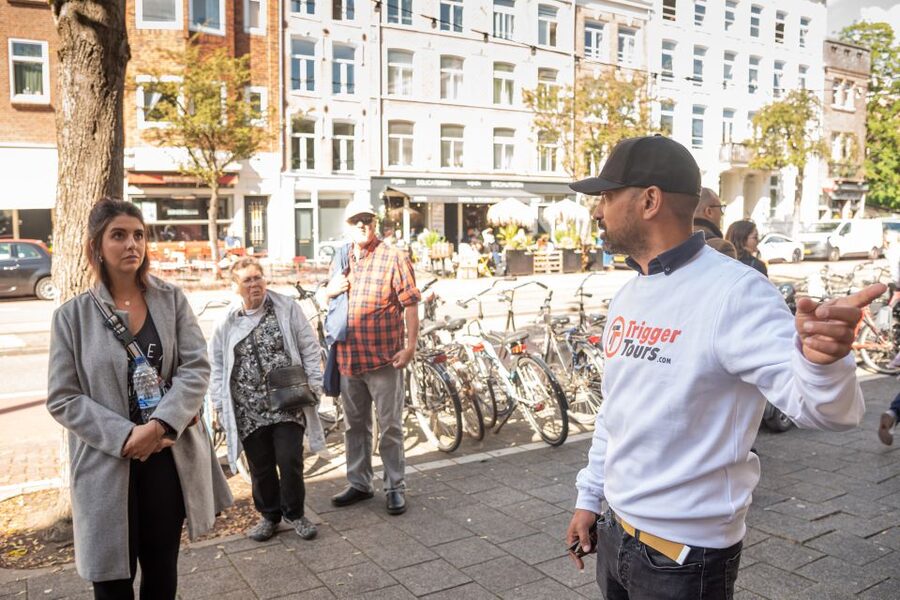
Amsterdam’s Jewish Quarter is not simply a collection of old buildings and memorials. It is a place where streets, institutions, and public monuments help explain how Jewish life changed under Nazi occupation.
I find guided context especially useful here because many important sites are easy to pass without understanding their purpose. A building may look like another Amsterdam façade until your guide explains who worked there, who lived nearby, or how it fit into the machinery of wartime control.
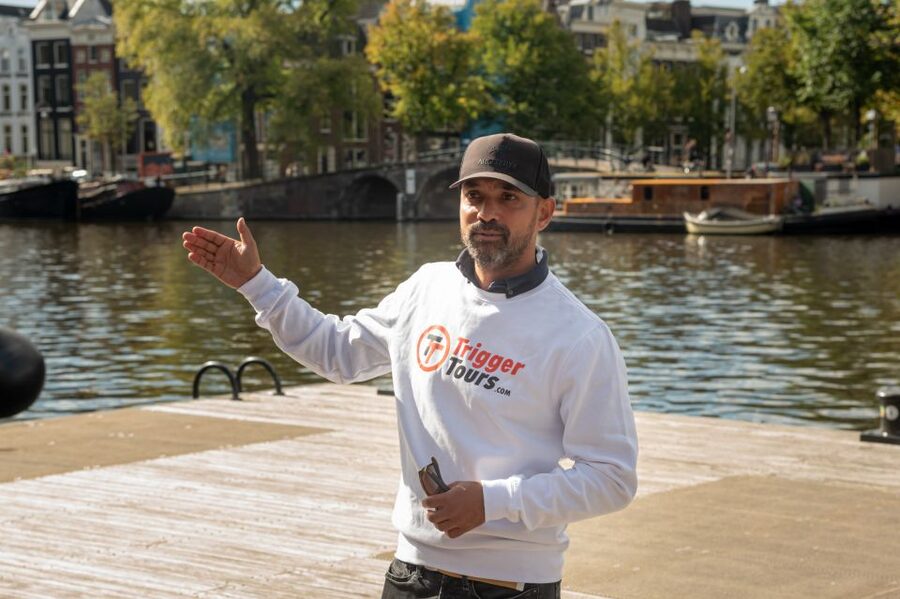
The route begins by the Amstel River and focuses on Amsterdam from 1940 through 1945. You hear about the occupation, the Jewish community, the behavior of Dutch people toward Jewish residents, and the daily restrictions that shaped ordinary life.
This is a serious subject, and the tour does not treat it as light sightseeing. The strongest part of the experience is the human scale. Instead of discussing only dates and military events, the guide connects the period to homes, streets, offices, religious buildings, and families.
Starting by the Amstel River
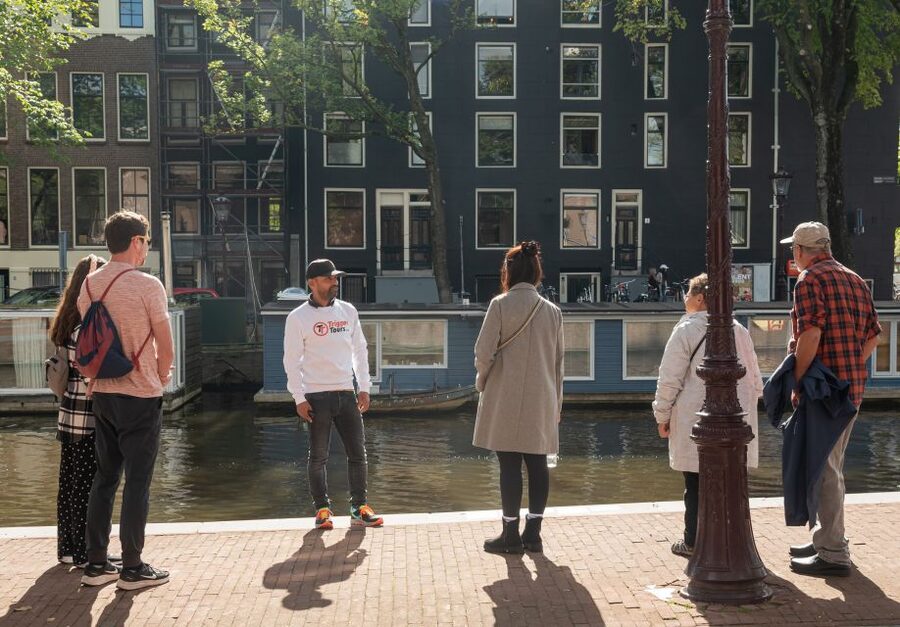
The walk begins near the Amstel, though the exact meeting point can vary according to the option you book. You should check the confirmed location carefully before setting out.
From the start, the guide sets the historical frame. Amsterdam under occupation was not an abstract wartime setting. It was a city where Jewish residents went to work, attended religious services, raised families, and moved through the same streets you see today.
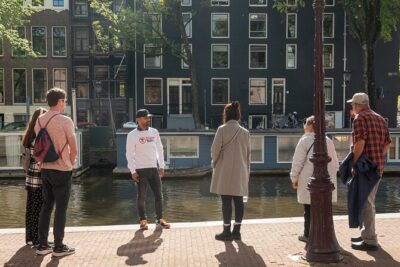
The tour then moves into the Jewish Quarter. You should expect regular walking on city streets rather than a museum-style presentation. The guide stops at key places, explains what happened there, and takes questions along the way.
That format works well for visitors who want a clear overview before exploring the museums on their own. It also helps you see connections between places that might otherwise feel scattered.
More Jewish Quarter and museum tours:
- Anne Frank Walking Tour Amsterdam Including Jewish Cultural Quarter
★ 5.0 · 1,879 reviews - Anne Frank and Jewish Quarter Amsterdam Private Walking Tour
★ 5.0 · 684 reviews - Amsterdam: Anne Frank and Jewish Quarter Tour
★ 4.7 · 434 reviews
Jewish Amsterdam before the war
The tour does not begin with persecution alone. It also introduces the Jewish community and its institutions, giving you a sense of what existed before the war changed the city.
The Portuguese Synagogue is one of the major landmarks on the route. Its presence points to the long-standing Jewish life of Amsterdam and gives the walk a needed historical balance. The Jewish Quarter was not created by the war. It was a living part of the city before the occupation, with religious, cultural, and social institutions.
The Jewish Historical Museum is another important stop. Even if you are not entering the museum during this experience, seeing it in the context of the neighborhood helps you place Amsterdam’s Jewish story within a wider setting.
I like this part of the route because it prevents the quarter from being reduced to a memorial zone. You learn about a community with its own institutions and traditions, not only about what was later destroyed.
The Jewish Council and the machinery of occupation
The former headquarters of the Jewish Council helps explain how Nazi policy reached into everyday Jewish life. Your guide discusses the role of the council and how occupation affected the community.
This is one of the parts where a guide adds real value. On your own, you might see a building and move on. With the historical explanation, the address becomes part of a difficult story about orders, administration, fear, and impossible choices.
The subject calls for careful handling, and that has been a major strength of the guides on this tour. James is repeatedly praised for presenting the material in a sensitive, factual, and impartial way. Aaron is also described as friendly and clear when answering difficult questions.
The tour does not reduce the period to simple labels. It addresses how Dutch people behaved toward Jewish residents, a subject that requires more care than a quick statement about resistance or collaboration. If you have family connections to the Holocaust, you may find the question-and-answer format especially useful, since the guides have been able to respond to personal and sensitive questions.
Dokwerker and the cost of resistance
The Dokwerker is one of the most recognizable memorials on the route. The statue recalls the February Strike of 1941, when workers protested the persecution of Amsterdam’s Jewish population.
The monument gives the tour a chance to discuss public response to Nazi measures. It also brings the story out of private homes and offices and into the public space of the city.
Your guide explains what the monument represents and why it matters. This is more useful than simply taking a photograph, since the meaning depends on the events behind it.
The stop can feel brief if the group is moving quickly. One suggestion from the feedback was to allow more time to absorb a monument before continuing. If you want to study details or take photographs, you may need to stay alert and keep up with the guide.
More history walks in Amsterdam:
- Amsterdam Food and Cultural Tour with Tastings
★ 5.0 · 2,442 reviews - Amsterdam: Haunted History and Ghost Walking Tour
★ 4.5 · 488 reviews - Amsterdam High-End Dutch Food & History Tour – Up to 8 guests
★ 5.0 · 482 reviews - Amsterdam: Historic City Sightseeing Canal Cruise
★ 4.5 · 444 reviews
The Auschwitz Monument and remembrance
The Auschwitz Monument is another central stop. It gives the walk a solemn focus and connects Amsterdam’s local story to the wider system of Nazi persecution.
Here, the value lies in the explanation around the monument. You hear how remembrance works in a city where so much of the Jewish population was lost, and how a public memorial gives form to an event that can otherwise feel too large to grasp.
The mood is quiet and reflective rather than dramatic. This is not a stop for rushing through a checklist. Still, the tour has only two hours, so the amount of time spent here can depend on group size, questions, and the guide’s pace.
The route has generally been described as well paced, but one person found it too long, while another wanted more time at individual sites. That contrast is worth keeping in mind. The tour aims to cover a great deal in a short period, and you may need to choose between broad coverage and long pauses.
Anne Frank House and the final connection
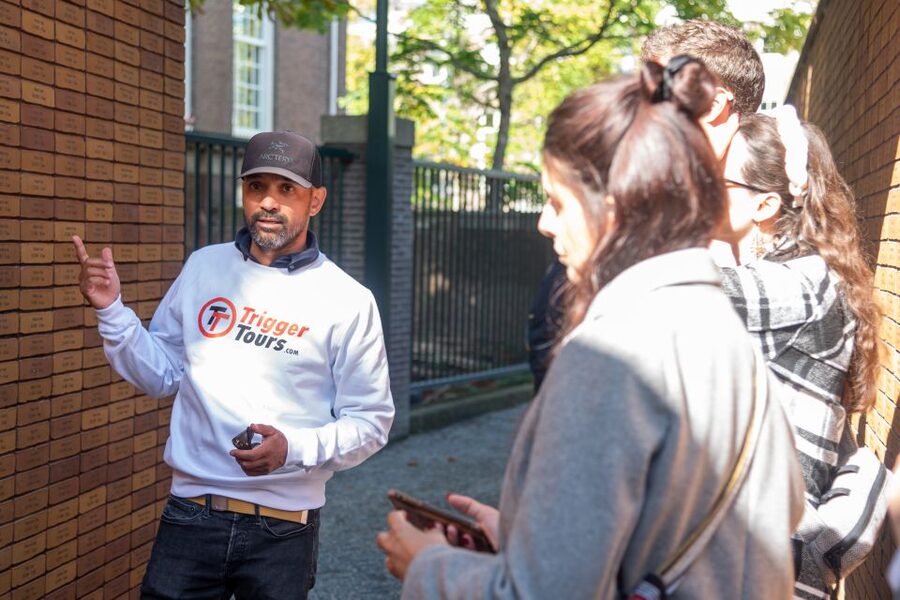
The walk is scheduled to finish in front of Anne Frank House. The guide explains Anne Frank’s diary, how her father Otto Frank helped publish it, and how the book became known around the world.
You do not receive entry to Anne Frank House as part of the tour. The experience is a walking tour with a guide, and food and drinks are not included.
Ending near the house makes sense because Anne Frank’s story gives many visitors a personal entry point into the occupation. It also connects the Jewish Quarter to a place already familiar from her diary.
There is one practical detail to check. One account says the walk ended at the Holocaust memorial rather than Anne Frank House. Since the meeting point and route can vary with the option booked, confirm the final stopping point when you reserve. Do not plan a tight appointment immediately afterward.
The guides and the tone of the experience
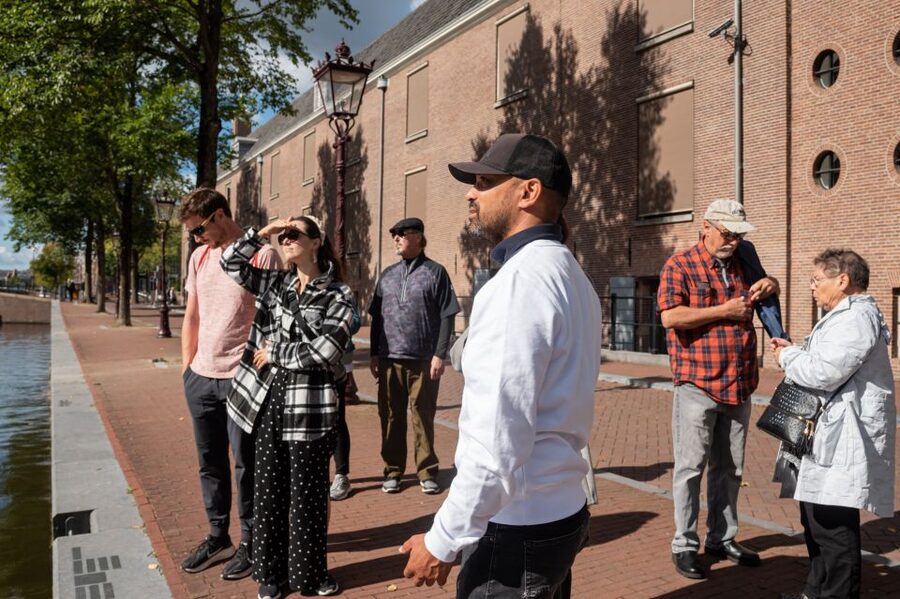
The guides named in the feedback include James, Aaron, Jyry, Masha, Joshua, and Guido. Names and assignments can change, but the pattern is clear: the guide matters greatly on a subject like this.
James receives especially strong praise for his clear explanations, patience, and ability to connect buildings with personal stories. Jyry is praised for his command of World War II and Dutch Jewish history, as well as for personalizing the walk. Aaron is described as friendly, easy to understand, and willing to answer questions.
Masha is praised for a prepared and professional presentation, while Joshua is noted for a thorough tour at an appropriate pace. These comments point to the qualities you should want here: accuracy, sensitivity, patience, and a willingness to explain rather than perform.
The tour is offered in English or Spanish. If the subject is important to you, a small group or private booking should give you more room for questions. One couple had a nearly private experience and appreciated being able to have an extended conversation with the guide.
What two hours can and cannot cover

Two hours is enough for a strong introduction, but not enough for every museum, memorial, and story in the quarter.
You can expect a connected walking route with several major landmarks and a broad explanation of Jewish life before and during the occupation. You cannot expect long visits inside each institution or a full museum experience.
The tour works best if you treat it as a foundation. Afterward, you can return to sites that caught your attention. One person followed the walk by revisiting several points independently, which is a sensible plan if you want more time for photographs, reading, or quiet reflection.
The amount of information is one of the tour’s strengths, but it can also feel dense. If you need time to process difficult material, take a moment after each stop and ask the guide to clarify anything that feels rushed.
Price, group size, and practical value
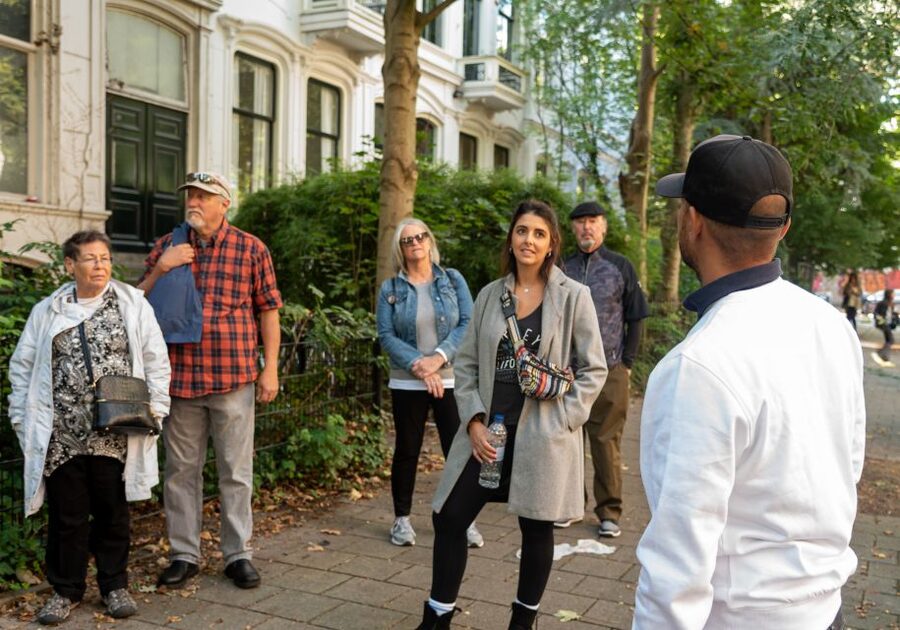
At $23 per person, this is a reasonable price for a two-hour guided walk in central Amsterdam. You are paying for historical interpretation, route planning, and the ability to ask questions, not for museum admission or refreshments.
I think the value is strongest for first-time visitors to the Jewish Quarter. Without a guide, you can walk past the Portuguese Synagogue, Jewish Historical Museum, Jewish Council headquarters, Dokwerker, and Auschwitz Monument without seeing how they fit together.
A private or small-group option may cost more than the basic shared rate, depending on the booking choice. The benefit is a quieter setting and more opportunity to shape the discussion around your interests.
The tour includes only the walk and guide. Wear shoes suitable for two hours of city walking, and leave space in your schedule because the exact endpoint may vary. You can cancel up to 24 hours in advance for a full refund, and the reserve-now, pay-later option helps if your plans are not fixed.
Who should book this tour
I would choose this tour if you want a clear introduction to Jewish Amsterdam and the Nazi occupation without spending a full day in museums.
It suits:
- First-time visitors who want historical context for the Jewish Quarter
- People interested in World War II, Jewish history, or Amsterdam’s social past
- Families and small groups who want to ask personal questions
- Visitors planning to see Anne Frank House or the National Holocaust Museum separately
- Anyone who prefers a guide to turn ordinary streets into meaningful places
It may not suit you if you want a light city walk, a food stop, or extended time inside museums. The subject is painful, and the route deals directly with persecution and loss. You should also avoid scheduling another fixed activity immediately afterward if you need time to reflect or if the route ends somewhere other than expected.
Should you book the Jewish Quarter tour?
Book it if you want to understand how Jewish life, occupation, public policy, and remembrance connect across Amsterdam. The strongest reason to go is not simply the number of landmarks. It is the way a good guide gives those places human meaning.
For the best experience, choose a small group or private option if your budget allows, confirm the meeting point and endpoint, and arrive ready for a serious conversation. At $23, the shared tour offers good value for a focused introduction, especially if you plan to visit a museum or memorial afterward.
I would not book it as a casual sightseeing stroll. I would book it as a respectful history walk, then give yourself time to revisit the places that need a slower look.
FAQ
How long does the Amsterdam Jewish Quarter tour last?
The tour lasts two hours.
How much does the tour cost?
The listed price is $23 per person.
Which languages are available?
The live guide is available in English or Spanish.
Is the tour private or shared?
You can choose a private experience or a small-group option, depending on availability and the booking selected.
Where does the tour begin?
It begins by the Amstel River, but the exact meeting point may vary according to the option booked.
Where does the tour finish?
The planned finish is in front of Anne Frank House. One account places the ending at the Holocaust memorial, so confirm the endpoint for your selected option.
Is entry to Anne Frank House included?
No. The experience is a guided walking tour, and admission to Anne Frank House is not listed as included.
Are food and drinks included?
No. Food and drinks are not included.
Can I cancel for a full refund?
Yes. You can cancel up to 24 hours in advance for a full refund.
Can I reserve now and pay later?
Yes. The reserve-now, pay-later option lets you hold your place without paying at the time of booking.
Newest Amsterdam write-ups
- Zaanse Schans: Half-Day Private Guided Tour★ 5.0 · 4 reviews
- Zaanse Schans: Private Cruise + Live Guide, Optional Drinks★ 4.7 · 26 reviews
- Zaanse Schans: Wooden Shoe Painting Workshop★ 4.9 · 23 reviews
- Amsterdam: Private Zaanse Schans Windmills and Volendam Trip★ 4.9 · 31 reviews
- Zaanse Schans: Pancake Restaurant Visit★ 4.5 · 26 reviews
- Amsterdam: Zaanse Schans E-Bike Tour with Windmills & Cheese★ 4.5 · 12 reviews
- Zaandam: Paint a Perfect Portrait workshop★ 5.0 · 5 reviews
- Volendam: Volendams Museum Entry Ticket★ 4.4 · 14 reviews
Amsterdam Jewish Heritage Tours, compared.
Anne Frank Walking Tour Amsterdam Including Jewish Cultural Quarter
Read our review →
Anne Frank and Jewish Quarter Amsterdam Private Walking Tour
Read our review →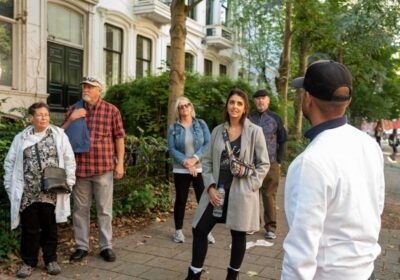
Anne Frank and Jewish Quarter Walking Tour (TOP RATED)
Read our review →

Anne Frank and the Jewish History of Amsterdam Private Tour
Read our review →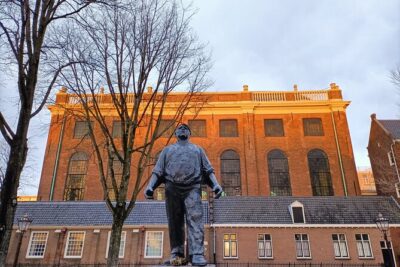
Anne Frank and Amsterdam Jewish History Walking Tour
Read our review →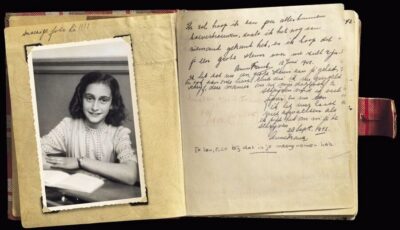
Browse the lists this tour appears in