Reviewed · TOURS
Amsterdam Architecture Tour
Amsterdam’s canal houses are more than pretty façades. Their narrow fronts, tall gables, hidden gardens, and varied widths reveal how Amsterdam grew through trade, religion, engineering, and strict use of limited land. This private tour brings those clues together, with a particularly valuable visit inside Huis Bartolotti, one of the city’s finest canal houses.
I like the private format, which gives your group up to eight people a chance to ask questions without competing with a crowd. I also like the mix of street views and interiors, especially the chance to see a canal house garden. The main consideration is price: at $384.63 per group, it makes the most sense for a family or small group that will use the full capacity, rather than one or two people traveling alone.
Key points at a glance
- Private group of up to eight: You get a personal guide and can ask questions freely.
- Huis Bartolotti inside and out: The 15-minute visit reveals both its decorative interior and the less visible canal-house gardens.
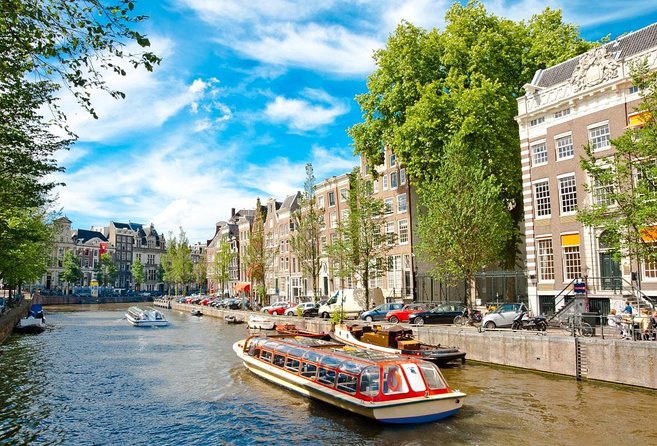
- Canal Ring explained clearly: You learn why the canals are arranged as they are and how the buildings differ along the water.
- Religion shaped the architecture: A late 17th-century building shows how religious minorities adapted to restrictions.
- Stories bring the city into focus: Guides Edgar and Tijs have discussed subjects ranging from skyline design and fortifications to fair-trade coffee.
- Flexible scheduling: Several start times make it easier to fit the tour around a day in Amsterdam.
Why Amsterdam’s canal houses reward a closer look
A first walk along Amsterdam’s canals can feel like a parade of handsome façades. You see brick, stepped gables, windows, and bridges, but the pattern can blur after a while. This tour gives you a way to read the scene.
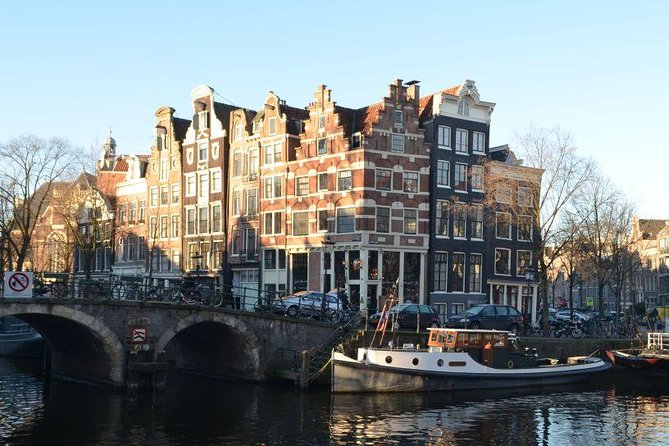
You’ll learn how the canal ring is structured, how the city expanded as trade grew, and why canal houses vary in width and gable style. Those details matter because Amsterdam’s architecture was shaped by practical pressure. Land near the water was valuable, plots were often narrow, and buildings had to serve business, storage, and home life at once.
The tour also connects architecture to subjects that are easy to miss on a casual walk. You might hear why the skyline looks the way it does, how old fortifications helped protect the city, and where traces of the medieval walls remain. The story of a swan atop a Protestant domed church adds a small but memorable detail to the city’s religious past.
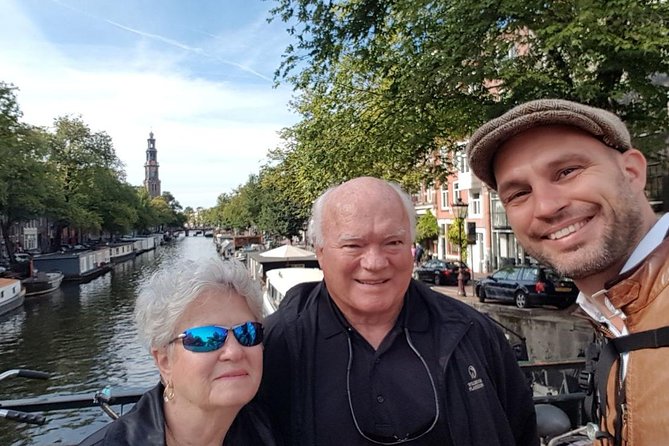
The listed guides include Edgar and Tijs. Edgar is praised for explaining city culture, architecture, and history with warmth. Tijs is noted for clear explanations, humor, and a personal approach. His tours have covered the Multatuli statue on Amsterdam’s oldest bridge, the prison below that bridge, the origins of fair-trade coffee, and the reasons behind Amsterdam’s distinctive house fronts.
That range is useful. You are not simply stopping at buildings to hear dates. You are being shown how architecture connects with politics, commerce, faith, and daily life.
Other Amsterdam outings people book alongside this one:
- Amsterdam Classic Saloon Boat Cruise with Drinks and Cheese
★ 5.0 · 31,825 reviews - Amsterdam Luxury Canal Cruise + Unlimited Drinks & Bites option
★ 5.0 · 30,518 reviews - Amsterdam: Heineken Experience Ticket
★ 4.6 · 30,055 reviews
A private walk that works best for small groups
The experience lasts about two hours and 30 minutes, which is long enough to build a connected story without taking over your day. It is a walking tour, so a moderate level of physical fitness is expected. Wear comfortable shoes, since the value comes from moving through the canal district rather than remaining in one place.
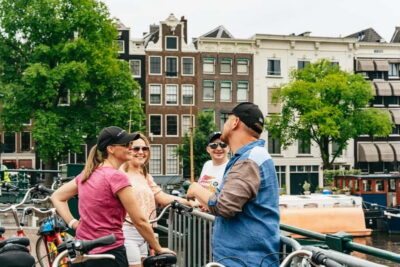
The private arrangement is the tour’s biggest practical advantage. Your group alone takes part, with a maximum of eight people. That means you can pause to ask why a building has a particular gable, request more detail about Dutch religious history, or spend less time on a topic that does not interest you.
This format is especially helpful for families and friends with mixed interests. One person may care about design, another about trade, and another about local stories. A private guide can adjust the conversation more easily than a large scheduled walk.
There is also room to discuss the route. The Dutch-language experience description specifically notes that the route can be chosen in consultation with the guide. The published stops give you a clear architectural focus, but the private format may allow the walk to respond to your questions and priorities.
The meeting point is Design Amsterdam at Brouwersgracht 64, in postal district 1013 GX. The tour ends back at the same meeting point. It is near public transportation, which makes the start and finish fairly easy to connect with the rest of your day.
Reading the canal ring from Brouwersgracht
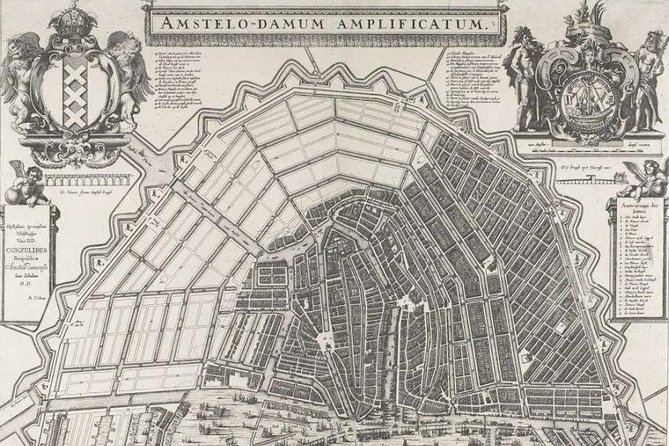
The opening section explains the shape of the Amsterdam canal ring and the kinds of architecture built along the water. This is important groundwork. Without it, individual houses can seem like isolated sights. With it, you can begin to see how the canal system organized movement, trade, defenses, and expansion.
Expect the guide to point out differences among the buildings rather than treating the canal frontage as one uniform style. House width, gable shape, and placement all tell part of the story. Amsterdam’s growth from its medieval core into a major trading city created new demand for homes, warehouses, and commercial buildings.
The tour’s value here is interpretive rather than spectacular. You are not being promised a long list of grand interiors. Instead, you get a framework for understanding the streets you may already be walking through during your stay.
This is also where a private guide can make a real difference. If you ask why some houses are narrow or why certain façades look more formal than others, the answer can be tied to land use, wealth, period, and function. Those are the small explanations that make the rest of your Amsterdam sightseeing more rewarding.
Huis Bartolotti and the secret life behind the façade
Huis Bartolotti is the tour’s standout interior visit. You have about 15 minutes there, with admission included. The house is presented as one of the most beautiful canal houses in Amsterdam, and its interior design offers a sharper sense of how impressive these buildings could be beyond their street façades.
The special lesson is the canal house garden. From the street, Amsterdam’s houses appear tightly packed, with little room between one property and the next. Inside, you discover another side of the plan, including gardens tucked behind the houses.
That contrast is one of the best reasons to include an interior on an architecture walk. A canal façade tells you about public display, status, and the need to fit a building onto a narrow plot. The garden shows how the same property could offer privacy and open space behind the formal front.
The visit is short, so keep your expectations measured. You are not spending an entire afternoon in a museum. The 15-minute stop works as a focused architectural example within a longer walk. It gives you an interior and garden glimpse, then sends you back outside with a better understanding of the canal-house plan.
If you have an interest in historic homes, this stop adds considerable value. It is also the part most likely to appeal to someone who wants more than exterior photographs.
Same city, a completely different afternoon:
- Amsterdam: Rijksmuseum Entry Ticket
★ 4.7 · 25,535 reviews - Amsterdam: Classic Boat Cruise with Optional Cheese & Wine
★ 4.6 · 22,925 reviews - Amsterdam: Evening Cruise with Optional Wine and Snacks
★ 4.4 · 19,696 reviews - Amsterdam: 75 Minute City Canal Cruise with Audio Guide
★ 4.4 · 17,501 reviews
Religious limits and an inventive late 17th-century solution
Another stop presents a distinctive example of late 17th-century architecture created in response to restrictions placed on religious minorities. The supplied details do not name the building, so it is best to treat this as a lesson in religious and social history rather than expect a particular famous landmark by name.
This part matters because Amsterdam’s built environment was shaped not only by wealth and trade, but also by rules about worship and public life. When a community could not build or use a conventional place of worship, architecture had to find another answer.
You’ll see how physical limits and religious policy could produce inventive design. That makes the stop more than an architectural curiosity. It shows how communities adapted to the city they lived in, finding ways to maintain religious life within legal and spatial boundaries.
For visitors who already know the basic canal-house story, this adds useful range. It moves the tour beyond wealthy merchants and decorative façades and gives you a clearer sense of the different communities that helped shape Amsterdam.
Westerkerk and the logic of early 17th-century design
The tour also covers early 17th-century architecture in general, with particular attention to the Westerkerk. The church provides a useful anchor for understanding how Amsterdam’s early modern architecture expressed religion, civic ambition, and changing construction methods.
The guide’s explanation may also help make sense of the church’s more unusual visual details. One story highlighted in the tour’s commentary concerns the swan on top of a Protestant domed church. That small symbol is exactly the kind of detail you might pass without noticing, then remember once someone explains it.
You should not expect this to be a full church-history lecture. The tour’s focus is architecture in its city setting. Westerkerk functions as a case study within the wider walk, helping you compare a major religious building with the narrower domestic structures along the canals.
This section may be especially useful if Amsterdam’s churches have seemed visually impressive but historically unclear. The guide connects the building to the broader development of the city, giving you more than a quick exterior photograph.
The House with the Heads and Dutch Renaissance style
The House with the Heads provides another clear architectural example. It is an extravagant early 17th-century canal house in Dutch Renaissance style, with a past connected to influential residents.
The building also has a present-day cultural role. It is home to a special library that has UNESCO recognition. That combination of private house, prominent occupants, and a continuing intellectual use gives the stop several layers.
This is a good place to compare the house with less elaborate canal buildings. Amsterdam’s canal ring is not made up of identical façades. Differences in decoration and scale reflect changing tastes, wealth, period, and purpose.
The stop also reinforces a point the tour makes throughout: buildings have lives beyond their original owners. A canal house can shift from residence to cultural institution while preserving clues to the city’s earlier social structure.
What the reviews reveal about the guiding style
The listed rating is 4.8 from four reviews, a small sample but a strong result. The most consistent praise is directed at the guides’ clear storytelling, courtesy, humor, and ability to connect architecture with everyday history.
Edgar receives particular praise for combining city culture, architecture, and history in a way that works well for a family group. Tijs is repeatedly singled out for clear explanations and enthusiasm. He has also been described as polite and fun, qualities that matter during a two-and-a-half-hour walk.
The most useful detail is the breadth of subjects covered. Tijs has explained Amsterdam’s expansion from medieval times, the old city walls, canal fortifications, house widths, gable ends, the Multatuli statue, fair-trade coffee, and the prison beneath Amsterdam’s oldest bridge.
That tells you what kind of experience to expect. This is not only a style-focused tour. It is a city-history walk told through buildings, bridges, symbols, and street details. If you enjoy asking why a place looks the way it does, you are likely to get more from it than someone seeking only a list of famous sights.
The Dutch-language feedback also emphasizes humor and the possibility of choosing the route in consultation with the guide. The published offering is in English, so confirm that language when booking if it matters to your group.
Price, timing, and who gets the best value
The price is $384.63 per group of up to eight people. That sounds high if you are comparing it with a large group walking tour priced per person, but the calculation changes when you fill most of the group places.
For eight people, the cost works out to about $48 per person. For four people, it is about $96 each. For two people, the per-person cost is roughly $192. The private format and included Huis Bartolotti admission add value, but solo visitors and couples should think carefully about the total.
I see the strongest value for families, two couples traveling together, or a group of friends who want a guide to themselves. You are paying for flexibility, conversation, and a route that can respond to your interests, not simply for access to a set of buildings.
The selection of start times helps you fit the walk around meals, museums, or other appointments. Since the tour ends where it begins, you can plan transportation with less guesswork. Confirmation is provided at booking, and free cancellation is available when you cancel at least 24 hours before the start time. Changes or cancellations made inside that period are not accepted for a refund.
Who should book this Amsterdam architecture tour?
I would choose this tour if you want to understand Amsterdam rather than simply photograph it. It suits first-time visitors who want a strong introduction to the canal ring, as well as returning visitors who have seen the main streets but never understood the buildings.
It is a particularly good fit for:
- Small groups that can divide the private cost.
- Families who want to ask questions at their own pace.
- Architecture fans interested in canal houses, churches, and gardens.
- History-minded visitors curious about trade, religion, defenses, and city growth.
- People who prefer a personal guide over a large scheduled group.
You may want to skip it if you dislike walking, want a major museum visit, or are traveling alone and watching every euro. The tour also gives only a short visit inside Huis Bartolotti, so anyone seeking a long, detailed house tour should adjust expectations.
Should you book it?
Book this Amsterdam Architecture Tour if the canal ring has caught your eye but still feels like a collection of attractive buildings without a clear story. The combination of private guiding, Huis Bartolotti’s interior and garden, Westerkerk, the House with the Heads, and the religious architecture stop gives you a useful view of how Amsterdam developed.
The best reason to book is the quality of the conversation. Guides such as Edgar and Tijs bring in small details about symbols, bridges, coffee, fortifications, and house design that can change how you see the rest of the city. Just make sure your group is large enough to make the $384.63 price comfortable, and remember that this is an active walking tour of about two and a half hours.
FAQ
How long is the Amsterdam Architecture Tour?
The tour lasts approximately two hours and 30 minutes.
What is the price of the tour?
The price is $384.63 per group, with up to eight people allowed in the private group.
Is this a private tour?
Yes. Only your group participates, and the maximum group size is eight people.
What language is the tour offered in?
The tour is offered in English.
Where does the tour start?
It starts at Design Amsterdam, Brouwersgracht 64, 1013 GX Amsterdam, Netherlands.
Where does the tour end?
The activity ends back at the meeting point.
Is admission to Huis Bartolotti included?
Yes. The 15-minute Huis Bartolotti visit includes admission.
Is the tour close to public transportation?
Yes. The meeting point is near public transportation.
What is the cancellation policy?
You can cancel for a full refund up to 24 hours before the experience start time. Cancellations or changes made less than 24 hours before the start time are not accepted for a refund.
Newest Amsterdam write-ups
- Rotterdam, Delft and the Hague Day Trip from Amsterdam★ 4.5 · 55 reviews
- Bruges Day Trip from Amsterdam★ 4.5 · 14 reviews
- Bike rental Volendam – Explore the Countryside of Amsterdam★ 5.0 · 16 reviews
- Amsterdam Canal Cruise with Live guide & Two drinks – Central St.★ 5.0 · 151 reviews
- Amsterdam Craft Beer Brewery Tour by Bus with Tastings★ 5.0 · 74 reviews
- Amsterdam small-group canal cruise in 1920s saloon boat★ 5.0 · 13 reviews
- Authentic Italian Dinner in Cozy Canal Home in Amsterdam★ 5.0 · 4 reviews
- Authentic tour of Amsterdam: Jordaan, Ana Frank and Vondelpark★ 4.5 · 31 reviews
Tours, compared.
Zaanse Schans, Edam, Volendam & Marken Bus Tour
Read our review →
Anne Frank’s Story – Guided Walking Tour through Amsterdam
Read our review →
Life of Anne Frank and World War II Walking Tour
Read our review →

Red Light District Tour in German/English/Italian
Read our review →
Guided Zaanse Schans, Windmills & Cheese Tour
Read our review →
Windmill Tour from Amsterdam, Including Volendam & Marken
Read our review →